The Soviet Union’s strategic interests in the Caspian Sea during the Cold War were multifaceted, encompassing resource control, geopolitical influence, and naval projection. Far from being a mere freshwater lake, the Caspian was viewed by Moscow as a vital inland sea, a strategic buffer, and a significant economic asset. To secure these interests, the Soviets developed a formidable, albeit often overlooked, arsenal and naval presence in this unique body of water. The construction, deployment, and evolution of Caspian Sea weapons systems reflected the broader technological advancements and strategic doctrines of the Cold War, adapted to the specific geographical and political realities of the region. This article will delve into the Soviet Caspian Sea weapons, examining the evolution of their naval power, the types of armaments employed, the strategic rationale behind their deployment, and the legacy of this Cold War arsenal.
The Genesis of a Soviet Inland Navy
The Soviet Union inherited a naval tradition in the Caspian Sea from the Tsarist era, but it was during the Soviet period, particularly after World War II, that a dedicated and substantial Caspian Flotilla truly took shape. The initial focus was on maintaining order, protecting burgeoning oil infrastructure, and countering potential threats from neighboring states, primarily Iran, which shared the southern coast. The geographical isolation of the Caspian, lacking direct access to the world’s oceans, dictated a unique approach to naval development. This meant that the Caspian Flotilla operated in a semi-enclosed environment, necessitating specialized vessel designs and weapon systems tailored for inland waterways and relatively shallow waters.
Early Post-War Buildup and Ideological Imperatives
Following the end of World War II, the Soviet Union intensified its focus on securing its borders and expanding its influence. The Caspian Sea was a crucial element in this strategy. The presence of significant oil reserves in the region, coupled with the proximity of Iran and Turkey (both of which had historically been targets of Soviet expansionist ambitions), made the Caspian a theater of strategic importance. The initial buildup of the Caspian Flotilla was driven by a combination of defense against perceived external threats and the projection of Soviet power into a region of geopolitical significance. Early Soviet naval doctrine emphasized coastal defense and riverine operations, and these principles were directly applied to the Caspian. The flotilla’s primary role was to deter any hostile actions from Iran and to ensure the safety of Soviet maritime trade and resource extraction.
Evolution of Vessel Types for Inland Waters
The unique environment of the Caspian Sea, with its relatively shallow depths and restricted access, led to the development of specialized naval platforms. Unlike deep-water ocean-going vessels, Caspian Flotilla ships were designed for maneuverability in confined spaces and for operating in shallower waters. This included a variety of small to medium-sized warships, patrol boats, and auxiliary vessels. The Soviet shipbuilding industry, a powerhouse during the Cold War, was adept at producing vessels optimized for specific roles. For the Caspian, this meant a focus on gunboats, missile boats, and patrol craft, often equipped with powerful armament relative to their size. The emphasis was on speed, agility, and the ability to deliver decisive firepower in a localized engagement, rather than extended ocean patrols.
The development and deployment of Soviet weapons in the Caspian Sea have been a topic of significant interest among military historians and analysts. For a deeper understanding of the strategic implications and historical context of these weapons, you can read a related article that explores the intricate dynamics of Soviet military operations in the region. This article provides valuable insights into the technological advancements and geopolitical considerations that shaped the Soviet presence in the Caspian Sea. To learn more, visit this link.
Armaments of the Caspian Flotilla: A Tailored Arsenal
The weaponry employed by the Soviet Caspian Flotilla was a carefully curated selection of systems designed to meet the specific challenges and objectives of operating in an inland sea. While perhaps not as technologically advanced or diverse as the Soviet Black Sea or Northern Fleets, the Caspian Flotilla’s armaments were nonetheless potent and well-suited to its operational domain. The focus was on anti-ship missiles, artillery, and defensive systems that could effectively neutralize threats in the confined waters of the Caspian.
Anti-Ship Missile Systems: The Stinger and its Kin
One of the most significant advancements in the Soviet naval arsenal for the Caspian was the introduction of anti-ship missile (AShM) systems. These missiles offered a significant leap in offensive capability, allowing smaller, faster vessels to engage larger and more heavily armed opponents at considerable distances. The P-15 Termit, NATO reporting name SS-N-2 “Stinger,” was a ubiquitous missile system deployed on a wide range of Soviet naval vessels, including those of the Caspian Flotilla. Its relatively simple design, impressive range for its era (around 40-60 km), and warhead made it a formidable weapon. Variants of the Stinger were carried by various classes of Soviet missile boats operating in the Caspian, such as the Osa-class and Komar-class, which were specifically designed for coastal and inland waters. The ability to launch these missiles from these smaller platforms gave the Caspian Flotilla a significant offensive punch.
Naval Artillery and Gunboats: Close-Quarters Firepower
Complementing missile systems, naval artillery remained a crucial component of the Caspian Flotilla’s armament. Gunboats, armed with a variety of rapid-firing cannons, were essential for patrol duties, shore bombardment, and engaging smaller craft. These vessels were typically equipped with 30mm, 57mm, or even 76mm guns. The AK-230 and AK-725 twin-barreled autocannons were commonly found on Soviet warships, providing effective anti-air and anti-surface capabilities. For patrol and interdiction missions, smaller patrol craft armed with heavy machine guns and grenade launchers also played a vital role. The tactical doctrine for the Caspian often involved swift engagements where accurate and sustained gunfire was paramount. The presence of oil rigs and coastal installations also meant that gunboats could be utilized for their close-in support and defensive fire capabilities.
Air Defense and Electronic Warfare: Protecting the Flotilla
In addition to offensive weapons, the Soviet Caspian Flotilla was equipped with a range of defensive systems to protect itself from air and sea threats. Close-in weapon systems (CIWS), such as the naval variant of the ZSU-23-4 Shilka, provided crucial last-ditch defense against incoming missiles and aircraft. These systems were highly effective due to their rapid firing rate and sophisticated targeting. Electronic warfare (EW) capabilities were also integrated into the Caspian Flotilla’s operations. This included radar jamming equipment and decoys designed to confuse enemy sensors and missile guidance systems. The Soviets understood that in a contested environment, the ability to deny the enemy effective targeting was as important as delivering one’s own ordnance. The threat of air attack, while perhaps less pronounced than in more open seas, was still a consideration, and thus effective anti-aircraft artillery and missile systems were vital.
Strategic Rationales and Operational Doctrines
The Soviet Union’s investment in a dedicated Caspian Sea navy and its arsenal was not merely an exercise in military buildup; it was deeply rooted in a complex web of strategic rationales and operational doctrines. The unique geopolitical position of the Caspian, coupled with the Soviet Union’s broader foreign policy objectives, shaped how this inland navy was conceived and employed.
Securing Resource Lines and Economic Interests
The Caspian Sea is exceptionally rich in oil and natural gas deposits. During the Soviet era, exploration and extraction of these resources were a top priority. The Caspian Flotilla played a critical role in protecting these vital economic assets. Its presence ensured the security of offshore oil platforms, pipelines, and shipping routes used to transport extracted resources. Any disruption to this infrastructure could have had significant economic repercussions for the Soviet Union. Therefore, the naval presence was essential for deterring potential sabotage or hostile actions by neighboring states or even internal dissidents. The flotilla acted as a visible guardian of the Soviet Union’s energy lifeline.
Geopolitical Influence and Regional Power Projection
Beyond economic concerns, the Caspian Sea was a theater for geopolitical maneuvering. The Soviet Union sought to maintain its dominance in the region and to counter the influence of other global powers, particularly the United States and its allies, in neighboring territories. The Caspian Flotilla served as a potent symbol of Soviet power and a tool for projecting that power into the southern republics and towards Iran. Its existence, and the capabilities it possessed, influenced regional military dynamics and diplomatic relations. The ability to conduct naval exercises, conduct patrols, and potentially intervene in regional conflicts underscored Soviet commitment to its sphere of influence.
Deterrence and Defense Against Neighboring Powers
Historically, the Soviet Union had complex relationships with its southern neighbors, particularly Iran and Turkey. The Caspian Flotilla served as a primary deterrent against any potential aggression from these countries, or from any external powers seeking to gain a foothold in the region. The Soviet military doctrine emphasized maintaining a strong defensive posture while also possessing the capability for swift offensive action if necessary. In the context of the Caspian, this meant having a capable naval force ready to defend Soviet territorial waters and to project power across the sea if a conflict arose. The naval build-up was also a response to the perceived expansionist tendencies of the West in the region during the Cold War.
The Caspian Flotilla in Operation: Exercises and Engagements
While the Cold War was largely characterized by proxy conflicts and limited direct military confrontation between the superpowers, the Soviet Caspian Flotilla was not a dormant force. It engaged in regular exercises, conducted patrols, and was at the ready to respond to various scenarios, reflecting the dynamic nature of Soviet naval operations even within an inland sea.
Regular Training and Readiness Exercises
To maintain the operational effectiveness of the Caspian Flotilla, extensive training and readiness exercises were a constant feature of its activity. These exercises simulated a wide range of combat scenarios, including anti-submarine warfare, anti-surface warfare, amphibious landings (though less common in the Caspian), and joint operations with other branches of the Soviet military, such as the Air Force and Ground Forces. The exercises were designed to test the crew’s proficiency, the reliability of their equipment, and the coordination between different naval units. These drills were also crucial for familiarizing sailors with the specific challenges of operating in the Caspian’s unique environment, such as its variable weather patterns and fluctuating water levels.
Patrols and Show of Force
Routine patrols were a fundamental aspect of the Caspian Flotilla’s mission. These patrols served multiple purposes: to monitor maritime traffic, to deter potential smugglers or hostile incursions, to observe the activities of neighboring navies, and to maintain a constant presence that signaled Soviet authority in the region. These patrols often involved “shows of force,” where vessels would operate in proximity to the borders of other nations or in areas of heightened geopolitical tension, serving as a visible reminder of Soviet military capability and resolve. This was particularly relevant during periods of heightened East-West tensions or when political developments in Iran or Turkey warranted a strong Soviet response.
The Shadow of Conflict: Potential Engagements
While no major naval battles were fought by the Caspian Flotilla during the Cold War, the possibility of conflict was ever-present. The Soviet Union maintained contingency plans for various scenarios, including potential confrontations with the Iranian navy, or even the intervention of NATO naval forces in the broader Black Sea-Red Sea corridor, which could indirectly affect Caspian security. The flotilla’s readiness was a testament to the prevailing Cold War climate, where the constant threat of escalation, even in seemingly remote theaters, necessitated a well-armed and disciplined naval force. The experience gained from these exercises and patrols, even without direct combat, contributed to the professional development of Soviet naval personnel.
The history of Soviet military operations in the Caspian Sea is a fascinating topic that reveals the strategic importance of this region during the Cold War. For those interested in exploring this subject further, a related article provides an in-depth analysis of the various weapons systems developed by the Soviet Union for naval dominance in the area. You can read more about these developments and their implications for modern military strategy by visiting this article.
Legacy and Post-Soviet Transition
| Weapon System | Type | Caliber/Size | Range | Deployment Period | Notes |
|---|---|---|---|---|---|
| SS-N-2 Styx | Anti-ship missile | SS-N-2: 5 m length, 0.76 m diameter | 40 km | 1960s – 1980s | Used on missile boats and coastal defense batteries |
| AK-630 | Close-in weapon system (CIWS) | 30 mm Gatling gun | 4-5 km effective range | 1970s – present | Used on Soviet Caspian Sea naval vessels for air defense |
| RPK-2 Vyuga (SS-N-15 Starfish) | Anti-submarine missile | Missile length approx. 7 m | 50 km | 1970s – 1990s | Deployed on larger Soviet warships in Caspian Sea |
| AK-176 | Naval gun | 76.2 mm caliber | 15 km max range | 1970s – present | Common on Soviet patrol boats in Caspian Sea |
| RBU-6000 | Anti-submarine rocket launcher | 213 mm rockets | 6 km | 1960s – present | Used for close-range anti-submarine defense |
The dissolution of the Soviet Union in 1991 left a profound impact on the Caspian Flotilla and its formidable arsenal. The once unified Soviet naval power in the Caspian was fractured, and the subsequent transition period was marked by significant challenges and reconfigurations of naval presence by the newly independent littoral states. The legacy of the Soviet Caspian Sea weapons continues to influence the region’s security landscape today.
Division and Reorganization of Naval Assets
Upon the collapse of the Soviet Union, the Caspian Flotilla, like other Soviet military assets, was divided among the newly independent littoral states: Russia, Kazakhstan, Turkmenistan, Azerbaijan, and Iran. This division was a complex and often contentious process. Russia, as the successor state to the USSR, inherited the largest portion of the Caspian Flotilla’s assets, including many of its key warships and weapon systems. However, the other nations also sought to establish their own naval capabilities, leading to the formation of new national navies. This often involved the redistribution and modernization of former Soviet vessels, as well as the acquisition of new ones. The process was not always smooth, with disputes over asset ownership and territorial waters shaping regional security dynamics for years to come.
Modernization and the New Geopolitical Landscape
The post-Soviet era saw a significant shift in the geopolitical landscape of the Caspian Sea. With the decline of overt Cold War tensions, the focus shifted towards economic cooperation, energy development, and managing regional security in a multipolar environment. The littoral states have since been engaged in modernizing their naval forces, often looking to upgrade their capabilities to address new threats such as maritime terrorism, piracy, and the need for effective border control. While some of the Soviet-era weaponry remains in service, many nations have sought to acquire more advanced systems, including patrol boats, corvettes, and more sophisticated missile and artillery systems. The legacy of the Soviet arsenal, however, provided a foundation for these nascent navies, offering a starting point for developing their own maritime defense capabilities.
The Enduring Influence on Regional Security
The Soviet Caspian Sea weapons, and the naval power they represented, left an indelible mark on the region’s security architecture. The infrastructure, training, and strategic doctrines developed during the Cold War continued to influence military thought and operational planning for decades. The sheer scale of the Soviet naval presence in the Caspian during the Cold War set a precedent for military assertiveness in the region. Today, as the littoral states continue to develop their naval capabilities, the historical context of the Soviet Caspian Flotilla and its arsenal serves as a crucial backdrop for understanding the contemporary security challenges and strategic considerations in this vital inland sea. The echoes of the Cold War arms race, even in this unique and often overlooked theater, continue to resonate.
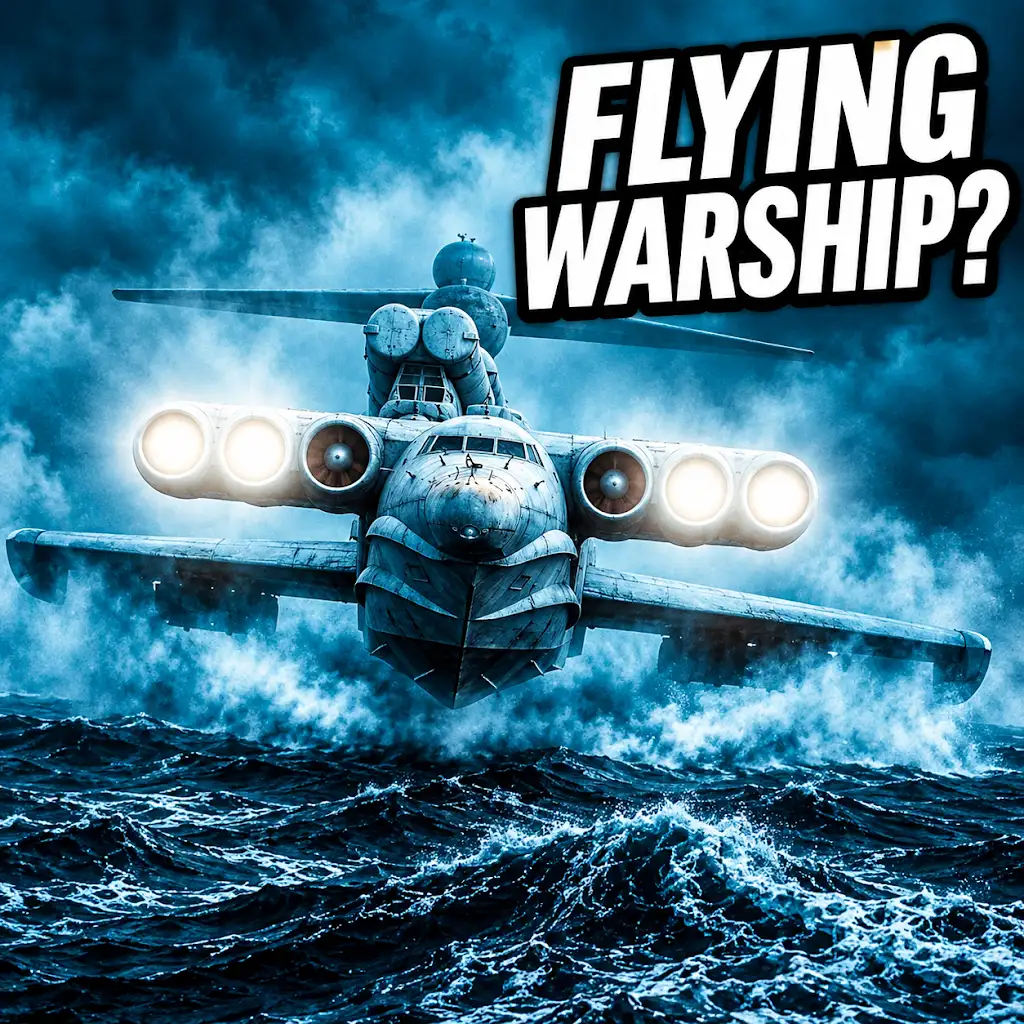
The Soviet Warship That Learned to Fly
FAQs
What types of weapons were deployed by the Soviet Union in the Caspian Sea?
The Soviet Union deployed a variety of weapons in the Caspian Sea, including missile boats, submarines, and naval aircraft.
How did the Soviet Union use the Caspian Sea for military purposes?
The Soviet Union used the Caspian Sea as a strategic location to deploy its naval forces, conduct military exercises, and project power in the region.
Were there any specific incidents or conflicts involving Soviet weapons in the Caspian Sea?
One notable incident was the Caspian Sea Monster, a massive Soviet ekranoplan aircraft that crashed during a test flight in the Caspian Sea in 1980.
Did the Soviet Union have any naval bases or installations along the Caspian Sea coast?
Yes, the Soviet Union had several naval bases and installations along the Caspian Sea coast, including in Azerbaijan, Kazakhstan, and Turkmenistan.
How did the presence of Soviet weapons in the Caspian Sea impact regional security during the Cold War?
The presence of Soviet weapons in the Caspian Sea contributed to tensions in the region and played a role in the broader geopolitical dynamics of the Cold War.