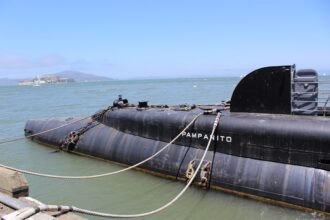
The Cold War was a period defined by ideological struggle, proxy conflicts, and an ever-present nuclear shadow. Beneath the waves, however, a silent, relentless contest played out, largely unseen and unheard by the world above. Soviet submarine operations during this era were a cornerstone of their military strategy, a shadowy deterrent and a potent offensive capability that constantly challenged Western naval dominance. These “silent hunters,” as they were often dubbed, represented a formidable and often terrifying element of the superpower rivalry, their presence a constant, gnawing anxiety for NATO navies.
The genesis of the Soviet submarine force lay in the ashes of World War II. While the German U-boat arm had inflicted devastating losses on Allied shipping, the Soviet Union’s own submarine arm, though significant, was outmatched and technologically inferior. The post-war period, however, saw a rapid and ambitious expansion of the Soviet navy, with a particular emphasis on submarines. Driven by a desire to counter the American carrier battle groups, to interdict Western supply lines, and ultimately, to deliver a nuclear first strike, Soviet shipbuilding yards churned out submarines at an unprecedented rate. This build-up was not merely quantitative; it was a qualitative leap as well, with the Soviets quickly embracing new technologies and designs, often through espionage and reverse-engineering, to close the gap with their Western counterparts. The sheer scale of this submarine fleet, its stealth capabilities, and its strategic deployment were to become defining features of the Cold War naval balance.
The Architect of the Deep: Soviet Submarine Design and Technology
The Soviet Union’s commitment to its submarine force was reflected in the relentless pace of innovation and the sheer diversity of its submarine classes. From the rudimentary diesel-electric boats of the immediate post-war era to the sophisticated nuclear-powered behemoths of later decades, Soviet designers consistently pushed the boundaries of underwater warfare. This evolution was not always a smooth or technologically superior path; often, Soviet submarines represented a different philosophy, prioritizing robustness, firepower, and sheer numbers over some of the more nuanced features found in Western designs. Nevertheless, the effectiveness of these vessels, particularly in terms of their offensive capabilities and their ability to operate in challenging environments, cannot be overstated.
From Diesel Dreams to Nuclear Nightmares
The initial Soviet submarine fleet inherited a legacy of World War II designs, primarily diesel-electric models. These boats, while capable of limited offensive actions and reconnaissance, were plagued by their reliance on air for diesel engines and the noisy, detectable nature of their propulsion systems when surfaced or snorkelling. However, even these early boats demonstrated a commitment to expansion. The M-class “Malyutka” submarines, for instance, were small, inexpensive, and produced in large numbers, serving as a training ground and a defensive asset.
The true revolution in Soviet submarine design began with the acquisition and adaptation of German technology following World War II, most notably the advanced Walter turbine technology which hinted at air-independent propulsion (AIP) capabilities. This led to the development of the Whiskey-class submarines, which, while still diesel-electric, represented a significant improvement in performance and endurance. The Soviets continued to refine these designs, producing numerous variants that served for decades.
The quantum leap, however, came with the advent of nuclear power. The Soviets were acutely aware of the limitations of diesel-electric propulsion and the strategic advantage nuclear power offered. Their first nuclear-powered ballistic missile submarine (SSBN), the Project 667A “Yankee” class, entered service in the late 1960s. These submarines, armed with ballistic missiles, were designed to patrol the vast oceans and act as a retaliatory nuclear strike force. The development of the Yankee class marked a significant shift in the global strategic landscape, introducing the concept of “boomers” that could remain submerged for extended periods, making them incredibly difficult to track and target.
Subsequent generations of Soviet SSBNs, such as the Delta classes (Delta I through IV), represented continuous improvements in missile range, stealth, and endurance. These boats were designed to operate at greater distances from Soviet shores, enhancing their survivability and the effectiveness of their deterrent role. Alongside these strategic submarines, the Soviets also developed a formidable fleet of nuclear-powered attack submarines (SSNs) and cruise missile submarines (SSGNs). The Victor classes, for example, were highly capable hunter-killers, designed to track and destroy Western SSNs and surface warships. The Charlie and Echo classes, on the other hand, were optimized for launching anti-ship cruise missiles, posing a direct threat to NATO carrier groups and convoys.
The Pursuit of Stealth and Silence
A critical element of Soviet submarine development, particularly in the latter half of the Cold War, was the relentless pursuit of stealth. Recognizing that their acoustic signature was often inferior to Western submarines, Soviet designers focused on reducing noise generated by propulsion systems, hull vibrations, and other operational sounds. This involved significant investment in sound-dampening materials, advanced hull coatings, and innovative propeller designs. The introduction of pump-jet propulsors on some later classes, such as the Akula-class SSNs, was a significant step in reducing the characteristic “cavitation” noise associated with traditional propellers.
The Alfa-class SSNs, while often lauded for their incredible speed, were also a testament to Soviet material science. Constructed from titanium alloys, they were lighter and stronger than steel-hulled submarines, allowing for deeper operational depths and the use of smaller, more efficient machinery. While facing significant engineering challenges, the Alfa class represented a bold and ambitious approach to submarine design, aiming for a combination of speed, depth, and reduced acoustic signature.
The ultimate expression of Soviet stealth and offensive capability, however, was perhaps the Typhon class (Project 941 Akula). These colossal SSBNs, the largest submarines ever built, were designed to carry an immense payload of intercontinental ballistic missiles. Despite their immense size, Soviet engineers incorporated significant advancements in quieting technology, making them surprisingly stealthy for their displacement. The Typhon class represented the apex of the Soviet SSBN program, a silent, submerged deterrent capable of inflicting catastrophic damage.
For those interested in the intricate history of Soviet submarines during the Cold War, a fascinating article can be found on In The War Room, which delves into the strategic significance of these underwater vessels and their impact on naval warfare. The article provides an in-depth analysis of key missions, technological advancements, and the geopolitical tensions that defined this era. To explore this topic further, you can read the article at In The War Room.
The Silent Stalk: Soviet Submarine Tactics and Doctrine
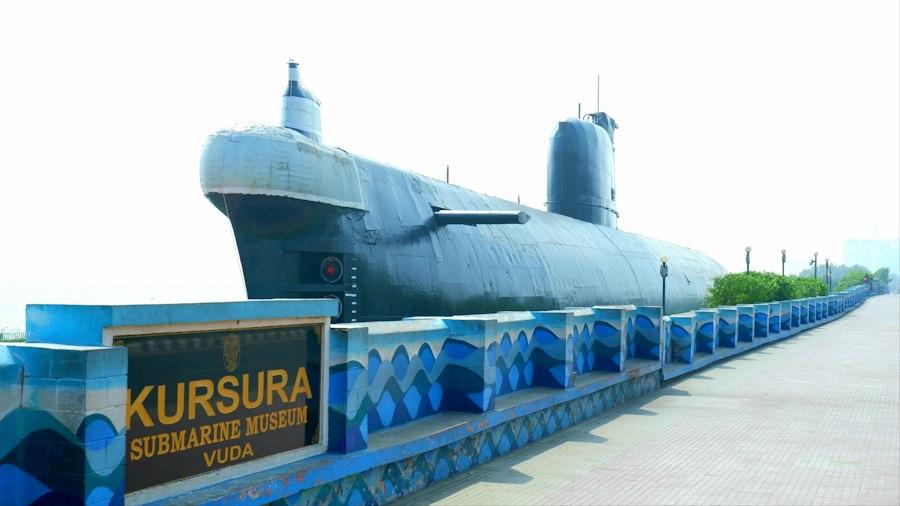
The formidable hardware produced by Soviet shipyards was only effective if wielded with a coherent doctrine and practiced with sophisticated tactics. Soviet submarine operations during the Cold War were characterized by a pragmatic and often aggressive approach, driven by the overarching strategic objectives of the Soviet Union. This doctrine emphasized the importance of intelligence gathering, the potential for offensive action, and the necessity of operating in an environment where they were often outmatched in terms of sonar technology and operational experience.
Eyes and Ears of the Deep: Intelligence and Reconnaissance Missions
One of the primary roles of Soviet submarines was intelligence gathering. Operating in the shadows, these vessels were invaluable for observing Western naval movements, monitoring communications, and gathering electronic intelligence (ELINT). Soviet SSNs and even some SSBNs were tasked with covertly shadowing NATO carrier battle groups, missile submarines, and amphibious forces. This constant surveillance provided the Soviet command with crucial information about Western capabilities, intentions, and force dispositions.
These intelligence missions were often incredibly dangerous, requiring submarines to operate in close proximity to sophisticated sonar arrays and hunter-killer submarines. Success relied on a combination of superior seamanship, a deep understanding of acoustic propagation, and the deployment of highly trained crews. The ability to evade detection, to remain submerged for extended periods, and to operate in areas with heavy Western naval presence were hallmarks of Soviet intelligence operations. The information gleaned from these missions was vital for informing Soviet military planning, from tactical decisions in potential conflicts to long-term strategic assessments.
The Hunter and the Hunted: Anti-Submarine Warfare and Naval Blockade
Soviet submarine doctrine also placed a significant emphasis on offensive operations against NATO naval forces. Their attack submarines were specifically designed and trained to hunt and destroy Western submarines, particularly SSBNs. The goal was not only to eliminate a strategic threat but also to disrupt NATO’s ability to project power and respond to a Soviet offensive. This involved intricate cat-and-mouse games, with Soviet SSNs attempting to track and engage American and British SSNs, often in the challenging acoustic environments of the North Atlantic.
Beyond the direct hunt for enemy submarines, Soviet doctrine also envisioned the use of submarines for naval blockade and interdiction of Western shipping. In the event of a conflict, Soviet submarines, particularly their cruise missile submarines, were intended to deny the Atlantic sea lanes to NATO, cutting off vital supply lines to Europe. This strategy aimed to cripple the Western war effort by isolating its forces and preventing reinforcements and resupply. The sheer volume of Soviet submarine production ensured that even if many were lost, a significant threat to Western maritime commerce would persist. This constant threat forced NATO navies to dedicate substantial resources to ASW (Anti-Submarine Warfare), diverting assets from other critical tasks.
The Nuclear Deterrent: SSBN Patrols and Strategic Missions
Perhaps the most critical role of Soviet submarines, and indeed the justification for the immense investment in the submarine fleet, was its contribution to the nuclear deterrent. Soviet SSBNs, equipped with nuclear-armed ballistic missiles, formed the backbone of their strategic nuclear triad. These submarines were designed to survive a first strike and retaliate with devastating force, thereby deterring a nuclear attack on the Soviet Union.
SSBN patrols were conducted in carefully designated areas, often far from Soviet shores, to maximize survivability. The crews of these submarines operated under immense pressure, tasked with maintaining a constant state of readiness and adhering to strict operational protocols. The constant presence of these submerged nuclear deterrents cast a long shadow over the Cold War, shaping strategic calculations and fueling the arms race. The “boomer” patrols were a silent, ever-present reminder of the catastrophic potential that lay beneath the waves, a key element in the delicate balance of terror.
The Shadow War: Encounters and Incidents Beneath the Waves
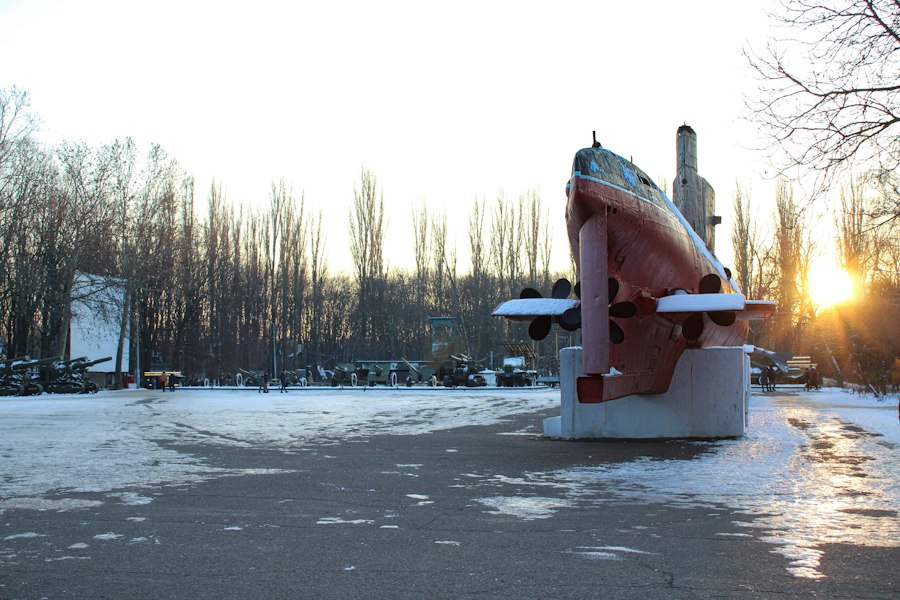
The Cold War was not fought with open declarations of war between the superpowers, but rather through a series of proxy conflicts, espionage, and carefully orchestrated confrontations. The maritime domain, and particularly the underwater realm, was a stage for numerous tense encounters and near-misses involving Soviet and NATO submarines. These incidents, often shrouded in secrecy, highlight the constant risk and the high stakes involved in the silent war beneath the waves.
The Close Call: Near Collisions and Evasive Maneuvers
Throughout the Cold War, there were countless documented and anecdotal reports of Soviet and NATO submarines encountering each other, sometimes in remarkably close proximity. These encounters could arise from intelligence-gathering missions, ASW exercises, or simply by chance in the vastness of the ocean. The primary objective for both sides was to avoid detection and to maintain the advantage, but the realities of operating complex machinery in a three-dimensional environment meant that close calls were inevitable.
Numerous incidents involved submarines being detected by the passive sonar of another vessel and engaging in extended periods of pursuit and evasion. These “silent chases” could last for days, with each submarine attempting to outwit the other. The skill of the commanding officers and the training of the crews were paramount in these situations, as a single miscalculation could lead to a collision or the loss of a valuable asset. The psychological pressure on the crews during these prolonged encounters was immense, confined in a metal tube, knowing that a hostile force was lurking nearby.
Accidental Encounters and Diplomatic Fallout
Beyond planned encounters, there were also instances of accidental collisions. While rare, the sheer number of submarines operating in contested waters increased the probability. One of the most well-known incidents occurred in 1970 when the Soviet K-108 (a November-class SSN) and the USS Trepang (a submarine of the Barb-class) collided in the Sea of Okhotsk. Both submarines sustained damage, but thankfully, neither was lost. Such incidents, though usually resolved without escalation, could have significant diplomatic ramifications, especially if they occurred in sensitive areas or involved loss of life.
The Soviets were often more reticent to acknowledge such incidents publicly, while the US would sometimes declassify information about encounters to signal their awareness and capabilities. These veiled exchanges served as a subtle form of communication and deterrence, reminding the other side of the constant presence and the potential consequences of aggression. The “line in the sea” was constantly being tested, with each encounter adding another layer to the complex web of Cold War naval diplomacy.
The ‘Broken Arrow’ and the Silent Loss
Perhaps the most chilling aspect of Soviet submarine operations was the risk of catastrophic accidents. While the focus was often on engaging the enemy, the inherent dangers of operating nuclear-powered vessels, particularly in extreme conditions, led to tragic losses. The sinking of Soviet submarines, such as the K-129 in 1968 and the K-141 Kursk in 2000 (though the latter occurred after the Cold War, its origins lie in the Soviet submarine design and operational ethos), represents the ultimate cost of the silent war.
The loss of the K-129, a diesel-electric ballistic missile submarine, remains a particularly poignant example. It sank in the Pacific Ocean with all hands, and the cause of the disaster is still debated. The US Navy even attempted a highly classified recovery mission (Project Azorian) to salvage parts of the submarine, highlighting the intelligence value placed on these vessels. These lost submarines and their crews represent the forgotten casualties of the Cold War, silent testimonies to the risks inherent in this clandestine struggle.
The Global Reach: Soviet Submarines in International Waters
The Soviet submarine force was not confined to its territorial waters or the immediate approaches to the Soviet Union. Their operational doctrine emphasized projecting power globally, challenging Western dominance in key maritime regions, and maintaining a persistent presence in strategic oceans. This global reach was a testament to the Soviet Union’s ambition and its determination to compete with the United States on a worldwide scale.
Patrolling the Atlantic and the Mediterranean Lifelines
The North Atlantic was arguably the most critical theatre for Soviet submarine operations. This vast expanse of ocean was the primary conduit for supplies and reinforcements between North America and Europe. Soviet submarines, both SSNs and SSBNs, were tasked with disrupting this flow, posing a constant threat to NATO convoys and naval forces. The Soviets established a sophisticated network of submarine bases and operational areas, allowing them to maintain a significant presence in these vital waters.
Similarly, the Mediterranean Sea, with its strategic chokepoints like the Strait of Gibraltar and the Suez Canal, was another key area of Soviet submarine activity. Soviet submarines operated alongside their surface fleet in this region, projecting Soviet influence and challenging the dominance of the US Sixth Fleet. Their presence in the Mediterranean was a constant reminder of the geopolitical tensions and the potential for conflict in this strategically vital area.
Operations in the Pacific and the Indian Ocean
Beyond the Atlantic, Soviet submarines also extended their reach into the Pacific and Indian Oceans. In the Pacific, they operated in areas crucial to US power projection, including waters near Japan, the Philippines, and the west coast of North America. The goal was to monitor US naval activities, gather intelligence, and be in a position to threaten US naval assets.
The Indian Ocean, with its vital oil routes and strategic importance, also saw Soviet submarine deployments. While perhaps less intense than in the Atlantic, the presence of Soviet submarines served to counter Western naval influence and to demonstrate Soviet global reach. These operations, often conducted far from Soviet home ports, required extensive logistical support and highly skilled crews capable of operating in diverse and challenging environments.
The Arctic Frontier: A Strategic Submerged Sanctuary
The Arctic Ocean presented a unique and strategically important environment for Soviet submarine operations. Its icy waters and vast, relatively unmonitored expanses offered a degree of natural stealth and a potential sanctuary for submarines. Soviet submarines, particularly SSBNs, utilized the Arctic’s sub-ice capabilities to evade detection and to launch missiles from relatively secure positions.
The development of specialized Arctic-capable submarines, designed to operate beneath the ice cap, was a significant Soviet achievement. These operations were technically demanding, requiring advanced navigation and operational skills. The Arctic also served as a crucial transit route for submarines moving between the Atlantic and Pacific oceans, further enhancing the strategic flexibility of the Soviet submarine force. The icy depths of the Arctic became another silent battleground in the Cold War.
The history of Soviet submarines during the Cold War is a fascinating topic that reveals much about the tensions of that era. For those interested in exploring this subject further, a related article can provide deeper insights into the technological advancements and strategic implications of these underwater vessels. You can read more about this intriguing aspect of military history in the article available at this link. Understanding the role of submarines not only sheds light on naval warfare but also on the broader geopolitical landscape of the time.
The Legacy of the Silent Hunters: Enduring Impact and Lessons Learned
| Metric | Details |
|---|---|
| Number of Submarines Built | Over 600 submarines constructed between 1945 and 1991 |
| Types of Submarines | Diesel-electric, Nuclear-powered attack (SSN), Nuclear-powered ballistic missile (SSBN), and Cruise missile submarines |
| Notable Classes | Whiskey, Foxtrot, November, Victor, Alfa, Typhoon, Delta, Oscar |
| Maximum Operational Depth | Up to 1,000 meters (Alfa class) |
| Top Speed | Up to 41 knots submerged (Alfa class) |
| Strategic Role | Second-strike nuclear deterrence via SSBNs, intelligence gathering, and anti-ship warfare |
| Cold War Incidents | 1968 K-129 sinking, 1981 K-219 missile silo explosion, 1986 K-219 missile silo fire |
| Number of Nuclear Submarines by 1991 | Approximately 60 SSBNs and 50 SSNs |
| Decommissioning | Most submarines retired or scrapped post-1991 following Soviet Union collapse |
The era of Soviet submarine operations during the Cold War left an indelible mark on naval warfare, strategic thinking, and the global balance of power. While the Soviet Union no longer exists, the lessons learned from its submarine program continue to inform naval development and strategic doctrine. The advancements made in submarine technology, operational tactics, and the understanding of underwater warfare have had a lasting impact.
Technological Legacies and Modern Submarine Warfare
The intense competition of the Cold War spurred unprecedented advancements in submarine technology. The Soviet pursuit of stealth, speed, and operational depth, though often achieved through different technological paths than Western navies, pushed the boundaries of what was possible. Technologies developed or refined during this period, such as advanced sonar systems, improved hull materials, noise reduction techniques, and the integration of sophisticated missile systems, continue to be cornerstones of modern submarine warfare.
The Soviet emphasis on robust designs and high-volume production also influenced Western thinking. While Western navies often focused on smaller numbers of highly sophisticated platforms, the sheer scale of the Soviet submarine force forced a re-evaluation of naval power projection and the importance of maintaining a sufficient quantity of capable vessels. The ongoing development of submarine technology today still grapples with the challenges and innovations born from that intense, silent competition.
Strategic Lessons and the Future of Deterrence
The Soviet submarine force fundamentally altered the nature of strategic deterrence. The concept of the nuclear-armed “boomer,” capable of surviving a first strike and retaliating, became a critical element of the global nuclear balance. This reality shaped strategic planning and arms control negotiations for decades. The constant threat of submerged nuclear attack influenced doctrines and deployments, contributing to the precarious stability of the Cold War.
The lessons learned from Soviet submarine operations also highlight the enduring importance of intelligence gathering and persistent surveillance in the maritime domain. The ability of Soviet submarines to shadow, observe, and gather information demonstrated the critical role of underwater reconnaissance in modern warfare. This emphasis on intelligence continues to be a vital component of naval strategy in the post-Cold War era
A Soviet Submarine Hit a U.S. Frigate. Was It the Wrong Ship?
FAQs
1. What was the purpose of Soviet submarines during the Cold War?
Soviet submarines played a crucial role during the Cold War as they were used for intelligence gathering, surveillance, and strategic deterrence against the United States and its allies.
2. How did Soviet submarines contribute to the arms race during the Cold War?
Soviet submarines were equipped with nuclear missiles, which significantly escalated the arms race between the Soviet Union and the United States. This led to a tense nuclear standoff known as Mutually Assured Destruction (MAD).
3. What were some notable incidents involving Soviet submarines during the Cold War?
One of the most famous incidents involving a Soviet submarine was the Cuban Missile Crisis in 1962, when a Soviet submarine nearly launched a nuclear torpedo in response to depth charges from U.S. Navy ships. Another notable incident was the sinking of the K-129 submarine in 1968, which the U.S. attempted to salvage.
4. How did advancements in Soviet submarine technology impact naval warfare during the Cold War?
Soviet submarines were known for their advanced technology, such as quiet propulsion systems and long-range missiles, which posed a significant threat to NATO forces. This forced Western navies to develop new anti-submarine warfare tactics and technologies.
5. What was the significance of the Soviet submarine fleet in the overall military strategy of the Soviet Union?
The Soviet submarine fleet was a key component of the Soviet Union’s military strategy, providing a second-strike capability in the event of a nuclear conflict with the United States. The submarines were tasked with maintaining a constant presence in strategic locations to deter potential adversaries and protect Soviet interests.