Echoes in the Deep: The Submarine’s Shadowy Role in the Cold War
The Cold War, a protracted period of geopolitical tension between the United States and the Soviet Union, was a conflict waged not only on the strategic battlefields and in the halls of diplomacy but also, crucially, in the silent, crushing depths of the world’s oceans. Submarine warfare, a legacy of World War II, underwent a profound transformation during this era, evolving into a central pillar of naval strategy for both superpowers. The silent hunter, once a raider of merchant shipping, became a sophisticated instrument of deterrence, intelligence gathering, and the potential arbiter of global conflict. This era witnessed an unprecedented arms race in submarine technology, leading to vessels that were faster, quieter, and more lethal than anything that had come before. The strategic implications of these underwater behemoths were immense, shaping doctrines of warfare, influencing the balance of power, and leaving an indelible mark on naval history. The following exploration delves into the multifaceted role of submarines during the Cold War, examining their technological evolution, strategic doctrines, operational theaters, and the enduring lessons learned from this shadowy, high-stakes contest.
For those interested in the intricate details of Cold War naval history, particularly regarding submarines, a fascinating article can be found at this link: Cold War Submarines: The Silent Warriors of the Deep. This piece delves into the strategic importance of submarines during the Cold War era, exploring their roles in espionage, deterrence, and the ever-present threat of nuclear conflict beneath the waves. It provides valuable insights into how these underwater vessels shaped naval tactics and international relations during a time of heightened tension.
The Technological Arms Race: From Hunter-Killers to Invisible Deterrents
The conclusion of World War II marked the end of one era of submarine warfare and the dawn of another. While the German U-boats had demonstrated the devastating potential of submarines against Allied shipping, the advent of radar, sonar, and improved anti-submarine warfare (ASW) tactics had begun to blunt their effectiveness. The Cold War, however, presented a new set of challenges and opportunities. Both the United States and the Soviet Union recognized the strategic imperative of developing submarines that could operate with stealth and survivability in increasingly sophisticated ASW environments. This led to a relentless technological arms race, pushing the boundaries of hydrodynamics, propulsion, acoustics, and weapon systems.
The Dawn of Nuclear Propulsion: A Paradigm Shift
Perhaps the most significant technological leap was the development of nuclear propulsion. The U.S. Navy’s USS Nautilus, commissioned in 1954, shattered previous limitations on submerged endurance. Unlike diesel-electric submarines, which were forced to surface or snorkel frequently to recharge their batteries, nuclear submarines could remain submerged for months at a time, limited only by food supplies and crew endurance. This capability fundamentally altered submarine operations, enabling sustained patrols in contested waters, extended deployments far from friendly shores, and a significantly reduced acoustic signature due to the absence of noisy diesel engines. The Soviet Union quickly followed suit, launching its first nuclear-powered submarine, K-3 Leninsky Komsomolets, in 1958. This race to nuclearize their submarine fleets gave both navies unprecedented freedom of action and a terrifying capacity for sustained underwater presence.
Enhancing Stealth and Survivability: The Quest for Silence
Beyond propulsion, the pursuit of stealth became paramount. Soviet submarine designers, particularly at the Rubin Design Bureau, focused on creating hulls that were less reflective of sonar waves. This led to the development of anechoic coatings and hull shapes designed to minimize the submarine’s acoustic signature. While the Americans also invested heavily in quieting their submarines, the Soviets often achieved remarkable levels of silence, particularly with their later-generation diesel-electric submarines, such as the Type 877 Kilo class. These boats, while not nuclear-powered, were exceptionally quiet and proved to be formidable opponents in coastal and shallow-water environments.
On the other side of the technological divide, the U.S. Navy’s Permit and Sturgeon class attack submarines (SSNs) were designed with sophisticated sonar systems and advanced quieting techniques, aiming to detect and track the increasingly silent Soviet submarine fleet. The introduction of specialized acoustic tiles and improved machinery isolation dramatically reduced the noise emanating from these vessels. The arms race extended to weapon systems as well, with the development of longer-range, more accurate torpedoes and, crucially, the deployment of Submarine-Launched Ballistic Missiles (SLBMs) on dedicated ballistic missile submarines (SSBNs).
The Ballistic Missile Submarine: The Ultimate Deterrent
The SSBN represented the apex of submarine development during the Cold War, embodying the concept of a secure second-strike capability. The U.S. Navy’s George Washington class and later Lafayette, James Madison, and Benjamin Franklin classes, carrying Polaris, Poseidon, and later Trident missiles, provided an almost invulnerable deterrent against Soviet aggression. Similarly, the Soviet Union’s R-13, R-29, and D-5 missiles, deployed on their Project 667A Yankee and later Delta classes, served the same strategic purpose. The ability of these submarines to hide in the vastness of the ocean, undetected by enemy forces, meant that even after a devastating first strike, a retaliatory nuclear response could be launched, thus deterring any first strike in the first place. This concept, known as Mutually Assured Destruction (MAD), was heavily reliant on the survivability of the SSBN force.
Strategic Doctrines: The Submarine’s Place in the Nuclear Calculus
The transformative technological advancements in submarine warfare necessitated the development of new strategic doctrines. The nature of the Cold War, characterized by the ever-present threat of nuclear annihilation, placed submarines at the forefront of strategic thinking. Their ability to operate covertly, project power, and provide a secure retaliatory capability made them indispensable tools in the arsenals of both the United States and the Soviet Union.
Deterrence and the Second Strike: The SSBN Imperative
The cornerstone of Cold War nuclear strategy was deterrence, and the SSBN played a pivotal role in this complex equation. The concept of a “secure second-strike capability” meant that a nation could absorb a first nuclear strike and still possess the means to retaliate effectively. SSBNs, by their very nature, were the ideal platform for this. Their submerged, undetectable status meant that even a surprise attack on land-based missile silos and bomber bases would likely leave a significant portion of the SSBN fleet unharmed. This inherent survivability ensured that any aggressor would face devastating retaliation, thus acting as a powerful deterrent against initiating a nuclear conflict.
The strategic doctrine evolved to include sophisticated command and control systems to ensure the survivability and operational readiness of SSBNs. Communication with submerged submarines, particularly the SSBNs, was a constant challenge, leading to the development of extremely low-frequency (ELF) radio communication systems and the controversial use of radio buoys. The doctrine also emphasized maintaining a certain number of SSBNs on patrol at all times, ensuring a constant threat and readiness to respond.
Cold War naval history is a fascinating subject, particularly when it comes to the role of submarines in the geopolitical tensions of the era. An insightful article that delves into this topic is available on In The War Room, which explores the strategic significance of submarine warfare during the Cold War. You can read more about it in this detailed analysis that highlights how submarines were not only tools of military power but also symbols of technological advancement and espionage.
Hunter-Killer Operations: Denying the Seas and Protecting Sea Lanes
Beyond their strategic nuclear role, attack submarines (SSNs and diesel-electric submarines) were crucial for tactical and operational objectives. The concept of “hunter-killer” operations became a central tenet of naval strategy. For the U.S. Navy, the primary objective was to detect, track, and destroy Soviet submarines that posed a threat to its carrier battle groups, amphibious forces, and vital sea lanes of communication. This involved extensive ASW operations, utilizing advanced sonar, maritime patrol aircraft, and ASW helicopters. The goal was to create a safe operating environment for their own naval assets and to deny the Soviets the ability to interfere with Allied shipping and troop movements.
The Soviet Union, in turn, viewed its submarines as a potent offensive weapon. Their submarine fleet was designed to disrupt NATO’s maritime supply lines, particularly the transatlantic convoys, and to attack high-value targets such as aircraft carriers. Soviet submarine doctrine emphasized ambush tactics, utilizing their stealth capabilities to get close to their targets before launching their attack. This created a dynamic cat-and-mouse game in the oceans, with ASW forces constantly working to counter the offensive capabilities of the submarine threat. The “bastion” concept, where Soviet submarines would operate in defended, relatively secure areas, was a key element of their defensive strategy, while also allowing for offensive patrols.
Intelligence Gathering and Reconnaissance: The Silent Observers
Submarines also served as invaluable platforms for intelligence gathering and reconnaissance. Their ability to operate undetected in close proximity to enemy naval bases, missile ranges, and strategic installations made them ideal for electronic intelligence (ELINT) collection, photographic reconnaissance, and acoustic monitoring. U.S. Navy SSNs, often referred to as “Silent Service” for their covert operations, conducted numerous missions to gather intelligence on Soviet naval activities, missile tests, and submarine deployments. These missions, often highly dangerous and requiring immense skill and daring, provided critical insights into the capabilities and intentions of the adversary. Similarly, Soviet submarines engaged in intelligence gathering, monitoring NATO naval exercises and deployments. The famous incident involving the USS Pueblo in 1968, a U.S. Navy technical research ship, highlights the importance and risks associated with intelligence gathering in contested waters, though the Pueblo was not a submarine, the underlying imperative was the same.
The Operational Theaters: Oceans as Strategic Battlegrounds
The Cold War chessboard was vast, and the world’s oceans served as a critical, often unseen, battleground. Submarines, with their global reach and stealth capabilities, were deployed to a multitude of theaters, each presenting unique challenges and strategic imperatives. From the frigid Arctic waters to the depths of the Atlantic and Pacific, these silent hunters prowled, their missions shaping the course of the conflict and influencing global power dynamics.
The North Atlantic: The Lifeline of NATO
The North Atlantic Ocean was arguably the most strategically important theater for submarine warfare during the Cold War. It represented the vital lifeline connecting North America to Western Europe, carrying immense quantities of military supplies, personnel, and economic goods. For the Soviet Union, disrupting these transatlantic supply lines was a primary objective, and their submarine fleet, particularly the Northern Fleet, was heavily concentrated in this region. Soviet SSNs and diesel-electric submarines posed a constant threat to NATO shipping.
The U.S. Navy, in conjunction with its NATO allies, dedicated significant ASW resources to protecting these sea lanes. Carrier battle groups, destroyer squadrons, and specialized ASW aircraft worked in concert to detect, track, and neutralize the Soviet submarine threat. The Greenland-Iceland-UK (GIUK) gap, a narrow passage between Greenland, Iceland, and the United Kingdom, became a crucial choke point where NATO forces attempted to intercept Soviet submarines as
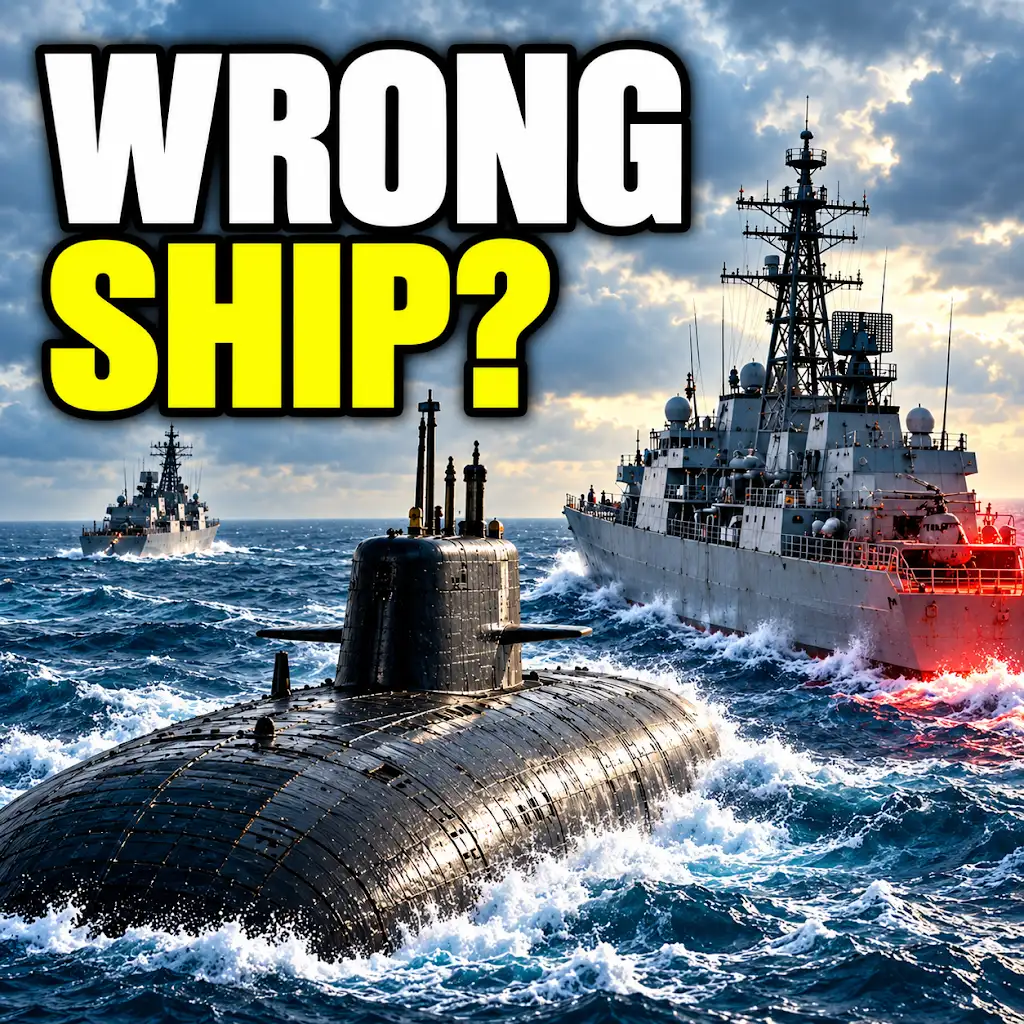
A Soviet Submarine Hit a U.S. Frigate. Was It the Wrong Ship?
FAQs
1. What role did submarines play during the Cold War?
Submarines played a crucial role during the Cold War as they were used for intelligence gathering, deterrence, and strategic defense. They were able to operate covertly and were a key component of both the United States and Soviet Union’s nuclear arsenals.
2. How did advancements in submarine technology impact Cold War naval strategies?
Advancements in submarine technology, such as the development of nuclear-powered submarines and ballistic missile submarines, significantly impacted Cold War naval strategies. These advancements allowed for longer underwater endurance, increased speed, and the ability to launch nuclear missiles from undetectable positions.
3. Were there any notable submarine incidents during the Cold War?
One of the most notable submarine incidents during the Cold War was the Cuban Missile Crisis in 1962, where a Soviet submarine nearly launched a nuclear torpedo in response to depth charges from U.S. Navy ships. Another incident was the collision between the USS Nautilus and a Soviet submarine in 1986.
4. How did the concept of mutually assured destruction (MAD) relate to submarine warfare during the Cold War?
The concept of mutually assured destruction (MAD) was a key factor in submarine warfare during the Cold War. Both the United States and Soviet Union relied on their submarine-based nuclear deterrents to ensure that any nuclear attack would result in the total annihilation of both countries, thus deterring aggression.
5. What was the significance of the 1968 nuclear submarine accident involving the USS Scorpion?
The 1968 nuclear submarine accident involving the USS Scorpion was significant as it resulted in the loss of the submarine and all 99 crew members. The cause of the accident remains unknown, leading to speculation and conspiracy theories surrounding the incident.