The genesis of Allied victory in World War II is a complex tapestry woven with threads of strategy, diplomacy, technological innovation, and immense human sacrifice. While countless factors contributed to the eventual triumph over the Axis powers, the pivotal role of the Supreme Headquarters, Allied Expeditionary Force (SHAEF) in the final European theater cannot be overstated. From its inception to its ultimate dissolution, SHAEF served as the crucial nexus, the beating heart that coordinated the disparate military might of the Allied nations into a cohesive and ultimately victorious force.
The concept of a unified Allied command structure was not an immediate outcome of the war’s outset. Initially, Allied operations were characterized by a degree of compartmentalization, with individual nations largely directing their own contributions. However, as the scale and complexity of the conflict grew, and particularly with the looming prospect of a cross-channel invasion of Europe, the need for a singular, overarching command became acutely apparent.
The Precursors to SHAEF: Early Coordination Efforts
Before SHAEF formally existed, various committees and joint staffs grappled with the challenges of inter-Allied cooperation. The Combined Chiefs of Staff (CCS), comprising senior representatives from the American and British military leadership, played a crucial role in strategic planning and resource allocation. However, the CCS was primarily a strategic body, not an operational command responsible for the day-to-day execution of military operations on the ground, in the air, or at sea. Furthermore, the contributions of other Allied nations, such as Canada, France, and Poland, while significant, often required separate coordination channels.
The Atlantic Charter and the Grand Alliance: Laying the Diplomatic Foundation
The diplomatic agreements forged between the Allied leaders, most notably the Atlantic Charter signed by Roosevelt and Churchill in August 1941, provided the ideological and political framework for the Grand Alliance. This charter articulated shared war aims and a vision for a post-war world, fostering a sense of common purpose that was essential for military cooperation. The establishment of the United Nations later in the war further solidified this collaborative spirit, but the military execution demanded a more direct and integrated command.
The Decision for a Supreme Allied Commander: The Need for a Single Voice
The sheer logistical and operational challenges of launching and sustaining a massive invasion of Fortress Europe necessitated a clear chain of command. The concept of a single Supreme Allied Commander was debated, with both the United States and Great Britain vying for the position. Ultimately, a compromise was reached, recognizing the immense responsibility and the need for a leader with the trust and authority to command forces from multiple nations. The appointment of General Dwight D. Eisenhower as Supreme Commander, Allied Expeditionary Force (SCAEF) in December 1943 was a watershed moment.
The Supreme Headquarters Allied Expeditionary Force (SHAEF) played a crucial role in coordinating the Allied forces during World War II, particularly during the D-Day invasion and the subsequent liberation of Western Europe. For a deeper understanding of the strategies and operations employed by SHAEF, you can read a related article that explores the complexities of this command structure and its impact on the war effort. Check it out here: SHAEF in World War II.
Eisenhower’s Leadership: The Art of Coalition Command
General Dwight D. Eisenhower’s appointment as SCAEF was a masterstroke of Allied leadership. His background as a skillful politician and diplomat, combined with his military acumen, made him uniquely suited to navigate the complexities of managing a vast coalition of nations with differing interests, priorities, and military doctrines. His ability to foster trust, mediate disputes, and maintain morale was instrumental in keeping the Allied war machine functioning smoothly.
Cultivating Trust and Understanding: Bridging National Differences
Eisenhower’s approach to command was characterized by his emphasis on diplomacy and consensus-building. He understood that success depended not only on military directives but also on fostering a genuine sense of partnership among the Allied forces. He spent considerable time engaging with commanders and troops from various nations, learning their customs, understanding their perspectives, and building personal relationships. This proactive approach to inter-Allied relations was crucial in preventing nationalist rivalries from undermining operational objectives.
Strategic Vision and Operational Planning: The Road to Normandy and Beyond
Under Eisenhower’s command, SHAEF orchestrated some of the most audacious and complex military operations of the war. The planning for Operation Overlord, the D-Day landings, was a monumental undertaking that involved coordinating air, sea, and land forces on an unprecedented scale. SHAEF’s detailed planning, including deception operations and meticulous logistical preparations, was critical to the success of the landings and the subsequent Allied advance across Europe.
Maintaining Morale and Discipline: The Human Element of Warfare
Warfare is not just about strategy and tactics; it is also about the human element. Eisenhower was deeply concerned with the well-being of the soldiers under his command. He made a concerted effort to visit troops, address their concerns, and ensure that they were well-supplied and motivated. His famous order of the day on June 6, 1944, before the D-Day landings, is a testament to his ability to inspire courage and determination in the face of extreme peril.
SHAEF’s Operational Imperatives: From Planning to Execution

SHAEF’s responsibilities extended far beyond strategic directives. It was the operational nerve center, responsible for translating grand strategy into concrete plans and ensuring their flawless execution on the battlefield. This involved intricate logistical planning, coordination of vast resources, and the management of highly complex military campaigns.
Operation Overlord: The D-Day Gambit
The planning and execution of Operation Overlord, the Allied invasion of Normandy, stands as SHAEF’s crowning achievement. The sheer scale of the operation, involving over 150,000 troops on D-Day alone, demanded unparalleled coordination. SHAEF meticulously orchestrated the involvement of thousands of ships, aircraft, and ground units from multiple Allied nations. The success of the landings was not just a testament to bravery but also to the impeccable planning and logistical prowess of SHAEF.
The Amphibious Assault: Mastering the Seas and Shores
SHAEF’s role in the amphibious assault was multifaceted. It involved selecting the optimal landing beaches, coordinating naval bombardments, managing the deployment of landing craft, and ensuring the rapid establishment of beachheads. The intricate choreography of the naval and air support, synchronized with the timing of the ground assaults, was a testament to the detailed planning undertaken by SHAEF’s staff.
Airborne Operations: Securing the Flanks
Integral to the success of Overlord were the airborne operations designed to secure key bridges and strategic points behind enemy lines. SHAEF directed the deployment of British and American airborne divisions, whose daring missions played a vital role in disrupting German defenses and facilitating the advance of the seaborne forces.
The Liberation of France and the Push to Germany: Sustaining the Momentum
Following the success of D-Day, SHAEF was responsible for directing the Allied advance through France and towards the German border. This involved complex logistical challenges, rapid troop movements, and the coordination of multiple army groups. SHAEF’s ability to adapt to changing battlefield conditions and to exploit German weaknesses was crucial in maintaining the momentum of the Allied offensive.
The Battle of the Bulge: A Test of Resilience
The Ardennes Offensive, or the Battle of the Bulge, presented SHAEF with one of its greatest tests. The surprise German offensive threatened to split Allied forces and reverse the gains made since D-Day. Eisenhower’s decisive leadership, his ability to rally dispersed forces, and SHAEF’s rapid redeployment of reserves were critical in repelling the German thrust and reaffirming Allied resolve.
The Rhine Crossing: Opening the Door to the Reich
The crossing of the Rhine River in March 1945 was a pivotal moment in the final campaign of the war in Europe. SHAEF masterminded this complex operation, which involved overcoming formidable German defenses and establishing a crucial bridgehead on the east bank of the river. The success of the Rhine crossing paved the way for the final Allied advance into the heart of Germany.
The Intelligence and Logistics Backbone: SHAEF’s Unsung Heroes

The brilliance of SHAEF’s strategic and operational planning would have been for naught without a robust and efficient intelligence gathering and logistical support system. These were the unsung heroes that enabled the Allied war machine to function effectively, ensuring that troops had the supplies, information, and support they needed to succeed.
Intelligence Gathering and Dissemination: Knowing the Enemy
SHAEF placed immense importance on intelligence. Its intelligence division worked tirelessly to gather information on enemy troop movements, strengths, and intentions. This intelligence was crucial for planning operations, identifying vulnerabilities, and anticipating enemy actions. Code-breaking efforts, such as Ultra, provided invaluable insights that directly informed SHAEF’s decision-making.
Code-breaking and Cryptanalysis: Unlocking Enemy Secrets
The work of Allied code-breakers, particularly the decryption of German Enigma and Lorenz cipher machines, provided SHAEF with a critical advantage. The intelligence derived from these efforts allowed SHAEF to anticipate German offensives, plan counter-offensives, and understand the enemy’s logistical capabilities. This intelligence was a game-changer in many critical battles.
Reconnaissance and Surveillance: Eyes in the Sky and on the Ground
SHAEF employed a wide array of reconnaissance and surveillance assets, including aerial photography, patrols, and agent networks, to gather real-time information from the front lines. This constant stream of data allowed SHAEF to maintain situational awareness and adapt its plans accordingly.
Logistical Prowess: The Lifeline of the Allied War Effort
The sheer scale of SHAEF’s operations demanded an equally massive logistical effort. From supplying ammunition and fuel to transporting troops and equipment, SHAEF oversaw the complex machinery that kept the Allied armies moving forward. The Red Ball Express, a rapid convoy system, was a remarkable example of SHAEF’s logistical ingenuity.
Supply Chain Management: Fueling the Advance
SHAEF managed an intricate global supply chain, ensuring that millions of soldiers received the necessary provisions. This involved coordinating the production, transportation, and distribution of everything from food and medical supplies to tanks and aircraft. The efficient functioning of this supply chain was fundamental to sustaining prolonged campaigns.
Transportation and Infrastructure: Moving Men and Material
The rapid movement of troops and equipment was a constant challenge. SHAEF oversaw the development and utilization of a vast transportation network, including railways, trucks, and landing craft, to facilitate Allied movements. The repair and maintenance of infrastructure, often devastated by war, was also a crucial logistical task.
The Supreme Headquarters Allied Expeditionary Force (SHAEF) played a crucial role in coordinating the Allied forces during World War II, and understanding its impact can be further explored in a related article. For a deeper insight into the strategies and operations that shaped the course of the war, you can read more about it in this informative piece on the subject. The article provides a comprehensive overview of SHAEF’s formation and its significance in the Allied victory. To learn more, visit this link.
The Dissolution of SHAEF and its Lasting Legacy
| Metric | Details |
|---|---|
| Full Name | Supreme Headquarters Allied Expeditionary Force (SHAEF) |
| Established | February 1944 |
| Commander | General Dwight D. Eisenhower |
| Primary Role | Command of Allied forces in Northwest Europe |
| Key Operations | Operation Overlord (D-Day), Battle of Normandy, Liberation of Western Europe |
| Headquarters Location | London, England |
| Number of Allied Troops Commanded | Approximately 3 million at peak |
| Disbanded | July 1945 |
As the war in Europe drew to a close, SHAEF’s primary mission was accomplished. However, its role did not end with the unconditional surrender of Germany. The complex tasks of occupation and demobilization still required careful coordination and leadership, underscoring the enduring significance of the structure.
The Occupation of Germany: From War to Peace
Following Germany’s defeat, SHAEF played a crucial role in establishing military government and overseeing the occupation of the defeated nation. This involved disarming German forces, maintaining order, and beginning the process of denazification and rebuilding. SHAEF’s directives provided the framework for the initial stages of post-war Germany.
Demobilization and Repatriation: Bringing Soldiers Home
A significant undertaking for SHAEF was the orderly demobilization of millions of Allied soldiers and their repatriation to their home countries. This complex logistical and administrative task was managed with efficiency, reflecting the organizational capabilities that had been honed throughout the war.
The Enduring Impact of Unified Command: Lessons for the Future
The success of SHAEF in coordinating the Allied war effort in Europe provided invaluable lessons in coalition warfare and international cooperation. The principles of unified command, clear communication, and shared objectives that underpinned SHAEF’s operations continue to influence military and diplomatic strategies to this day. The legacy of SHAEF serves as a powerful reminder of what can be achieved when disparate forces are united under strong leadership and a common purpose, a testament to its indispensable role in securing Allied victory in World War II.
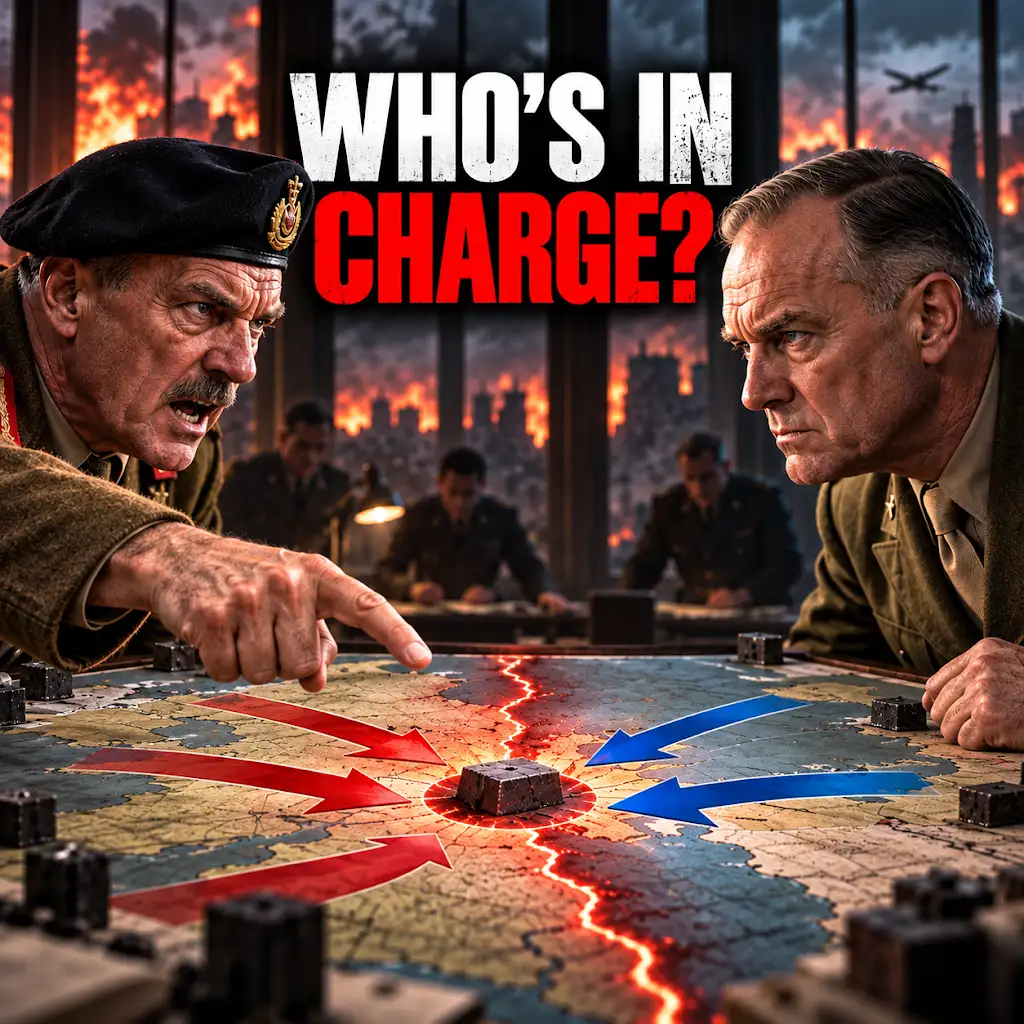
Eisenhower Gave Montgomery 2 U.S. Armies—Then He Wanted More
FAQs
What does SHAEF stand for in World War 2?
SHAEF stands for Supreme Headquarters Allied Expeditionary Force.
Who was the Supreme Commander of SHAEF during World War 2?
General Dwight D. Eisenhower served as the Supreme Commander of SHAEF during World War 2.
What was the role of SHAEF in World War 2?
SHAEF was responsible for planning and executing the Allied forces’ invasion of Normandy on D-Day and the subsequent liberation of Western Europe from Nazi occupation.
When was SHAEF established during World War 2?
SHAEF was established on February 14, 1944, in preparation for the Allied invasion of Normandy.
Where was the headquarters of SHAEF located during World War 2?
The headquarters of SHAEF was located in London, England, with General Eisenhower leading the planning and coordination of Allied forces.