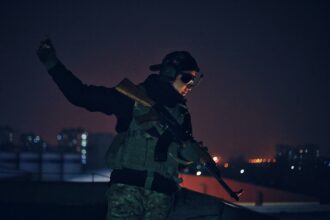
The year 2026 finds the United States Navy’s Sea, Air, and Land (SEAL) teams engaged in a rigorous and evolving series of underwater training exercises. These drills, designed to maintain and enhance operational readiness in a complex and dynamic global landscape, push the boundaries of individual skill, team cohesion, and technological integration. The focus remains on developing proficiency in a spectrum of aquatic environments, from the shallow, littoral zones of contested coastlines to the deep, open ocean, all while integrating emerging threats and countermeasures.
Evolving Operational Parameters
The 2026 underwater training curriculum reflects a strategic adaptation to the shifting geopolitical environment. Commanders are emphasizing scenarios that mimic potential engagements in areas with increasing maritime friction and the proliferation of sophisticated naval and coastal defense systems. The traditional emphasis on covert insertion and extraction remains, but it is now augmented by an increased focus on operating in contested waters where adversaries may possess advanced sonar capabilities, underwater drones, and integrated information warfare systems.
littoral Operations Under Pressure
A significant component of 2026 training involves the meticulous practice of operations within the littorals. These are the areas along coastlines, often characterized by shallow depths, complex underwater terrain, and proximity to population centers. SEAL teams are dedicating substantial time to mastering techniques for navigating these environments with minimal acoustic signature, even when faced with active sonar sweeps and other detection methods.
Mine Countermeasure Integration
The threat of naval mines, both conventional and advanced, is a persistent concern. SEAL teams are undergoing extensive training in identifying, rendering safe, and bypassing various types of underwater mines. This includes utilizing advanced mine-hunting sonar systems, remotely operated vehicles (ROVs) for visual confirmation and manipulation, and specialized explosive ordnance disposal (EOD) technicians integrated directly into SEAL platoons. The objective is to ensure freedom of maneuver for aquatic operations even in heavily mined areas.
Amphibious Assault Reconnaissance
Reconnaissance missions in advance of amphibious assaults constitute another critical area of focus. SEAL units are practicing silent insertion via submersibles or combat diving from submarines, followed by detailed observation and reporting on enemy positions, fortifications, and potential obstacles along the intended landing zones. The emphasis is on gathering actionable intelligence under conditions of extreme stealth.
Asymmetric Threats in Coastal Zones
The training also addresses the growing threat posed by asymmetric actors operating from coastal regions. This includes scenarios involving the deployment of man-portable anti-ship missiles from concealed positions, the use of small, agile surface crafts to harass friendly vessels, and the potential for underwater improvised explosive devices (IEDs) targeting friendly shipping. SEAL teams are refining their tactics for identifying and neutralizing these dispersed and often hard-to-locate threats.
In 2026, the U.S. Navy SEALs have intensified their underwater infiltration drills, showcasing advanced techniques and technologies designed to enhance their operational effectiveness in maritime environments. These drills are critical for preparing SEAL teams for a variety of missions, including counter-terrorism and reconnaissance. For more insights into the evolving tactics and training of elite military units, you can read a related article at In The War Room.
Deep Water Operations and Insertion Methods
While littoral operations are a significant focus, deep water environments remain crucial for certain mission profiles. SEAL teams are continuously refining their capabilities for operating in the open ocean, emphasizing long-duration deployments, extended submerged transit, and undetected insertion to objectives far from shore. The selection and mastery of insertion methods are paramount to mission success.
Submersible Deployment and Recovery
The use of specialized submersibles, ranging from small, single-operator vehicles to larger, multi-crew platforms, forms a core element of deep water training. SEAL teams are practicing efficient deployment and recovery from a variety of naval platforms, including submarines and surface vessels. This involves meticulous choreography and communication to ensure minimal acoustic disturbance and rapid ingress and egress.
Advanced Navigation Techniques
Navigating in the vastness of the deep ocean, often under conditions of poor visibility and without reliable surface references, demands exceptional skill. SEAL teams are incorporating advanced navigation techniques, including inertial navigation systems, Doppler sonar, and correlation sonar, to maintain precise position and course. The training emphasizes redundancy in navigation systems and the ability to operate effectively even in GPS-denied environments.
Long Duration Dive Operations
Extended submerged operations present significant physiological and logistical challenges. SEAL trainees and active operators are undertaking long-duration dive operations, pushing their physiological limits and refining techniques for efficient oxygen consumption, waste management, and crew coordination within submersible confines. These exercises simulate missions that may require days or even weeks of submerged transit.
Covert Submarine Operations
The integration with submarine force remains a cornerstone of SEAL operations. Training exercises include scenarios where SEAL teams are deployed from operational submarines, conducting missions that require the utmost stealth and coordination with the submarine’s own operational tempo. This encompasses silent approach, precise egress, and subsequent recovery, all while minimizing the submarine’s acoustic footprint.
Technological Integration and Innovation
The 2026 training landscape is profoundly influenced by rapid technological advancements. SEAL teams are not only adept at using existing advanced technologies but are also actively involved in the testing and integration of nascent capabilities designed to counter evolving threats and enhance operational effectiveness.
Unmanned Systems in Underwater Operations
The proliferation of unmanned systems offers both new opportunities and challenges. SEAL teams are extensively training with various unmanned underwater vehicles (UUVs) and unmanned surface vehicles (USVs). These can be employed for reconnaissance, mine neutralization, communication relays, and even as decoys.
UUV Deployment and Control
Operators are becoming proficient in the deployment, operation, and data interpretation from a range of UUVs. This includes small, man-portable systems for reconnaissance of immediate areas of interest, as well as larger, more sophisticated vehicles capable of extended survey missions. The focus is on seamless integration of UUV data into the overall tactical picture.
Countering Adversarial UUVs
Conversely, training scenarios now incorporate the detection and neutralization of adversarial UUVs. This involves the development of tactics and technologies for tracking, identifying, and disabling enemy drones operating in operational areas, thus preventing them from conducting surveillance or deploying payloads.
Advanced Underwater Communications
Maintaining secure and effective communication in the underwater domain remains a significant challenge due to the inherent limitations of radio wave propagation. SEAL teams are actively training with advanced underwater communication systems, including acoustic modems and optical communication devices, to establish robust links between operating units and with higher command.
Acoustic Communication Networks
The development and deployment of persistent acoustic communication networks are a key area of development. SEAL teams are practicing establishing and maintaining these networks, which utilize sound waves to transmit data over significant distances underwater. This allows for real-time situational updates and coordination among dispersed units.
Optical Communication for Short-Range Links
For shorter-range, high-bandwidth communication, optical systems are being integrated. These systems utilize directed beams of light, offering greater data rates but requiring line-of-sight. Training focuses on tactical deployment and use of these systems for rapid information transfer between close-proximity assets.
Next-Generation Sonar and Detection Systems
Combating increasingly sophisticated enemy detection capabilities requires a constant evolution of SEAL team’s own sensor technology. Operators are undergoing training with next-generation sonar systems, designed to provide enhanced resolution, reduced false alarm rates, and improved performance in complex acoustic environments.
Passive Sonar Analysis
Emphasis is placed on the advanced analysis of passive sonar data, allowing operators to identify and track subtle acoustic signatures. This includes training in distinguishing between natural sounds and the acoustic emissions of enemy vessels, submersibles, and other underwater threats.
Active Sonar Countermeasures
While passive listening is preferred for stealth, active sonar is sometimes necessary. Training includes understanding the limitations of active sonar and employing countermeasures to minimize their own acoustic detection when using these systems.
Physiological and Psychological Preparedness
Operating in the underwater environment places extreme demands on the physical and mental fortitude of SEAL operators. The 2026 training regimen continues to prioritize comprehensive physiological conditioning and psychological resilience.
Advanced Diving Medicine and Physiology
Beyond basic SCUBA certification, SEAL teams undergo extensive training in advanced diving medicine and physiology. This includes understanding the effects of extreme pressures, decompression sickness, nitrogen narcosis, and the physiological impact of long-duration dives and confined environments. Operators are trained to recognize and address these issues promptly.
Decompression Sickness Management
The prevention and management of decompression sickness are paramount. SEAL teams utilize sophisticated decompression tables and protocols, often tailored to specific operational profiles. Training includes thorough understanding of these protocols and procedures for managing potential decompression incidents.
Hypobaric and Hyperbaric Chamber Training
Regular sessions in hypobaric and hyperbaric chambers simulate extreme atmospheric pressures, providing operators with acclimatization and reinforcing safety procedures for underwater operations at significant depths.
Mental Fortitude and Stress Inoculation
The psychological demands of underwater missions, particularly those involving prolonged isolation, high-stakes environments, and potential for extreme danger, are substantial. Training incorporates techniques for enhancing mental fortitude and inoculating operators against stress.
Simulated High-Stress Scenarios
Exercises are designed to replicate the intense pressure of real-world operations, pushing operators to make critical decisions under duress. This includes simulated equipment failures, unexpected enemy encounters, and communication blackouts to build resilience.
Team Cohesion and Communication Under Duress
The ability of the team to function cohesively and communicate effectively, even when facing extreme stress, is a critical training objective. Drills focus on reinforcing trust, clear communication protocols, and mutual support among team members.
In 2026, the Navy SEALs are set to enhance their underwater infiltration capabilities through advanced training drills designed to improve stealth and efficiency in aquatic environments. These drills will focus on new technologies and tactics that allow for seamless entry into hostile territories. For those interested in learning more about the evolution of military training techniques, a related article provides insights into the latest developments in special operations. You can read it here: related article.
Adaptability to Emerging Threats
The global security landscape is in a constant state of flux, and SEAL training must remain agile to address novel and emerging threats that may arise in the underwater domain. This includes not only technological advancements by adversaries but also evolving tactical approaches.
Cyber Warfare in the Underwater Domain
The integration of cyber warfare tactics into underwater operations is a growing concern. SEAL teams are being trained to operate in environments where adversaries might attempt to disrupt or compromise their communication systems, navigation aids, and even the control of their unmanned systems through cyber means.
Network Security Protocols
Operators are instructed on maintaining robust network security protocols and adhering to strict data handling procedures to prevent unauthorized access to sensitive operational information.
Counter-Cyber Operations
Training scenarios include simulated cyber-attacks on underwater systems, requiring SEAL teams to identify and mitigate these threats, often in real-time, to maintain operational effectiveness.
Environmental Hazards and Contamination
In addition to man-made threats, SEAL teams must be prepared to operate in environments that may be degraded by natural or accidental contamination. This can include areas affected by chemical spills, radiological events, or even biological agents. Training focuses on operating safely and effectively in such compromised environments.
Protective Equipment and Decontamination Procedures
Operators are trained in the use of specialized protective equipment to shield them from environmental hazards. Furthermore, rigorous decontamination procedures are practiced to ensure that operators do not carry contaminants back to friendly bases or undetected into operational areas.
Navigating Contaminated Waters
Exercises involve navigating through contaminated waters, assessing the level of risk, and employing tactics to minimize exposure and fulfill mission objectives without compromising operator safety.
Unconventional Warfare Scenarios
The proliferation of non-state actors and the potential for hybrid warfare necessitate training in unconventional scenarios. This can include operating in areas where adversaries might employ civilian infrastructure for military purposes or utilize civilian populations as shields, demanding a high degree of tactical acumen and ethical consideration.
Operating in Dual-Use Environments
SEAL teams are trained to operate effectively in environments where civilian and military infrastructure are intermingled. This requires careful intelligence gathering to distinguish between legitimate civilian activities and covert military preparations.
Minimizing Collateral Damage
A core tenet of SEAL operations is the minimization of collateral damage. Training emphasizes the development of precise targeting methodologies and the adherence to strict rules of engagement, particularly when operating in humanitarian or densely populated areas.
The comprehensive nature of 2026 underwater training for SEAL teams underscores a commitment to maintaining a decisive edge in an increasingly complex and contested maritime domain. The constant evolution of tactics, technologies, and the unwavering dedication to operator preparedness ensure that these elite units remain capable of fulfilling their critical missions, regardless of the challenges presented by the underwater environment.
FAQs
What are SEAL Team underwater infiltration drills?
SEAL Team underwater infiltration drills are training exercises conducted by the United States Navy SEALs to practice entering and exiting underwater environments, such as during maritime missions or special operations.
What is the purpose of SEAL Team underwater infiltration drills?
The purpose of SEAL Team underwater infiltration drills is to enhance the SEALs’ ability to conduct covert underwater operations, including reconnaissance, sabotage, and direct action missions. These drills also help the SEALs develop the necessary skills and confidence to operate effectively in challenging maritime environments.
What techniques are used in SEAL Team underwater infiltration drills?
SEAL Team underwater infiltration drills may involve the use of various techniques, such as closed-circuit rebreathers, swimmer delivery vehicles (SDVs), and combat swimmer strokes. These techniques enable the SEALs to move stealthily and efficiently through the water while minimizing their presence and maximizing their operational effectiveness.
How often do SEAL Teams conduct underwater infiltration drills?
SEAL Teams regularly conduct underwater infiltration drills as part of their ongoing training regimen. The frequency of these drills may vary based on operational requirements, but they are a critical component of the SEALs’ overall readiness and preparedness for maritime missions.
What advancements have been made in SEAL Team underwater infiltration drills in 2026?
In 2026, advancements in technology and equipment have enhanced SEAL Team underwater infiltration drills, including improvements in underwater navigation systems, communication devices, and specialized gear designed to support extended underwater operations. These advancements have further strengthened the SEALs’ capabilities in conducting underwater missions.