Rostislav Alexeyev, a name synonymous with audacious engineering and visionary design, stands as a pivotal figure in the history of maritime and aerospace innovation. His most enduring legacy lies in the development of the ekranoplan, a revolutionary type of vehicle that operates on the principle of the ground effect. This unique design, often described as a “flying ship” or “wing-in-ground-effect” vehicle, blurred the lines between watercraft and aircraft, promising unprecedented speed, efficiency, and operational capabilities. Alexeyev’s relentless pursuit of this concept, often met with skepticism and resistance, ultimately birthed a fleet of extraordinary machines that showcased the potential of his groundbreaking ideas.
The Genesis of Ground Effect and Alexeyev’s Vision
The fundamental principle behind the ekranoplan, the ground effect, is a well-understood aerodynamic phenomenon. When a wing flies at a low altitude close to a surface, the air flowing beneath it is compressed. This compression increases the air pressure beneath the wing and reduces the pressure above it, generating a significant lift force. This effect is most pronounced when the wing is at a very small distance from the ground or water surface, typically less than its wingspan.
Rostislav Alexeyev, a brilliant Soviet engineer, recognized the immense potential of harnessing this phenomenon for practical applications. Born in 1916, Alexeyev displayed an early aptitude for engineering and a fascination with speed and innovation. After graduating from the Gorky Polytechnic Institute, he joined the shipbuilding industry, where his innovative spirit began to flourish. His early work involved developing high-speed hydrofoil vessels, demonstrating his keen understanding of fluid dynamics and his desire to push the boundaries of traditional transportation. It was during this period that Alexeyev started to conceptualize a vehicle that could leverage the ground effect for even greater speed and efficiency.
He envisioned a craft that would travel just meters above the water, propelled by powerful engines, achieving speeds far exceeding those of conventional ships, yet with a fraction of the fuel consumption of aircraft. This vision was born out of a need for rapid deployment and transport of goods and personnel, particularly in the vast and often challenging waterways of the Soviet Union. Alexeyev’s understanding was not merely theoretical; he possessed an intuitive grasp of how these forces interacted, and he was driven by a pragmatic desire to translate his ideas into tangible, working machines.
Early Explorations and Theoretical Framework
Alexeyev’s initial forays into the ekranoplan concept were rooted in extensive theoretical work and small-scale model testing. He meticulously studied the aerodynamics of wings in close proximity to a surface, developing mathematical models and performing wind tunnel experiments. His approach was characterized by a deep dive into the physics of the problem, ensuring that his designs were grounded in sound scientific principles. This foundational research allowed him to predict the performance characteristics of his proposed vehicles with remarkable accuracy. He understood that unlike traditional aircraft that rely on generating sufficient lift to overcome gravity entirely, ekranoplans operated in a regime where the ground effect provided a significant portion of the required lift, enabling them to skim over the surface with reduced drag.
The Hydrofoil Connection and Transition to Ekranoplans
Alexeyev’s previous experience with hydrofoil technology proved to be a crucial stepping stone in his ekranoplan development. Hydrofoils are essentially underwater wings that lift a vessel out of the water at speed, reducing hull drag and increasing speed. This experience provided him with invaluable insights into high-speed watercraft design, hull optimization for reduced drag, and the integration of powerful propulsion systems. The transition from hydrofoils to ekranoplans was a natural progression, as he saw the ground effect as a way to achieve even higher speeds and a smoother ride by eliminating direct contact with the water altogether, while still benefiting from the proximity to the surface. He recognized that the principles of lift and drag management that were critical for hydrofoils were also fundamental to the successful operation of ekranoplans, albeit in a different medium and at different altitudes.
Rostislav Alexeyev’s ekranoplan, often referred to as the “Caspian Sea Monster,” represents a fascinating chapter in aviation history, blending the principles of aircraft and marine vessels. For those interested in exploring more about the innovative designs and the impact of such vehicles on military and civilian applications, a related article can be found at In the War Room, which delves into the strategic implications and technological advancements of ekranoplans.
The Birth of the “Caspian Sea Monster” and Its Successors
The culmination of Alexeyev’s early research and development was the creation of the KM, a monumental prototype that would forever etch his name in the annals of engineering history. This colossal machine, unofficially dubbed the “Caspian Sea Monster,” was a testament to Alexeyev’s audacity and engineering prowess. Its sheer size and unique design immediately captured the imagination, and its subsequent performance validated the ekranoplan concept.
The KM was not just a prototype; it was a statement of intent. It was a vehicle that defied conventional classification, a hybrid that operated with the grace of an aircraft and the payload capacity of a ship. Its development was fraught with challenges, from the sheer engineering complexities of building such a large and novel craft to navigating the political and bureaucratic landscape of the Soviet Union. However, Alexeyev’s unwavering dedication and his ability to inspire his team were instrumental in overcoming these hurdles.
The Monumental KM: A Technological Marvel
The KM, which first flew in 1966, was an awe-inspiring sight. It was an enormous winged vehicle, measuring over 100 meters in length with a wingspan of nearly 38 meters. Powered by ten jet engines, it was designed to carry heavy payloads at speeds of up to 500 kilometers per hour. Its most remarkable feature was its ability to skim over the water at altitudes of just a few meters, thanks to the ground effect. The KM was not intended for passenger transport or commercial use in its initial stages; its primary purpose was military, demonstrating the potential for rapid troop deployment and heavy cargo transport over water, bypassing traditional naval and air defenses. The success of the KM was a powerful vindication of Alexeyev’s vision, proving that his theories were not just sound but practically achievable. Its operational capabilities were extraordinary, offering speed and range previously unimaginable for such a large craft.
The Lun-Class and Air Cushion Ekranoplans
Following the success of the KM, Alexeyev and his team went on to develop several other ekranoplan designs, each with specific operational roles. The most famous of these were the Lun-class ekranoplans, designed for military applications. The Lun was a formidable anti-ship missile carrier, equipped with a battery of P-270 Moskit missiles, giving it the ability to engage naval targets at long range with unprecedented speed and stealth. Its design incorporated elements that optimized its performance in the ground effect regime, including carefully shaped wings and sophisticated control systems.
Beyond the rigid-wing ekranoplans, Alexeyev also explored the integration of air cushion technology. This led to the development of hybrid vehicles that combined the ground effect with an air cushion system. These craft, such as the A-90 Orlyonok, could operate not only over water but also over relatively flat land and marshy terrain, significantly expanding their operational versatility. The Orlyonok was a troop transport and assault craft, capable of landing on unprepared beaches, making it an ideal vehicle for amphibious operations. These advancements demonstrated Alexeyev’s continuous innovation, pushing the boundaries of what was thought possible with this unique class of vehicle.
Navigating the Challenges: Technical and Political Hurdles
The development and deployment of Alexeyev’s ekranoplans were not without their significant challenges. Beyond the inherent technical complexities of such novel designs, the projects also faced considerable political scrutiny and a changing geopolitical landscape. The Soviet Union’s emphasis on military might often dictated the direction and funding of such ambitious endeavors.
Alexeyev himself was a driving force, a man of immense vision and tenacity, but even his influence had its limits. The sheer scale and cost of developing and producing these advanced vehicles meant that they were always subject to the prevailing priorities of the state. The intricate balance between military necessity, technological ambition, and economic feasibility played a crucial role in the fate of his creations.
Rostislav Alexeyev’s ekranoplan, a fascinating blend of aviation and marine engineering, has captured the interest of many enthusiasts and historians alike. For those looking to delve deeper into the innovative designs and historical significance of these unique vehicles, an insightful article can be found at this link. The ekranoplan represents a remarkable chapter in the evolution of transport technology, showcasing the ingenuity of its creator and the potential of ground effect vehicles.
Engineering Complexities and Aerodynamic Fine-Tuning
Designing and building ekranoplans presented a unique set of engineering challenges. The low-altitude flight regime required highly precise control systems to maintain stability and prevent collisions with the water surface. The large wingspans, while crucial for generating the ground effect, also presented structural challenges. Alexeyev and his team had to meticulously design for aerodynamic efficiency, minimizing drag while maximizing lift. This involved extensive testing and refinement of wing shapes, control surfaces, and propulsion systems. The engines, often powerful jet engines borrowed from aircraft, needed to be adapted for the marine environment and integrated into the hull design without compromising aerodynamic performance. The interaction of the air flow with the water surface at high speeds also introduced unique hydrodynamic and aerodynamic considerations that had to be addressed.
Geopolitical Shifts and Military Priorities
The ekranoplan program was deeply intertwined with the Soviet Union’s military strategy. The ability to rapidly deploy forces and heavy equipment across vast water bodies, bypassing traditional naval defenses, was a significant strategic advantage. However, the colossal investment required for these programs meant they were constantly evaluated against other military priorities. The Cold War era provided a strong impetus for such advanced military technology, but as geopolitical tensions shifted and economic pressures mounted, the continued funding and development of large-scale ekranoplan projects became increasingly difficult. The collapse of the Soviet Union in 1991 marked a significant turning point, leading to the eventual decline of state-sponsored ekranoplan development.
The Enduring Impact and Modern Reverberations
While the era of large-scale Soviet ekranoplan development largely came to an end with the dissolution of the USSR, Rostislav Alexeyev’s legacy continues to resonate. His innovative spirit and the unique capabilities of the ekranoplan design have inspired subsequent generations of engineers and researchers. The fundamental principles he harnessed remain relevant, and the potential for ekranoplan technology is still being explored in various forms.
The sheer audacity of his vision, the willingness to challenge established norms, and the creation of functional, large-scale vehicles that seemed to defy conventional physics serve as a powerful inspiration. His work serves as a reminder that sometimes the most transformative innovations lie in understanding and exploiting fundamental principles in novel ways.
Alexeyev’s Legacy in Design Philosophy
Rostislav Alexeyev’s contribution extends beyond just the physical machines he created. His design philosophy emphasized a holistic approach, integrating aerodynamics, hydrodynamics, and structural engineering into a cohesive whole. He was not afraid to think outside the box, pushing the boundaries of what was considered possible. His unwavering belief in his vision, even in the face of skepticism, is a testament to his character and his dedication to innovation. This legacy of bold, unconventional thinking continues to inspire engineers working on advanced transportation and aerospace technologies. The ekranoplan concept itself, a testament to clever application of physics, continues to serve as a case study in innovative engineering.
Resurgence of Interest and Future Possibilities
In recent years, there has been a renewed interest in ekranoplan technology, driven by advancements in materials, computing power, and a growing demand for efficient and high-speed transportation solutions. Companies and research institutions around the world are exploring modernized versions of ekranoplans for various applications, including cargo transport, passenger ferries, and even personal watercraft. The potential for reduced environmental impact due to their efficiency, coupled with their ability to operate over water with high speed, makes them an attractive proposition for the future. These modern endeavors often draw inspiration from Alexeyev’s pioneering work, aiming to overcome the limitations of earlier designs while preserving the fundamental advantages of the ground effect principle.
The dream of “flying ships” that skim effortlessly over the waves, a vision championed by Rostislav Alexeyev, may yet be fully realized, a lasting testament to his revolutionary spirit and engineering genius. His work laid the groundwork for a unique class of vehicles that, for a time, seemed like science fiction but were, in fact, the tangible product of brilliant engineering and unwavering dedication. The impact of his contributions continues to ripple through the world of transportation and aerospace, proving that true innovation knows no bounds.
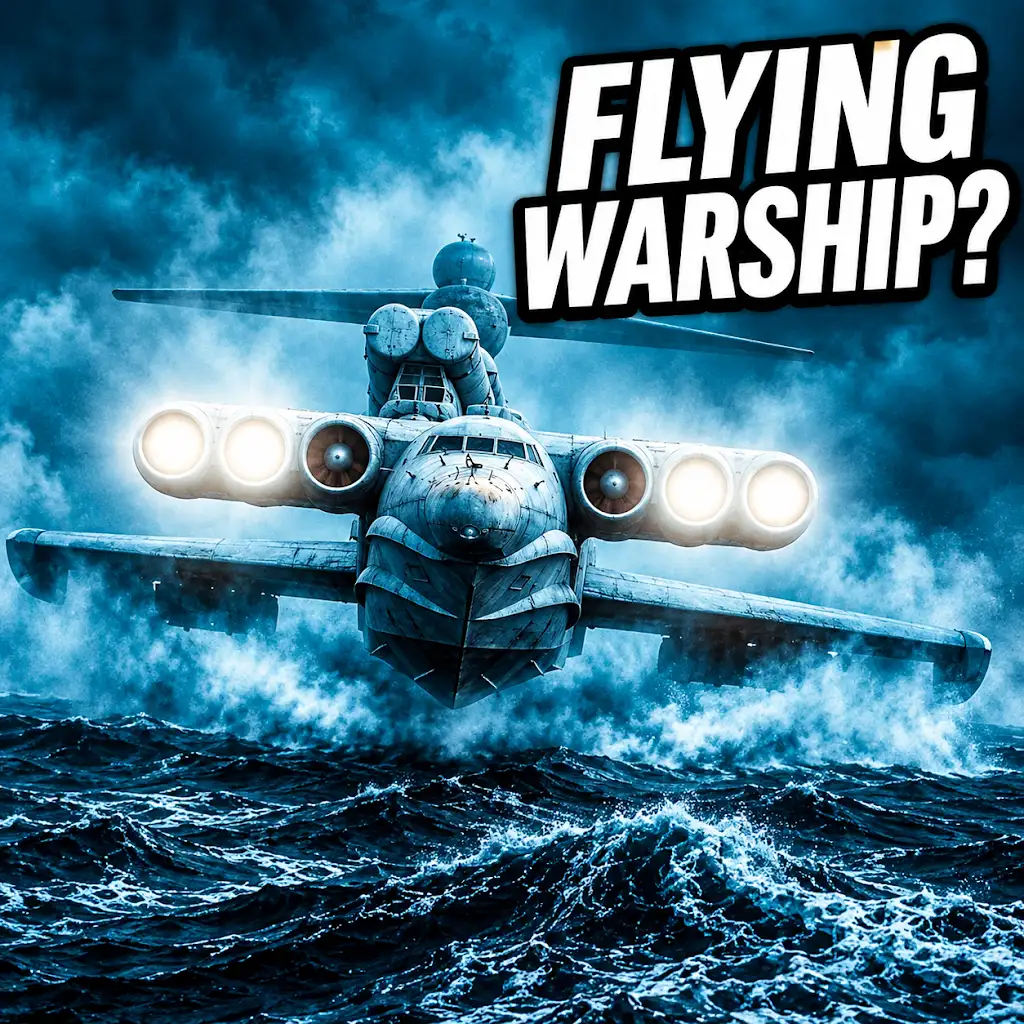
The Soviet Warship That Learned to Fly
FAQs
What is an ekranoplan?
An ekranoplan is a type of ground effect vehicle that is designed to fly at very low altitudes over water surfaces, using the ground effect to generate lift.
Who is Rostislav Alexeyev?
Rostislav Alexeyev was a prominent Soviet engineer and designer known for his work in developing ekranoplans, including the famous Caspian Sea Monster.
What is the significance of Rostislav Alexeyev’s ekranoplans?
Rostislav Alexeyev’s ekranoplans were significant for their innovative design and capabilities, showcasing the potential of ground effect vehicles for military and civilian applications.
Where were Rostislav Alexeyev’s ekranoplans primarily tested and used?
Rostislav Alexeyev’s ekranoplans were primarily tested and used in the Soviet Union, particularly on the Caspian Sea where they were developed and operated.
Are ekranoplans still in use today?
While ekranoplans are no longer widely used, there is ongoing interest in their potential for various applications such as maritime patrol, search and rescue, and cargo transport.