Revolutionary States: Military History Unveiled
The annals of military history are replete with transformations, periods where entrenched doctrines and established practices were not merely modified but fundamentally reshaped. The emergence and evolution of revolutionary states, characterized by their often radical departures from existing political and social orders, represent critical junctures in this historical trajectory. These states, driven by ideologies that rejected the status quo, frequently harnessed military innovation and strategic reorientation to achieve their aims and solidify their power. Understanding the military history of these revolutionary entities offers a crucial lens through which to analyze the dynamics of conflict, state-building, and the long-term consequences of ideological struggle.
The inception of a revolutionary state is rarely a spontaneous event. It is typically a process fueled by deep-seated grievances, emergent ideologies, and the perceived failure of existing structures to address societal needs. These initial stages are marked by the mobilization of diverse social strata, united by a common vision, however loosely defined, of a future order. The military dimension of this genesis is crucial, often beginning with irregular forces that leverage popular support and terrain to challenge established authority.
The Role of Ideology in Shaping Military Objectives
Ideologies, whether they are rooted in nationalism, liberalism, communism, or other political philosophies, provide the foundational justification for revolution and, consequently, shape the military objectives pursued. The clarity or ambiguity of these ideological tenets directly influences the strategic goals articulated by revolutionary leaders. A highly defined ideology, for instance, might dictate a comprehensive vision of societal transformation that translates into ambitious military campaigns aimed at both internal consolidation and external expansion to promote the revolutionary cause. Conversely, a less defined ideology might lead to more pragmatic military objectives focused initially on survival and the dismantling of existing power structures. The intellectual underpinnings of the revolution dictate not only what the military is fighting for but also how it is expected to operate, influencing everything from recruitment strategies to acceptable levels of collateral damage.
Case Study: The French Revolution and Levee en Masse
The French Revolution stands as a seminal example of an ideology driving radical military change. The abstract ideals of liberty, equality, and fraternity, coupled with a potent sense of national identity, coalesced into a powerful force. The existential threat posed by foreign monarchies seeking to restore the Ancien Régime necessitated an unprecedented mobilization of the populace. The decree of levee en masse in 1793 was not merely a conscription order; it was a revolutionary declaration of total war, where the state commanded all resources and citizens for the defense of the revolution. This move signified a dramatic shift from the professional, often mercenary armies of the preceding era to a citizen army, motivated by patriotic fervor and a stake in the revolutionary outcome. The strategic implications were profound, enabling France to field vastly larger armies than its adversaries and to prosecute war on a scale previously unimaginable.
From Irregular Forces to Proto-State Armies
The initial phase of a revolution often sees the formation of disparate irregular units. These forces, often comprised of local militias, partisan groups, or disgruntled former soldiers, are characterized by their flexibility and intimate knowledge of local conditions. Their effectiveness lies in their ability to disrupt enemy supply lines, conduct ambushes, and garner popular support, forcing the established power to overextend its resources. As the revolution gains momentum, these disparate elements begin to coalesce into more structured, albeit still rudimentary, proto-state armies.
The Continental Army in the American Revolution
The Continental Army, forged from colonial militias and volunteers during the American Revolution, exemplifies this transition. Initially a collection of poorly trained and equipped units, it gradually evolved under the leadership of figures like George Washington. The army faced immense logistical challenges and struggled with consistent recruitment and discipline. However, its survival through periods of severe hardship, coupled with strategic victories and foreign support, allowed it to develop into a more cohesive and effective fighting force. This proto-state army was fundamental to the eventual success of the revolution, demonstrating that even nascent revolutionary administrations could, with sufficient resolve and support, field armies capable of challenging imperial power.
The Impact of Early Victories and Defeats on Morale and Strategy
The early military engagements of a revolution are critical for shaping both internal morale and external perception. Decisive victories, even against odds, can galvanize popular support, attract foreign aid, and bolster the confidence of revolutionary leaders and soldiers. Conversely, significant defeats can be demoralizing, leading to internal dissent, desertions, and a reassessment of strategic objectives. These early experiences are formative, instilling in the revolutionary military a particular ethos and influencing its approach to future conflicts.
The Russo-Japanese War’s Influence on the Bolsheviks
While not a direct revolutionary conflict, the crippling defeats suffered by Tsarist Russia in the Russo-Japanese War (1904-1905) significantly weakened the autocracy and contributed to the revolutionary fervor that culminated in the 1905 revolution. This war exposed the technological and organizational deficiencies of the Tsarist military, fueling public discontent and providing fertile ground for radical ideologies. The Bolsheviks, in their later seizure of power during World War I, inherited a military apparatus profoundly shaped by such prior humiliations, lending urgency to their calls for peace and the reorientation of military policy.
The concept of containment in military history has been a pivotal strategy in addressing the challenges posed by revolutionary states. A related article that delves into this topic is available at In The War Room, which explores various case studies and the implications of containment strategies throughout different conflicts. For further insights, you can read the article here: In The War Room.
Adaptation and Innovation: The Military as a Catalyst for State Transformation
Once a revolutionary state has established its initial foothold, the military often becomes a primary engine for its further consolidation and transformation. This involves not only the acquisition of new weapons and tactics but also the broader restructuring of society to support sustained conflict and the creation of a new order. The revolutionary military becomes a crucible where old institutions are dismantled and new ones, reflecting the revolutionary ideology, are forged.
The Development of New Military Doctrines in Response to Adversity
Revolutionary states rarely have the luxury of training their forces according to pre-existing, well-honed doctrines. Instead, they are often forced by circumstances to invent and adapt their military thinking. This adaptation is directly driven by the nature of the conflict, the capabilities of their adversaries, and the lessons learned from both successes and failures. The need for survival and victory compels a departure from rigid, theoretical frameworks towards pragmatic, situationally responsive doctrines.
Blitzkrieg and the German Revolution (Nazi Germany)
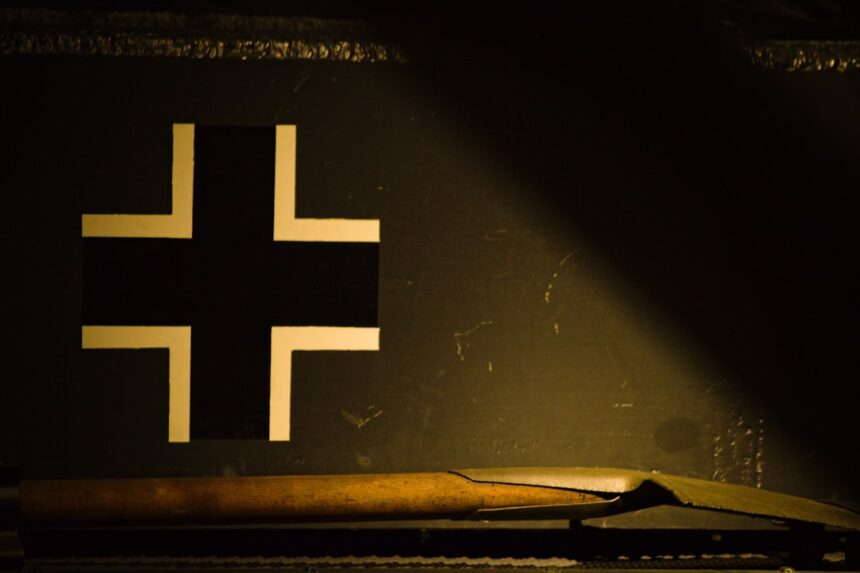
While the term “revolution” can be applied in different contexts, Nazi Germany’s radical shift in political and social order, coupled with its aggressive military resurgence, offers a compelling, albeit controversial, example of military doctrine as a catalyst. The development and implementation of Blitzkrieg (lightning war) was a revolutionary approach to warfare. It eschewed the static trench warfare of World War I in favor of rapid, concentrated armored assaults supported by close air support. This doctrine required a fundamental reorganization of the military, emphasizing combined arms operations and the decentralized execution of strategic objectives. The initial successes of Blitzkrieg in Poland and France demonstrated its revolutionary potential, overwhelming traditional defensive strategies and reshaping European warfare.
The Military as an Instrument of Social Engineering
In many revolutionary states, the military is not merely a tool of defense or conquest but also a potent instrument for enacting social and political change. Recruitment policies, officer training, and the very structure of the armed forces can be designed to break down old social hierarchies and instill the values of the new regime. This process often aims to create a loyal and ideologically homogenous fighting force, which can then be used as a model for broader societal reform.
The People’s Liberation Army of China and Maoist Ideology
The People’s Liberation Army (PLA) under Mao Zedong was a prime example of a revolutionary military acting as a vehicle for social engineering. Beyond its combat role, the PLA was deeply imbued with Maoist ideology. Soldiers participated in political study, construction projects, and even played a role in managing rural areas. The concept of the “people’s war” emphasized the organic link between the army and the populace, blurring the lines between civilian and military life. This integration served to both consolidate the regime’s power and to disseminate its revolutionary message throughout Chinese society.
The Impact of Technological adoption on Revolutionary Warfare
The adoption of new technologies has always been a significant factor in military history, and revolutionary states are often at the forefront of embracing innovations that can provide them with a decisive edge. Their willingness to break with tradition can make them more receptive to adopting technologies that established powers might view with skepticism or that require a fundamental rethinking of existing doctrines.
The Tank in World War I and its Revolutionary Implications
While World War I was not initiated by revolutionary states, its technological developments, particularly the tank, had profound implications for future revolutionary warfare. The hesitant and often piecemeal deployment of early tanks by established powers highlighted their failure to fully grasp the potential of this new technology. Revolutionary movements that emerged in its aftermath, such as the Bolsheviks, recognized the transformative power of armored vehicles when integrated into a cohesive strategy. Their subsequent development and application of tank warfare, particularly in the context of the Russian Civil War and later during World War II, showcased how a revolutionary state could leverage new technology to overcome entrenched adversaries.
Internal Consolidation and the Military’s Role in State-Building

Securing the revolution from internal dissent and external threats is paramount for the survival of any new state. The military, in its expanded role, becomes a critical component of this consolidation process, often tasked with suppressing opposition, enforcing the new regime’s authority, and rebuilding the nation’s infrastructure.
Suppressing Counter-Revolutionary Movements
The birth of a revolution is often accompanied by internal opposition from those who supported or benefited from the old order. Revolutionary states frequently rely heavily on their military forces to identify, apprehend, and neutralize these counter-revolutionary elements. This can involve widespread purges, the establishment of political policing units, and the use of military force to quell uprisings and maintain public order.
The Red Army and Internal Security in Soviet Russia
Following the Bolshevik Revolution, the Red Army played a crucial role in the Russian Civil War (1917-1923). Beyond fighting external White armies and interventionist forces, the Red Army was instrumental in suppressing internal dissent, consolidating Bolshevik control over vast territories, and enforcing the new communist regime. Its presence was felt in every aspect of Soviet life, from ensuring grain procurement to maintaining order in newly conquered regions. This application of military power for internal security solidified the Soviet state’s grip on its populace.
The Military as a Pillar of the New State Apparatus
In many revolutionary contexts, the military transcends its traditional role and becomes a fundamental pillar of the newly established state. Its organizational capacity, resources, and hierarchy are often co-opted to administer large swathes of territory, manage essential services, and even drive economic development. This integration ensures that the military remains loyal to the revolutionary leadership and serves as a constant instrument of state power.
The Ottoman Military’s Transformation under the Young Turks
The Young Turk Revolution of 1908 aimed to modernize the Ottoman Empire and, in many ways, represented a revolutionary departure from previous imperial administration. The Committee of Union and Progress (CUP) heavily relied on the military, particularly its officer corps, to implement its reform agenda. Military officers were appointed to significant administrative and political positions, and the army itself was reorganized and modernized. This symbiotic relationship between the military and the revolutionary government was crucial for the CUP’s attempt to consolidate power and steer the empire through a period of immense geopolitical upheaval.
The Role of Military Logistics and Infrastructure Development
The successful prosecution of revolutionary wars and the subsequent consolidation of the state are heavily dependent on robust logistical capabilities and the development of essential infrastructure. Revolutionary states often prioritize the rebuilding or creation of transportation networks, communication systems, and industrial capacity to support their military and to facilitate economic recovery. The military itself frequently plays a direct role in these endeavors, providing labor and expertise.
Post-Unification Vietnam and Military-led Reconstruction
Following the reunification of Vietnam in 1975, the victorious communist government inherited a nation devastated by decades of war. The Vietnamese military, a highly organized and disciplined force, was instrumental in the post-war reconstruction efforts. Soldiers participated in rebuilding infrastructure, clearing mines, and even contributing to agricultural production. This extensive use of military personnel in civilian reconstruction reflected both their capacity and the state’s reliance on the armed forces to rebuild the nation and solidify the new political order.
The Military and the Projection of Revolutionary Ideals Abroad
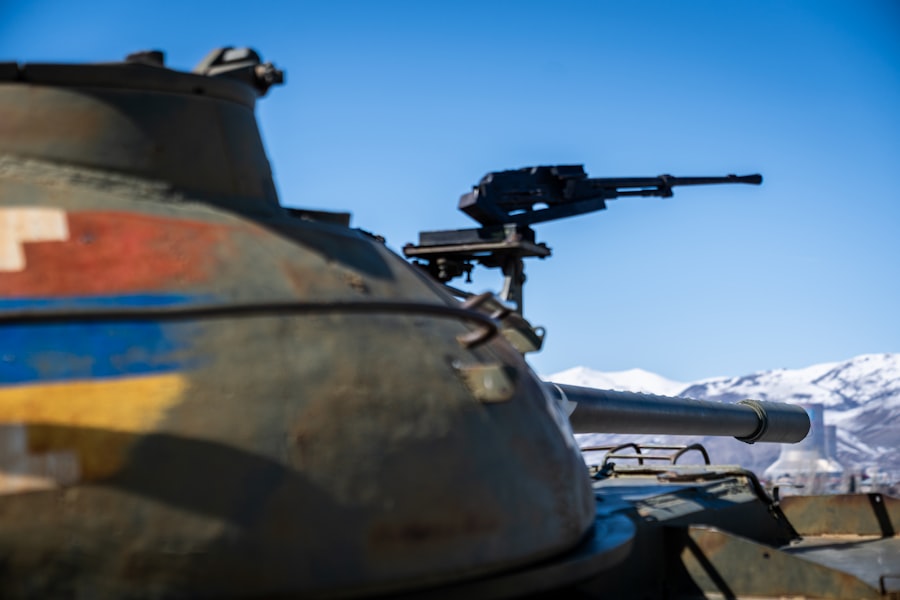
Once internal stability is achieved, or in some cases concurrently, revolutionary states often seek to extend their influence beyond their borders, either through direct intervention, ideological dissemination, or support for sympathetic movements abroad. The military becomes the primary instrument for projecting these revolutionary ideals and for challenging the existing international order.
The Export of Revolution and Proxy Warfare
Many revolutionary movements aspire to see their ideologies adopted globally. This can manifest as direct military interventions aimed at supporting allied factions or overthrowing regimes deemed hostile. In other instances, revolutionary states engage in proxy warfare, providing arms, training, and logistical support to insurgent groups in other countries that align with their revolutionary goals, thereby avoiding direct confrontation while achieving strategic objectives.
Soviet Support for Global Communist Movements
The Soviet Union, as the world’s first communist state, actively sought to export its revolution. Through organizations like the Comintern (Communist International), Moscow provided significant financial, political, and military support to communist parties and revolutionary movements around the globe. This manifested in numerous proxy conflicts and interventions, most notably during the Cold War, where Soviet-backed forces clashed with those supported by the United States and its allies across various continents.
The Military as a Diplomatic Tool and Deterrent
Beyond direct conflict, the military serves as a potent diplomatic tool and a crucial deterrent for revolutionary states seeking to secure their position on the international stage. The demonstration of military strength, through parades, exercises, or a well-maintained defense capability, can influence foreign policy decisions, deter potential aggressors, and elevate the state’s standing in global affairs.
The Military Balance during the Cold War
The protracted ideological struggle between the Soviet Union and the United States during the Cold War was largely defined by military parity and the constant threat of nuclear annihilation. Both revolutionary and established powers engaged in an unprecedented arms race, developing sophisticated military technologies. The perceived military strength of each bloc served as both a deterrent against direct conflict between the superpowers and as a significant element in their diplomatic maneuvering and influence over allied nations.
The Impact of Intervention on the Trajectory of Revolutionary States
The decision to intervene militarily abroad, whether directly or through proxies, has profound and often unpredictable consequences for the trajectory of revolutionary states. While such actions can achieve short-term strategic gains, they can also lead to prolonged conflicts, economic strain, international condemnation, and internal dissent. The lessons learned from these interventions can shape the future military policies and the very identity of the revolutionary state.
The Soviet-Afghan War and its Consequences for the USSR
The Soviet intervention in Afghanistan (1979-1989) proved to be a catastrophic misadventure for the revolutionary Soviet Union. The prolonged and costly war drained the nation’s resources, weakened its military morale, and contributed to internal disillusionment. The eventual Soviet withdrawal, coupled with mounting domestic pressures, is widely considered a significant factor in the eventual dissolution of the Soviet Union, demonstrating the profound and often destabilizing impact of foreign military ventures on revolutionary states.
The military history of revolutionary states often highlights the strategies employed to contain their influence and expansion. A fascinating exploration of this topic can be found in a related article that delves into the various methods used by established powers to counteract the rise of these states. For a deeper understanding of the dynamics at play, you can read more about it in this insightful piece on revolutionary containment strategies at In the War Room.
Legacies and Long-Term Consequences: Military Transformation and State Persistence
| Country | Year of Revolution | Containment Strategy | Outcome |
|---|---|---|---|
| France | 1789 | Coalition warfare | Revolutionary wars ended with the rise of Napoleon |
| Russia | 1917 | Intervention by Allied powers | Communist regime established |
| Cuba | 1959 | Economic embargo | Regime remained in power |
The military history of revolutionary states is not confined to the period of their inception and consolidation. The choices made and the structures built during these formative years have enduring legacies that shape the nature of the state, its relationship with its citizens, and its role in the international arena for generations to come.
The Persistence of Military Culture and Influence in Post-Revolutionary Societies
In many instances, the military institutions and culture forged during the revolutionary upheaval persist long after the initial radical phase has subsided. The ingrained habits of command and control, the ideological indoctrination, and the significant allocation of resources to defense can continue to exert a powerful influence on civilian government and societal development. This can lead to a militaristic state, where the armed forces retain disproportionate political and economic power.
The Generational Impact of the Algerian War of Independence
The Algerian War of Independence (1954-1962) was a brutal and transformative conflict that deeply scarred Algerian society. The military, particularly the National Liberation Army (ALN), played a central role in achieving independence. However, the war also fostered a powerful military establishment that continued to exert significant influence over post-independence Algerian politics. This military influence has impacted the nation’s governance, foreign policy, and internal security apparatus for decades, shaping its developmental trajectory.
The Evolution of Military Technology and Doctrine in the Modern Era
The innovations and adaptations made by revolutionary states during their formative periods often paved the way for broader military trends. Concepts pioneered in revolutionary conflicts, such as combined arms warfare, ideological mobilization, and the strategic use of propaganda, have been studied and adapted by militaries worldwide. Understanding the origins of these developments within revolutionary contexts is crucial for a comprehensive grasp of modern military evolution.
The Influence of the Vietnam War on US Military Strategy
The Vietnam War, while not a revolution in the traditional sense, saw North Vietnam and the Viet Cong employing revolutionary tactics and leveraging popular support to great effect against a technologically superior adversary. The eventual US withdrawal and the strategic rethinking that followed had a profound impact on American military doctrine. Concepts like counterinsurgency warfare, psychological operations, and the careful consideration of military intervention in complex political environments were significantly shaped by the lessons learned from this protracted conflict involving a revolutionary opponent.
The Redefinition of Warfare and the State’s Relationship with its People
Revolutionary states, by their very nature, often redefine the relationship between the state and its citizenry, and this transformation is frequently mirrored in their military. The concept of total war, where the entire nation is mobilized for the war effort, or the idea of the military as the vanguard of ideological progress, can fundamentally alter the traditional understanding of warfare and civil-military relations. The legacies of these redefinitions continue to resonate in contemporary discussions about national security, citizen responsibility, and the ethical boundaries of conflict.
The Ongoing Relevance of Revolutionary Military History
The study of the military history of revolutionary states remains critically relevant for understanding contemporary global dynamics. The ideological fervor, the strategic adaptations, and the often-unforeseen consequences of revolutionary conflicts continue to inform the motivations and actions of national movements and established powers alike. By unveiling the military dimensions of these transformative periods, we gain a deeper appreciation for the enduring complexities of conflict, state formation, and the relentless pursuit of change throughout history.
FAQs
What is the strategy of containment in military history?
Containment is a strategic approach used in military history to prevent the expansion of a revolutionary state’s influence and power. It involves using diplomatic, economic, and military means to limit the state’s ability to spread its revolutionary ideology or aggression.
What are some examples of containment in military history?
One notable example of containment in military history is the United States’ policy towards the Soviet Union during the Cold War. The US sought to contain the spread of communism by providing military and economic aid to countries threatened by Soviet expansion, as well as engaging in proxy wars and espionage.
How effective has containment been as a strategy in military history?
The effectiveness of containment as a strategy in military history has varied. In some cases, such as the containment of the Soviet Union during the Cold War, it was successful in preventing the spread of revolutionary ideology and aggression. In other cases, such as the containment of North Korea, it has been less successful.
What are the key components of a successful containment strategy in military history?
A successful containment strategy in military history typically involves a combination of diplomatic, economic, and military measures. This may include forming alliances with other countries, providing military aid to threatened states, imposing economic sanctions, and engaging in covert operations.
How does containment in military history differ from other military strategies?
Containment in military history differs from other strategies, such as deterrence or preemption, in that it focuses on limiting the expansion of a revolutionary state’s influence rather than directly confronting or preempting its aggression. It is often a long-term, multifaceted approach that aims to undermine the revolutionary state’s ability to achieve its goals.