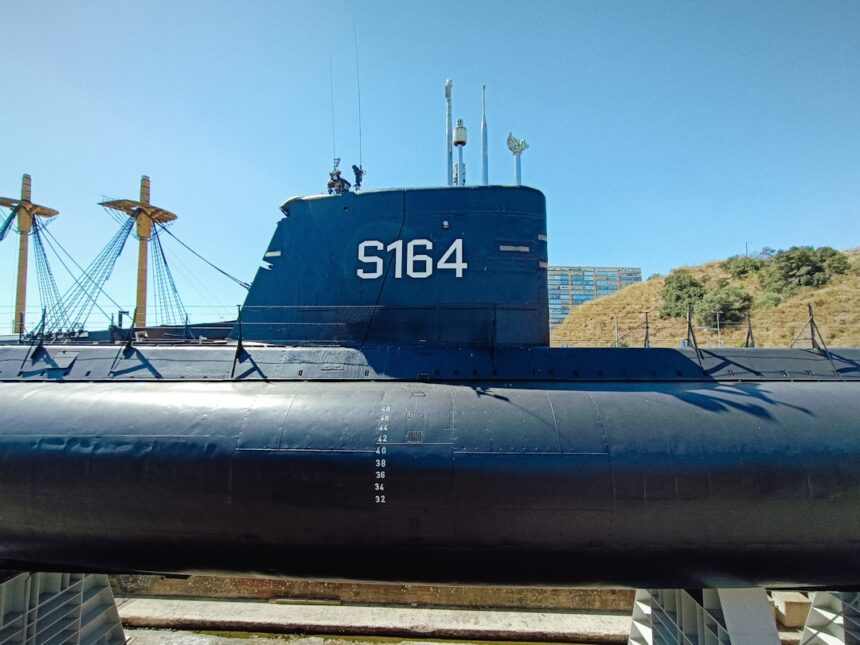
Unveiling the clandestine voyages of ballistic missile submarines (SSBNs) offers a unique glimpse into the strategic underpinnings of nuclear deterrence. These silent behemoths, often referred to as “boomers,” operate in the deepest recesses of the oceans, their primary mission to provide a credible and survivable second-strike capability. Understanding their patrol patterns, though often shrouded in secrecy, is crucial for comprehending the delicate balance of global power. This article endeavors to illuminate these patterns, drawing from publicly available information, expert analysis, and historical trends, while acknowledging the inherent limitations imposed by national security classifications.
The fundamental principle guiding SSBN operations is evasion. Unlike their attack submarine counterparts, which actively seek out and engage enemy vessels, SSBNs are designed to remain undetected at all costs. Their purpose is to survive an initial nuclear strike and then launch their own devastating retaliatory attack. This mission dictates nearly every aspect of their design, operational procedures, and patrol patterns.
The Strategic Value of Undetectability
To grasp the significance of secrecy, consider the metaphor of a hidden dagger. An SSBN is this dagger, kept sheathed and out of sight until absolutely necessary. If its location were known, it would become a prime target, compromising its retaliatory role. This leads to several key operational considerations:
- Minimizing Acoustic Signature: SSBNs are meticulously engineered to be as quiet as possible, isolating machinery, using advanced propulsion systems, and employing anechoic tiles on their hulls to absorb sonar pulses.
- Operating in Deep and Complex Waters: Patrol areas are often chosen for their inherent hydrographic complexities, such as deep ocean trenches, areas with thermoclines (layers of water with different temperatures that can refract sonar), and regions with high levels of natural acoustic noise.
- Limited Communication: Communication is a vulnerability. SSBNs minimize their transmissions to avoid detection, often relying on extremely low frequency (ELF) radio waves that can penetrate seawater but offer very low data rates, or periodic surfacing for brief bursts of communication.
The “Shoot-and-Scoot” Doctrine
The inherent vulnerability of any missile launch further underscores the need for evasion. Once an SSBN launches its missiles, its position becomes temporarily exposed. This mandates a “shoot-and-scoot” doctrine, where the submarine rapidly changes course and depth after a launch to minimize the chance of a retaliatory attack. This tactical necessity influences the selection of patrol areas, favoring regions that offer ample room for maneuver after missile deployment.
Recent developments in naval strategy have brought attention to the patrol patterns of ballistic missile submarines, highlighting the implications for global security. An insightful article that delves into this topic can be found at In the War Room, where experts analyze how these patrols affect deterrence and strategic stability among nuclear powers. Understanding these patterns is crucial for assessing the balance of power and the potential for conflict in various regions around the world.
Geographic Determinants of Patrol Patterns
The vastness of the world’s oceans offers numerous hiding places, but specific geopolitical and geographical factors heavily influence where SSBNs operate. These factors are not static and evolve with technological advancements, geopolitical shifts, and the perceived threat landscape.
Access to the Open Ocean
For most SSBN fleets, access to the open ocean is paramount. This avoids constricted chokepoints and shallow coastal waters where detection by anti-submarine warfare (ASW) assets is more probable.
- For the United States Navy: The primary operational areas for U.S. Navy SSBNs, notably the Ohio-class submarines, are the Atlantic and Pacific Oceans. Their homeports in Kings Bay, Georgia, and Bangor, Washington, are strategically located to facilitate rapid deployment to these vast expanses. The deployment patterns in the Pacific often involve traversing wide stretches of the open ocean, while Atlantic deployments similarly favor deep-water operations.
- For the Russian Navy: Russia’s SSBNs, including the Borei-class, operate primarily in the Arctic Ocean and the North Atlantic. The ice-covered waters of the Arctic offer a unique protective layer, making detection significantly more challenging. However, navigating under ice presents its own set of operational hurdles and risks. Access to the North Atlantic is primarily from their Northern Fleet bases on the Kola Peninsula.
- For the Royal Navy and French Navy: Both the UK’s Vanguard-class and France’s Triomphant-class SSBNs largely confine their operations to the North Atlantic, often in close proximity to their home bases. This is partly due to the smaller size of their fleets and the strategic focus on European theater deterrence.
- For the Chinese People’s Liberation Army Navy (PLAN): China’s Jin-class SSBNs face unique geographical constraints. Their homeport on Hainan Island in the South China Sea requires them to transit potentially vulnerable chokepoints to reach the deeper, more expansive waters of the Pacific Ocean. This geographical reality has significant implications for their operational patterns and the investments made in ensuring safe passage.
Proximity to Target Areas
While evading detection is paramount, SSBNs also need to be within range of their designated targets. The range of modern submarine-launched ballistic missiles (SLBMs) is substantial, often exceeding 7,000 kilometers (4,300 miles). This broadens the potential patrol areas considerably, allowing for greater maneuverability and reducing the need to operate excessively close to potential adversaries.
- Overlapping Arc of Influence: Consider a series of concentric circles radiating outwards from potential target zones. SSBN patrol areas often fall within the outermost rings, providing a balance between sufficient range and maximum operational freedom. This creates an overlapping arc of influence, where multiple SSBNs from different nations could theoretically be targeting similar areas, albeit from different geographical starting points.
Operational Rhythms and Deployment Cycles
SSBN operations are not continuous, but rather follow distinct rhythms and deployment cycles determined by maintenance schedules, crew rotations, and strategic requirements. These cycles offer a structured insight into their global presence even when their exact locations remain unknown.
The “Boomer Bastion” Concept
Historically, some naval powers, particularly Russia, have employed the “boomer bastion” concept. This involves dedicating significant naval assets, including surface ships and attack submarines, to protect specific patrol areas, often in geographically advantageous locations like the Barents Sea. These bastions create a protective bubble, allowing SSBNs to operate with a reduced risk of detection from ASW threats. While the prominence of bastions may have shifted with advancements in ASW technology, the underlying principle of establishing protected zones remains relevant.
Routine Patrols and “Out-of-Area” Deployments
The majority of an SSBN’s operational life consists of routine patrols within established areas. These patrols are meticulously planned, factoring in hydrographic data, potential enemy ASW assets, and communication requirements.
- Patrol Duration: Typical patrol durations can range from 60 to 90 days, though longer deployments are not uncommon. These extended periods at sea demand exceptional logistical support and crew endurance.
- Crew Rotation: Most SSBNs operate with two crews (often designated ‘Blue’ and ‘Gold’ in the USN) that rotate, allowing for continuous operational readiness while providing off-patrol time for training and rest. This ensures the vessel can maintain a near-constant presence at sea.
- Strategic Deterrent Patrols (SDPs): These are the core mission. The continuous deployment of a certain number of SSBNs at sea, typically one or more per nation, ensures a survivable nuclear deterrent. This ongoing presence ensures that no adversary could successfully disarm a nation’s nuclear arsenal in a first strike.
Surge Operations and Crisis Response
While routine patrols form the bedrock of SSBN operations, these vessels also possess the capability for “surge operations” during times of heightened tension or crisis. In such scenarios, additional SSBNs might be rapidly deployed or existing patrols extended.
- Increased Readiness: During a crisis, SSBNs would likely increase their operational readiness, potentially moving to pre-designated launch zones and maintaining a higher alert status. This acts as a clear signal of resolve without resorting to overt military aggression.
Technological Evolution and its Impact on Patterns
The technology of both SSBNs and anti-submarine warfare (ASW) is in a constant state of evolution, directly influencing where and how these submarines operate. Advances in one area inevitably lead to adaptations in the other, creating a perpetual strategic chess match.
Quieting Technologies
As previously mentioned, every advancement in quieting technology, from pump-jet propulsors to advanced sound-dampening materials, allows SSBNs to operate with greater impunity in more diverse environments. The quieter a submarine is, the less restricted it is by the ambient noise of the ocean.
Sonar and Satellite Surveillance
Conversely, improvements in sonar technology, both passive and active, and the proliferation of satellite-based surveillance, pose ongoing challenges to SSBN concealment.
- Low-Frequency Active (LFA) Sonar: While controversial due to potential environmental impacts, LFA sonar can detect submarines at very long ranges. Its deployment, whether by surface ships or airborne assets, could force SSBNs to operate in deeper, more acoustically complex regions to avoid detection.
- Satellite Imagery and Oceanography: Satellites can map ocean currents, surface temperatures, and ice conditions, providing valuable data for ASW analysts to predict plausible submarine movements or identify potential hiding spots.
The Rise of Unmanned Underwater Vehicles (UUVs)
The development and deployment of UUVs for ASW purposes represent a significant emerging threat. These autonomous vehicles can operate for extended periods, potentially conducting wide-area searches or monitoring specific chokepoints, complicating SSBN movements.
- Persistent Monitoring: Swarms of UUVs, equipped with advanced sensors, could provide persistent monitoring of vast ocean areas, forcing SSBNs to adopt more convoluted and unpredictable patrol patterns.
Recent developments have shed light on the intricate patrol patterns of ballistic missile submarines, raising concerns about national security and strategic stability. For a deeper understanding of the implications of these patterns, you can explore a related article that discusses the broader context of submarine warfare and its impact on global military dynamics. This insightful piece can be found here, providing valuable information for those interested in the evolving landscape of underwater defense strategies.
The Human Element: Training and Operational Discipline
| Metric | Description | Typical Values | Implications |
|---|---|---|---|
| Patrol Duration | Length of time a ballistic missile submarine remains on patrol | 45-70 days | Longer patrols increase stealth but risk exposure due to predictable patterns |
| Patrol Area Size | Geographical area covered during patrol | 10,000 – 50,000 square nautical miles | Larger areas reduce detection risk but complicate communication and resupply |
| Patrol Routes | Commonly used paths or corridors for submarine movement | Fixed or semi-fixed routes near strategic chokepoints | Predictable routes increase vulnerability to tracking and targeting |
| Communication Intervals | Frequency of communication with command during patrol | Once every 3-7 days | Regular communication can expose location; irregular intervals improve stealth |
| Detection Probability | Likelihood of patrol pattern exposure by adversaries | 5-15% per patrol | Higher detection probability compromises deterrence and mission success |
| Countermeasures Employed | Techniques used to avoid detection | Route variation, emission control, decoys | Effective countermeasures reduce exposure risk |
Beyond the technological marvels, the efficacy of SSBN operations hinges critically on the human element. The highly specialized crews who operate these submarines undergo rigorous training and adhere to unwavering operational discipline.
Psychological Fortitude and Isolated Operations
Life aboard an SSBN during a patrol is characterized by extreme isolation and confinement. Crews operate in a windowless environment, often submerged for months, with limited communication with the outside world. This demands exceptional psychological fortitude.
- Intense Training Regimes: Crews are extensively trained not only in operating the submarine’s complex systems but also in maintaining mental resilience and teamwork under high-stakes conditions. This includes simulating crisis scenarios, catastrophic equipment failures, and prolonged periods of silent running.
Maintaining Secrecy Post-Patrol
Even after returning to port, the operational discipline regarding secrecy continues. SSBN crews are highly compartmentalized, with knowledge of specific patrol patterns and operational details restricted to a need-to-know basis. This systemic approach to secrecy ensures that information leakage is minimized at every stage.
- Controlled Decompression: Upon returning to port, crews undergo a controlled reintegration process, often with psychological support, to adjust from the extreme isolation of underwater operations back to normal life. This support helps manage the unique stresses associated with their duties and further reinforces the culture of discretion.
Conclusion: A Continuous Dance of Concealment and Detection
The patrol patterns of ballistic missile submarines are a testament to the continuous and often unseen strategic competition that underpins global security. They are not static routes but dynamic behaviors influenced by geopolitics, technological innovation, hydrography, and the unwavering discipline of their crews. As ASW capabilities evolve, so too will the tactics and procedures of SSBNs, ensuring that the dance of concealment and detection remains an enduring feature of the maritime strategic landscape. Understanding these patterns, even through the veil of secrecy, allows us to better appreciate the complex mechanisms of nuclear deterrence and the constant effort required to maintain strategic stability in a volatile world.

SHOCKING: How the KGB Read Our Nuclear Codes for 18 Years
FAQs
What are ballistic missile submarine patrol patterns?
Ballistic missile submarine patrol patterns refer to the strategic routes and operational areas that nuclear-powered submarines equipped with ballistic missiles follow while on deployment. These patterns are designed to maximize stealth, survivability, and readiness for deterrence missions.
Why is the exposure of ballistic missile submarine patrol patterns significant?
The exposure of these patrol patterns is significant because it can compromise the stealth and security of the submarines, potentially making them vulnerable to detection and tracking by adversaries. This could undermine the effectiveness of a country’s nuclear deterrent.
How are ballistic missile submarine patrol patterns typically kept secret?
Patrol patterns are kept secret through strict operational security measures, including encrypted communications, randomization of routes, and limited knowledge of exact locations even within the military. This secrecy helps prevent adversaries from predicting submarine movements.
What are the potential consequences if patrol patterns are exposed?
If patrol patterns are exposed, adversaries might develop strategies to track or target the submarines, increasing the risk of a first-strike scenario. It could also lead to a loss of strategic advantage and necessitate changes in deployment tactics.
Have there been historical instances of ballistic missile submarine patrol patterns being exposed?
Yes, there have been instances during the Cold War and afterward where patrol patterns or submarine locations were compromised through espionage, technological surveillance, or accidental leaks. Such events have often led to increased security measures and changes in operational protocols.