
Remote Viewing: What Ingo Swann Claimed to See on the Moon
So, you’re curious about remote viewing and Ingo Swann’s alleged discoveries on the Moon? It’s a pretty wild topic, and the short answer is that Ingo Swann, a pioneer in remote viewing, claimed to have “seen” and described various structures and anomalies on the Moon through his remote viewing sessions. These weren’t just vague impressions; he provided detailed descriptions of what he believed were artificial constructions and even living beings. Whether you’re a believer, a skeptic, or just intrigued, understanding these claims requires digging into the context, the methods, and the specific details of Swann’s work.
The Genesis of Remote Viewing and Swann’s Role
Ingo Swann wasn’t just some random person claiming to see things. His involvement in remote viewing, particularly within government-funded research, is a significant part of the story. He’s often credited with refining the techniques and even coining the term “remote viewing” itself.
Early Experiments and the Stanford Research Institute (SRI)
The origins of systematic remote viewing research can be traced back to the late 1960s and early 1970s, with a strong push from organizations like the Stanford Research Institute (SRI) in California. SRI was interested in exploring psychic phenomena, and they brought in individuals who claimed such abilities. Ingo Swann was one of the most prominent figures to emerge from this period.
He participated in numerous experiments designed to test his abilities under controlled conditions. These experiments often involved viewers being asked to describe a target they couldn’t see, which could be a person, a place, or an object, sometimes even from a significant distance. The idea was to see if they could pick up information that wasn’t accessible through normal sensory channels.
Developing the “Scientific” Approach
What set Swann apart, according to proponents, was his methodical approach to remote viewing. He didn’t just sit and wait for images to appear. He worked on developing protocols and techniques to make the process more structured and, in his view, more scientifically verifiable. This involved things like learning to manage the influx of sensory data, filtering out “noise,” and focusing on specific details.
He believed that remote viewing wasn’t just about fleeting visions but a learnable skill that could be honed with practice and the right training. This laid the groundwork for what would later become known as “spoon bending” or “psychic spying” programs, though Swann’s focus was often on gathering information rather than just demonstrating a phenomena.
Ingo Swann, a prominent figure in the field of remote viewing, claimed to have witnessed extraordinary phenomena on the Moon during his sessions. His experiences have sparked considerable interest and debate regarding the existence of extraterrestrial life and advanced civilizations beyond Earth. For those intrigued by Swann’s revelations and the broader implications of his findings, a related article can be found at this link, which delves deeper into the mysteries surrounding lunar exploration and the potential for undiscovered truths about our celestial neighbor.
Swann’s Lunar Claims: Beyond the Craters
When Ingo Swann turned his remote viewing skills towards the Moon, the results were, to say the least, extraordinary. He didn’t just see rocks and dust. He described seeing things that suggested intelligence and intention, things that weren’t, and still aren’t, part of mainstream scientific understanding of the Moon.
The “Moon Anomaly” Project
One of the most famous accounts of Swann’s lunar explorations comes from his involvement in the “Moon Anomaly” project, often discussed in relation to the U.S. government’s interest in psychic phenomena, including programs like Project Stargate. While the details of these government projects are often shrouded in declassification and speculation, Swann’s personal accounts offer a glimpse into what he believed he was experiencing.
He claimed to have been tasked with investigating anomalies on the Moon that had been observed or suspected by intelligence agencies. These weren’t just vague hunches; he provided detailed descriptions of specific locations and what he purported to find there.
Descriptions of Artificial Structures
Swann’s most compelling lunar claims revolved around his descriptions of what he believed were artificial structures. He spoke of seeing vast, geometric formations, tunnels, and even what appeared to be domes or enclosed habitats. These weren’t natural geological features that could be explained by volcanic activity or impact craters. He described them as clearly manufactured, with straight lines, right angles, and patterns that suggested engineering and design.
One notable claim involved a “dome” or “enclosure” that he described as being located near a specific crater. He provided details about its shape, size, and the materials he perceived it to be made of, suggesting a level of technological sophistication. These descriptions often contrasted sharply with the visually barren and geologically straightforward image of the Moon that was presented by NASA at the time.
The “Alien” Encounters and Lunar Habitats
Beyond just seeing structures, Swann also claimed to have perceived signs of life or former inhabitants on the Moon. This is where his accounts become even more speculative and, for many, enter the realm of science fiction.
Evidence of Past or Present Inhabitants
Swann described seeing evidence that suggested the Moon might not be as lifeless as it appears. He spoke of perceiving what he interpreted as “living beings” or “beings of light” on the lunar surface. These descriptions were often abstract and hard to pin down, but they consistently pointed to a non-human presence, either past or present.
He also spoke of underground habitats or systems that indicated a sustained presence, not just a fleeting visit. These were not just abandoned outposts but implied a more complex and ongoing interaction with the lunar environment. The idea was that these beings might have utilized the Moon for various purposes, perhaps as a refuge, a research station, or a transit point.
The “Great Pyramid” and Lunar Bases
Another recurring theme in Swann’s lunar remote viewing accounts is the presence of monumental structures. He alluded to seeing something akin to a “Great Pyramid” on the Moon, not as a relic of ancient Earthly civilizations, but as something indigenous to the Moon or constructed by its inhabitants.
These were not just small, hidden structures. Swann described them as being on a scale that would be impossible to miss if they were clearly visible from Earth. He suggested that perhaps they were hidden by cloaking technology, or that their visibility was limited to certain lunar phases or conditions, which would explain why they hadn’t been widely recognized. He also spoke of seeing what could be interpreted as a vast lunar base or network of bases, integrated into the lunar landscape.
Skepticism and Scientific Rebuttals
It’s crucial to address the substantial skepticism surrounding Ingo Swann’s claims. While his proponents see his work as groundbreaking, the mainstream scientific community remains unconvinced, and for good reason.
Lack of Corroborating Evidence
The most significant hurdle for Swann’s lunar claims is the complete absence of independent, verifiable evidence. Despite decades of lunar exploration by various space agencies, including numerous orbiters, landers, and even manned missions, no physical structures or anomalies matching Swann’s descriptions have ever been detected.
High-resolution imagery from missions like NASA’s Lunar Reconnaissance Orbiter (LRO) has provided incredibly detailed maps of the lunar surface. These images show natural geological features, including craters, mountains, lava tubes, and evidence of past volcanic activity. They do not, however, show any artificial structures, geometric formations, or signs of intelligent life that align with Swann’s remote viewing reports.
The Nature of Remote Viewing and Its Challenges
Remote viewing, by its very nature, is a difficult phenomenon to study and validate scientifically. The subjective experience of the viewer, the interpretation of impressions, and the potential for unconscious biases all present significant challenges.
Critics argue that Swann’s descriptions, while vivid, could be explained by a combination of:
- Pareidolia: The psychological phenomenon where the mind perceives a familiar pattern where none exists, like seeing faces in clouds.
- Confabulation: The unconscious filling-in of gaps in memory or perception with fabricated information.
- Confirmation Bias: The tendency to interpret new evidence as confirmation of one’s existing beliefs or theories.
- Suggestibility: The viewer being influenced, even subtly, by the underlying assumptions or questions posed during the remote viewing session.
The ambiguity of remote viewing perceptions makes it easy for a viewer to “find” what they are looking for, especially when targets are poorly defined or when there is a strong pre-existing belief system.
Ingo Swann, a prominent figure in the field of remote viewing, claimed to have witnessed extraordinary sights on the Moon during his sessions. His experiences have sparked considerable interest and debate among enthusiasts of the paranormal and space exploration. For those intrigued by the implications of Swann’s revelations, a related article can be found at In the War Room, which delves into the mysteries of lunar exploration and the potential for undiscovered phenomena beyond our planet.
The Legacy and Enduring Questions
Despite the lack of scientific validation, Ingo Swann’s work continues to fascinate and provoke discussion. His claims, however outlandish they may seem, highlight enduring human curiosity about the unknown, particularly concerning extraterrestrial life and the mysteries of the cosmos.
The Impact on Remote Viewing Research
Swann’s contributions to the development of remote viewing techniques are undeniable, at least within the circles that study and practice it. He helped move the concept from a fringe idea to something that was, for a time, explored by serious research institutions and even government agencies.
Even if one dismisses his lunar discoveries as fantasy, his efforts in systematizing remote viewing and training other viewers have had a lasting impact on the field. His legacy is that of a pioneer who pushed the boundaries of what was considered possible, even if those boundaries ultimately proved to be more conventional than he believed.
The Unanswered Questions
The enduring allure of Swann’s lunar claims lies in the fact that, in the absence of definitive proof either way, the “what ifs” remain. While science demands empirical evidence, the human imagination often thrives on possibility.
Did Ingo Swann genuinely perceive structures on the Moon that were beyond our current understanding or technological reach? Was he a victim of his own highly imaginative mind, or perhaps influenced by the very nature of the experiments he was conducting? Or did he tap into a deeper, more subtle reality that science has yet to fully grasp?
These questions continue to fuel discussions among remote viewing enthusiasts, skeptics, and anyone interested in the outer limits of human perception and the potential mysteries of our solar system. While definitive answers remain elusive, the story of Ingo Swann’s Moon discoveries serves as a compelling chapter in the ongoing dialogue between science, consciousness, and the vast unknown.
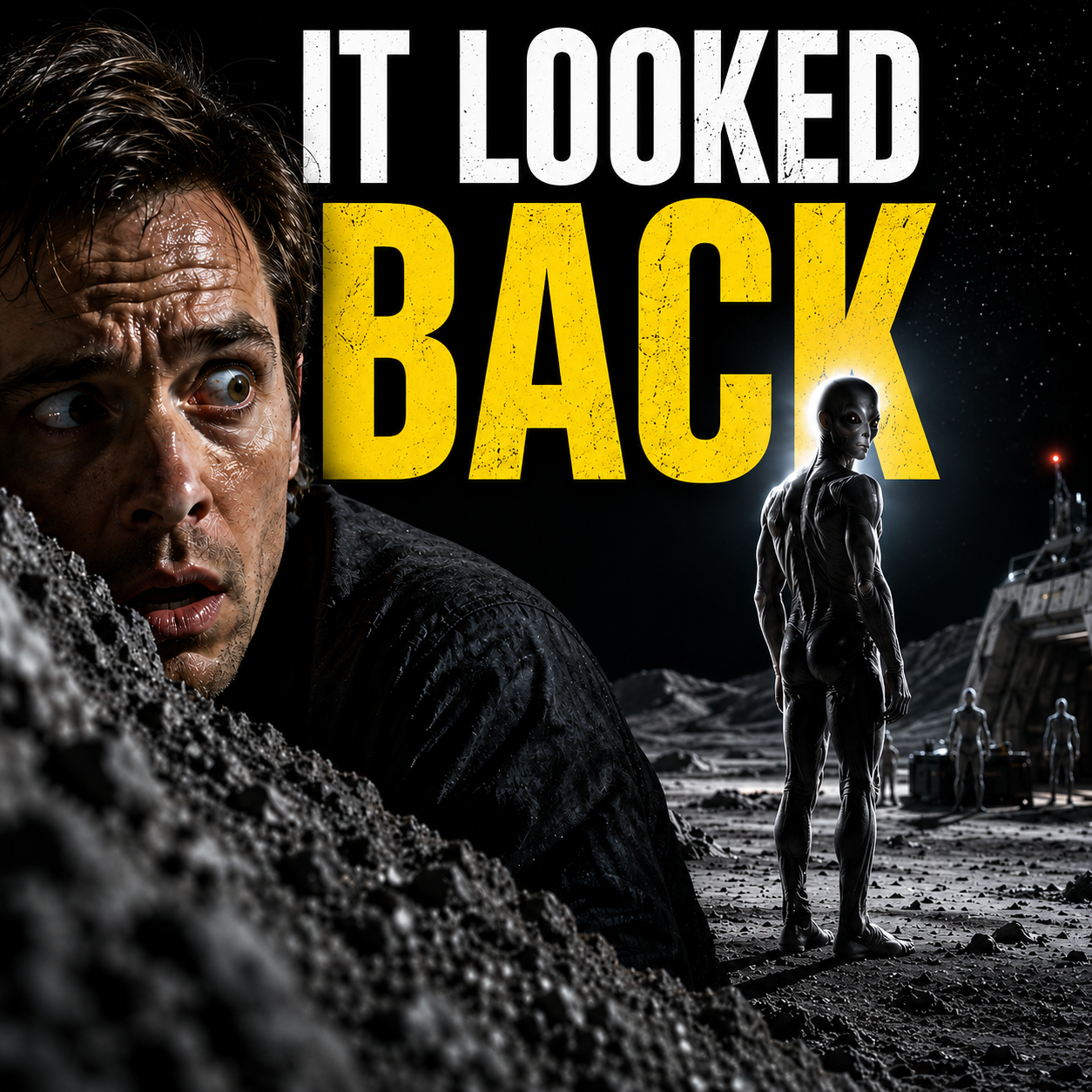
He Remote Viewed the Moon. Then Something Saw Him.
FAQs
1. Who is Ingo Swann and what is his connection to the Moon?
Ingo Swann was a renowned psychic, artist, and author who is best known for his involvement in the US government’s remote viewing program. He claimed to have remote viewed the Moon and reported seeing structures and other anomalies on its surface.
2. What did Ingo Swann claim to have seen on the Moon?
Ingo Swann claimed to have remote viewed the Moon and reported seeing structures, domes, and other artificial-looking objects on its surface. He also described seeing what he believed to be extraterrestrial activity.
3. Is there any scientific evidence to support Ingo Swann’s claims?
There is no scientific evidence to support Ingo Swann’s claims of seeing structures and extraterrestrial activity on the Moon. Remote viewing is a controversial practice and is not considered a scientifically valid method for gathering information.
4. What is the general consensus among scientists and experts regarding Ingo Swann’s claims?
The general consensus among scientists and experts is that Ingo Swann’s claims of seeing structures and extraterrestrial activity on the Moon are not supported by scientific evidence and are considered to be unsubstantiated.
5. How did Ingo Swann’s claims impact the study of the Moon and space exploration?
Ingo Swann’s claims have not had a significant impact on the study of the Moon and space exploration. They are generally regarded as pseudoscience and have not influenced the direction of scientific research in these fields.