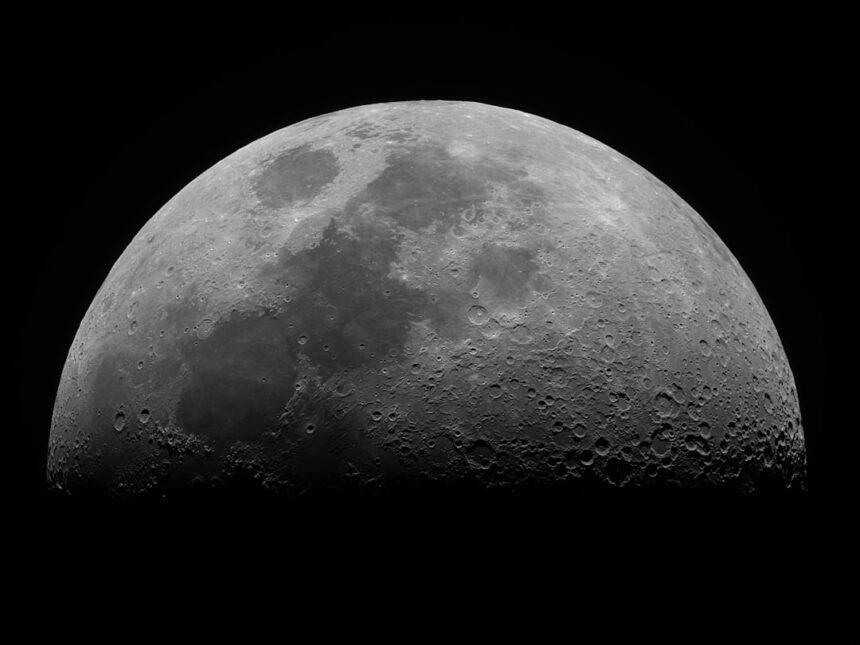
So, you’re curious about remote viewing and whether it’s ever been used to look at artificial structures on the Moon. The short answer is yes, some remote viewers have reported seeing things they describe as artificial structures on the Moon, but it’s important to understand what that means and the limitations involved. It’s not like sending a drone up there; it’s a subjective process with its own set of challenges.
Before we dive into Moon structures, let’s get on the same page about what remote viewing actually is. Think of it as a trained mental skill that allows someone to perceive information about a distant or unseen target using their mind, without any conventional sensory input. It’s often described as a form of psychic perception or intuition, but proponents believe it can be trained and developed through specific protocols and exercises.
The “Blind” and the “Controlled”
Remote viewing sessions are typically conducted in a “blind” or “controlled” manner. This means the remote viewer doesn’t know what the target is beforehand. A “monk” or “analyst” receives the target coordinates (often just a random number or a coded reference) and relays this to the viewer. This is crucial to prevent the viewer from unconsciously influencing their own perceptions based on what they expect to see.
The Process: Data Collection, Not Visualisation
It’s less about forming a clear mental picture and more about gathering impressions. Viewers record their perceptions in stages, often starting with general impressions, then moving to more specific details like shapes, textures, sounds, smells, and even emotional feelings associated with the target. They’re trained to distinguish between “analytical overlay” (their own thoughts and interpretations) and genuine “associative data” (direct perceptions).
Scientific Scrutiny and Skepticism
It’s worth noting that remote viewing sits on the fringes of mainstream science. While some studies have shown statistically significant results under specific laboratory conditions, it remains a controversial topic. Many scientists are skeptical, citing a lack of replicability, potential for confirmation bias, and the difficulty in ruling out conventional explanations.
Recent discussions surrounding the phenomenon of remote viewing have gained traction, particularly in relation to artificial structures on the Moon. A compelling article that delves into this intriguing topic can be found at In The War Room, where experts analyze various claims and evidence supporting the existence of man-made or extraterrestrial constructs on our lunar neighbor. This exploration not only challenges our understanding of space exploration but also invites further investigation into the potential implications of such findings.
Early Claims and Notable Projects
The idea of remote viewing artificial structures on the Moon isn’t entirely new. It gained traction within the remote viewing community over the decades, often fueled by anecdotal reports and interpretations of publicly available data.
The Star Gate Project
During the Cold War, the US government funded research into psychic phenomena, including remote viewing, under projects like “Grill Flame” and later “Stargate.” While the primary focus was often on military targets and intelligence gathering, the protocols and training developed during these projects laid the groundwork for many of the remote viewers who later explored subjects like extraterrestrial activity and off-world structures.
Declassified Documents and Their Interpretations
Many of the declassified documents from the Stargate project, while often vague, have been pored over by remote viewing enthusiasts. They sometimes describe seemingly unusual phenomena or locations that are then speculated to be evidence of extraterrestrial presence or artificial constructs. However, the interpretations of these documents are often highly subjective and open to debate.
Publicly Available Moon Imagery
As technology advanced, so did our ability to image the Moon. The availability of high-resolution photographs and data from lunar missions allowed remote viewers to have targets to focus on. These images, while providing concrete visual references, also became a source of contention, with some interpreting anomalies as artificial structures while others attribute them to natural geological formations or photographic artifacts.
What Remote Viewers Report Seeing
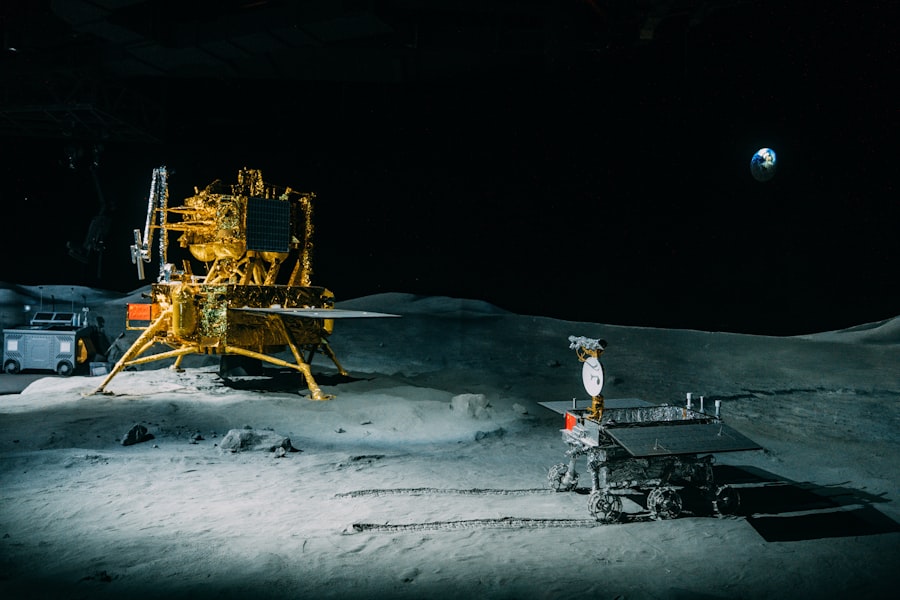
When remote viewers talk about artificial structures on the Moon, their descriptions can vary widely. It’s rarely a straightforward report of a gleaming city. Instead, it’s often more about energy signatures, geometric shapes, or something that feels “wrong” or out of place.
Geometric Anomalies
Some viewers report perceiving areas on the Moon with unnaturally straight lines, sharp angles, or repetitive geometric patterns that don’t align with known geological processes. These could be anything from subtle grid-like patterns in the regolith to more prominent, structured shapes.
Surface Modifications
Other reports describe what appear to be deliberate modifications to the lunar surface. This might include leveled areas, excavated regions, or even what could be interpreted as foundations or pathways. The descriptions often focus on the unnaturalness of these features compared to the surrounding terrain.
Energy Signatures and Unusual Materials
Beyond physical structures, some remote viewers claim to perceive unusual energy signatures emanating from certain lunar locations. These could be described as humming, pulsating, or simply having a distinct “feel” that suggests technology or an artificial origin. There are also occasional reports of sensing unusual materials, not found in natural lunar rock.
Subterranean Structures
A recurring theme in some remote viewing sessions related to the Moon is the suggestion of subterranean or hidden structures. This is often inferred from a sense of depth, hollow spaces, or a perceived “cover” over something below the surface.
Challenges and Limitations of Interpretation
It’s absolutely crucial to talk about the difficulties in interpreting remote viewing data, especially when it comes to something as speculative as artificial Moon structures. This isn’t about dismissing the viewers; it’s about being realistic.
The Subjectivity of Perception
Remote viewing is inherently subjective. What one viewer perceives as an artificial dome, another might interpret as a volcanic caldera or a strangely shaped rock formation. The viewer’s own biases, preconceptions, and even their current emotional state can influence their perceptions.
Associative Overlay vs. Genuine Data
A core challenge in remote viewing is distinguishing between genuine perceptions and “associative overlay.” This is when the viewer’s mind fills in the gaps, interprets ambiguous data based on their knowledge, or creates a narrative that isn’t directly derived from the target. For example, seeing a line might be perceived as a beam, when it could simply be the edge of a crater.
The Lack of Tangible Proof
The biggest hurdle is the lack of tangible, irrefutable proof. Remote viewing reports are not the same as photographs, samples, or direct sensor readings. Without independent verification, these reports remain intriguing but unproven.
The Ambiguity of Lunar Terrain
The Moon’s surface itself can be a confusing place. Craters, lava tubes, rilles, and impact debris can create illusions and unusual formations that, at first glance, might appear unnatural. It takes significant geological knowledge to differentiate between these natural features and something truly artificial.
The Difficulty of “Seeing” Technology
Remote viewing is not like looking through a telescope or a microscope. Viewers are often describing impressions and energy fields. “Seeing” complex technology or advanced engineering through this method is incredibly difficult and prone to misinterpretation. A “smooth, metallic surface” could be a naturally occurring glassy rock.
Recent advancements in the study of remote viewing have sparked interest in the possibility of discovering artificial structures on the Moon. Researchers are exploring various techniques to analyze lunar imagery and gather insights into potential man-made objects. For those intrigued by this topic, a related article delves deeper into the methodologies and findings surrounding these investigations. You can read more about it in this informative piece on remote viewing and its implications for our understanding of extraterrestrial life.
What About Actual Evidence?
| Location | Observation | Conclusion |
|---|---|---|
| Mare Crisium | Unusual geometric formations | Possible artificial structures |
| Sinuous Rilles | Straight lines and right angles | Debated artificial origin |
| Highland regions | Complex patterns and symmetrical shapes | Subject of ongoing research |
This is where things get really important. When we talk about artificial structures, we’re usually talking about something that can be independently verified. And when it comes to the Moon, the official record from space agencies is our primary source of evidence.
Official Lunar Missions and Their Findings
Numerous missions, from the Apollo program to more recent robotic explorers like NASA’s Lunar Reconnaissance Orbiter (LRO) and China’s Chang’e missions, have provided a wealth of data, including high-resolution imagery, geological samples, and spectral analysis of the lunar surface. To date, these official findings have not presented any conclusive evidence of artificial structures.
Explaining “Anomalies”
Many perceived anomalies in lunar imagery that have been cited as potential evidence of artificial structures have been subsequently explained by scientists. These explanations often involve:
- Lighting and Shadow Effects: The unique way sunlight hits the Moon’s surface can create deceptive shadows and highlight features that appear unnatural.
- Pareidolia: Our brains are wired to find patterns, and we can often perceive familiar shapes (like faces or structures) in random or abstract forms.
- Image Artifacts: Camera glitches, processing errors, or the inherent limitations of imaging technology can create unusual visual effects.
- Natural Geological Formations: Many lunar features, while seemingly strange, are the result of volcanism, impacts, and other natural geological processes that have shaped the Moon over billions of years. For instance, features that some interpret as “ruins” are often basaltic lava flows or impact ejecta.
The Scientific Consensus
The prevailing scientific consensus, based on the extensive data gathered by space agencies, is that the Moon is a geologically natural body. There is no peer-reviewed scientific evidence to support the existence of artificial structures on its surface.
The Future of Lunar Exploration and Remote Viewing
The conversation around lunar structures, whether natural or potentially artificial, is likely to continue. As technology advances, so too will our ability to explore and understand the Moon.
Next-Generation Lunar Missions
Upcoming missions, like NASA’s Artemis program and various international robotic endeavors, aim to establish a more sustained human presence on the Moon and conduct even more detailed scientific investigations. These missions will undoubtedly provide new data and potentially reveal features we haven’t seen before.
Continued Exploration by Remote Viewers
Within the remote viewing community, interest in lunar targets is likely to persist. As new imagery and data become available, viewers may continue to explore these locations and offer their interpretations. The protocols and techniques for remote viewing are also constantly evolving.
Bridging the Gap?
The ongoing dialogue between the scientific community and those exploring phenomena like remote viewing is complex. While science demands rigorous, repeatable, and falsifiable evidence, the experiences of remote viewers are deeply personal and often qualitative. Whether these two approaches will ever truly converge on the question of lunar structures remains to be seen. For now, the evidence for artificial structures remains firmly in the realm of speculation and personal interpretation within the remote viewing community, while the scientific community relies on observable, verifiable data.
He Remote Viewed the Moon. Then Something Saw Him.
FAQs
What is remote viewing?
Remote viewing is the practice of seeking impressions about a distant or unseen target using paranormal means, such as extrasensory perception (ESP) or “sensing” with the mind.
What are artificial structures on the Moon?
Artificial structures on the Moon refer to any man-made or non-natural formations that are believed to exist on the lunar surface, such as buildings, bases, or other constructed objects.
What is the concept of remote viewing artificial structures on the Moon?
The concept of remote viewing artificial structures on the Moon involves using the practice of remote viewing to attempt to perceive or gather information about potential artificial structures or constructions on the lunar surface.
Is there scientific evidence to support remote viewing of artificial structures on the Moon?
There is currently no scientific evidence to support the concept of remote viewing artificial structures on the Moon. Remote viewing is not considered a scientifically validated practice, and claims of perceiving artificial structures on the Moon through remote viewing are not supported by empirical evidence.
What are the mainstream scientific views on remote viewing and artificial structures on the Moon?
Mainstream scientific views do not support the validity of remote viewing as a means of gathering accurate information about distant or unseen targets, including potential artificial structures on the Moon. The existence of artificial structures on the Moon is not supported by credible scientific evidence.