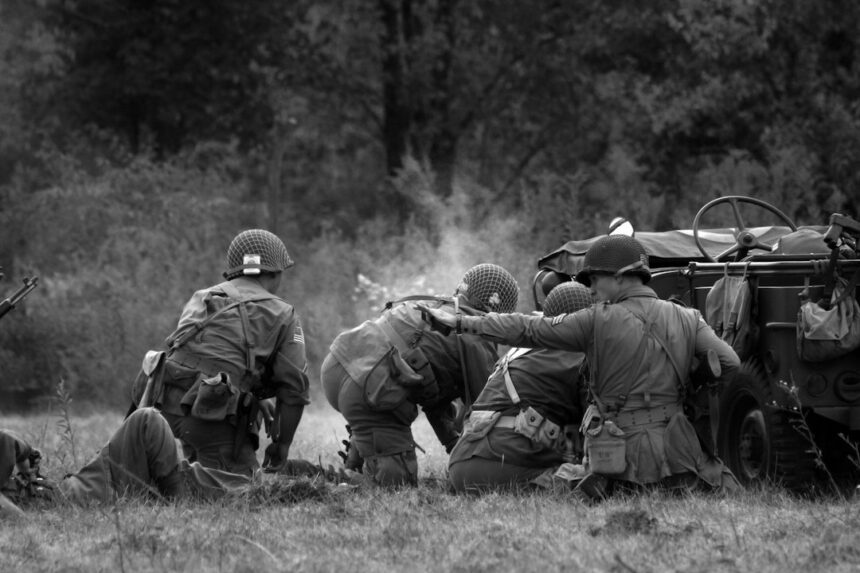
The Cold War, a period of geopolitical tension between the United States and the Soviet Union and their respective allies, spanned nearly half a century, leaving an indelible mark on the global landscape and the very fabric of American society. More than just a military standoff, it was an ideological battle, a technological race, and a constant underlying threat that shaped foreign policy, domestic anxieties, and the evolution of warfare itself. The documentary series, “Red, White, and Cold: American Cold War Military History,” offers a powerful and insightful journey through this pivotal era, dissecting the complexities of American military strategy, technological advancements, and the human cost of this prolonged global confrontation.
This ambitious documentary, presented in a multi-part series, eschews a simplistic narrative for a nuanced exploration of the multifaceted nature of the American military experience during the Cold War. From the initial post-World War II anxieties to the final dissolution of the Soviet Union, “Red, White, and Cold” meticulously examines the doctrines, decisions, and deployments that defined America’s role as a superpower. It moves beyond mere chronologies of events, delving into the motivations behind strategic choices, the ethical dilemmas faced by military leaders and policymakers, and the profound impact on the lives of soldiers, civilians, and the international community. Through archival footage, expert interviews, and meticulously crafted reenactments, the series paints a vivid portrait of a nation perpetually on alert, navigating a world teetering on the brink of nuclear annihilation.
The Dawn of a Bipolar World: Post-War Tensions and the Nuclear Shadow
The end of World War II marked not an era of peace, but the abrupt emergence of a new global order characterized by the ideological chasm between the capitalist West, led by the United States, and the communist East, dominated by the Soviet Union. “Red, White, and Cold” dedicates its initial segments to understanding the genesis of this bipolarity and the profound shift in American military posture it necessitated. The documentary skillfully illustrates how the shared victory against fascism quickly dissolved into mutual suspicion, fueled by differing political systems, economic models, and visions for the post-war world.
The Marshall Plan and Containment: Early Strategic Imperatives
The series highlights the critical early years of the Cold War, showcasing the development of core American foreign policy doctrines. The Marshall Plan, initially conceived as an economic recovery program for war-torn Europe, is presented not just as a humanitarian gesture but as a strategic maneuver to prevent the spread of communism by fostering stable, democratic economies. Furthermore, the documentary delves into the intellectual and political underpinnings of the containment policy, famously articulated by George Kennan. This strategy, which sought to prevent the expansion of Soviet influence without direct military confrontation, became the guiding principle of American foreign policy for decades. “Red, White, and Cold” explores how this doctrine was translated into tangible military commitments, from aid to Greece and Turkey to the establishment of NATO.
The Berlin Blockade and Airlift: A Defining Early Confrontation
A key early flashpoint, the Berlin Blockade and subsequent airlift, is vividly depicted. The documentary uses compelling footage and firsthand accounts to convey the immense logistical challenge and the symbolic importance of this standoff. It illustrates how the United States, through a remarkable feat of aerial logistics, demonstrated its unwavering commitment to West Berlin and its refusal to yield to Soviet pressure, solidifying the division of Germany and Europe.
The Korean War: The First Hot Conflict of the Cold War
The Korean War serves as a stark reminder that the Cold War was not solely a war of ideologies and proxy skirmishes; it also involved direct military engagement. “Red, White, and Cold” meticulously reconstructs the complex events leading up to the conflict, the initial North Korean invasion, and the subsequent intervention by United Nations forces, primarily led by the United States. The documentary examines the strategic debates surrounding intervention, the brutal realities of trench warfare, and the agonizing decision-making process that led to the armistice rather than a decisive victory. The human toll of this conflict, depicted through soldier testimonies and harrowing images, underscores the brutal cost of superpower rivalry.
The Shifting Sands of Strategy: From Limited War to Escalation Concerns
Within the context of the Korean War, the series explores the evolution of military strategy. The initial belief in swift, decisive victory clashed with the entrenched nature of the conflict and the ever-present fear of Soviet intervention. The documentary highlights the internal debates about escalation, the potential for nuclear war, and the delicate balance between achieving military objectives and avoiding wider conflict.
For those interested in exploring the intricacies of American Cold War military history, a compelling resource is available in the form of a documentary that delves into the strategic decisions and military engagements of the era. This documentary not only highlights key events but also provides insights into the political climate that shaped U.S. military actions during the Cold War. To learn more about this fascinating topic, you can visit the related article at this link.
The Nuclear Age and the Arms Race: Deterrence and the Brink of Annihilation
Perhaps the most defining characteristic of the Cold War was the existential threat posed by nuclear weapons. “Red, White, and Cold” dedicates significant attention to the development of nuclear arsenals, the doctrine of Mutually Assured Destruction (MAD), and the constant dance on the precipice of global catastrophe. The documentary portrays the scientific ingenuity and the immense industrial effort poured into developing increasingly powerful and sophisticated nuclear weapons by both superpowers.
The Genesis of Nuclear Power: From Hiroshima to the H-Bomb
The series traces the lineage of nuclear weapons from their horrifying debut over Hiroshima and Nagasaki to the development of the hydrogen bomb, a weapon of unimaginable destructive power. Expert interviews with scientists and military strategists offer insights into the moral and ethical considerations that accompanied this technological leap, as well as the perceived necessity of maintaining parity with the Soviet Union.
The Strategic Imperative of Deterrence: MAD and its Perilous Logic
The core concept of Mutually Assured Destruction is thoroughly explored. The documentary explains how the understanding that a nuclear attack by one side would inevitably result in the complete annihilation of both served as a fragile deterrent. The series delves into the psychological warfare, the constant simulations, and the immense pressure on leaders to maintain a credible nuclear deterrent while simultaneously seeking to avoid accidental war.
The Space Race: A Parallel Battlefield for Technological Supremacy
While not strictly a military endeavor, the Space Race is presented as a critical component of the Cold War competition, inextricably linked to military advancements. “Red, White, and Cold” illustrates how the Soviet Union’s early successes, particularly Sputnik, ignited a fierce sense of urgency and national pride in the United States. The documentary highlights the technological breakthroughs in rocketry, guidance systems, and satellite technology that were born from this competition, many of which had direct applications in military reconnaissance and missile development.
From Sputnik to the Moon Landing: A Demonstration of Might
The series chronicles the key milestones of the Space Race, from the launch of Sputnik to the monumental achievement of the Apollo moon landing. It emphasizes how these events were not just scientific triumphs but also powerful demonstrations of technological prowess and national resolve, viewed through the lens of the ongoing ideological struggle.
Proxy Wars and Global Conflicts: The Cold War on the Front Lines
While the specter of nuclear war loomed, the Cold War was also fought through a series of proxy conflicts across the globe. “Red, White, and Cold” meticulously examines these regional battles, where the superpowers supported opposing sides, transforming local disputes into arenas for ideological struggle. These conflicts, though often overlooked in broader historical narratives, represented significant military engagements and had profound consequences for the nations involved.
The Vietnam War: A Defining Quagmire of the Cold War
The Vietnam War receives extensive coverage, serving as a pivotal and deeply controversial chapter in American military history. The documentary delves into the complex political and military landscape of Southeast Asia, the rationale for American involvement, and the escalating commitment of troops and resources. It explores the tactical challenges, the effectiveness of different strategies, and the devastating impact of the war on both American soldiers and the Vietnamese population. The series does not shy away from the anti-war movement in the United States and the profound societal divisions the conflict created.
The Shifting Tides of Conflict: From Conventional Warfare to Counterinsurgency
Within the Vietnam War, the documentary highlights the evolution of military tactics. The initial reliance on conventional warfare proved inadequate against a determined insurgent force. The series examines the development and implementation of counterinsurgency strategies, the challenges of fighting an elusive enemy in a foreign land, and the psychological toll on those involved.
Conflicts in Africa, Latin America, and the Middle East: The Global Reach of Superpower Rivalry
Beyond Vietnam, “Red, White, and Cold” expands its scope to encompass the numerous other proxy conflicts that played out across the globe. The documentary examines American involvement in conflicts in Africa, such as the Angolan Civil War, and in Latin America, including support for various regimes and interventions in countries like Nicaragua. The Middle East, a region of immense strategic importance, is also explored, with the series detailing the role of the United States in supporting Israel and navigating the complex regional dynamics influenced by Soviet influence. These examples illustrate the far-reaching consequences of the Cold War rivalry and the often-unseen human cost in regions far from the direct confrontation between the superpowers.
The Doctrine of Intervention: Balancing Interests and Consequences
The documentary scrutinizes the rationale behind American interventions in these proxy conflicts. It explores the various motivations, including preventing communist expansion, securing vital resources, and maintaining regional stability. The series also critically examines the long-term consequences of these interventions, often highlighting the unintended outcomes and the lasting impact on the geopolitical landscape.
Technological Advancements and Military Modernization: The Ever-Evolving Battlefield
The Cold War was also a relentless technological arms race, with both sides constantly striving for military superiority through innovation. “Red, White, and Cold” dedicates considerable attention to the significant advancements in military technology that emerged during this period, transforming the nature of warfare.
The Jet Age and the Rise of Air Superiority
The documentary details the transition from propeller-driven aircraft to the era of high-speed jet fighters. It examines the development of strategic bombers capable of delivering nuclear payloads, the evolution of air-to-air combat, and the critical importance of achieving air superiority in modern warfare. The series showcases iconic aircraft and the strategies employed to dominate the skies.
The Strategic Bomber and the Nuclear Deterrent: A Constant Threat
The B-52 Stratofortress, for instance, is presented as a symbol of American nuclear deterrence. The documentary explores its development, its operational role, and the psychological impact of its constant presence in the skies as a visible manifestation of American military might.
The Nuclear Submarine and the Silent Deterrent
The advent of the nuclear submarine revolutionized naval warfare and the concept of nuclear deterrence. “Red, White, and Cold” explains the technological challenges and breakthroughs that enabled submarines to remain submerged for extended periods, armed with nuclear missiles. The documentary highlights the strategic importance of this “silent deterrent” and its role in maintaining a second-strike capability.
The Polaris and Trident Programs: Ensuring Global Reach
The series examines key submarine-launched ballistic missile programs, such as Polaris and Trident. It details the technological evolution and the strategic implications of these systems, which provided the United States with an unassailable nuclear deterrent capable of striking targets anywhere in the world.
The Dawn of the Information Age: Surveillance and Intelligence Gathering
The Cold War also spurred significant advancements in intelligence gathering and surveillance technologies. “Red, White, and Cold” explores the development of spy satellites, advanced reconnaissance aircraft, and sophisticated electronic eavesdropping capabilities. The documentary highlights the crucial role of intelligence in informing strategic decisions and shaping the understanding of the adversary’s intentions.
The U-2 Incident and its Aftermath: The Risks of Espionage
The infamous U-2 incident, where an American spy plane was shot down over Soviet airspace, is meticulously reconstructed. The documentary examines the implications of this event for international relations and the constant tension inherent in espionage during the Cold War.
In exploring the intricate dynamics of American Cold War military history, one can gain valuable insights from a related article that delves into the strategies and policies that shaped the era. This comprehensive piece highlights key events and figures that played pivotal roles in the Cold War, offering a deeper understanding of the geopolitical landscape. For those interested in further expanding their knowledge, I recommend checking out this informative resource at In the War Room, which provides a wealth of information on military strategies and historical analysis.
The Human Element: Sacrifice, Resilience, and the Enduring Legacy
While “Red, White, and Cold” focuses on military strategy and technological advancements, it never loses sight of the human cost of the Cold War. The documentary dedicates significant segments to the experiences of soldiers, their families, and the impact of the prolonged conflict on American society.
The Soldier’s Experience: From Basic Training to the Battlefield
Through interviews with veterans and archival footage, the series offers a poignant look at the realities of military service during the Cold War. It explores the rigors of basic training, the psychological impact of constant readiness, and the courage and sacrifice demonstrated on battlefields around the world. The documentary humanizes the soldiers, moving beyond the abstract concepts of strategy and doctrine to reveal the personal stories of those who served.
The Psychological Toll: PTSD and the Lingering Scars of Conflict
The series acknowledges the psychological toll of prolonged conflict and constant threat. It touches upon the emergence of Post-Traumatic Stress Disorder (PTSD) and the challenges faced by veterans in reintegrating into civilian life after their service. This aspect of the documentary is crucial for understanding the lasting impact of the Cold War on individuals and families.
The Home Front: Anxiety, Mobilization, and Cultural Impact
The Cold War was not solely fought on distant battlefields; it permeated American society. “Red, White, and Cold” examines the anxieties of the nuclear age, the civil defense drills, and the widespread fear of communist infiltration. The documentary explores how the Cold War influenced popular culture, from Hollywood films to literature, shaping public perception and reinforcing national identity. It also highlights the immense mobilization of resources and the economic impact of the sustained military buildup.
The Anti-War Movement and Societal Divisions: A Nation Divided
The series also addresses the significant opposition to the Cold War and its many conflicts, particularly the Vietnam War. It explores the rise of the anti-war movement, the protests, and the societal divisions that the conflicts engendered. This examination provides a more complete picture of the American experience during this era, acknowledging both the consensus and the dissent.
The End of an Era: The Fall of the Berlin Wall and the Dissolution of the Soviet Union
The documentary culminates with the dramatic events of the late 1980s and early 1990s, marking the end of the Cold War. “Red, White, and Cold” vividly portrays the fall of the Berlin Wall as a symbolic moment of liberation and the subsequent dissolution of the Soviet Union. The series reflects on the strategic decisions, the economic pressures, and the internal dynamics that led to the collapse of the Soviet empire, bringing an end to nearly half a century of superpower tension.
Lessons Learned and the Legacy of the Cold War: Shaping the Future
The concluding segments of the documentary offer a reflective look at the enduring legacy of the Cold War. It examines the lessons learned from this period of intense global competition, the shifts in international relations, and the ongoing impact on global security. “Red, White, and Cold” serves not just as a historical record but as a vital educational tool, reminding viewers of the profound sacrifices made, the complex challenges faced, and the enduring importance of understanding this pivotal era in shaping the world we inhabit today. The documentary’s comprehensive approach, its commitment to historical accuracy, and its nuanced exploration of the human element make it an essential viewing for anyone seeking a deeper understanding of American military history and its profound impact on the 20th century and beyond.

How a Dropped Socket Destroyed a Titan II Missile
FAQs
What is the focus of the American Cold War military history documentary?
The documentary focuses on the military history of the United States during the Cold War era, highlighting key events, strategies, and technologies.
Who are the key figures interviewed in the American Cold War military history documentary?
The documentary features interviews with military historians, veterans, and experts in Cold War history, providing insights and perspectives on the era.
What are some of the major events covered in the American Cold War military history documentary?
The documentary covers events such as the Korean War, Cuban Missile Crisis, Vietnam War, and the arms race between the United States and the Soviet Union.
How does the American Cold War military history documentary explore the impact of the Cold War on American society?
The documentary delves into how the Cold War influenced American society, politics, and culture, examining the fear of communism, nuclear proliferation, and the military-industrial complex.
Where can viewers watch the American Cold War military history documentary?
The documentary may be available for streaming on platforms like Netflix, Amazon Prime, or PBS, or it may be aired on television channels specializing in historical documentaries.