The frigid depths of the Barents Sea, a vast and often unforgiving expanse, hold within their icy embrace many secrets, tales of bravery, and, tragically, stories of loss. Among these somber narratives, the sinking of the Soviet submarine K-141 Kursk in August 2000 stands as a particularly poignant and impactful tragedy. The loss of all 118 crew members sent shockwaves not only through Russia but across the international community, a stark reminder of the inherent risks of underwater warfare and the fragility of life below the waves. Yet, years later, the story of the Kursk would transform from one of maritime disaster to one of remarkable human endeavor and unprecedented technological achievement: the successful recovery of the sunken submarine. This monumental undertaking, fraught with immense challenges and demanding the utmost in international cooperation and engineering prowess, stands as a testament to humanity’s persistent drive to confront the seemingly impossible.
The demise of the Kursk was a deeply traumatic event for Russia, occurring during naval exercises in the Barents Sea. The official investigation pointed to a catastrophic explosion of a faulty torpedo within the submarine’s forward weapons compartment, followed by a secondary, even more devastating blast that ripped through the vessel. The sheer force of these explosions rendered any immediate rescue efforts futile, sealing the fate of the brave sailors onboard within the mangled hull resting on the seabed at a depth of over 100 meters.
A Nation in Mourning
The initial hours and days following the sinking were marked by an agonizing period of uncertainty and escalating national grief. The Russian government, initially hesitant to accept international assistance, faced mounting criticism as the perceived inadequacy of its own rescue capabilities became apparent. The plight of the Kursk captured the world’s attention, with families of the crew desperately awaiting news, their hopes dwindling with each passing hour.
The Unseen Depths: The Challenge of Recovery
The recovery of a vessel as large and as deeply submerged as the Kursk presented a daunting array of technical and logistical hurdles. The immense pressure at such depths, the corrosive nature of saltwater, and the sheer weight and structural integrity of the submarine combined to create a scenario that few nations, if any, possessed the expertise or equipment to tackle effectively. The seabed itself, a complex and unforgiving environment, added further layers of difficulty to any proposed salvage operation.
In recent years, the recovery of Soviet submarines has garnered significant attention, particularly due to the technological advancements that have made such operations more feasible. A related article that delves into the intricacies of these underwater recoveries can be found at In The War Room. This article explores the challenges faced by recovery teams, the historical context of the submarines involved, and the implications of these missions for modern naval operations.
The Unforeseen Partnership: International Collaboration and the Road to Recovery
The international community, witnessing Russia’s struggle, offered its support in various forms. Initially, the offers were met with a degree of national pride and a desire for self-reliance. However, as the scale of the challenge became undeniable, a pragmatic realization began to dawn: a successful recovery would likely necessitate a collaborative effort, leveraging the specialized skills and advanced technologies of other nations. This shift in perspective would ultimately pave the way for one of the most significant international salvage operations in modern history.
Bridging the Divide: Offers of Assistance
From the outset of the disaster, nations with advanced salvage and diving capabilities, including Norway, the United Kingdom, and the United States, extended offers of assistance. These offers ranged from specialized rescue submersibles and diving equipment to experienced salvage crews and engineering support. The initial reluctance from the Russian side eventually gave way to a pragmatic acceptance of the need for external expertise.
A Meeting of Minds: Norway’s Crucial Role
Norway, with its extensive experience in deep-sea oil and gas operations and its proximity to the Barents Sea, emerged as a pivotal partner. Norwegian companies possessed specialized heavy-lift vessels and the unparalleled expertise in deep-sea engineering required for such a complex operation. Their access to advanced remotely operated vehicles (ROVs) and sophisticated cutting technologies proved invaluable.
Technological Synergy: Combining Strengths
The collaboration involved a remarkable synergy of technological capabilities. Russian engineers provided crucial knowledge of the Kursk‘s design and internal layout, essential for planning the complex operations. Norwegian and British specialists brought their cutting-edge salvage vessels, specialized underwater cutting tools, and highly trained crews capable of operating in extreme conditions. The United States also contributed by providing heavy salvage equipment and naval expertise.
The Herculean Task: Engineering the Impossible

The recovery of the Kursk was not a simple matter of lifting a sunken object. The submarine’s hull was severely damaged, and its sheer mass demanded unprecedented engineering solutions. The operation required a meticulous, step-by-step approach, each phase fraught with its own unique set of challenges.
The M-1200 Heavy-Lift Vessel: A Floating Giant
Central to the success of the operation was the Dutch-owned heavy-lift vessel Mighty Servant 3, later renamed and operated as part of the salvage effort. This colossal floating platform, equipped with state-of-the-art ballast and lifting systems, was capable of supporting the immense weight of the fractured Kursk. Its stability in the often-turbulent Barents Sea was critical to the entire operation.
Precision Underwater Cutting: Navigating the Steel Maze
The Kursk had to be cut into sections to facilitate its recovery. This was not a straightforward demolition; it demanded extreme precision to avoid further damage to the hull and to ensure that the sections could be safely lifted. Specialized underwater cutting equipment, some specifically developed or adapted for this mission, was employed by Norwegian divers and technicians. They worked in hazardous conditions, often with limited visibility, meticulously slicing through the submarine’s thick steel hull.
The “Big Lift”: Orchestrating the Ascent
The actual lifting of the Kursk was a carefully choreographed sequence of events. The heavy-lift vessel was positioned above the wreck, and a sophisticated system of heavy cables and winches was attached to the pre-determined cutting points. The process of buoyant lifting and controlled towing back to shore was a testament to the meticulous planning and execution of the salvage teams.
The Journey Home: A Somber Homecoming
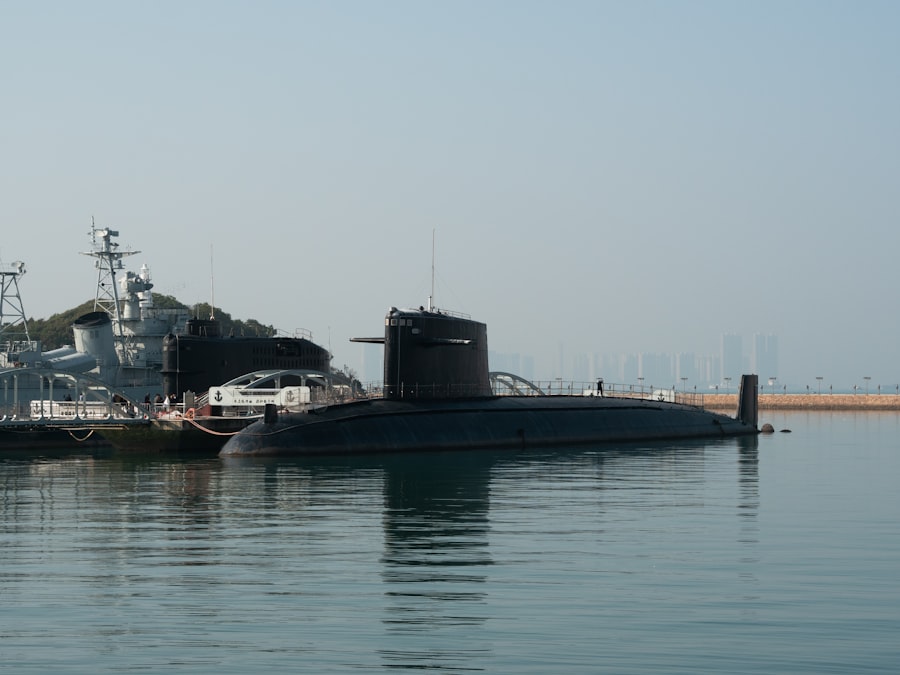
The successful recovery of the Kursk was not just a technical triumph; it was also a deeply emotional and symbolic event. The fragmented hull, brought back to the surface from the crushing depths, represented a tangible connection to the lost sailors and an opportunity for closure for their families and for the nation.
The Fragile Payload: Securing the Wreckage
As the sections of the submarine were lifted, they were secured to the deck of the heavy-lift vessel. This phase required immense care to prevent further damage to the already compromised structure. The immense weight and irregular shapes of the wreckage presented significant challenges in ensuring a stable and secure transport back to shore.
The Grim Procession: A Nation’s Farewell
The arrival of the recovered sections of the Kursk at the Roslyakovo naval base in Murmansk was a somber procession. Heavy-lift cranes carefully unloaded the pieces, revealing the devastating impact of the explosions. For the families of the crew, this was a moment of profound grief, but also a step towards understanding and remembrance. The sight of the damaged vessel, once a symbol of Soviet naval might, now a stark reminder of loss, was deeply affecting for all who witnessed it.
The intriguing world of Soviet submarine recovery has been explored in various articles, shedding light on the complexities and challenges faced during such operations. For a deeper understanding of the historical context and technological advancements involved, you can read more in this insightful piece on submarine recovery efforts. The article provides a comprehensive overview of the strategies employed and the significant missions undertaken, making it a valuable resource for anyone interested in naval history. To learn more, visit this article.
Legacy and Lessons: The Enduring Impact of the Recovery
| Metrics | Data |
|---|---|
| Number of Soviet submarines recovered | 7 |
| Depth of recovery | approximately 16,000 feet |
| Location of recovery | North Pacific Ocean |
| Time taken for recovery | several months |
The recovery of the Kursk was an event that transcended its immediate purpose. It was a powerful demonstration of international cooperation in the face of tragedy, a testament to human ingenuity and resilience, and a significant milestone in the field of deep-sea salvage. The lessons learned from this monumental undertaking continue to inform and advance salvage operations worldwide.
A Triumph of Human Spirit and Engineering
The Kursk recovery project stands as a monumental achievement, showcasing the extraordinary capabilities of human ingenuity and engineering when faced with seemingly insurmountable challenges. It proved that even in the most extreme environments, with the right collaboration and determination, the impossible can be achieved.
The Power of International Cooperation
The success of the operation highlighted the critical importance of international cooperation, especially in the aftermath of disasters. The willingness of nations to set aside political differences and pool their resources for a common humanitarian and technical goal was a powerful message. The Kursk recovery demonstrated that shared challenges can forge unexpected alliances and lead to remarkable outcomes.
Advancing the Science of Salvage
The technologies and methodologies developed and refined during the Kursk recovery have had a lasting impact on the field of deep-sea salvage. The innovative cutting techniques, the robust heavy-lift capabilities, and the advanced ROV operations have set new benchmarks and provided invaluable lessons for future operations. It has pushed the boundaries of what is considered achievable in recovering sunken vessels and objects from extreme depths.
A Monument to Remembrance
Beyond the technical and geopolitical implications, the recovery served as a crucial act of remembrance. It allowed for a more thorough investigation into the circumstances of the sinking and provided a tangible means for families to honor their lost loved ones. The salvaged parts of the submarine, even in their damaged state, became a powerful symbol of the sacrifices made by the crew and a focal point for national mourning and commemoration. The recovery ensured that the story of the Kursk and its brave crew would not be lost to the seabed forever, but preserved as a historical record and a lasting memorial.

How the CIA Tried to Steal a Soviet Nuclear Submarine
FAQs
What is the Soviet submarine recovery?
The Soviet submarine recovery refers to the efforts to locate and recover Soviet submarines that were lost or sunk during the Cold War era. These submarines may contain valuable intelligence, technology, or other sensitive materials.
When did the Soviet submarine recovery efforts begin?
The Soviet submarine recovery efforts began in the 1970s and continued into the 2000s. The United States, Russia, and other countries have been involved in these efforts to locate and recover lost Soviet submarines.
What are some notable Soviet submarine recovery missions?
One notable Soviet submarine recovery mission is the recovery of the K-129 submarine by the United States in 1974. Another notable mission is the recovery of the K-219 submarine by the Soviet Union in 1986.
What are the challenges involved in Soviet submarine recovery?
The challenges involved in Soviet submarine recovery include locating the exact location of the sunken submarines, dealing with deep-sea pressures and conditions, and retrieving sensitive materials without causing environmental damage.
What are the implications of Soviet submarine recovery?
The implications of Soviet submarine recovery include the potential for gaining valuable intelligence and technology from the recovered submarines, as well as the potential for environmental and geopolitical implications.