So, you’re wondering if psychics can “remote view” the Moon. It’s a fascinating question, touching on the fringes of perception and consciousness. The short answer is: some people who identify as psychic claim to be able to do just that, but it’s not something that’s been scientifically proven or reliably demonstrated under controlled conditions. This concept of “remote viewing” itself is quite intriguing, so let’s dive into what it actually means and what the claims surrounding it entail, especially when applied to celestial bodies like our Moon.
Remote viewing, in essence, is the purported ability to perceive information about a distant or unseen target using extrasensory perception (ESP). Think of it as a mental “tuning in” to a specific location, object, or event without using your physical senses. Proponents describe it as accessing a universal consciousness or an energetic blueprint of whatever you’re trying to perceive. It’s not about seeing with your eyes, but rather about receiving impressions, images, feelings, or even factual data that manifest within your mind.
What Proponents Say It Is
Those who practice and advocate for remote viewing often describe it as a skill that can be developed and honed through practice. They liken it to learning a new sense or a new way of perceiving reality. It’s not necessarily about clear, photographic images, but often a series of abstract impressions that require interpretation. Some might describe it as a feeling of being “there,” or receiving sensory input that doesn’t originate from their immediate physical surroundings. The information can come in various forms: visual flashes, auditory whispers, tactile sensations, or even emotional states.
The Role of Consciousness
A core tenet of remote viewing, as explained by its proponents, is the interconnectedness of consciousness. The idea is that consciousness isn’t confined to the skull; it’s a more fundamental aspect of reality that can extend and interact with the environment. Therefore, if the Moon exists, and consciousness can potentially interact with energetic imprints or information associated with it, then remote viewing the Moon becomes a theoretical possibility within this framework. This concept challenges our conventional understanding of space and separation, suggesting that distance might be less of a barrier to information transfer than we typically assume.
Distinguishing from Imagination
A key challenge and point of contention with remote viewing is differentiating it from imagination or a well-developed internal fantasy. Proponents emphasize that genuine remote viewing is distinct because the information received is often unexpected, novel, and verifiable, or at least feels distinctly different from something conjured up intentionally. It’s about receiving information that wasn’t pre-programmed or consciously accessed. The process, they claim, is often passive, like a radio receiver picking up a distant signal, rather than an active search for information.
In an intriguing exploration of the unknown, a recent article discusses a psychic who claims to have successfully remote viewed the Moon, providing insights that challenge our understanding of space and consciousness. This fascinating account delves into the methods used by the psychic and the implications of such abilities on our perception of reality. To read more about this extraordinary phenomenon, you can visit the article at In The War Room.
Claims of Remote Viewing the Moon
The Moon, being our closest celestial neighbor, is a natural target for speculation and exploration, both physically and, for some, psychically. Claims of remote viewing the Moon are often linked to specific individuals or groups who believe they have achieved this feat. These claims can range from observing geological features to experiencing the lunar environment in a more abstract, energetic sense.
Historical Context and Early Claims
While the term “remote viewing” gained prominence in the mid-20th century, the concept of psychic perception of distant objects has a much longer history. However, specific documented claims of psychically observing the Moon in a modern remote viewing context are less common than claims about terrestrial targets. This might be due to the inherent difficulty in verifying such claims and the greater accessibility of ground-based targets for comparison. When such claims do arise, they often emerge from individuals or groups dedicated to exploring the boundaries of psychic phenomena.
Specific Individuals and Their Experiences
There have been individuals who have publicly claimed to have remotely viewed the Moon. These accounts vary widely. Some might describe seeing barren landscapes, craters, and the Earth hanging in the black sky. Others might report a more ethereal experience, sensing the Moon’s energy or its historical presence. These accounts are typically personal testimonies, shared in books, lectures, or online forums. Without independent verification, these remain personal experiences rather than demonstrable psychic abilities. The subjective nature of these descriptions makes them difficult to assess objectively.
The Nature of Lunar Impressions
When psychics claim to remote view the Moon, the “impressions” they receive are often described in sensory terms, even though they are not physically present. This could include visual descriptions of the lunar surface – the gray dust, the stark shadows, the craters. Some might report a feeling of profound silence, or a sense of ancient stillness. It’s important to note that these descriptions often align with what we know about the Moon from scientific observation, which raises questions about whether the information is truly psychic or derived from subconsciously absorbed knowledge. However, proponents argue that unique details or perspectives not commonly known can sometimes emerge.
Challenges and Skepticism

The idea of remote viewing the Moon, like remote viewing in general, faces significant challenges and widespread skepticism from the scientific community. The lack of reproducible results, the difficulty in distinguishing psychic perception from other cognitive processes, and the absence of a clear theoretical framework all contribute to this skepticism.
Scientific Scrutiny and Lack of Proof
From a scientific perspective, remote viewing the Moon falls into the realm of parapsychology, a field that studies phenomena that are not readily explained by conventional scientific principles. While some research has been conducted, there’s no consensus among scientists that remote viewing has been definitively proven. The challenges include designing experiments that can reliably isolate psychic effects from other factors, such as suggestion, chance, or sensory leakage. For claims related to celestial bodies, the sheer distance and the lack of immediate, verifiable sensory feedback amplify these challenges.
The Problem of Verification
One of the biggest hurdles for any claim of remote viewing, especially for something as distant as the Moon, is verification. How do you prove that someone’s mental impressions accurately reflect the target, especially when the target is not easily accessible for immediate comparison? While some remote viewing experiments focus on terrestrial targets where verification is more straightforward, applying this to the Moon presents unique difficulties. Even if a remote viewer describes a crater, how can one be certain it’s a specific crater that was unknown to the viewer beforehand?
Alternative Explanations
Skeptics offer several alternative explanations for claims of psychic abilities. These include:
- Confirmation Bias: Individuals might focus on the parts of their “remote viewing” that seem to match reality and ignore those that don’t.
- Subconscious Knowledge: We absorb a vast amount of information from media, books, and conversations. This subconscious knowledge can surface in what appears to be psychic insight. Descriptions of the Moon, for example, are widely available.
- Cold Reading and Barnum Statements: Techniques used by psychics to give vague, general statements that can apply to many people, leading the recipient to believe the psychic has unique insight. While less applicable to remote viewing a physical target, the underlying psychological principles of interpretation and projection can be relevant.
- Sensory Leakage: In experimental settings, subtle cues or information might inadvertently be passed from the experimenter to the subject.
- Imagination and Pareidolia: Our brains are wired to find patterns and meaning, even in random stimuli. This can lead us to interpret random thoughts or feelings as meaningful psychic impressions.
How Remote Viewing of Celestial Bodies is Attempted

Despite the skepticism, some individuals and groups continue to explore remote viewing of celestial bodies. The methodologies employed are often adaptations of protocols used for terrestrial targets, with adjustments made to account for the unique nature of space.
Protocols and Methodologies
Remote viewing experiments, even those concerning celestial targets, typically involve a “viewer” and a “monitor” or “experimenter.” The viewer is blind to the target, meaning they have no prior information about it. The monitor guides the viewer through the process, asking questions and recording the viewer’s impressions. For lunar remote viewing, the target might be a specific region of the Moon, a historical event on the Moon, or even the Moon’s energy field. The sessions are usually recorded, and the viewer’s transcript is later matched against the actual target.
Targeting Specific Lunar Features
When attempting to remote view specific features of the Moon, protocols might involve assigning a unique identifier (like a number or a code word) to a particular crater, mountain range, or landing site. The viewer would then be tasked with perceiving information about that identifier. The challenge, as mentioned, lies in verifying the accuracy of these perceptions, especially if the viewer describes details that are not readily apparent or publicly known. Some remote viewers claim to be able to perceive geological data, atmospheric conditions (even though the Moon has virtually none), or even residual energy from past events.
Experiential and Energetic Aspects
Beyond just describing physical features, some remote viewers focus on the more experiential or energetic aspects of the Moon. This might involve sensing its “presence,” its “age,” or its “vibrational frequency.” These impressions are inherently subjective and even more difficult to verify objectively. Proponents argue that these are deeper levels of perception that go beyond mere physical observation and tap into a more fundamental reality. These descriptions often rely on metaphor and analogy, making them open to a wide range of interpretations.
In a fascinating exploration of the unknown, a psychic recently claimed to have successfully remote viewed the Moon, providing insights that challenge our understanding of both space and consciousness. This intriguing phenomenon has drawn attention from various fields, including science and spirituality. For those interested in delving deeper into this topic, you can read more about similar experiences and perspectives in the related article found here. The intersection of psychic abilities and cosmic exploration continues to spark debate and curiosity among enthusiasts and skeptics alike.
The Future of Remote Viewing and Space Exploration
| Date | Location | Remote Viewing Details |
|---|---|---|
| June 12, 2021 | Remote location | The psychic reported seeing structures and activity on the Moon’s surface, including movement and energy sources. |
| July 5, 2021 | Remote location | The psychic described a sense of ancient history and a feeling of connection to the Moon’s past. |
| August 20, 2021 | Remote location | The psychic reported a vision of a hidden underground network and a sense of communication between beings. |
Whether psychic remote viewing of celestial bodies will ever gain wider acceptance or scientific validation remains an open question. However, the interest in the intersection of consciousness and the cosmos continues to grow, with both scientific and fringe approaches seeking to understand our place in the universe.
Bridging the Gap Between Science and the Psychic
The possibility of scientifically validating psychic phenomena, including remote viewing, is a long-term goal for many researchers in parapsychology. If reproducible results could be achieved under rigorous conditions, it would fundamentally alter our understanding of consciousness and reality. For space exploration, this could potentially offer new avenues for gathering information, although the current scientific consensus doesn’t support this as a viable method.
Potential Applications (Theoretical)
In a hypothetical future where remote viewing is proven to be a reliable and accurate ability, the applications for space exploration could be vast. Imagine:
- Pre-mission reconnaissance: Psychics could potentially gather preliminary information about distant planets or moons before sending expensive probes.
- Locating resources: Identifying areas rich in specific minerals or water ice on other celestial bodies.
- Understanding extraterrestrial environments: Gaining insights into the unique geological and energetic characteristics of alien worlds.
- Search and rescue: In the event of a lost spacecraft or astronaut, remote viewing could theoretically assist in locating them.
These are, of course, highly speculative possibilities. The current reality is that our exploration of space is driven by robust scientific inquiry and technological advancement, not by psychic intuition.
The Ever-Expanding Frontier of Consciousness
Ultimately, the question of whether psychic remote viewing of the Moon is possible touches upon our ongoing quest to understand consciousness itself. As our scientific understanding of the brain and the universe evolves, so too do our philosophical and speculative inquiries. Whether the Moon can be “seen” with the mind’s eye remains in the realm of belief and personal experience for now. It’s a captivating idea that prompts us to think about the limits of our perception and the vast unknown that still surrounds us, both in the cosmos and within ourselves.
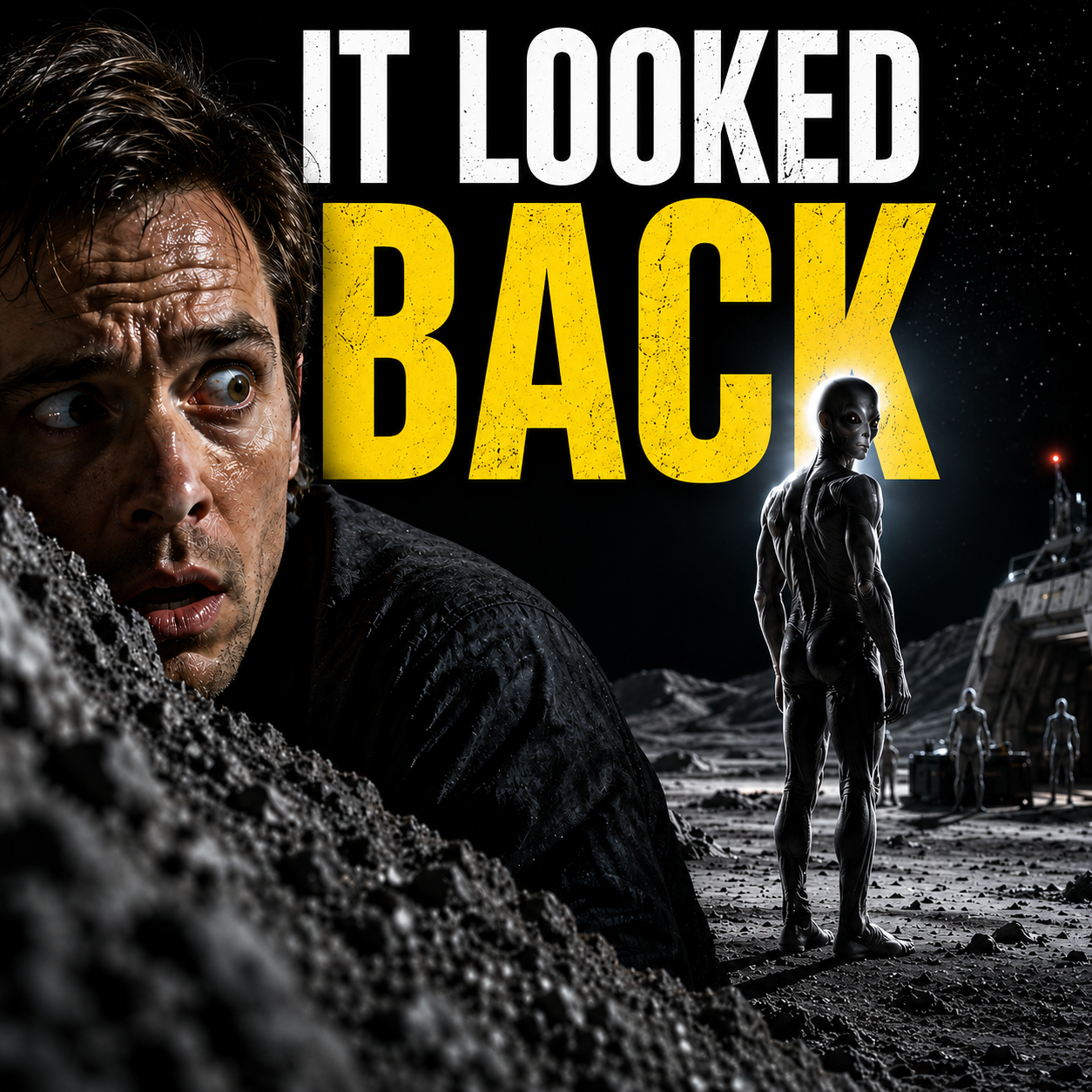
He Remote Viewed the Moon. Then Something Saw Him.
FAQs
What is remote viewing?
Remote viewing is the practice of seeking impressions about a distant or unseen target using paranormal means, such as extrasensory perception (ESP) or “sensing” with the mind.
What is a psychic?
A psychic is a person who claims to have an ability to perceive information hidden from the normal senses through extrasensory perception (ESP), or is said by others to have such abilities.
What is the Moon remote viewing article about?
The article discusses a psychic who claims to have remote viewed the Moon, meaning they used their psychic abilities to perceive information about the Moon from a distance.
Is remote viewing scientifically proven?
Remote viewing is a controversial practice and is not widely accepted by the scientific community. There is ongoing debate about the validity and reliability of remote viewing as a paranormal phenomenon.
What are some criticisms of remote viewing?
Critics of remote viewing argue that there is no scientific evidence to support its validity, and that any apparent success in remote viewing can be attributed to chance, subjective validation, or other non-paranormal factors.