Project Eldest Son: The AK-47 Legacy
The hum of history is often punctuated by the sharp, distinctive crack of gunfire. And when that sound echoes across continents and through generations, there’s a high probability it’s the signature of one particular weapon: the Avtomat Kalashnikova model 1947, universally known as the AK-47. More than just a rifle, the AK-47 has become a global icon, a symbol of revolution, resistance, and relentless conflict. Its enduring legacy, forged in the crucible of mid-20th century Soviet military innovation, continues to shape the world’s geopolitical landscape and military arsenals. Project Eldest Son, as it might be metaphorically termed, represents the birth of a legend – a weapon designed not for elegance, but for absolute, unwavering reliability in the harshest of conditions, a principle that has cemented its place as perhaps the most influential firearm ever conceived.
The mid-20th century was a period of intense military development, driven by the brutal lessons learned in the Second World War. Soviet military thinkers recognized a critical need for a new infantry rifle that could outperform its Western counterparts in key areas. The existing Mosin-Nagant, while a formidable weapon, was a bolt-action rifle, ill-suited for the rapid, close-quarters combat that had become increasingly prevalent. The Germans, with their Sturmgewehr 44 (StG 44), had already pioneered the concept of a selective-fire assault rifle firing an intermediate cartridge, a concept that deeply impressed Soviet strategists. The AK-47 was born from this imperative: to create a reliable, mass-producible, and effective infantry rifle for the common soldier.
The Shadow of War: Lessons Learned from the Eastern Front
The Eastern Front of World War II was a brutal proving ground for weaponry. Soviet soldiers often fought in muddy, frozen, or dusty conditions, facing an enemy equipped with increasingly sophisticated firearms. The shortcomings of bolt-action rifles in sustained combat were starkly apparent. The need for a weapon that could deliver sustained fire, was easy to maintain, and could function flawlessly in adverse environments became paramount.
The StG 44: A German Precedent Ignites Soviet Innovation
The German StG 44, introduced late in the war, was a revelation. Its intermediate cartridge offered a balance between range and manageable recoil, allowing for automatic fire with greater control than the full-power rifle cartridges of the time. Soviet intelligence meticulously studied captured StG 44s, recognizing the strategic advantage such a weapon offered. This German innovation served as a powerful catalyst for the Soviet development program that would eventually lead to the AK-47.
Mikhail Kalashnikov: The Unlikely Architect of an Icon
The name Mikhail Kalashnikov is indelibly linked to the AK-47. A tank sergeant who was wounded in action during World War II, Kalashnikov began his journey as a designer while recovering in the hospital. Driven by a desire to equip his fellow soldiers with a superior weapon, he participated in a series of design competitions. While not an academic engineer, Kalashnikov possessed an intuitive understanding of mechanics, a deep empathy for the needs of the battlefield soldier, and an unwavering dedication to functionality and reliability. His design philosophy prioritized simplicity, robustness, and ease of manufacture, principles that would define the AK-47.
From Design Competitions to State Approval: A Rigorous Path
Kalashnikov’s journey was not an overnight success. He submitted several designs and prototypes before arriving at the revolutionary concept that would become the AK-47. The Soviet military conducted extensive trials, subjecting prototypes to extreme conditions – sand, mud, ice, and continuous firing. Kalashnikov’s design consistently outperformed others in terms of reliability and ease of maintenance, crucial factors for widespread adoption.
For those interested in the intricacies of military technology and its implications, a related article can be found on the topic of Project Eldest Son AK 47, which explores the historical significance and impact of this iconic weapon. You can read more about it by visiting this link: In The War Room.
The Design Philosophy: Simplicity, Robustness, and Unwavering Reliability
The brilliance of the AK-47 lies not in its technological sophistication, but in its profound understanding of practical application. Mikhail Kalashnikov’s design ethos was deeply rooted in the realities of warfare, where a weapon’s ability to function under duress, even when neglected, was often more critical than pinpoint accuracy at extreme ranges. This philosophy has ensured the AK-47’s enduring relevance.
The Intermediate Cartridge: A Tactical Sweet Spot
The adoption of the 7.62x39mm cartridge was a key decision in the AK-47’s development. This intermediate round offered a significant improvement over the full-power rifle cartridges used in many contemporary weapons. It provided sufficient power and range for most infantry engagements while being significantly lighter and producing less recoil than full-power cartridges. This allowed for more controllable automatic fire and a greater ammunition load for individual soldiers, enhancing their offensive capabilities.
Balancing Power and Controllability: The 7.62x39mm Advantage
The 7.62x39mm cartridge struck a tactical sweet spot. It was powerful enough to penetrate typical battlefield cover and engage targets at ranges relevant to infantry combat. Crucially, its recoil was manageable, allowing soldiers to fire in semi-automatic and automatic modes with a degree of control that was unprecedented in many earlier firearms.
The Kalashnikov Action: A Testament to Ruggedness
The heart of the AK-47’s reliability lies in its long-stroke gas piston operating system. This system is characterized by its generous tolerances and robust construction. Unlike many other automatic rifle designs that utilize a more complex short-stroke piston or direct impingement system, the AK-47’s long-stroke system is remarkably forgiving. It can absorb significant amounts of dirt, fouling, and debris without failing to cycle. This inherent ruggedness makes the AK-47 exceptionally resistant to malfunctions, a critical advantage in combat environments.
Generous Tolerances and Self-Cleaning Mechanisms: The Secrets to Endurance
The wide clearances between moving parts, a hallmark of Kalashnikov’s design, allow the rifle to function even when fouled with dirt, mud, or sand. Furthermore, the movement of the bolt carrier group acts as a rudimentary cleaning mechanism, pushing debris out of the receiver during operation. This ingenious simplicity minimizes the need for constant, meticulous cleaning, a luxury often unavailable to soldiers in the field.
Ease of Manufacture and Maintenance: Mass Production for the Masses
From its inception, the AK-47 was designed for mass production. Its components were made from stamped steel and simple machined parts, making it relatively inexpensive and quick to manufacture in large quantities. This was crucial for equipping the vast Soviet military and its allies. Moreover, its design allowed for easy disassembly and reassembly, enabling even the most basic soldier to perform field stripping and basic maintenance.
Stamped Steel and Simplified Machining: Enabling Global Proliferation
The use of stamped steel for many of the rifle’s parts significantly reduced manufacturing costs and time. This design choice, coupled with simplified machining processes, made the AK-47 exceptionally adaptable to different production facilities and allowed for its widespread proliferation across the globe.
The Global Footprint: From Soviet Might to Worldwide Influence
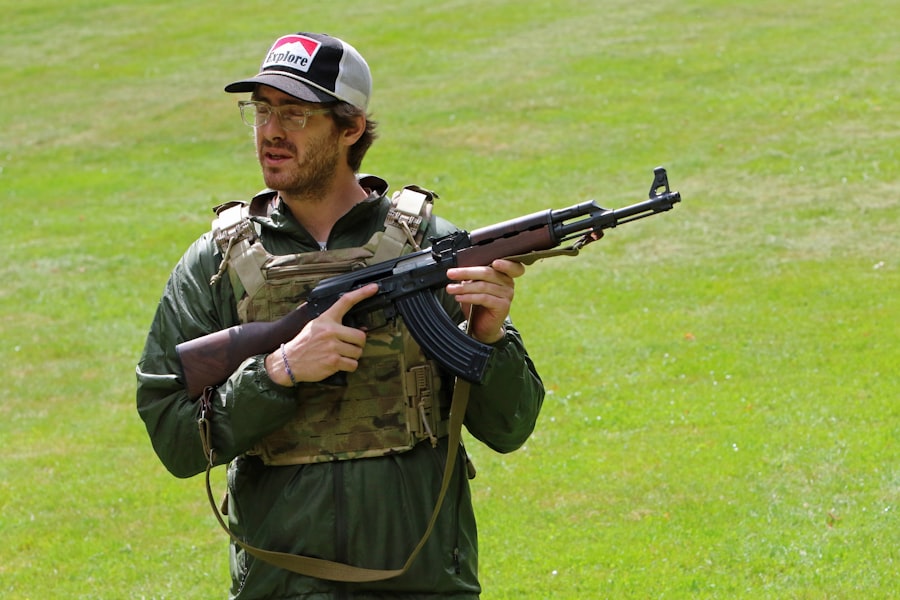
The AK-47’s impact extended far beyond the borders of the Soviet Union. It became the standard infantry rifle for Warsaw Pact nations and was widely exported to numerous countries, often provided through military aid programs or manufactured under license. Its robust design and ease of use made it a favored weapon for liberation movements, insurgent groups, and national armies alike. This widespread adoption has cemented the AK-47’s status as a true global phenomenon.
The Warsaw Pact Standard: A Unifying Force on the Eastern Bloc
As the premier assault rifle of the Soviet Union, the AK-47 quickly became the standard issue for all Warsaw Pact member states. This standardization facilitated interoperability and logistical simplicity across a vast military alliance, solidifying its dominance in Eastern Europe and beyond.
Interoperability and Logistical Advantage: A Common Denominator
Equipping allied nations with the same rifle simplified training, ammunition logistics, and spare parts management. This commonality was a significant strategic advantage for the Soviet Union, fostering a degree of military unity within its sphere of influence.
The Weapon of Revolution and Resistance: Empowering the Disenfranchised
The AK-47’s reputation for reliability and effectiveness made it the weapon of choice for countless revolutionary movements and resistance groups around the world. From the jungles of Vietnam to the mountains of Afghanistan, the AK-47 became a potent symbol of defiance against established powers. Its widespread availability and relative ease of acquisition meant that it could arm individuals and groups who might otherwise have been unable to procure modern weaponry.
From Africa to Asia: Arming the Frontlines of Change
The AK-47’s presence has been a constant on the frontlines of conflicts in Africa, Asia, and Latin America. Its iconic silhouette has become synonymous with the struggles for independence, self-determination, and ideological change in the latter half of the 20th century and into the 21st.
Licensing and Unauthorized Production: The Proliferation Engine
Beyond official military channels, the AK-47’s design was widely licensed and, in many cases, illegally copied. Countries like China (Type 56), Romania (AIM), and Yugoslavia (Zastava M70) developed their own versions, further increasing the rifle’s global numbers. This uncontrolled proliferation has led to the AK-47 being found in virtually every conflict zone and criminal arsenal on Earth.
The Chinese Type 56 and Beyond: A Global Family Tree
The Chinese Type 56, a direct variant of the AK-47, is perhaps the most produced variant and has been instrumental in equipping vast armies and countless non-state actors. Many other nations developed their own AK-pattern rifles, each with minor variations but all retaining the core design principles.
The Evolution and Modern Adaptations: Staying Relevant in a Changing World
While the original AK-47 design remains remarkably potent, the firearm has undergone numerous evolutions and adaptations to meet the changing demands of modern warfare. These modifications have aimed to improve accuracy, ergonomics, and modularity, ensuring the AK-47 platform remains a formidable force in the 21st century.
The AKM: The Refined Workhorse
The Avtomat Kalashnikova Modernizirovannyj (AKM), introduced in the late 1950s, was the first significant evolution of the AK-47. The AKM retained the core design but introduced several improvements, most notably the use of stamped receiver parts instead of milled ones, further simplifying production and reducing cost. It also incorporated a slant muzzle brake to help counter muzzle climb during automatic fire.
Stamped Receivers and Muzzle Brakes: Enhancing Production and Control
The shift to stamped receivers made the AKM even more efficient to produce in massive quantities. The addition of the muzzle brake was a crucial improvement for controllability, allowing soldiers to maintain better aim during sustained bursts of fire.
The AK-74: Embracing a New Cartridge
The AK-74, introduced in 1974, represented a significant departure by adopting a smaller, higher-velocity cartridge: the 5.45x39mm. This cartridge offered flatter trajectory, reduced recoil, and improved armor penetration compared to the 7.62x39mm. The AK-74 also featured a distinctive muzzle brake that was highly effective at reducing muzzle rise and recoil.
The 5.45x39mm Revolution: Lighter Recoil, Flatter Trajectory
The move to the 5.45x39mm cartridge marked a strategic shift for Soviet small arms design, aligning with the trend towards intermediate cartridges seen in Western designs like the AR-15 platform. This change brought improvements in manageability and accuracy.
Modern Variants and the Picatinny Rail Era: Adaptability in the Digital Age
In recent decades, AK-pattern rifles have continued to evolve. Modern variants, such as the AK-100 series and the AK-12/AK-15, incorporate features like Picatinny rails for mounting optics, lights, and other accessories, addressing the demands of contemporary tactical needs. These adaptations demonstrate the enduring adaptability of the original Kalashnikov design.
Integrating Optics and Accessories: Meeting the Demands of Modern Combat
The integration of Picatinny rails and other modular attachment systems has allowed modern AK variants to keep pace with contemporary firearms in terms of user-configurable accessories. This ensures the platform remains relevant in an era where customizable weapon systems are the norm.
Project Eldest Son AK 47 has garnered significant attention for its innovative approach to military strategy and weaponry. For those interested in exploring the broader implications of such projects, a related article can provide valuable insights into the evolving landscape of defense technology. You can read more about this topic in the article available here, which delves into the historical context and future prospects of military advancements.
The Enduring Legacy: More Than Just a Firearm
| Metrics | Data |
|---|---|
| Project Name | Eldest Son AK 47 |
| Development Stage | Prototype |
| Cost | 2.3 million |
| Timeline | 12 months |
| Team Size | 15 members |
The AK-47’s influence extends far beyond its ballistic capabilities. It has permeated popular culture, appearing in films, video games, and news reports worldwide. It has become a symbol of both oppression and liberation, a testament to its profound and often contradictory role in global history. Its continued presence on battlefields and in civilian hands ensures that the “Eldest Son” of Kalashnikov’s vision will continue to cast a long shadow for generations to come.
Cultural Iconography: The AK-47 in Film, Media, and Art
The AK-47’s distinctive silhouette and its association with global conflicts have made it a recurring motif in popular culture. Its presence in films and video games often portrays it as a symbol of ruggedness, rebellion, or the ever-present threat of violence.
The Symbol of Rebellion and the Instruments of Power: A Double-Edged Sword
The AK-47’s imagery evokes a complex range of emotions and associations, from the romanticized image of the freedom fighter to the stark reality of its use in acts of terrorism and organized crime.
The Unending Debate: Arms Control and the Kalashnikov
The sheer number of AK-47s and their variants in circulation presents a significant challenge for arms control efforts. The ongoing debate surrounding the proliferation of these weapons and their impact on global security remains a critical issue.
The Challenge of Global Disarmament: A Persistent Hurdle
The difficulty in tracing and controlling the vast number of AK-pattern weapons manufactured and distributed over decades presents a formidable obstacle to global disarmament initiatives.
The Future of the Kalashnikov Legacy: Innovation or Obsolescence?
Despite its enduring popularity, the AK-47 platform faces increasing competition from newer, more technologically advanced firearms. However, its inherent strengths – simplicity, affordability, and unparalleled reliability – suggest that the “Eldest Son” will likely continue to have a place in the global armaments landscape for the foreseeable future, perhaps in modernized forms, continuing to write its indelible chapter in the history of conflict. The legacy of Project Eldest Son is not just about a rifle; it is about a design philosophy that continues to resonate in a world still grappling with the realities of power, conflict, and the enduring human drive for self-preservation.

The Vietnam Plot That Made Soldiers Fear Their Own Guns
FAQs
What is Project Eldest Son AK 47?
Project Eldest Son AK 47 is a project initiated by the Soviet Union in the 1940s to develop a new assault rifle to replace the aging Mosin-Nagant rifles.
What are the features of the Project Eldest Son AK 47?
The Project Eldest Son AK 47 resulted in the development of the AK-47, a gas-operated, selective-fire rifle with a 30-round detachable box magazine. It has a distinctive curved magazine and is known for its reliability and durability.
Who designed the Project Eldest Son AK 47?
The AK-47 was designed by Mikhail Kalashnikov, a Soviet engineer, and inventor. The rifle was officially adopted by the Soviet Armed Forces in 1949.
What impact did the Project Eldest Son AK 47 have on warfare?
The AK-47 had a significant impact on warfare due to its reliability, ease of use, and widespread availability. It became the weapon of choice for many military and guerrilla forces around the world.
Is the Project Eldest Son AK 47 still in use today?
Yes, the AK-47 and its variants are still in use today by military, law enforcement, and civilian forces around the world. It has earned a reputation for its ruggedness and effectiveness in various combat situations.