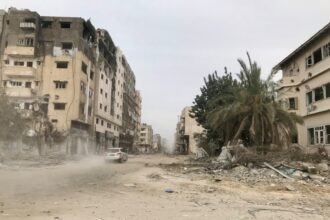
The American presidential legacy is a complex tapestry woven with threads of policy, public perception, and historical consequence. For any commander-in-chief, the desire to leave behind a lasting positive imprint is a powerful motivator. Yet, two protracted and ultimately tragic military engagements, Vietnam and Afghanistan, stand as stark monuments to the so-called “Presidential Legacy Trap.” These conflicts, spanning decades and multiple administrations, offer a compelling comparative study in how presidents grapple with, and are often ensnared by, the intractable realities of nation-building and counterinsurgency, ultimately shaping their historical standing in ways they likely did not intend.
The Vietnam War cast a long shadow over subsequent American foreign policy and, by extension, the presidential aspirations of those who followed. The sheer scale of loss in lives and resources, coupled with the profound societal divisions it engendered, created a deep-seated reluctance to commit to large-scale overseas interventions. Presidents learned hard lessons from Lyndon B. Johnson’s escalation and Richard Nixon’s eventual withdrawal.
The Domino Theory and its Unraveling
The Political Costs of Escalation
The Psychological Scars on American Society
The ‘Vietnam Syndrome’ and its Influence on Subsequent Administrations
The memory of widespread anti-war protests, the erosion of public trust in government, and the lingering sense of a mission gone awry became a potent deterrent. This “Vietnam Syndrome” often manifested as a cautious approach to military commitments, a desire for clear objectives, and an emphasis on public and congressional support before engaging in prolonged conflicts. While intended to prevent a repeat of the past, this caution also sometimes clouded judgment and contributed to a delayed or insufficient response to emerging threats.
The discussion surrounding presidential legacies often highlights the challenges faced in foreign interventions, particularly when comparing the Vietnam War to the conflict in Afghanistan. An insightful article that delves into this topic is available at this link, where the complexities of military engagement and the long-term implications for U.S. leadership are examined. This comparison sheds light on how the outcomes of these wars have shaped public perception and the political landscape for subsequent administrations.
Afghanistan: A New Battleground, A Familiar Trap
Following the September 11th attacks, Afghanistan presented a seemingly clear and justifiable objective: dismantle al-Qaeda and prevent the re-emergence of a haven for terrorists. However, what began as a limited military intervention to achieve tactical goals gradually morphed into a protracted nation-building endeavor, mirroring, in unsettling ways, the trajectory of Vietnam. The initial consensus that coalesced around the war eroded over time, replaced by weariness and doubt.
The Bush Doctrine and the War on Terror
The Evolution of Objectives: From Counterterrorism to Nation-Building
The Obama Administration’s Pivot and the Persistent Insurgency
The Trump Era and the Search for an Exit
Each president inherited the conflict with different intentions and strategies, yet all ultimately found themselves entangled in its complexities. George W. Bush’s initial decisive action, aimed at eliminating immediate threats, paved the way for the long-term commitment. Barack Obama, inheriting a burgeoning conflict, sought to recalibrate the strategy with a troop surge and a focus on Afghan security forces, a move that proved insufficient to overcome the deeply entrenched challenges. Donald Trump, campaigning on an anti-endless wars platform, ultimately negotiated a withdrawal agreement that had devastating consequences, highlighting the difficulty of cleanly disengaging from such a complex conflict.
The Nature of Insurgency and Counterinsurgency in the Presidential Calculus

Understanding the core challenges of counterinsurgency and insurgency was crucial, yet seemingly never fully grasped to a degree that allowed for a clear path to victory or effective withdrawal. Presidents often entered these conflicts with a belief in American exceptionalism and the capacity to impose external solutions, underestimating the resilience of local resistance and the inherent difficulties in fostering democracy and stability in deeply fractured societies.
The Elusive Enemy: Asymmetric Warfare and Adaptability
The Challenge of Winning Hearts and Minds
The Corruption and Weak Governance of Partner Nations
The Illusion of a Military Solution
The persistent nature of insurgencies in both Vietnam and Afghanistan, characterized by their ability to adapt, regroup, and exploit local grievances, proved to be a formidable obstacle for American military might. The notion that superior firepower and advanced technology could guarantee victory proved to be an oversimplification of the complex socio-political dynamics at play. Presidents, often advised by military strategists focused on kinetic outcomes, struggled to translate battlefield successes into sustainable political progress. The inherent limitations of imposing external governance models on deeply rooted societies began to surface, revealing a fundamental disconnect between stated goals and achievable realities.
The Role of Presidential Perception and Public Opinion

The enduring legacy of any presidency is inextricably linked to how the public and historians perceive their decisions. The Vietnam War, with its televised brutality and widespread dissent, indelibly marked the American psyche. For Afghanistan, while the early days saw broad support, the protracted nature of the conflict, the rising human cost, and the eventual ignominious withdrawal led to a similar erosion of public faith. Presidents are acutely aware of the narrative surrounding their actions, and the “legacy trap” often involves the struggle to control that narrative amidst unfolding, often negative, events.
The Impact of Media Coverage
Shifting Public Support and the Tides of War Fatigue
The Narrative of Victory vs. The Reality of Stalemate
The Long-Term Judgment of History
The continuous flow of information, particularly in the age of the internet and social media, amplified the impact of unfolding events. Images and stories of casualties, civilian suffering, and perceived failures could quickly galvanize opposition and erode support for the war effort. Presidents found themselves in a constant battle to shape public perception, often attempting to frame the conflict in terms of national security imperatives or the pursuit of noble ideals. However, when the on-the-ground realities failed to align with these narratives, disillusionment inevitably set in, impacting not only the president’s immediate standing but also their place in historical accounts. The eventual outcomes in both Vietnam and Afghanistan, characterized by unmet objectives and significant losses, have cast a pall over the presidencies associated with them, underscoring the formidable challenge of crafting a positive legacy in the face of such complex and costly endeavors.
The complexities of presidential legacies often become evident when comparing the Vietnam War and the conflict in Afghanistan, as both have left lasting impacts on American foreign policy and public perception. A thought-provoking article that delves into this topic can be found at In the War Room, where it explores how these two wars shaped the decisions and reputations of U.S. presidents. Understanding these historical contexts can provide valuable insights into the challenges faced by leaders in navigating military engagements and their long-term consequences.
Lessons Learned (or Not): The Enduring Presidential Legacy Trap
| Aspect | Vietnam War | Afghanistan War |
|---|---|---|
| Duration | 1955-1975 | 2001-2021 |
| US Troop Casualties | 58,220 | 2,448 |
| Civilian Casualties | 2 million | 47,245 |
| Financial Cost | 168 billion | 2.26 trillion |
| Outcome | US withdrawal and communist victory | Taliban resurgence after US withdrawal |
The experiences in Vietnam and Afghanistan offer a stark and consistent set of lessons for presidential decision-making regarding foreign interventions. The core of the “legacy trap” lies in the difficulty of accurately assessing the complexities of foreign conflicts, the limits of military power in achieving political objectives, and the long-term consequences of nation-building efforts. Presidents who fail to heed these lessons risk repeating historical mistakes, finding their aspirations for a positive legacy overshadowed by the unintended and often tragic outcomes of prolonged engagements.
The Danger of Mission Creep
The Importance of Exit Strategies, Not Just Entry Strategies
The Limits of American Power and the Need for Humility
The Unforeseen Consequences of Intervention
The repeated pattern of mission creep, where initial limited objectives expand into open-ended commitments, has been a recurring feature in both conflicts. The development of clear, achievable exit strategies, rather than solely focusing on the initial rationale for engagement, is paramount. Furthermore, the historical record suggests a persistent underestimation of the resilience of local resistance and an overestimation of the capacity for external powers to unilaterally shape the destiny of complex societies. The “legacy trap” serves as a cautionary tale, demonstrating that the pursuit of a grand presidential legacy can, paradoxically, lead to enduring historical condemnation if it is built on a foundation of miscalculation and an inability to adapt to the intractable realities of foreign intervention. The specter of both Vietnam and Afghanistan continues to inform and complicate the foreign policy calculations of every subsequent American president.
FAQs
What is the US presidential legacy trap?
The US presidential legacy trap refers to the challenge faced by US presidents when dealing with military interventions in foreign countries, particularly in Vietnam and Afghanistan. It involves the difficulty of extricating the US from prolonged and costly conflicts while also preserving the country’s reputation and the president’s legacy.
How does the US involvement in Vietnam compare to its involvement in Afghanistan?
The US involvement in Vietnam and Afghanistan both resulted in prolonged and costly conflicts. In Vietnam, the US became embroiled in a long and ultimately unsuccessful war, while in Afghanistan, the US engaged in a lengthy conflict with mixed results. Both conflicts have posed significant challenges for US presidents and have had lasting impacts on US foreign policy.
What are the similarities and differences in the US presidential approach to Vietnam and Afghanistan?
The US presidential approach to Vietnam and Afghanistan has similarities in terms of the challenges faced in extricating the US from prolonged conflicts. However, there are also differences in the specific strategies and tactics employed in each conflict, as well as in the geopolitical context and the nature of the adversaries involved.
How have US presidents grappled with the legacy trap in Vietnam and Afghanistan?
US presidents have grappled with the legacy trap in Vietnam and Afghanistan by attempting to balance the need to end costly and unpopular conflicts with the desire to preserve US credibility and their own legacies. This has involved a range of strategies, including troop withdrawals, negotiations with adversaries, and efforts to shape public perceptions of the conflicts.
What are the long-term implications of the US presidential legacy trap in Vietnam and Afghanistan?
The long-term implications of the US presidential legacy trap in Vietnam and Afghanistan include the shaping of US foreign policy, the impact on global perceptions of US power and credibility, and the enduring legacies of these conflicts for the countries involved. These conflicts have also influenced subsequent US military interventions and the public’s attitudes towards war and foreign policy.