Pearl Harbor: Tactical Win, Strategic Loss
The attack on Pearl Harbor, a pivotal moment in the Second World War, is often lauded for its sheer audacity and devastating effectiveness. On December 7, 1941, the Imperial Japanese Navy launched a surprise aerial assault on the United States naval base in Hawaii, achieving a tactical masterpiece that crippled the Pacific Fleet. However, as history has unfolded, this brilliant execution proved to be a profound strategic miscalculation, ultimately sealing Japan’s fate and galvanizing the United States into a war it was initially hesitant to enter. The attack, while a stunning tactical victory, irrevocably altered the course of the war, transforming a distant conflict into an all-consuming American crusade.
The motivations behind Japan’s decision to attack Pearl Harbor were complex and deeply rooted in their ambition for regional dominance and their perception of American interference in their expansionist agenda. For years, Japan had been engaged in a protracted war in China and sought to secure vital resources, particularly oil and rubber, from Southeast Asia. The United States, a growing economic and military power, viewed Japan’s aggression as a threat to its interests in the Pacific and had responded with economic sanctions, including an oil embargo. This embargo, in particular, was seen by Japanese strategists as an existential threat, pushing them towards a decisive confrontation.
The Seeds of Conflict
The late 1930s and early 1940s witnessed a steady escalation of tensions between the United States and Japan. Japan’s invasion of Manchuria in 1931 and its subsequent expansion into China were met with increasing disapproval from Western powers. The US, along with Britain and China, had been providing aid to China, and the Stimson Doctrine, which refused to recognize territorial changes brought about by force, underscored America’s opposition to Japanese aggression. As Japan continued its military campaigns, the US gradually tightened the screws.
The Oil Embargo: A Turning Point
The critical turning point came in July 1941 when the United States, in response to Japan’s occupation of French Indochina, imposed a comprehensive oil embargo. This was a devastating blow to Japan, which was heavily reliant on imported oil for its war machine and its burgeoning industrial economy. With less than two years’ worth of oil reserves, Japan faced a stark choice: either capitulate to American demands and abandon its expansionist ambitions or risk war. For many within the Japanese military and government, war seemed the only viable path to survival and the realization of their grand vision of a Greater East Asia Co-Prosperity Sphere.
The Strategic Calculus of Surprise
Japanese strategists, led by Admiral Isoroku Yamamoto, recognized that a direct confrontation with the United States would be an immensely difficult undertaking. Yamamoto, uniquely educated in the West, understood the industrial might and resilience of America. He believed that if Japan could deliver a decisive blow to the US Pacific Fleet at the outset of the conflict, it might cripple American naval power long enough for Japan to establish its dominance in Southeast Asia and consolidate its gains. The hope was that such a devastating initial victory would demoralize the United States and potentially lead to a negotiated peace favorable to Japan.
The attack on Pearl Harbor is often viewed as a tactical victory for Japan, as it successfully crippled the U.S. Pacific Fleet in a surprise assault on December 7, 1941. However, this victory ultimately led to a strategic defeat for Japan, as it galvanized American resolve and resulted in the United States entering World War II with full force. For a deeper exploration of this paradox, you can read the article on this topic at In the War Room, which discusses the implications of the attack and its long-term consequences for both nations involved.
The Dawn of Devastation: A Tactical Masterpiece
The attack on Pearl Harbor was a meticulously planned and flawlessly executed operation. The Japanese task force, comprising six aircraft carriers, two battleships, three cruisers, and numerous destroyers and submarines, sailed silently across the vast expanse of the Pacific. The element of surprise was paramount, and the Japanese achieved it with chilling efficiency.
The Deception and the Approach
For weeks, Japanese diplomatic overtures to the United States were deliberately designed to mislead. While negotiations were ostensibly ongoing, the fleet was already steaming towards Hawaii. Radio silence was strictly maintained, and the fleet navigated through remote waters, carefully avoiding known shipping lanes. The American forces at Pearl Harbor, despite some intelligence indicating potential Japanese aggression, were largely caught unaware of the scale and proximity of the impending threat. The belief that the Japanese would not dare to attack such a heavily fortified base contributed to the complacency.
The Waves of Destruction
On the morning of December 7, 1941, at 7:55 AM Hawaiian time, the first wave of Japanese aircraft, launched from the carriers, descended upon Pearl Harbor. The attack was divided into two main waves, targeting airfields and then the naval vessels. The objective was to neutralize the air power on the ground and then decimate the ships at anchor. Torpedo bombers, dive bombers, and fighter planes unleashed a torrent of bombs and torpedoes with devastating accuracy.
The Devastating Toll
The results were catastrophic for the US Pacific Fleet. Battleships, the pride of the American navy, were particularly vulnerable moored in neat rows. The USS Arizona was struck by a bomb that ignited its forward magazine, causing an explosion that ripped the ship apart and killed 1,177 of its crew. The USS Oklahoma capsized, trapping hundreds of sailors. Other battleships, including the USS West Virginia, USS California, and USS Utah, suffered severe damage or sank. In total, 18 ships were sunk or damaged, and over 2,400 Americans were killed, with more than 1,100 wounded. Crucially, all of the American aircraft carriers were at sea and thus escaped the attack, a detail that would prove profoundly significant.
The Ripple Effect: America Awakens
The shock and outrage that swept across the United States in the wake of Pearl Harbor were palpable. The attack, perceived as a cowardly and unprovoked act of aggression, united a nation divided by isolationist sentiments. The days of American neutrality were over; the nation was now unequivocally committed to war.
The Galvanizing of a Nation
President Franklin D. Roosevelt famously declared December 7, 1941, as “a date which will live in infamy.” The attack shattered any remaining illusions of American invincibility and galvanized public opinion. Support for entering the war, which had been hesitant and divided, surged to an unprecedented level. Congress swiftly declared war on Japan, and the nation mobilized for a conflict that would demand immense sacrifice and resources.
The Industrial Might Unleashed
The attack on Pearl Harbor, while a tactical victory for Japan, inadvertently triggered the full might of American industrial power. The United States, with its vast manufacturing capabilities and abundant resources, was able to rapidly rebuild its fleet and ramp up its production of war materials. The damage inflicted on the Pacific Fleet, while severe, ultimately proved to be temporary, as American shipyards worked tirelessly to replace lost vessels and innovate new naval technologies.
The Declaration of War and Global Implications
The United States’ entry into the war dramatically shifted the global balance of power. The Allied forces gained a powerful new ally with immense industrial and military potential. The war in Europe, which had been raging for years, now had the full backing of American resources and manpower. Similarly, the conflict in the Pacific, which had been primarily a struggle between Japan and China, was transformed into a full-blown theater of war involving all major Allied powers.
The Strategic Blunder: Missed Opportunities and Long-Term Consequences

Despite the immediate tactical success, the attack on Pearl Harbor represented a profound strategic blunder for Japan. The failure to destroy the American aircraft carriers and the underestimation of America’s resolve proved to be fatal flaws in their calculations.
The Undestroyed Carriers: A Fatal Omission
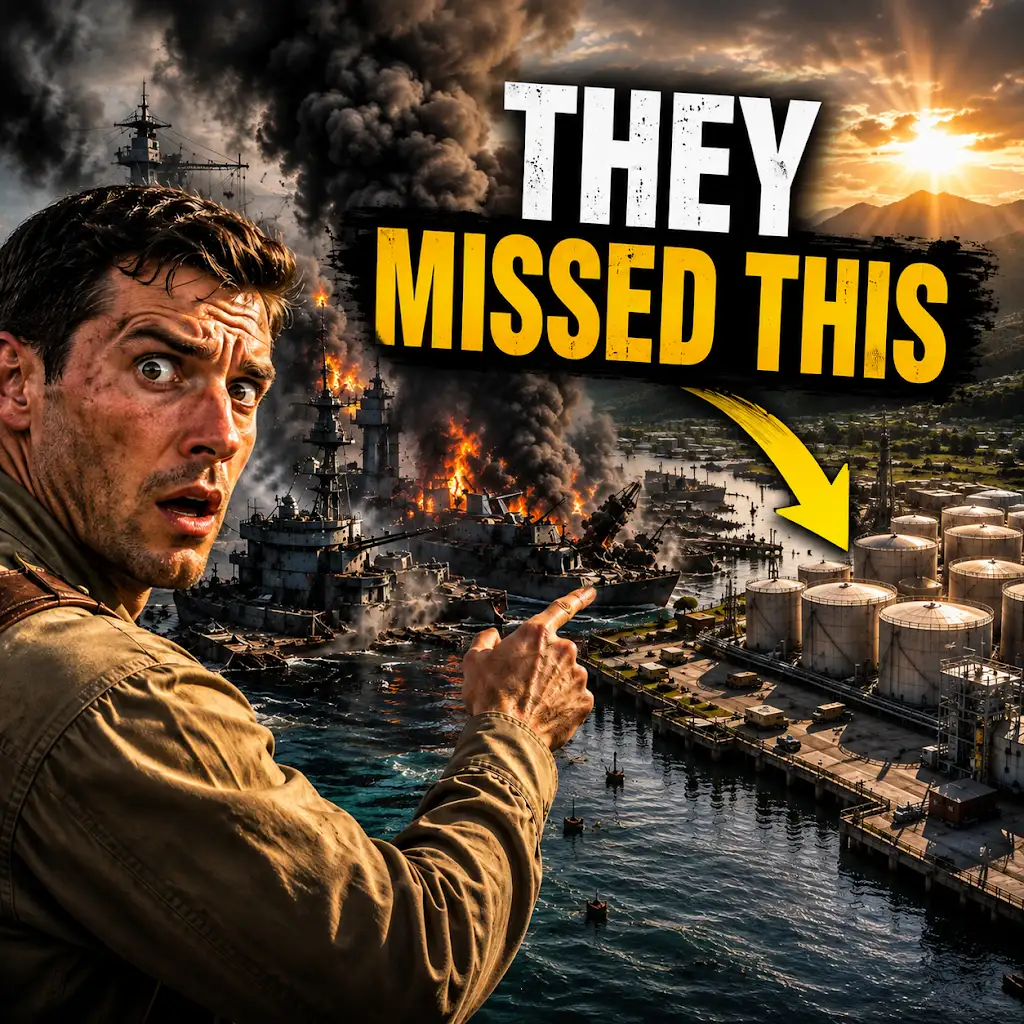
The most critical tactical error by the Japanese was their failure to target and destroy the American aircraft carriers. These vessels, far more flexible and powerful than battleships in the evolving naval warfare landscape, were at sea during the attack. Their survival allowed the United States to project air power across the Pacific, a capability that would prove decisive in subsequent battles like Midway and Guadalcanal. Admiral Yamamoto himself later lamented that the attack would be a “great defensive success” for the Americans.
The Underestimated Resolve of the United States
Perhaps the most significant strategic miscalculation was the Japanese underestimation of the American will to fight. They believed that a swift and decisive blow would break America’s spirit and lead to a negotiated peace. Instead, the attack on Pearl Harbor ignited a fierce determination for total victory. The Japanese failed to comprehend the depth of American patriotism and the nation’s capacity for sustained, all-out warfare. The war that followed was not a limited engagement but a long, brutal struggle for survival and dominance.
The War of Attrition and Industrial Superiority
Japan’s strategy relied on a quick victory and the hope that the United States would eventually tire of the conflict. However, the reality was a protracted war of attrition. The United States, with its superior industrial capacity, could sustain a far greater rate of production and replacement of losses than Japan. While Japan achieved early victories, it could not match the overwhelming flow of ships, planes, and weapons produced by American factories. This industrial imbalance was a decisive factor in the eventual Allied victory.
The attack on Pearl Harbor is often viewed as a tactical victory for Japan, yet it ultimately led to a strategic defeat in the larger context of World War II. This paradox is explored in depth in a related article that discusses how the initial success of the surprise attack failed to achieve its long-term objectives. For a comprehensive analysis of this critical turning point in history, you can read more about it in this insightful piece on the implications of Pearl Harbor at In the War Room.
The Long Shadow of December 7th
| Aspect | Details |
|---|---|
| Date | December 7, 1941 |
| Location | Pearl Harbor, Hawaii |
| Attackers | Imperial Japanese Navy |
| Outcome | Tactical victory for Japan, but strategic defeat in the long run for the United States |
| Damage | 8 battleships, 3 cruisers, 4 destroyers, and 188 aircraft destroyed |
| Casualties | 2,403 Americans killed and 1,178 wounded |
| Impact | Led to the United States’ entry into World War II |
The attack on Pearl Harbor remains a potent symbol of the devastating consequences of miscalculation and the unpredictable nature of warfare. It serves as a stark reminder that tactical brilliance alone is insufficient to guarantee strategic success.
The Legacy of a Surprise Attack
The phrase “Pearl Harbor” has become synonymous with surprise attacks and the profound impact they can have on the course of history. It is studied in military academies and history classrooms worldwide as a case study in strategic planning, intelligence failures, and the psychological impact of warfare. The attack forever altered the relationship between the United States and Japan and left an indelible mark on the collective memory of both nations.
The Cost of Ambition
For Japan, the attack on Pearl Harbor marked the beginning of a path that ultimately led to its defeat and devastation. The ambition for regional dominance, fueled by a complex interplay of nationalism, resource scarcity, and perceived external threats, led to a war that it was ultimately ill-equipped to win. The tactical brilliance of the attack was overshadowed by the strategic folly of provoking an enemy with the industrial might to wage a global war.
The Turning Point in the Pacific War
Ultimately, Pearl Harbor was the event that irrevocably drew the United States into the Second World War, transforming it from a largely European conflict into a truly global conflagration. While the initial objective of crippling the US Pacific Fleet was achieved, the long-term consequences were the exact opposite of what Japan had intended. It was a tactical triumph that paved the way for a strategic defeat, a devastating lesson in the unforgiving calculus of war. The “Day of Infamy” was not the twilight of American power, but its fiery dawn on the global stage.
Japan Won Pearl Harbor—So Why Did It Lose the War?
FAQs
What was the tactical victory at Pearl Harbor?
The tactical victory at Pearl Harbor refers to the successful surprise attack carried out by the Japanese on the United States Pacific Fleet on December 7, 1941. The attack resulted in the destruction of numerous American ships and aircraft, effectively crippling the fleet.
What was the strategic defeat at Pearl Harbor?
The strategic defeat at Pearl Harbor refers to the long-term consequences of the attack. While the Japanese achieved a tactical victory by inflicting significant damage on the US Navy, the attack ultimately galvanized the American public and led to the United States entering World War II, ultimately leading to Japan’s defeat.
How did the attack on Pearl Harbor impact the United States?
The attack on Pearl Harbor had a profound impact on the United States. It led to a surge of patriotism and unity among Americans, and ultimately resulted in the country’s entry into World War II. The attack also prompted a massive mobilization of resources and manpower for the war effort.
What were the consequences of the attack on Japan?
While the attack on Pearl Harbor initially gave Japan a tactical advantage in the Pacific, it ultimately led to their strategic defeat. The United States’ entry into the war shifted the balance of power, and Japan faced a series of defeats that culminated in their surrender in 1945.
What lessons were learned from the attack on Pearl Harbor?
The attack on Pearl Harbor taught the United States the importance of preparedness and vigilance in the face of potential threats. It also underscored the need for strong intelligence and communication systems to prevent similar surprise attacks in the future.