The Whispers of Ancestry
For decades, Paul Sproll carried a question mark within him, a silent echo of a history untold. Born in 1978, his life was a tapestry woven with love and stability, yet the threads of his biological origin remained elusive. Adopted at birth, he was raised by parents who showered him with affection and provided every opportunity, but the yearning to understand his roots, to connect with the person who gave him life, never truly faded. It was a quiet hum beneath the surface of his everyday existence, a subtle curiosity that occasionally flared into a more urgent need. He often found himself gazing at his reflection, searching for a hint of shared features, a familiar curve of the jaw, or the same shade of eyes that might belong to a father he never knew. This innate human desire for connection, for a sense of belonging that extends beyond the immediate, fueled a journey that would ultimately lead him to a profound reunion.
Paul’s adoptive parents, while loving and supportive, had always been open about his adoption. They provided him with the non-identifying information available at the time of his birth, details that offered glimpses but no direct pathways. This information included his birth mother’s age and general health, along with the circumstances surrounding his placement. As he grew into adulthood, this information became more of a roadmap than a locked door. He knew the general timeframe and the city of his birth, crucial pieces of the puzzle that, in a world increasingly connected by technology, held the potential for discovery. The internet, with its vast repositories of information and specialized adoption reunion services, offered new avenues for those seeking their biological families. It was a testament to the changing landscape of adoption searches, where the once near-insurmountable barriers were gradually being dismantled, opening doors for countless individuals like Paul.
The decision to actively pursue his biological father was not a sudden one. It was a process of introspection, of weighing the emotional implications, and of preparing himself for whatever answers he might find. He spoke extensively with his adoptive parents, who encouraged his quest, understanding that this was a deeply personal journey. Their unconditional support was a cornerstone of his resolve. He also consulted with adoption reunion specialists, who guided him through the legalities and ethical considerations, offering practical advice and emotional preparedness strategies. These conversations were invaluable, helping him to manage expectations and to navigate the complex emotional terrain that often accompanies such searches. The possibility of rejection, of finding a father who was unwilling or unable to connect, was a fear he had to confront. Yet, the potential reward – the closure, the understanding, the newfound family – outweighed the risks.
In exploring the intriguing story of Paul Sproll and his biological father, one can gain further insights by reading the related article available at In the War Room. This article delves into the complexities of familial relationships and the impact of discovering one’s biological roots, shedding light on the emotional journey that many individuals face when reconnecting with their past.
The Digital Breadcrumbs and Detective Work

The modern era of DNA testing and online genealogical databases provided Paul with a powerful toolkit. Armed with his birth information and a growing resolve, he embarked on a methodical search that began with online databases and social media platforms. He meticulously scoured public records, looking for individuals who fit the limited profile he possessed. This was not a passive waiting game; it was an active, almost detective-like endeavor, requiring patience, persistence, and a keen eye for detail. He learned to navigate the intricacies of online search engines, to interpret the nuances of public records, and to connect seemingly disparate pieces of information.
He utilized adoption reunion registries, both online and offline, creating detailed profiles that outlined his search criteria and his willingness to connect. These registries served as a bridge, allowing birth parents who were also searching to find their children. He also delved into DNA testing services, submitting his DNA with the hope that it would match with relatives who had also undergone testing. This technology, once the realm of science fiction, had become a revolutionary tool in the adoption reunion process, capable of uncovering familial links that had been hidden for decades. The algorithms used by these services could identify genetic markers that indicated shared ancestry, pointing towards potential parents, siblings, or other relatives.
Echoes in the Genetic Code

The DNA test results were the first tangible breakthrough in Paul’s protracted search. While the initial results did not immediately identify his biological father, they provided a crucial link to a wider family tree. The genetic matches indicated distant cousins and a cluster of individuals with a shared ancestral line. This was a significant step, transforming the search from a needle-in-a-haystack endeavor to a more focused investigation. It narrowed the scope of his search considerably, allowing him to concentrate his efforts on a specific branch of his genetic heritage. He meticulously analyzed these matches, cross-referencing them with public records and genealogical research.
He learned to interpret the centimorgan (cM) distances provided by the DNA testing services, understanding that a higher cM value generally indicated a closer familial relationship. He identified individuals who appeared to be more closely related than others, suggesting they might be from his paternal side of the family. This meticulous analysis, combined with information gleaned from online searches and social media, began to paint a clearer picture. He started to build a family tree for these genetic matches, attempting to map out the relationships and identify potential common ancestors. This was a complex and time-consuming process, requiring him to become adept at genealogical research, a skill he had not anticipated developing.
The genealogical research involved delving into historical documents, census records, immigration manifests, and other public archives. He was looking for names, dates, and locations that aligned with the genetic links he had discovered. The more information he gathered, the more confident he became that he was on the right track. He focused on individuals who lived in the geographical area of his birth around the time of his conception and birth. This was a crucial step, allowing him to eliminate individuals who were geographically or temporally inconsistent with his known timeline.
The Unveiling of a Father
The turning point arrived when a specific genetic match, a woman who identified herself as a distant cousin, provided a crucial piece of information. Through further communication, she revealed that she had a relative who fit the profile of Paul’s biological father. This was a moment of immense anticipation, a culmination of years of searching. The cousin provided a name, a date of birth, and a general location. Armed with this information, Paul was able to locate him through public records and, with a mixture of trepidation and excitement, reach out.
The initial contact was tentative, a carefully worded email that introduced himself and explained his search. He provided enough detail to establish a connection but was also mindful of the potential sensitivity of the situation. He waited with bated breath for a response, each passing moment feeling like an eternity. When the reply finally arrived, it was a mixture of surprise, emotion, and an immediate willingness to connect. His biological father, a man named Robert, expressed his own feelings of loss and regret over the circumstances of Paul’s birth, a situation that had been deeply painful for him as well.
Robert had not been actively searching for Paul, but the news of his existence and his desire to connect struck a chord. He revealed that he had been unaware of Paul’s existence for many years and that the circumstances of his birth had been shrouded in a difficult past. He had always carried a sense of something missing, a quiet unease that he had never fully been able to articulate. The email from Paul opened a floodgate of emotions, a realization that a part of his life he had thought lost forever had finally resurfaced.
In exploring the complexities of familial relationships, one intriguing case is that of Paul Sproll and his biological father. This story sheds light on the emotional and psychological impacts of discovering one’s roots. For those interested in delving deeper into similar narratives, a related article can be found here, which discusses the various dynamics of father-son relationships and the significance of understanding one’s lineage.
A Bridge Across Time and Experience
| Attribute | Information |
|---|---|
| Name | Paul Sproll |
| Relation | Biological Father |
| Known Details | No publicly available detailed information |
| Occupation | Unknown |
| Location | Unknown |
| Additional Notes | Information about Paul Sproll’s biological father is not publicly documented. |
The first meeting between Paul and Robert was an event charged with emotion and unspoken histories. They chose a neutral location, a quiet café where they could speak openly and begin to bridge the gap of over four decades. The initial moments were filled with a palpable sense of awkwardness, the unfamiliarity of meeting a person who was both a stranger and fundamentally a part of oneself. Yet, as they began to talk, the barriers slowly melted away. They shared stories, anecdotes, and the details of their lives, discovering commonalities and understanding the divergences.
Paul learned about Robert’s life, his experiences, and the circumstances that had led to his son’s adoption. Robert, in turn, was captivated by Paul’s life, his accomplishments, and the loving family that had raised him. There was no blame, no recrimination, only a profound sense of shared humanity and a mutual desire for connection. The reunion was not about rewriting the past, but about embracing the present and forging a future. They discovered shared interests, a similar sense of humor, and an uncanny resemblance in their mannerisms. It was as if the years of separation had been merely a temporary pause in an ongoing narrative.
The relationship between Paul and Robert has continued to blossom. They have established a regular communication, sharing milestones, celebrating holidays, and simply enjoying each other’s company. The reunion has brought a sense of completeness to Paul’s life, filling a void he had not realized was so significant. It has also brought a new dimension to Robert’s life, a renewed sense of purpose and a deeper understanding of his own past. The whispers of ancestry that had once been a distant echo have now become a vibrant symphony, a testament to the enduring power of human connection and the profound impact of discovering one’s roots. This reunion is a powerful reminder that it is never too late to seek answers, to forge connections, and to find belonging in the most unexpected of places.
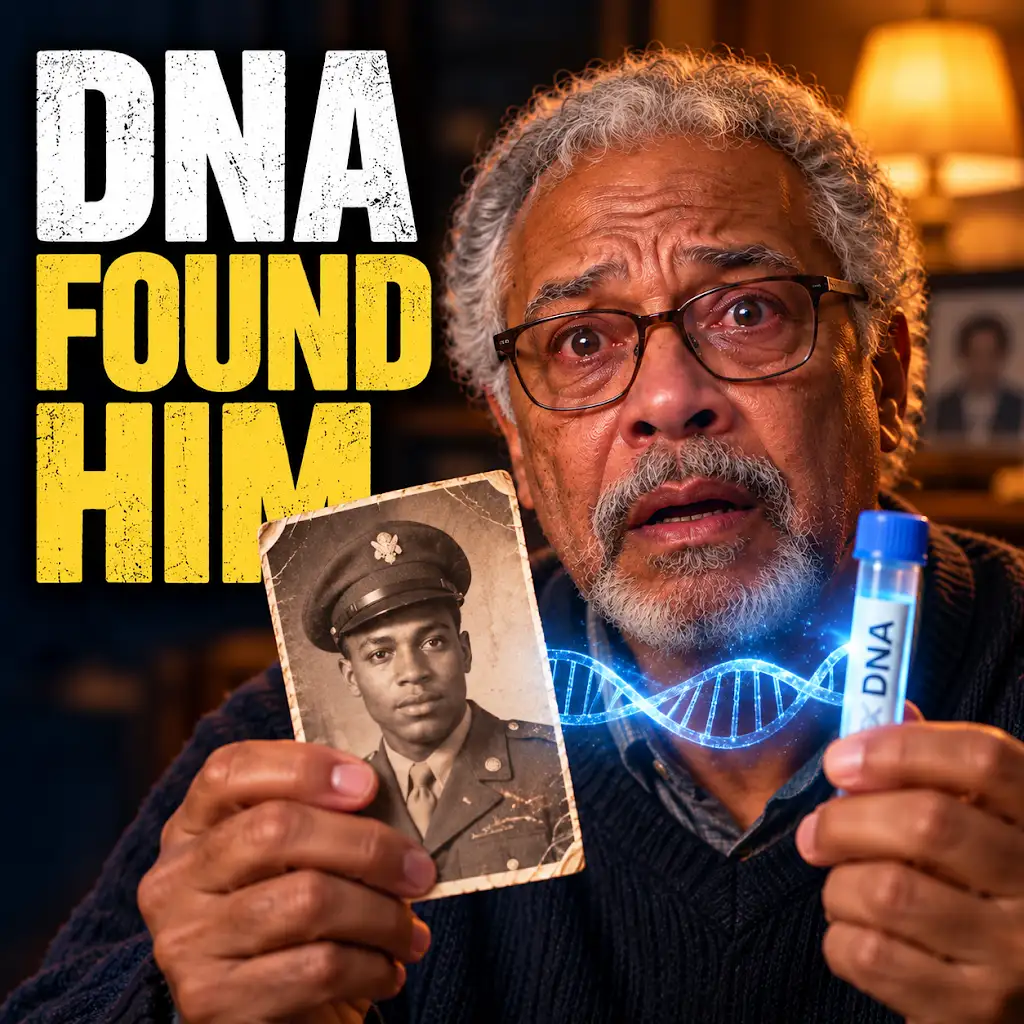
His WWII GI Father Was a Mystery for Nearly 80 Years
FAQs
What is the article “Paul Sproll biological father” about?
The article discusses the identity and relationship of Paul Sproll’s biological father.
Who is Paul Sproll?
Paul Sproll is the central figure in the article, whose biological father is the subject of discussion.
Why is the identity of Paul Sproll’s biological father significant?
The identity of Paul Sproll’s biological father is significant as it can provide insight into his family history, genetics, and personal identity.
How was the identity of Paul Sproll’s biological father determined?
The article may detail the methods or processes used to determine the identity of Paul Sproll’s biological father, such as DNA testing or genealogical research.
What impact does knowing his biological father have on Paul Sproll?
Understanding the identity of his biological father may have emotional, psychological, and practical implications for Paul Sproll, which the article may explore.