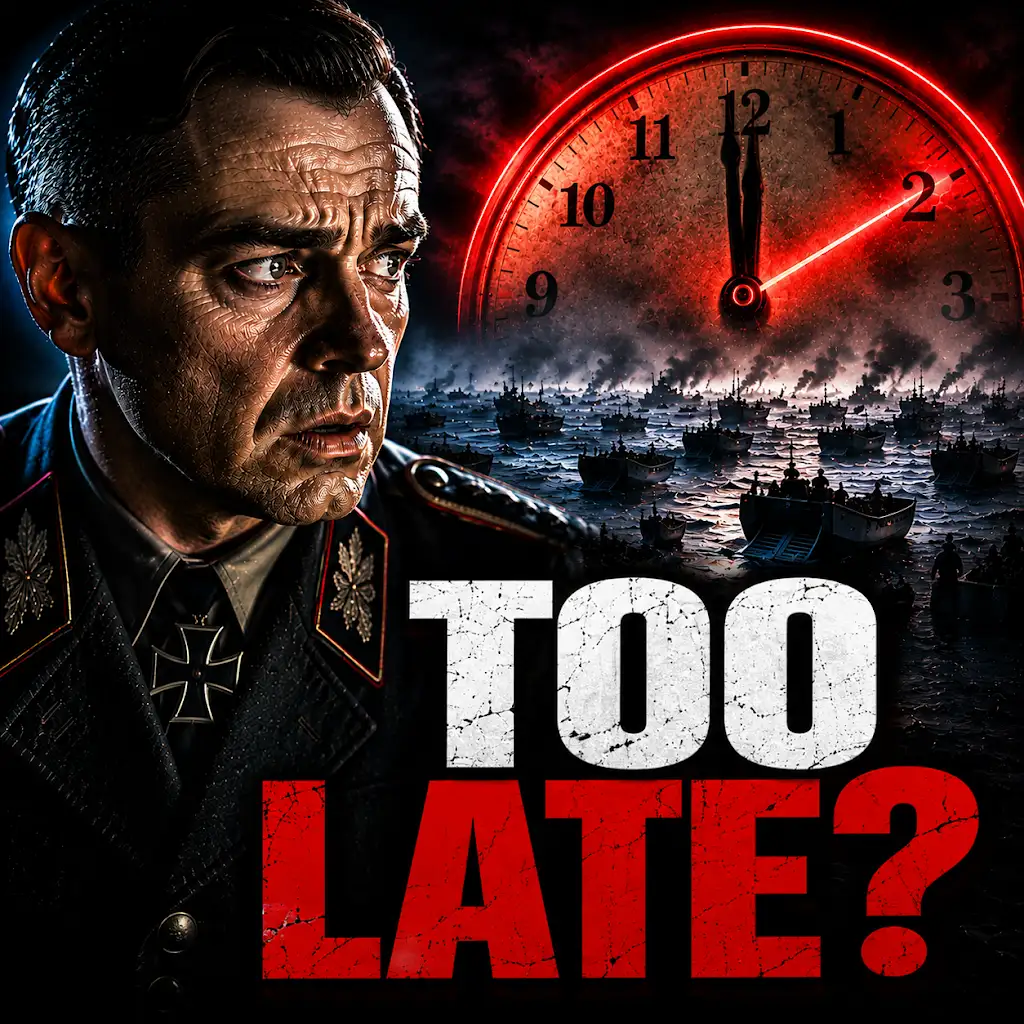
The Panzer Lehr Division, a formidable force of the German Wehrmacht, arrived in Normandy in the spring of 1944, a veteran unit hardened by years of combat across the Eastern Front and Tunisia. Its deployment to this crucial sector was a clear indication of the High Command’s apprehension regarding an impending Allied invasion. Originally formed in 1943 as a demonstration unit, its ranks were filled with experienced soldiers and its equipment was state-of-the-art, including the latest Panzer IV and Panther tanks, as well as a significant complement of self-propelled guns and armored vehicles. Panzer Lehr was intended to be the sharp edge of the German response, a mobile reserve capable of rapidly reacting to and crushing any Allied landings. However, the chaos and deception surrounding the Allied D-Day landings, coupled with the division’s own unfortunate positioning, would transform this elite unit into a tragic symbol of futile resistance.
The origins of Panzer Lehr were rooted in the need for a highly mobile, well-equipped armored formation capable of fulfilling diverse combat roles. The initial concept was to create a “demonstration” or “training” division, hence the name “Lehr” (which translates to “teaching” or “demonstration” in German). This unit was designed to showcase the latest in armored warfare tactics and equipment, and to provide a benchmark for other Panzer divisions.
Formation and Early Training
Panzer Lehr Division was officially established in January 1943. Its cadre was drawn from experienced personnel serving in various Panzer training and replacement units. The division was deliberately equipped with the most advanced tanks and armored vehicles available at the time, including the formidable Panther medium tank, which was just entering widespread service. This focus on cutting-edge technology and veteran manpower aimed to create a division that was not only a formidable fighting force but also a living textbook for armored warfare. Early training exercises were rigorous, focusing on rapid deployment, combined arms coordination, and offensive operations. The division’s leadership emphasized initiative and adaptability, qualities that would be severely tested in the crucible of Normandy.
Strategic Purpose and Equipment
The strategic purpose of Panzer Lehr evolved beyond its initial training role. As the war turned against Germany, the need for mobile reserves capable of plugging gaps on the front lines became paramount. Panzer Lehr, with its high level of equipment and experienced troops, was deemed an ideal candidate for this crucial role. Its formidable arsenal included a significant number of Panther tanks, which were superior in firepower and armor protection to most Allied tanks at the time. In addition to Panthers, the division was equipped with Panzer IV tanks, Sturmgeschütz IV assault guns, and a variety of armored personnel carriers and reconnaissance vehicles. This concentration of armored might made Panzer Lehr a significant threat on paper, capable of delivering a powerful blow against any invading force.
The Crucible of Normandy: Pre-Invasion Maneuvers
As the Allied invasion loomed, Panzer Lehr found itself strategically positioned, albeit in a manner that would prove disadvantageous. Its presence in the vicinity of Normandy was not accidental, but the specific operational directives it received were hampered by Allied deception efforts and the fragmented nature of German defenses.
Deployment and Geographic Positioning
Panzer Lehr was initially stationed in the Pas-de-Calais region, the area where the Germans, and particularly Hitler himself, expected the main Allied landing. This was a deliberate attempt by the Allies to deceive the Germans into believing that Pas-de-Calais was the primary invasion target, drawing German reserves away from Normandy. When the true invasion occurred on June 6, 1944, Panzer Lehr was ordered to redeploy to the Normandy sector. This movement, however, was not immediate. The division was initially held in reserve, partly due to the uncertainty surrounding the scale and location of the landings and partly due to the difficulties in coordinating such a large armored formation’s movement.
Allied Deception and Misinformation
Operation Fortitude, the elaborate Allied deception campaign, played a crucial role in shaping the German response and, consequently, the deployment of Panzer Lehr. Allied agents and radio transmissions fed the German High Command misinformation about the intended invasion sites, creating a phantom army under General Patton in the Pas-de-Calais. This successfully convinced many German commanders, including Hitler, that Normandy was only a diversionary attack and that the main assault would occur elsewhere. This miscalculation meant that Panzer Lehr, a critical reserve unit, was not initially positioned to react with maximum speed and impact to the D-Day landings.
The Darkest Hour: D-Day and Immediate Aftermath
June 6, 1944, dawned with the thunder of Allied artillery and the roar of aircraft. The Panzer Lehr Division, caught off guard by the speed and scale of the Normandy landings, began its agonizing journey to the front lines, a journey fraught with delays and escalating resistance.
The Initial Shock and Delayed Response
The Allied airborne landings on the night of June 5-6, 1944, and the subsequent seaborne assaults on June 6, were met with confused and fragmented German responses. Panzer Lehr, although alerted, was not immediately committed to battle. Orders were relayed, delayed, and sometimes contradictory. The division’s commanding officer, Generalleutnant Fritz von der Heydte, was initially tasked with securing key bridges in the Caen sector, a critical objective that would have severely hampered the Allied advance from the Orne River. However, these orders were later rescinded, and the division was ordered to move south to counter the perceived main threat in the Caen area. This series of command decisions and the inherent slowness of troop movements for such a large formation meant that Panzer Lehr arrived piecemeal and at a crucial disadvantage.
The Battle for Carentan: A Symbol of Futility
One of the most brutal and emblematic engagements for Panzer Lehr in the initial phase of the Normandy campaign was the battle for Carentan. This strategically vital town, situated at the nexus of the Utah and Omaha beachheads, became a focal point of fierce fighting. Panzer Lehr was committed to retake Carentan from American forces. The fighting was intense and attritional. The division’s tanks, though powerful, were hampered by the bocage terrain and faced determined American infantry supported by artillery and anti-tank guns. Despite inflicting heavy casualties, Panzer Lehr was unable to dislodge the American defenders. The failure to recapture Carentan represented a significant early setback for the German defense and a costly expenditure of Panzer Lehr’s strength. The fierce fighting in and around Carentan also highlighted the growing effectiveness of American anti-tank tactics and the devastating impact of Allied air superiority, which repeatedly targeted German armor.
The Bocage Grind: Attrition and the Loss of Strength
The hedgerow country of Normandy, known as the bocage, proved to be a treacherous and unforgiving battlefield for armored formations like Panzer Lehr. The dense vegetation and narrow lanes negated the advantages of tanks, turning them into vulnerable targets for Allied infantry.
The Challenges of Bocage Warfare
The unique terrain of Normandy, characterized by dense hedgerows, sunken lanes, and small fields, was a significant impediment to armored warfare. These natural fortifications provided excellent cover for Allied infantry and anti-tank teams, allowing them to ambush German tanks from close range. The confined spaces also restricted the maneuverability of Panzer Lehr’s tanks, forcing them into predictable kill zones where they could be targeted by bazookas, anti-tank guns, and artillery. Visibility was often severely limited, making reconnaissance difficult and increasing the risk of surprise attacks. The hedgerows themselves, often several feet high and reinforced with earth, were almost impervious to tank fire and could only be breached with specialized equipment or by overwhelming force, further hindering Panzer Lehr’s advance.
Encounters with Allied Armor and Infantry
As Panzer Lehr advanced, it clashed with a variety of Allied armored units, including American Sherman tanks and British Cromwells. While the Panther tanks of Panzer Lehr often held a technological advantage in terms of firepower and armor, they were frequently outmaneuvered, ambushed, and disabled by superior Allied tactics and the effective use of terrain. Allied infantry, trained in bocage fighting, proved adept at neutralizing tanks using anti-tank weapons and coordinating their attacks with supporting artillery. The attritional nature of these engagements began to wear down Panzer Lehr, with significant losses of personnel and materiel incurred in often fruitless assaults. The division’s once formidable strength was gradually eroded, and its ability to conduct large-scale offensive operations was severely compromised.
The Long Road to Destruction: Retreat and Annihilation
Following the initial engagements and the failure to break the Allied beachheads, Panzer Lehr found itself embroiled in a desperate defensive struggle. The relentless Allied advance, coupled with continuous air attacks, sealed the division’s fate.
The Falaise Pocket: A Trap Sprung
The Falaise Pocket was the culmination of the Allied summer offensive in Normandy, Operation Cobra, and its subsequent pursuit. As Allied forces converged from the west and south, they created a massive encirclement, trapping large numbers of German troops, including significant portions of Panzer Lehr, in a shrinking pocket of territory around the town of Falaise. The conditions within the pocket were horrific. German soldiers were subjected to constant artillery bombardment and relentless air attacks, with little food, water, or medical supplies. Panzer Lehr, along with other remnants of the German Seventh Army, was caught in this inferno.
The Final Stand and Dissolution
During the fighting within the Falaise Pocket, Panzer Lehr made a series of desperate attempts to break out or to hold the collapsing front lines. The division fought with characteristic ferocity, but it was simply overwhelmed by the sheer weight of Allied forces and firepower. Tanks were destroyed in droves, and the remaining infantrymen were either killed, captured, or forced to scatter. By the end of August 1944, the Falaise Pocket had been closed, and the Panzer Lehr Division, as an effective fighting formation, had ceased to exist. Its surviving personnel were either killed, wounded, or taken prisoner, and its formidable equipment was lost. While a reconstituted Panzer Lehr Division would later fight on other fronts, the original unit that arrived in Normandy in the spring of 1944 was effectively annihilated. Its story serves as a stark reminder of the brutal realities of warfare and the devastating consequences of strategic miscalculations.