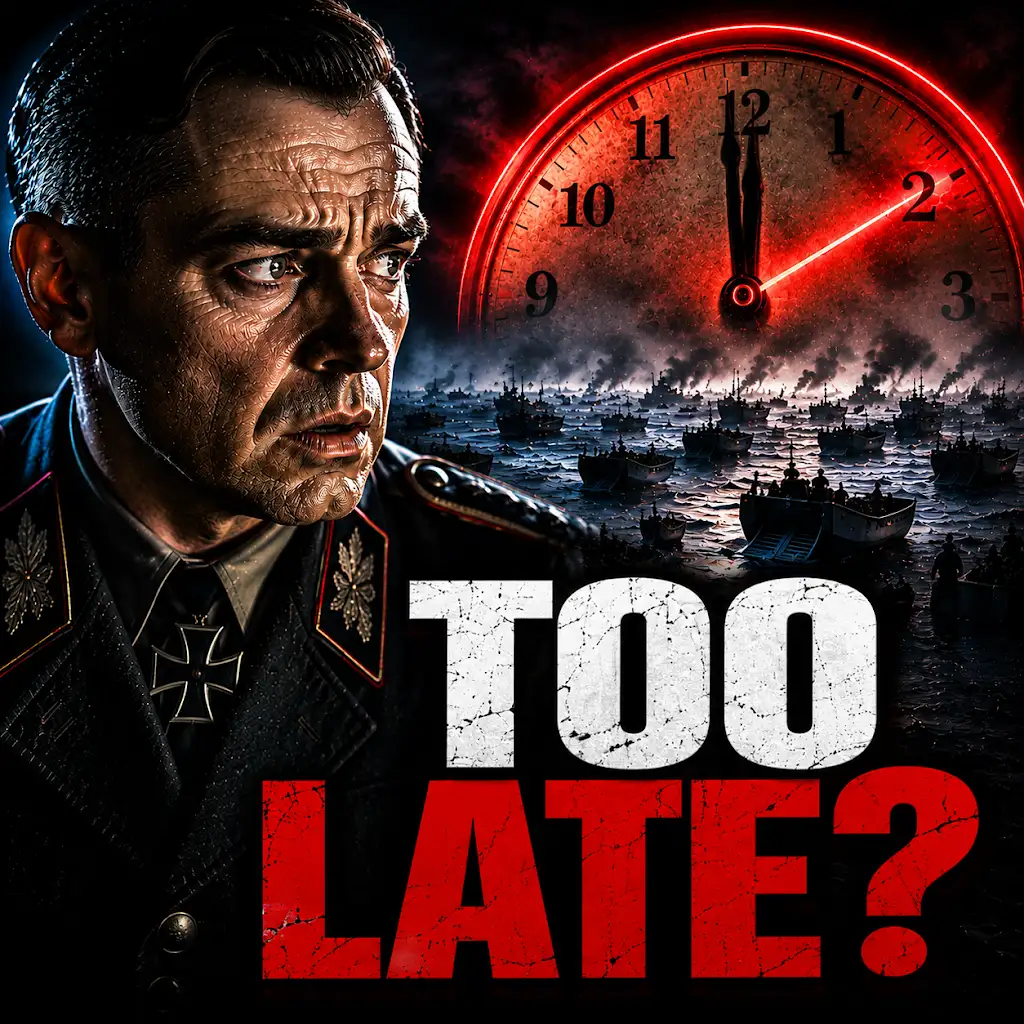
Operation Overlord, the Allied invasion of Normandy on June 6, 1944, stands as one of the most pivotal and complex military operations in history. Codenamed “D-Day,” it marked the beginning of the end for Nazi Germany in Western Europe, launching a relentless offensive that would ultimately lead to the liberation of France and the downfall of Hitler’s regime. The sheer scale of the undertaking, encompassing meticulous planning, vast logistical feats, and the bravery of hundreds of thousands of soldiers, sailors, and airmen, cemented its place as a defining moment of World War II. This article delves into the multifaceted history of Operation Overlord, exploring its strategic genesis, the critical preparations, the harrowing events of D-Day itself, and the subsequent unfolding of the Normandy campaign.
The decision to launch an invasion of Western Europe was not made lightly. By 1943, the Allied powers, primarily the United States and Great Britain, recognized the urgent need to relieve pressure on the Eastern Front, where the Soviet Union was bearing the brunt of the German war machine. A successful Western Front would force Germany to fight a multi-front war, stretching its resources and ultimately hastening its defeat.
The Long Road to a Second Front
For years, the Soviet Union had pressed the Western Allies to open a “second front” against Germany. Joseph Stalin, leading the Soviet Union, viewed the delaying of such an operation as a deliberate attempt to allow Germany to decupys and destroy his forces. While the Western Allies acknowledged the strategic necessity, they were acutely aware of the immense challenges involved.
The Atlantic Wall: A Formidable Obstacle
Germany, under the command of Field Marshal Erwin Rommel, had constructed a formidable defensive network along the coast of occupied Europe, known as the Atlantic Wall. This formidable line of fortifications, bunkers, anti-tank obstacles, and minefields was designed to repel any Allied landing attempt. Rommel, in particular, understood the vulnerability of the beaches and personally oversaw the strengthening of defenses in key areas.
The Disagreement on Location: Calais vs. Normandy
The specific landing site was a subject of intense debate. The shortest sea crossing from Britain to the continent was across the Strait of Dover, leading to the Pas-de-Calais region. This area was also the most heavily fortified by the Germans, and therefore the most logical target if the Allies could breach the defenses. However, Allied intelligence, particularly the deception operations, convincingly suggested that the main German reserves would be concentrated in this area.
The Deception Campaign: Operation Fortitude
A crucial element of the Allied strategy was deception. Operation Fortitude aimed to convince the Germans that the main invasion would occur at the Pas-de-Calais, thereby drawing their reserves away from Normandy. This elaborate ruse involved the creation of phantom armies, complete with inflatable tanks, dummy aircraft, and fake radio traffic, all under the command of General George S. Patton. This masterful deception played a significant role in the success of the actual invasion in Normandy.
The Allied Advantage: Normandy’s Strategic Value
Despite the perceived advantages of Calais, the Allies ultimately chose Normandy for several reasons. The extensive coastline offered multiple landing beaches, allowing for a wider distribution of forces and making it harder for the Germans to concentrate their defenses. Furthermore, the terrain inland from Normandy provided better opportunities for rapid exploitation and the establishment of a secure lodgment area. The presence of key ports like Cherbourg, though heavily defended, was also a significant draw.
The Leadership and the Plan: Operation Bolero and Overlord
The overarching invasion plan was codenamed Operation Overlord. However, the logistical buildup necessary to support such an operation was equally critical and was codenamed Operation Bolero. This massive undertaking involved the movement of millions of tons of equipment, supplies, and personnel across the Atlantic, preparing the ground for the invasion.
Supreme Allied Commander: General Dwight D. Eisenhower
The immense responsibility of commanding Operation Overlord fell to General Dwight D. Eisenhower. His leadership was characterized by his ability to manage diverse personalities, navigate complex political considerations, and make difficult decisions under immense pressure. Eisenhower’s calm demeanor and unwavering resolve were instrumental in keeping the Allied war effort unified and focused.
The Architects of the Plan: Combined Chiefs of Staff and SHAEF
The strategic and operational planning for Overlord was a monumental effort involving the Combined Chiefs of Staff of the United States and Great Britain, working through Supreme Headquarters Allied Expeditionary Force (SHAEF). Generals Bernard Montgomery and Omar Bradley, among others, played key roles in shaping the tactical details of the invasion.
The Unseen Battle: Preparation and Planning
The success of Operation Overlord hinged on a period of intense and meticulous planning and preparation that spanned several years. This included intelligence gathering, logistical mobilization, troop training, and the development of specialized equipment. The sheer scale of this undertaking often goes unnoticed, yet it was as vital as the fighting itself.
Intelligence Gathering: Knowing the Enemy
Comprehensive intelligence was paramount. Allied intelligence services worked tirelessly to understand the strength, disposition, and capabilities of the German forces in Normandy. This involved aerial reconnaissance, espionage, and the analysis of intercepted German communications.
Aerial Reconnaissance: Eyes in the Sky
High-altitude reconnaissance aircraft, such as the B-17 Flying Fortress and the P-51 Mustang, provided invaluable photographic intelligence of the Atlantic Wall defenses, troop concentrations, and transportation networks. This visual information allowed Allied planners to identify weaknesses and target key infrastructure.
Intercepted Communications: Listening to the Enemy
The cracking of German codes, particularly by the codebreakers at Bletchley Park, provided critical insights into German troop movements, defensive plans, and even the morale of their soldiers. This intelligence, often codenamed “Ultra,” gave the Allies a significant advantage.
Logistical Masterclass: Supplying the Invasion
The logistical challenges of transporting and supplying an invasion force of over 150,000 men on D-Day, with millions more to follow, were unprecedented. This involved a vast network of shipping, port facilities, and transportation routes.
Mulberry Harbours: Artificial Ports for Artificial Needs
One of the most ingenious logistical innovations was the construction of the Mulberry harbours. These massive, prefabricated floating harbours were towed across the English Channel and assembled off the Normandy coast to facilitate the rapid unloading of troops and supplies, bypassing the need to capture and operate heavily defended German ports immediately.
Operation Pluto: Fueling the Advance
Ensuring a continuous supply of fuel for the advancing Allied armies was another critical challenge. Operation Pluto (Pipe-Line Under The Ocean) involved laying massive underwater pipelines from Britain to France, providing a vital lifeline for vehicles and equipment.
Training and Specialization: Honing the Edge
The soldiers who would land on the beaches underwent rigorous and often dangerous training. This included amphibious assault drills, specialized commando training, and the practice of urban warfare.
Amphibious Assault Training: Mastering the Beaches
Troops practiced beach landings under simulated combat conditions, learning to navigate choppy waters, overcome obstacles, and establish a beachhead. These exercises, often conducted on the British coast, were a brutal but necessary preparation for the realities of D-Day.
Commando and Airborne Operations: Securing Key Objectives
Specialized units like the British Commandos and American Rangers were trained for high-risk missions, such as scaling cliffs and capturing fortified positions. Similarly, airborne troops underwent intensive training for parachute and glider landings.
D-Day: The Longest Day
June 6, 1944, dawned with a sense of trepidation and immense anticipation. Codenamed “D-Day,” it was the culmination of years of planning and preparation, and the beginning of a brutal fight for the liberation of Europe. The operation involved a multi-pronged assault across five key beaches, supported by a vast armada and overwhelming air power.
The Airborne Assault: Seizing Key Bridges and Objectives
In the pre-dawn hours, thousands of Allied paratroopers and glider-borne troops were dropped behind the German lines. Their mission was to secure vital bridges, crossroads, and artillery positions, preventing German reinforcements from reaching the beaches.
American Airborne Divisions: Utah and Omaha
The American 82nd and 101st Airborne Divisions were tasked with securing areas around the Utah and Omaha beaches. Despite facing heavy resistance and widespread scattering due to adverse weather conditions, they managed to secure some critical objectives, playing a crucial role in supporting the seaborne landings.
British Airborne Divisions: Sword, Juno, and Gold
The British 6th Airborne Division was responsible for securing the eastern flank of the invasion area, particularly around the Orne River and Caen Canal. They famously captured Pegasus Bridge in a daring night raid, a feat that prevented German counterattacks from immediately disrupting the landings on Sword Beach.
The Seaborne Assault: Storming the Beaches
As dawn broke, the main invasion force began its assault on the five designated beaches: Utah, Omaha, Gold, Juno, and Sword. The landing craft churned through the choppy waters, carrying hundreds of thousands of soldiers into the teeth of German defenses.
Utah Beach: A Relatively Successful Landing
The American forces landing on Utah Beach encountered less resistance than expected, partly due to the inundation of the beach by high tide and the fact that the German defenses were not as strong in this sector. This allowed the Americans to establish a beachhead relatively quickly and with fewer casualties.
Omaha Beach: The Bloodiest Day
Omaha Beach was the scene of the most intense fighting and the highest casualties of D-Day. The German defenses were formidable, with strongpoints positioned on the bluffs overlooking the beach. American troops faced a hail of machine-gun fire, artillery, and mortar shells as they attempted to advance. The bravery and tenacity of the soldiers, particularly the Rangers who scaled the cliffs, were legendary.
Gold, Juno, and Sword Beaches: Canadian and British Efforts
The British landing on Gold Beach and the Canadian landing on Juno Beach encountered strong German resistance but managed to overcome it through determined assaults. Sword Beach, the easternmost of the Allied landings, also saw heavy fighting, with British and Free French forces battling to secure their objectives.
Naval and Air Support: The Unseen Pillars of Strength
The success of the D-Day landings would have been impossible without the overwhelming naval and air support provided by the Allies. The Royal Navy and the US Navy provided covering fire, transported troops, and engaged German warships, while the Allied air forces dominated the skies, neutralizing German air power and bombing enemy positions.
Naval Bombardment: Softening the Defenses
A massive naval bombardment preceded the landings, targeting German strongpoints and artillery batteries along the coast. This helped to suppress enemy fire and inflict casualties before the troops even hit the sand.
Air Superiority: Dominating the Skies
The Allied air forces achieved air superiority over Normandy, preventing the Luftwaffe from launching effective attacks on the invasion fleet. Allied bombers also relentlessly targeted German infrastructure, troop concentrations, and supply lines.
The Normandy Campaign: From Beachhead to Falaise
Following the success of D-Day, the Allies faced the arduous task of expanding their beachhead and breaking out of Normandy. This campaign was characterized by intense fighting, heavy casualties, and a strategic battle of attrition.
Establishing the Lodgment Area: Consolidating the Gains
The initial objective after securing the beaches was to link them up and establish a cohesive lodgment area. This involved pushing inland, capturing key towns and villages, and fending off German counterattacks.
The Battle for Caen: A Strategic Prize
The city of Caen, a major transportation hub, was a key objective for the Allies. However, the fighting for Caen proved to be a prolonged and costly battle of attrition, with the Germans defending it fiercely. Its eventual capture, though delayed, was strategically significant.
The Bocage Country: A Difficult Terrain
The hedgerow country of Normandy, known as the bocage, proved to be a challenging environment for the Allied advance. The dense network of hedgerows provided excellent cover for German defenders, making it difficult for Allied armor to maneuver and for infantry to advance.
The Breakout: Operation Cobra and the Drive South
Once a sufficient lodgment area was established, the Allies launched Operation Cobra, a massive armored offensive designed to break out of the Normandy peninsula and drive south.
The Air Support for Cobra: Thunder from the Skies
Operation Cobra was preceded by an immense aerial bombardment that devastated German defenses. This overwhelming air power created a gap in the German lines, allowing Allied armored columns to pour through.
General Patton’s Spearhead: The Third Army’s Advance
General George S. Patton’s newly activated Third Army played a crucial role in the breakout, spearheading the advance south and west, rapidly outflanking German positions.
The Falaise Pocket: A Decisive Victory
The Allied advance culminated in the encirclement of a large German force in the Falaise Pocket. This decisive victory resulted in the destruction of a significant portion of the German army in Normandy, paving the way for the liberation of France.
The Role of the Canadians and Poles: Closing the Trap
Canadian and Polish forces played a critical role in closing the northern pincer of the Falaise Pocket, trapping the retreating German forces.
The Cost of Victory: The Heavy Toll
While the Falaise Pocket was a resounding victory, it came at a significant cost in terms of Allied casualties. The fighting to close the pocket was intense and brutal.
The Aftermath and Legacy: A Turning Point in History
Operation Overlord and the subsequent Normandy campaign were more than just a military victory; they were a turning point in World War II and a testament to human courage, ingenuity, and sacrifice.
The Liberation of Paris and Beyond
Following the Falaise Pocket, the Allies continued their advance, liberating Paris on August 25, 1944. The momentum gained in Normandy carried the Allied armies across France and Belgium, ultimately leading to the liberation of Western Europe.
The Opening of the Western Front: A Two-Front War for Germany
The establishment of the Western Front put immense pressure on Germany, forcing Hitler to divert resources and troops from the Eastern Front. This significantly aided the Soviet advance and hastened the end of the war.
The Cost of Freedom: The Human Sacrifice
The scale of human sacrifice on D-Day and throughout the Normandy campaign was immense. Hundreds of thousands of Allied soldiers lost their lives, and many more were wounded. Their bravery and sacrifice remain a somber reminder of the cost of freedom.
Memorials and Remembrance: Honoring the Fallen
Numerous memorials and cemeteries across Normandy serve as poignant reminders of the battles fought and the lives lost. These sites are visited by millions each year, ensuring that the sacrifices of those who fought are never forgotten.
The Enduring Impact: A Foundation for Peace
Operation Overlord not only liberated Europe from Nazi tyranny but also laid the groundwork for a new era of international cooperation and peace. The shared struggle forged strong bonds between Allied nations, contributing to the establishment of institutions like the United Nations. The military strategies, logistical innovations, and lessons learned from Operation Overlord continue to be studied and analyzed by military historians and strategists to this day, a testament to its enduring significance in the annals of warfare.