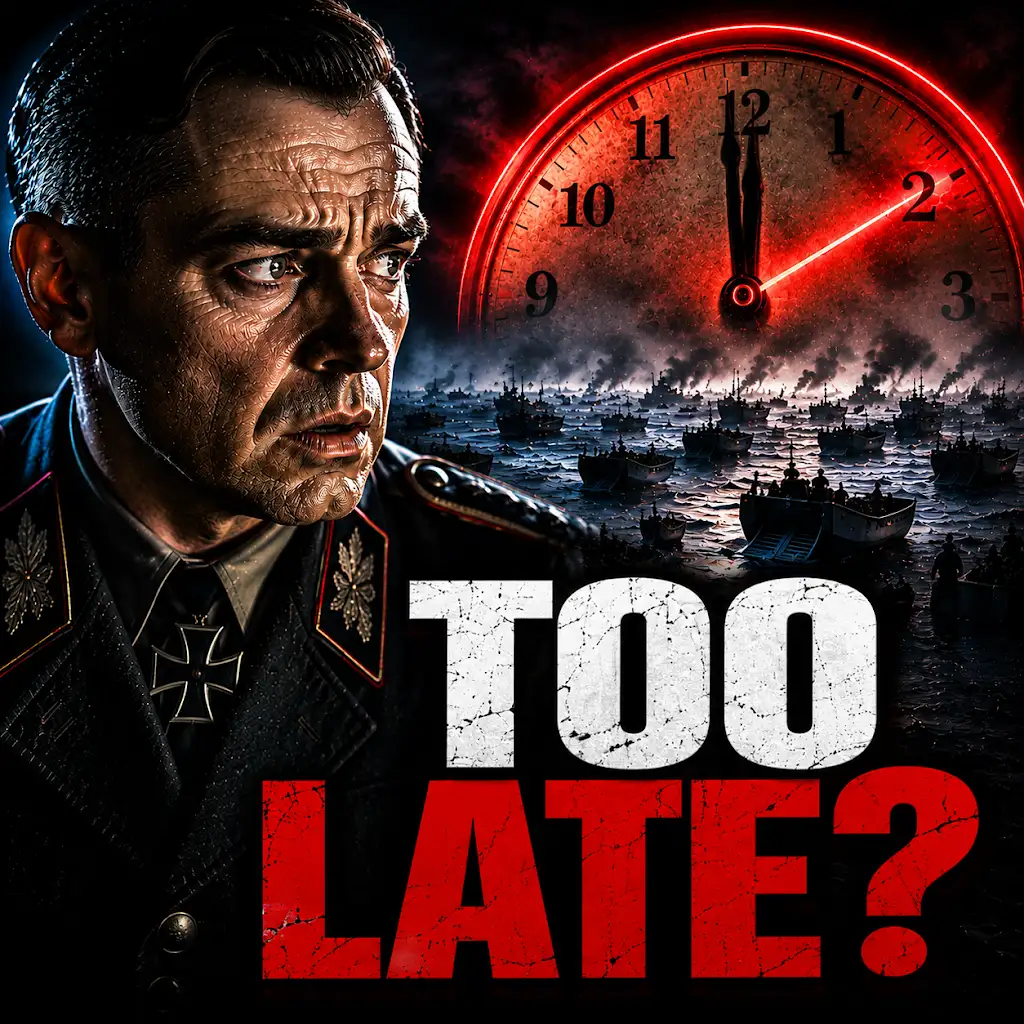
The vast and intricate defensive preparations of Nazi Germany along the Atlantic Wall were designed to repel any Allied invasion with overwhelming force. However, the Allied deception operations, coupled with the sheer audacity and scale of Operation Overlord, presented a strategic and tactical challenge that the Wehrmacht was ultimately ill-equipped to overcome. The German response to the D-Day landings was a fragmented and often desperate affair, hampered by a fundamental misunderstanding of the Allied objectives and a severe lack of centralized command and control.
The German High Command, under the increasingly paranoid leadership of Adolf Hitler, had spent years constructing what they believed to be an impregnable barrier against invasion. The Atlantic Wall, a line of fortifications stretching from Denmark to the Spanish border, was a monumental undertaking. Its perceived strength, however, was built on a foundation of flawed assumptions and internal disagreements, which would prove fatal when the Allied forces finally breached its defenses.
The Strategic Vision of the Atlantic Wall
The concept of the Atlantic Wall was born from the lessons learned, or rather mislearned, from the Allied landings at Gallipoli in World War I and the successful German offensives in France. The primary aim was to prevent any enemy foothold on the continent. This was to be achieved through a layered defense system, comprising coastal artillery, minefields, beach obstacles, and heavily fortified strongpoints.
Coastal Artillery: The Guns of the Wall
Thousands of artillery pieces, ranging from heavy naval guns salvaged from warships to newly manufactured field artillery, were strategically placed to dominate the beaches and coastal waters. These emplacements were often built into concrete bunkers, designed to withstand heavy bombardment. The intention was to decimate any landing craft and troops attempting to come ashore.
Minefields and Obstacles: A Deadly Welcome
Extensive minefields were laid on beaches and in the hinterland to inflict casualties and slow down any attacking force. These were supplemented by a vast array of obstacles, including anti-tank ditches, barbed wire entanglements, dragon’s teeth (concrete anti-tank obstacles), and the notorious “Rommel’s Asparagus” – tall wooden stakes designed to damage landing craft and aircraft.
The Role of the Panzer Divisions
Crucially, the Atlantic Wall was not intended to be defended solely by static defenses. A significant number of mobile reserve units, particularly Panzer (armored) divisions, were stationed behind the Wall. Their role was to launch devastating counterattacks against any invading force that managed to breach the coastal defenses. However, the deployment and readiness of these vital units would become a major point of contention and a critical failing of the German response.
The Deception Campaign: Fogging the German Mind
One of the most significant factors contributing to the initial German confusion was the elaborate and highly successful Allied deception campaign, codenamed “Operation Fortitude.” The Allies masterfully created the illusion that the primary invasion would occur elsewhere, drawing vital German reserves away from the Normandy coast and sowing widespread doubt about the true landing sites.
Operation Fortitude North and South
Operation Fortitude was divided into two main components: Fortitude North and Fortitude South. Fortitude North aimed to convince the Germans that a diversionary attack would be launched in Norway, while Fortitude South focused on creating the belief that the main invasion would target the Pas-de-Calais, the shortest crossing point of the English Channel.
The Phantom Army of First U.S. Army Group (FUSAG)
The cornerstone of Fortitude South was the creation of a fictitious Allied army group, the First U.S. Army Group (FUSAG), commanded by the highly respected General George S. Patton. FUSAG was presented as a massive invasion force massed in southeastern England, complete with inflatable tanks, dummy landing craft, and radio traffic designed to deceive German intelligence.
Double Agents and Propaganda
The Allies also employed a sophisticated network of double agents to feed misleading information to the German Abwehr (military intelligence). Propaganda efforts, including carefully leaked documents and exaggerated reports, further amplified the deception, convincing German commanders that the Pas-de-Calais was the most likely and strategically advantageous landing point.
Hitler’s Obsession with the Pas-de-Calais
Adolf Hitler himself became a strong proponent of the Pas-de-Calais theory, a conviction that the Allied deception campaign exploited to its fullest. His unwavering belief meant that German reserves and attention were disproportionately focused on this sector, leaving Normandy relatively less defended, especially in the crucial early hours of the invasion.
The Normandy Landings: A Shock to the System
The morning of June 6, 1944, dawned with a ferocity that the German defenders were ill-prepared to meet. The Allied airborne landings, preceding the main seaborne assault, created immediate confusion and disrupted German communications and command structures. When the landing craft hit the beaches, the scale and nature of the assault caught many by surprise, despite years of anticipation.
Airborne Assaults: Disrupting the Defenses
The Allied airborne divisions, tasked with securing key bridges and strategic points behind the beaches, achieved a significant degree of success in disrupting German defenses and sowing chaos. Paratroopers dropped in the dark and often behind enemy lines, facing immediate and fierce resistance from localized German units.
The 6th Airborne Division in the East
British airborne troops, primarily the 6th Airborne Division, were tasked with capturing the Orne River bridges near Caen. Despite facing strong German opposition, they managed to secure these vital crossings, preventing German armor from reinforcing the coastal defenses from that direction.
The 82nd and 101st Airborne Divisions in the West
American airborne divisions, the 82nd and 101st, faced a far more chaotic drop in the western sector around Sainte-Mère-Église. Scattered by strong winds and intense anti-aircraft fire, they landed in small, isolated groups. While this led to significant casualties and a struggle to consolidate their forces, the dispersed nature of the landings also prevented the Germans from effectively concentrating their counterattacks against them.
The Beach Landings: Facing Determined Resistance
As dawn broke, the main seaborne assault began on five beaches: Utah, Omaha, Gold, Juno, and Sword. The defenders on these beaches, while often outnumbered, fought with a ferocity that reflected their training and the ideology they served.
Omaha Beach: The Bloodiest Day
Omaha Beach proved to be the most brutal of the landings. Allied troops faced heavily fortified German positions with interlocking fields of fire, extensive minefields, and a resolute defense. The initial waves of American soldiers suffered catastrophic casualties, and the landing was nearly a failure before reinforcements managed to overcome the German resistance.
The Other Beaches: Hard-Fought Successes
While Omaha was the site of the greatest carnage, the other beaches also witnessed fierce fighting. British and Canadian troops on Gold, Juno, and Sword faced determined defenses but managed to secure their objectives, albeit with significant losses. Utah Beach saw a comparatively lighter defense, partly due to the disruption caused by the American airborne landings.
The Dispersed Command and the Hesitation of Reserves
A critical weakness in the German response was the fragmented nature of their command structure and the indecisiveness of their high command regarding the deployment of crucial armored reserves. This hesitation, coupled with the Allies’ continued deception, proved to be a fatal flaw.
Rommel’s Absence and the Chain of Command
Field Marshal Erwin Rommel, the architect of much of the Atlantic Wall’s defenses, was absent on June 6th, having returned to Germany for a conference and to see his wife on her birthday. This absence meant that crucial decisions regarding the deployment of the Panzer divisions, which he strongly advocated for, were delayed.
The Dispute Over Reserve Deployment
There was a significant dispute within the German high command regarding the deployment of the Panzer reserves. While Rommel and some other commanders understood the urgency of a rapid counterattack, the Supreme Commander West, Field Marshal Gerd von Rundstedt, was more cautious, favoring a defensive posture until the true scale and location of the invasion were confirmed.
Hitler’s Interference
Adolf Hitler, resting at his headquarters in Berchtesgaden, was initially reluctant to believe that the Normandy landings were the main invasion, still suspecting a feint. This indecision meant that vital hours were lost before he authorized the release of the Panzer reserves. The process of gaining Hitler’s approval was often cumbersome and required intermediaries, further delaying any effective response.
The Delayed Commitment of Panzer Divisions
The Panzer divisions, stationed in various locations across France, were not immediately committed to the Normandy front. Their movement was hampered by the need for authorization, Allied air superiority, and the damage inflicted on French infrastructure, including railways, by Allied bombing campaigns.
The 21st Panzer Division
The 21st Panzer Division, stationed near Caen, was the closest Panzer unit to the Normandy beaches. However, its commitment was delayed due to conflicting orders and the continued uncertainty within the German command. It eventually launched a counterattack on June 6th, but its impact was limited.
Other Panzer Reserves
Other Panzer divisions, like the 12th SS Panzer Division and Panzer Lehr Division, were further inland and took longer to reach the front. Their arrival was staggered, and they were often committed piecemeal, unable to achieve the concentrated force needed to repel the Allied invasion.
The Fog of War and Allied Air Superiority
The “fog of war,” a term used to describe the confusion and uncertainty inherent in combat, was amplified by the Allies’ overwhelming air superiority. The Luftwaffe (German Air Force) was virtually absent from the skies over Normandy, leaving German ground forces vulnerable and isolated.
The Luftwaffe’s Weakened State
By June 1944, the Luftwaffe had been severely depleted by years of combat on the Eastern Front and the strategic bombing campaigns by the Allies. It lacked sufficient aircraft, experienced pilots, and fuel to effectively challenge Allied air power.
Limited Reconnaissance and Communication
The absence of friendly air cover meant that German ground commanders had little reconnaissance of enemy movements and often struggled to communicate with higher command or coordinate their own forces. Allied fighter-bombers roamed the skies with impunity, attacking German troop concentrations, supply lines, and armored vehicles.
Allied Air Interdiction
The constant threat of Allied air attack made it extremely difficult for German units to move during daylight hours. This significantly slowed the deployment of reinforcements and supplies to the front lines, further exacerbating the German response.
The “Battle of the Bridges”
The Allies actively targeted bridges and railway lines in an attempt to disrupt German troop movements. This “Battle of the Bridges” was largely successful in preventing the rapid reinforcement of the Normandy front with German armor.
The Inevitable Outcome: A Strategic Miscalculation
The German response to Operation Overlord, while containing pockets of fierce resistance, was ultimately a failure of strategy, intelligence, and command. The years of building the Atlantic Wall, while a testament to German engineering and determination, proved insufficient against the combined might of Allied planning, deception, and overwhelming force.
The Failure of Intelligence
The German intelligence services, despite their considerable resources, were largely outmaneuvered by the Allied deception operations. The belief that the main invasion would occur at the Pas-de-Calais was a critical miscalculation that blinded them to the true threat in Normandy.
The Impact of Deception
The success of Operation Fortitude had a profound and detrimental impact on the German response. It drew away crucial reserves, created uncertainty, and allowed the Allies to establish a precarious but ultimately decisive foothold on the continent.
The Strategic Inflexibility of the Nazi Regime
The Nazi regime’s inherent inflexibility and Hitler’s increasingly erratic decision-making played a significant role in the German failure. The reluctance to delegate authority, the obsession with Hitler’s direct approval, and the internal rivalries within the military leadership all contributed to a slow and uncoordinated response.
The Over-Reliance on Static Defenses
While the Atlantic Wall was a formidable physical barrier, the German military doctrine had arguably become too reliant on static defenses. The inability to effectively counter the mobile and adaptable nature of the Allied invasion, particularly the overwhelming air power, proved to be a fatal flaw.
The Beginning of the End for the Third Reich
The failure to repel the D-Day landings marked a turning point in World War II. It opened the Western Front in earnest, allowing the Allies to push relentlessly into Germany and hastening the collapse of the Nazi regime. The German response, characterized by confusion, hesitation, and a strategic miscalculation, ultimately paved the way for Allied victory in Europe.