
The sands of Normandy, scarred by the boots of Allied soldiers, hide a deeper secret than the beaches themselves. For beneath the roar of battle and the grim calculus of invasion, a phantom army marched, a colossal fabrication designed to shatter the enemy’s will and pave the way for victory. This was Operation Fortitude, a masterstroke of deception so profound, so pervasive, that it remains to this day one of the most audacious and successful deceptions in military history, a testament to the power of illusion in warfare. The success of the D-Day landings, a pivotal moment in the Second World War, was not solely a triumph of steel and courage, but also a triumph of cunning and psychological warfare, meticulously orchestrated by the British and American forces.
The Genesis of a Phantom Force
The Allied invasion of Europe, codenamed Operation Overlord, was a monumental undertaking. The sheer scale of the operation, involving hundreds of thousands of troops, ships, and aircraft, demanded meticulous planning. However, a significant hurdle existed: the overwhelming strength of the German defenses, particularly the heavily fortified Atlantic Wall. The Germans had amassed significant forces in France, and a direct frontal assault without diversion would have been immensely costly, potentially even leading to a catastrophic failure. Recognizing this, the Allied strategists understood that the element of surprise, or at least a carefully managed misdirection, was paramount. The concept of deception was not new to warfare, but Operation Fortitude elevated it to an art form, aiming to deceive not just about the timing and location of the landings, but about the very existence and strength of the attacking forces.
The Strategic Imperative of Misdirection
The German High Command, despite their vast intelligence network, was largely fixated on the idea of a single, decisive invasion. Their strategic doctrine, honed by years of Eastern Front battles, often centered on identifying the primary enemy thrust and concentrating their reserves to repel it. This predictability, while a strength in some contexts, became a fatal flaw in the face of Operation Fortitude. The Allies understood that if they could convince the Germans that the main invasion would occur elsewhere, or that the forces assembling were far larger and more numerous than they actually were, they could draw German reserves away from Normandy, weakening their defenses at the crucial point of entry. The goal was to create a phantom threat so compelling that it would tie down German forces that would otherwise be deployed to counter the real landings. This required a multi-faceted approach, involving not just the deployment of fake military hardware, but also the intricate manipulation of information and intelligence.
The Architect of Illusion: Lieutenant Colonel John Bevan
At the heart of Operation Fortitude stood Lieutenant Colonel John Bevan, a British intelligence officer whose sharp mind and unwavering belief in the power of deception made him the ideal candidate to lead this complex endeavor. Bevan was a member of the London Controlling Section (LCS), the shadowy organization responsible for coordinating all Allied deception plans. He understood that successful deception was not merely about creating visual illusions; it required a deep understanding of the enemy’s psychology, their decision-making processes, and their intelligence vulnerabilities. Bevan and his team meticulously crafted narratives, planting false information through a variety of channels, ensuring that every piece of intelligence the Germans received pointed them in the wrong direction. His role was not just that of a planner, but of a puppeteer, pulling the strings of a grand theatrical performance designed to fool an entire nation.
The documentary “Operation Fortitude” delves into the elaborate deception tactics employed by the Allies during World War II to mislead the Germans about the D-Day invasion. For a deeper understanding of the strategies and impacts of these operations, you can explore a related article that provides further insights into the intricacies of wartime deception and its significance in shaping the outcome of the war. Check out the article at In the War Room for more information.
Crafting the Ghost Armies: The Twin Pillars of Fortitude

Operation Fortitude was divided into two main components, each designed to deceive the Germans about different aspects of the impending invasion: Fortitude North and Fortitude South. These were not independent operations but integral parts of a single, overarching strategy, designed to create a believable and overwhelming illusion of Allied strength and intent. The success of each depended on the intricate coordination and execution of both.
Fortitude North: The Threat to Norway
The first prong of Operation Fortitude aimed to convince the Germans that a major Allied invasion was being planned for Norway. This was a plausible threat, given Norway’s strategic importance and the historical precedent of Allied operations in the Arctic. The Germans had significant forces stationed in Norway, and diverting even a portion of their reserves to counter this perceived threat would be a significant victory for the Allies. To support this deception, the Allies created a phantom army group, the “14th Army Group,” purportedly preparing for operations in Scotland. This involved the creation of fake headquarters, the dissemination of false radio traffic, and the use of dummy equipment that would suggest a large-scale deployment. While the threat to Norway was secondary to the main invasion of France, its role in tying down German resources was crucial.
Fortitude South: The Spectre of Pas-de-Calais
The true masterpiece of Operation Fortitude lay in Fortitude South, the deception aimed at convincing the Germans that the main Allied invasion would land in the Pas-de-Calais, the narrowest point of the English Channel, rather than Normandy. This was the most critical deception, as the Pas-de-Calais was the most heavily defended sector of the Atlantic Wall. If the Germans believed this was the primary landing zone, they would concentrate their mobile reserves there, leaving Normandy relatively weaker. To achieve this, the Allies created the “First U.S. Army Group” (FUSAG), a seemingly massive force commanded by the highly respected General George S. Patton. FUSAG was a phantom army in every sense of the word, existing only in carefully constructed intelligence reports and visible only through strategically placed deceptions.
The Ingenious Use of Double Agents and Forged Intelligence
Central to Fortitude South was the manipulation of German intelligence through the use of double agents and carefully crafted misinformation. The British “Double Cross System” was instrumental in this regard, providing a secure channel for feeding false information to the Germans. Agents like “Garbo” (Juan Pujol García), a Spaniard who worked for the British, played a vital role in relaying deceptive intelligence to his German handlers. He fed them fabricated reports about FUSAG’s size, equipment, and intended invasion routes, all pointing towards the Pas-de-Calais. These reports were meticulously designed to be believable, often corroborated by other deceptive measures, creating a web of misinformation that the Germans found difficult to disentangle. The intelligence they received was a carefully curated narrative, designed to exploit their pre-existing beliefs and expectations.
The Theatre of the Absurd: Dummy Tanks, Aircraft, and Inflatable Armies
The visual aspect of Fortitude South was equally crucial. The Allies constructed an entire phantom army in southeast England, directly opposite the Pas-de-Calais. This involved the deployment of vast quantities of inflatable tanks, artillery pieces, and landing craft, creating the illusion of an enormous invasion force poised for deployment. These dummy formations were strategically placed in areas visible to German reconnaissance aircraft and along the coast, making them appear as authentic military encampments. The sound of dummy aircraft engines, the visible movement of fictional troop transports, and the construction of fake port facilities all contributed to the elaborate illusion. The Germans were fed photographs and reports of these formations, believing they were witnessing the assembly of an unstoppable invasion force. This “theatre of the absurd” played on the enemy’s assumptions and made the phantom army appear terrifyingly real.
The Enemy Within: Exploiting German Perceptions

The success of Operation Fortitude was not solely due to the ingenuity of the Allied deception planners; it was also a testament to their profound understanding of the German psyche and their intelligence apparatus. The Germans, despite their formidable military, were prone to certain biases and predictable patterns of thought that the Allies skillfully exploited.
The Operation Fortitude documentary provides an intriguing look into the elaborate deception strategies employed during World War II, particularly in the lead-up to the D-Day invasion. For those interested in exploring more about the broader context of military strategies and operations during the war, a related article can be found at this link, which delves into various tactics and their impacts on the outcome of the conflict.
The Myth of the “Super-Weapon” and the Obsession with Pas-de-Calais
One of the key factors that played into the Allies’ hands was the German belief in their own technological superiority and their obsession with specific strategic objectives. The Germans had developed sophisticated “V” weapons, and the Allies used this to their advantage by subtly hinting that these weapons might be deployed to counter an invasion. More importantly, the German High Command was convinced that the Pas-de-Calais, due to its proximity to England, was the most logical and heavily defended landing site. This preconceived notion made them susceptible to any intelligence that reinforced this belief. The Allies, by consistently feeding information that pointed to Pas-de-Calais, played directly into this existing bias, making their deception far more palatable and convincing.
The Power of the “Real” Patton
The decision to place General George S. Patton at the head of FUSAG was a stroke of strategic genius. Patton was a legendary and feared commander, known for his aggressive tactics and his aggressive personality. His reputation alone lent immense credibility to the phantom army. The Germans knew of Patton and his capabilities, and the idea of him leading a massive invasion force was a frightening prospect. The Allies carefully leaked information about Patton’s supposed movements and activities, further solidifying the illusion of FUSAG’s imminent deployment. This psychological element, leveraging the fear and respect that Patton inspired, was a crucial component of Operation Fortitude’s success. The Germans feared Patton, and that fear made them believe in his phantom army.
The Unveiling: D-Day and the Lingering Shadow of Deception
On June 6, 1944, D-Day, the Allied forces stormed the beaches of Normandy. The success of the landings was a direct consequence of the meticulous planning and execution of Operation Fortitude. While the deception itself did not win the war, it created the conditions necessary for the real invasion to succeed with significantly fewer casualties than would have otherwise been the case.
The German Response: Bewilderment and Delayed Reinforcements
As the invasion commenced in Normandy, the German response was initially characterized by confusion and a delay in committing their strategic reserves. The existence of FUSAG, the phantom army in southeast England, continued to cast a long shadow. German commanders were hesitant to strip defenses from the Pas-de-Calais, fearing that the real invasion was still yet to come. This hesitation, this lingering doubt sown by Operation Fortitude, was invaluable to the Allied forces fighting on the Normandy beaches. It allowed them to establish a foothold and begin the arduous task of pushing inland. The German High Command, blinded by the meticulously crafted illusion, remained convinced that the primary threat was still across the Strait of Dover.
The Lingering Questions and the Legacy of Fortitude
Even after the D-Day landings, the Allies continued to maintain the illusion of FUSAG’s continued threat. This was crucial in preventing the Germans from rapidly redeploying their forces to counter the Normandy landings. The full extent of Operation Fortitude’s success was only truly understood in the aftermath of the war, when captured German documents and testimonies revealed just how effectively they had been deceived. The legacy of Operation Fortitude is profound. It demonstrated the immense power of deception as a strategic weapon, proving that a well-executed illusion could be as potent as any bomb or tank. It forever changed the landscape of military strategy, highlighting the importance of psychological warfare and the art of manipulating enemy perceptions. Operation Fortitude remains a compelling case study, a testament to human ingenuity and the enduring power of a well-crafted lie in the pursuit of truth and victory. It served as a stark reminder that in the crucible of war, perception can be as powerful as reality, and the greatest battles can be won not on the battlefield, but in the minds of men.
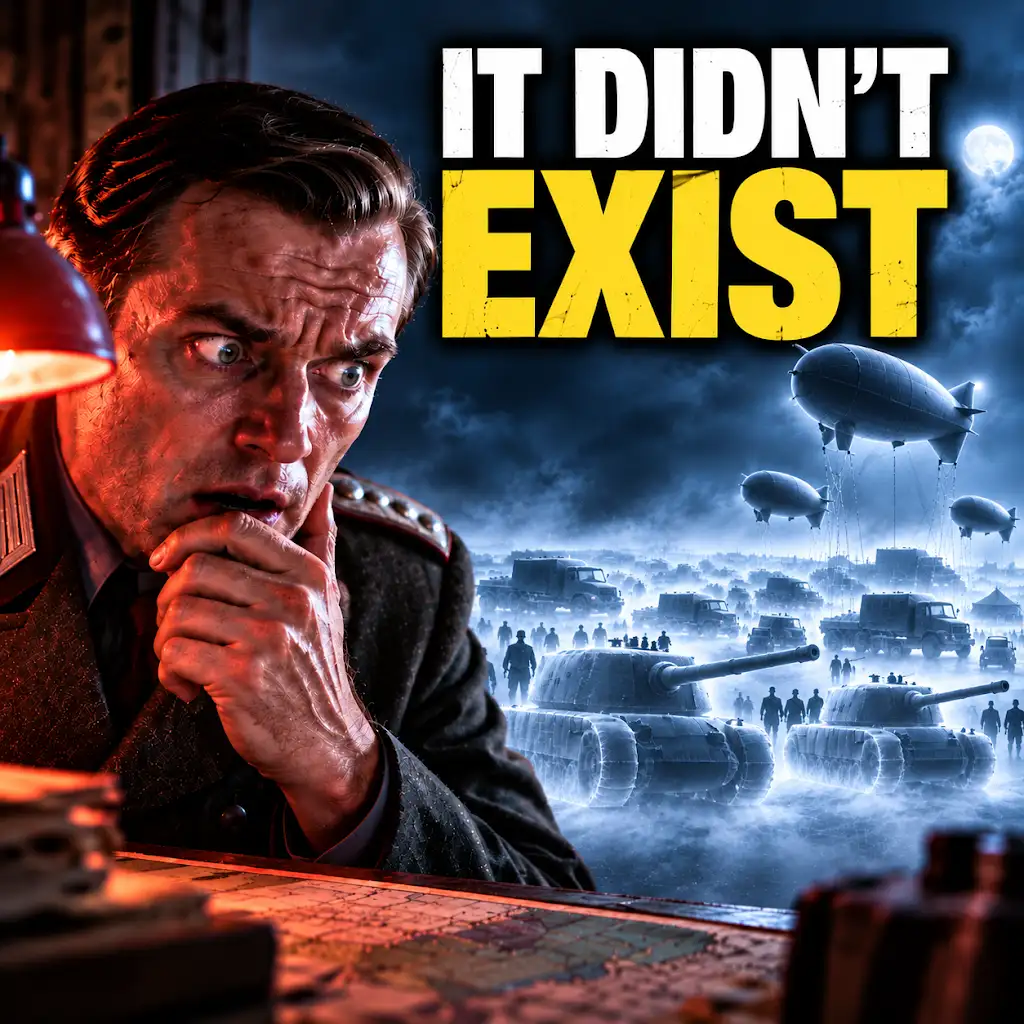
How the Allies Built an Army for Germany to Discover
FAQs
What is Operation Fortitude documentary about?
Operation Fortitude documentary is about the elaborate deception plan orchestrated by the Allies during World War II to mislead the Germans about the location of the D-Day invasion.
When was Operation Fortitude documentary released?
Operation Fortitude documentary was released on [insert release date].
Who directed Operation Fortitude documentary?
Operation Fortitude documentary was directed by [insert director’s name].
Where can I watch Operation Fortitude documentary?
Operation Fortitude documentary can be watched on [insert streaming platform or network].
What is the significance of Operation Fortitude in history?
Operation Fortitude played a crucial role in the success of the D-Day invasion by deceiving the Germans and diverting their attention away from the actual landing sites, ultimately contributing to the Allied victory in World War II.