The Illusion of Strength: Operation Fortitude’s Crucial Role
The Allied invasion of Normandy in June 1944, codenamed Operation Overlord, stands as a watershed moment in World War II. While the bravery of the soldiers on the beaches and the strategic brilliance of the overall plan are well-documented, a less celebrated but equally vital component of the Allied victory lay in a sophisticated and audacious deception: Operation Fortitude. This intricate plan, executed with remarkable skill and cunning, aimed to mislead the German High Command about the true location and strength of the impending invasion force. Its success in drawing German reserves away from Normandy was instrumental in ensuring the initial Allied foothold on the continent.
Operation Fortitude was not a singular event but a series of elaborate stratagems designed to convince the Germans that the main Allied assault would come not on the beaches of Normandy, but elsewhere. The primary targets of this deception were the Pas-de-Calais, the shortest sea crossing to mainland Europe, and Norway. By creating the impression of multiple invasion threats, the Allies aimed to disperse German defenses, sow confusion, and ultimately, achieve tactical superiority at the point of their true assault. The scale and ingenuity of Operation Fortitude underscore the importance of psychological warfare and deception in modern military operations, demonstrating how appearances could be manipulated to achieve decisive battlefield advantages.
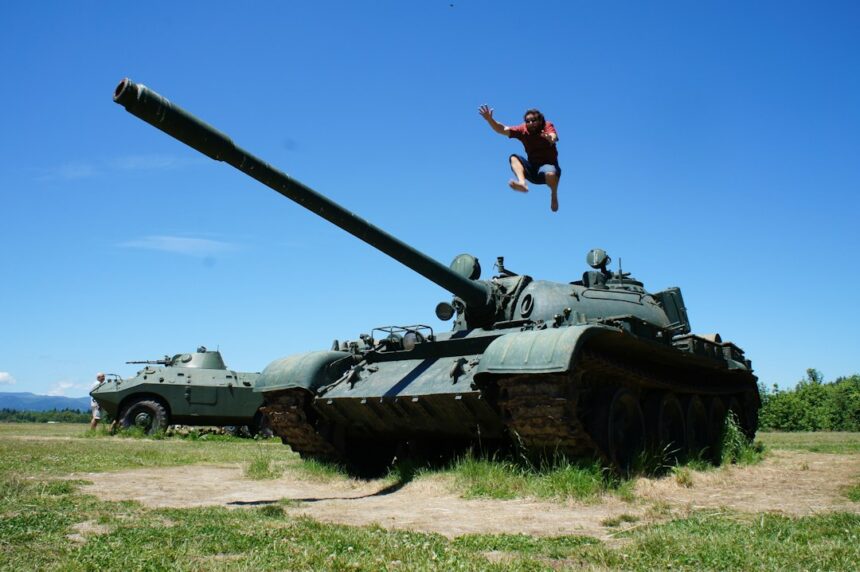
Operation Fortitude, the elaborate deception strategy employed by the Allies during World War II to mislead the Germans about the location of the D-Day invasion, involved the use of dummy tanks and other fake military equipment. This operation played a crucial role in ensuring the success of the Normandy landings. For more insights into the intricacies of this operation and its impact on the war, you can read a related article at In The War Room.
Crafting the Phantom Army: The Genesis of Fortitude
The seeds of Operation Fortitude were sown long before the D-Day landings. Allied intelligence had gathered a considerable amount of information about German troop dispositions and their anxieties regarding potential invasion sites. It was understood that the Germans, having fortified the Atlantic Wall, were particularly concerned about threats to the Pas-de-Calais, given its proximity to Britain and the relative ease of crossing. This understanding formed the bedrock upon which the deception plan was built.
The overarching objective was clear: to convince the German High Command that a massive Allied army, far larger than the actual force being assembled for Normandy, was poised to invade France, primarily at the Pas-de-Calais. This required a multi-faceted approach, engaging not only military deception but also radio traffic, propaganda, and the creation of entirely fictitious military formations. The planning for Fortitude was a complex undertaking, involving the coordinated efforts of various intelligence agencies, military units, and civilian personnel.
The Architects of Illusion: Key Figures and Their Roles
The success of Operation Fortitude was due in no small part to the individuals who conceived and executed its intricate details. Lieutenant General Frederick E. Morgan, as Chief of Staff to the Supreme Allied Commander (COSSAC), played a foundational role in developing the initial deception plans. His team was responsible for laying the groundwork for how the deception would unfold and what key information would be fed to the Germans.
Later, Major General John F. M. “The Black Fox” Whiteley took over as the head of the deception efforts, refining and expanding the plans. Whiteley was a master of psychological warfare, understanding the minds of his adversaries. His leadership ensured that the deception was not only technically sound but also psychologically persuasive. The success of Fortitude depended on their ability to anticipate German reactions and to weave a narrative of invasion that was utterly believable.
The Strategic Imperative: Why Deception Was Essential
The Allied forces invading Normandy faced immense challenges. They were assaulting a heavily fortified coastline, outnumbered in terms of ground troops by the Germans within France, and reliant on achieving a rapid breakout before the enemy could fully mobilize their reserves. Without a successful deception, the Germans would likely have concentrated their formidable panzer divisions to repel the Normandy invasion, turning the D-Day landings into a catastrophic defeat.
Operation Fortitude aimed to create a strategic dilemma for the German High Command. By presenting multiple credible invasion threats, the Allies sought to force the Germans to divide their forces, committing troops and equipment to areas that would ultimately prove to be feints. The Pas-de-Calais was the primary target of this diversion, with the Allies creating the illusion of an imminent invasion there. This would tie down German panzer reserves, crucial for counter-attacking any Allied landings, and prevent them from being deployed to Normandy in the critical early days of the invasion.
The Art of the Fake: Constructing the Dummy Forces
The core of Operation Fortitude lay in the creation of phantom armies and fleets, meticulously designed to deceive German aerial reconnaissance and agents. These were not mere cardboard cutouts; they were sophisticated illusions built with considerable resources and ingenuity. The goal was to make these fabricated forces appear as real and imminent as the actual invasion preparations underway for Normandy.
The deception planners understood that the Germans relied heavily on aerial observation and radio intercepts. Therefore, their efforts focused on creating tangible evidence of large armies and naval forces where none truly existed, and on generating convincing radio traffic that suggested significant military activity. This involved a combination of physical props, cleverly staged maneuvers, and the deliberate manipulation of communication channels.
The Ghost Army of Dover: First U.S. Army Group
The most famous element of Operation Fortitude was the creation of the First U.S. Army Group (FUSAG), a fictitious formation ostensibly commanded by the esteemed General George S. Patton Jr. FUSAG was positioned in southeast England, directly opposite the Pas-de-Calais. The choice of Patton was a stroke of genius; his aggressive reputation and prominent role in Allied command made him a credible figurehead for any invasion.
FUSAG was not just a name on a map. It was a meticulously constructed illusion. Dummy tanks, made of canvas and wood, were strategically placed in fields. Inflatable artillery pieces and trucks dotted the landscape. The “army” even had its own logistical network, with dummy supply dumps and fake airfields. Radio operators broadcast messages between FUSAG units, simulating troop movements and operational planning. The sheer scale of these dummy installations was designed to convince German agents and reconnaissance planes that a massive force was indeed amassed and ready to cross the Channel. The deception was so convincing that even after the war, some German officers believed FUSAG had been a real entity.
Orchestrating the Seas: The Phantom Fleet
Complementing the phantom army was the creation of a fictitious naval armada. The Germans knew that a successful invasion would require naval support, and the Allies manufactured evidence of a substantial fleet poised to sail from southeastern English ports. This involved the deployment of dummy landing craft, which were often barges and other vessels disguised to resemble invasion ships.
The Allies also employed naval deception tactics. They would move real vessels out to sea, only to have them return and anchor in positions visible to German reconnaissance. The radio traffic associated with these movements was also carefully managed to suggest preparations for a large-scale amphibious assault. The intent was to create the impression that a massive fleet was assembling, ready to launch an assault across the shortest sea crossing.
The Whispers of War: Radio Deception and Double Agents
Radio traffic was a critical component of Operation Fortitude. The Allies established a complex web of radio communications for their phantom formations, broadcasting messages that simulated troop movements, operational orders, and logistical preparations. This traffic was designed to be intercepted by German monitoring stations, providing concrete “evidence” of FUSAG’s existence and readiness.
Furthermore, the Allies utilized a network of double agents, known as “double crosses.” These agents, who had previously worked for the Germans, were now providing intelligence to the Allies. They were fed carefully crafted disinformation that reinforced the narrative of an impending invasion at the Pas-de-Calais. This allowed the Allies to control the flow of information directly into German intelligence channels, ensuring that their deception was believed. The careful management of radio frequencies, call signs, and message content was crucial to maintaining the illusion and avoiding detection.
The Second Front: The Norwegian Diversion
While the Pas-de-Calais was the primary focus of Operation Fortitude, the Allies also sought to tie down German forces in Norway. The Germans had a significant military presence in Norway, largely due to its strategic importance in the Atlantic and the presence of vital resources. The Allies believed that by creating the impression of an impending invasion of Norway, they could further disperse German reserves and prevent their deployment to more critical fronts.
This aspect of Fortitude, codenamed “Fortitude North,” was designed to be a less elaborate but equally effective diversion. The objective was to create enough doubt and concern in the minds of the German High Command to warrant the retention of substantial forces in Norway, forces that could otherwise have been used to counter the Normandy invasion.
The Threat from the North: Creating a Credible Danger
The rationale behind the Norwegian diversion was straightforward. Norway offered a natural and logical invasion route from the Allied perspective, given its proximity to northern Britain and its strategic importance. The Allies simulated a buildup of forces in Scotland and the northeast of England, suggesting preparations for an amphibious assault on the Norwegian coast.
This involved the creation of fake troop concentrations, the movement of real but limited naval assets in the North Sea, and the broadcast of radio traffic that alluded to operations in the north. The goal was not to convince the Germans of an immediate invasion, but to instill enough concern to keep them guessing and to divert their attention and resources.
Sustaining the Illusion: Limited Resources, Maximum Impact
Fortitude North was executed with significantly fewer resources than its counterpart in the south. The Allies understood that a full-scale phantom army was not necessary. Instead, they relied on creating a credible threat through clever intelligence manipulation and limited visible activity. The threat of a naval blockade and the potential for airborne operations were also emphasized.
The limited nature of the physical deception was compensated by the careful crafting of intelligence reports and the use of a few well-placed agents who could feed information to German intelligence. The emphasis was on creating uncertainty and doubt, forcing the German command to consider Norway as a genuine potential invasion site. The success of Fortitude North was measured not by its physical presence, but by the number of German troops and resources it kept occupied, thus indirectly aiding the main invasion force in Normandy.
Operation Fortitude, the elaborate deception strategy used by the Allies during World War II to mislead the Germans about the location of the D-Day invasion, involved the use of dummy tanks and other fake military equipment. This operation played a crucial role in ensuring the success of the Normandy landings by diverting German forces away from the actual landing sites. For those interested in learning more about the intricacies of this operation, you can explore a related article that delves deeper into the tactics employed during this pivotal moment in history at this link.
The Payoff: Fortitude’s Decisive Impact on D-Day
| Metric | Details |
|---|---|
| Operation Name | Operation Fortitude |
| Purpose of Dummy Tanks | Deception to mislead German forces about Allied invasion location |
| Number of Dummy Tanks Used | Approximately 1,000 |
| Material | Wood, canvas, and inflatable rubber |
| Deployment Locations | Southern England, especially Kent and Sussex |
| Effectiveness | Successfully diverted German attention from Normandy |
| Duration of Use | April to June 1944 |
| Associated Units | British 1st US Army Group (FUSAG) fictitious formation |
The meticulous planning and execution of Operation Fortitude yielded remarkable results on D-Day and in the critical days that followed. The deception had a profound impact on German decision-making, leading to crucial miscalculations that directly contributed to the success of the Normandy landings and the subsequent Allied breakout.
The Allies had successfully convinced the Germans that the Pas-de-Calais was the primary invasion target. This meant that the bulk of the German panzer reserves, the very forces capable of launching a devastating counter-attack, were held back in that region, waiting for an invasion that would never come. This strategic misdirection was invaluable.
The Untouched Reserves: Panzerwaffe Held in Abeyance
As the Allied invasion force stormed the beaches of Normandy on June 6, 1944, the German High Command remained fixated on the phantom threat at the Pas-de-Calais. Despite initial reports of landings in Normandy, Hitler and his generals were reluctant to commit their mobile reserves, believing that these were merely diversionary tactics and that the main assault would still occur at the Pas-de-Calais.
This hesitation proved to be a fatal flaw. The crucial hours and days that followed D-Day were spent by the Germans trying to ascertain the true intentions of the Allies, while the latter were consolidating their beachhead and pouring in reinforcements. The absence of a swift and overwhelming German counter-attack allowed the Allies to establish a secure foothold, a critical prerequisite for the eventual liberation of Europe.
The Lingering Doubt: German Command’s Strategic Paralysis
The effectiveness of Operation Fortitude extended beyond the initial landing. The deception continued to influence German strategic thinking for weeks after D-Day. Even as the Allies expanded their presence in Normandy, the Germans remained hesitant to fully commit their remaining reserves, fearing that doing so would leave them vulnerable to an attack on the Pas-de-Calais.
This persistent doubt and strategic paralysis crippled the German war effort. They were unable to effectively respond to the Allied operations in Normandy, allowing the Allies to gain momentum and eventually break out of the beachhead. The phantom army of FUSAG, though never firing a shot, played a decisive role in the Battle of Normandy by occupying the minds and the strategic planning of the German High Command.
A Legacy of Deception: The Enduring Significance of Fortitude
Operation Fortitude stands as a testament to the power of deception in warfare. It demonstrated that by skillfully manipulating enemy perceptions, a numerically inferior force could achieve decisive strategic advantages. The operation was a masterclass in psychological warfare, employing a combination of physical props, radio deception, and intelligence manipulation to create a convincing illusion.
The success of Fortitude underscored the importance of understanding the enemy’s anxieties and assumptions. By playing on the German obsession with the Pas-de-Calais, the Allies were able to divert critical defensive resources away from the true point of attack. The legacy of Operation Fortitude continues to be studied by military strategists today, serving as a powerful reminder that in war, what is seen is not always what is real, and that the battlefield of the mind can be as crucial as the battlefield of physical combat.

How the Allies Built an Army for Germany to Discover
FAQs
What were dummy tanks used for in Operation Fortitude?
Dummy tanks were used in Operation Fortitude to deceive the German military about the location and strength of Allied forces. They were inflatable decoys designed to mimic real tanks and vehicles from the air.
How were dummy tanks created for Operation Fortitude?
Dummy tanks were created by constructing inflatable replicas of tanks and vehicles used by the Allied forces. These decoys were strategically placed in various locations to mislead the German military about the Allies’ actual military strength and intentions.
What was the purpose of Operation Fortitude?
Operation Fortitude was a deception campaign carried out by the Allies during World War II to mislead the German military about the location and timing of the D-Day invasion. By using tactics such as dummy tanks, the Allies aimed to confuse and distract the Germans to gain a strategic advantage.
Did dummy tanks play a significant role in the success of Operation Fortitude?
Yes, dummy tanks played a significant role in the success of Operation Fortitude by helping to deceive the German military and divert their attention away from the actual invasion plans. The use of decoys like dummy tanks contributed to the overall effectiveness of the deception campaign.
How were dummy tanks used in conjunction with other tactics in Operation Fortitude?
Dummy tanks were used in conjunction with other tactics in Operation Fortitude, such as fake radio transmissions, double agents, and misinformation campaigns. By combining these strategies, the Allies were able to create a complex web of deception that ultimately helped to secure the success of the D-Day invasion.