The Whispers That Fooled an Empire
The sheer audacity of Operation Fortitude remains a cornerstone of Second World War deception. It was a meticulously crafted symphony of misinformation, designed to lull the Nazi high command into a state of profound misunderstanding regarding the true location and timing of the Allied D-Day landings. At the heart of this elaborate charade lay a powerful weapon, often overlooked in the grand narratives of tanks and paratroopers: the deceptive power of fake radio traffic. While the physical presence of dummy landing craft and inflatable tanks played their part, it was the invisible battlefield of radio waves that truly cemented the illusion, making the enemy believe invasion was imminent, but crucially, in entirely the wrong place.
The objective was simple yet immensely complex: to convince the Germans that the Allied invasion force was much larger than it was and, more importantly, that its primary thrust would be directed at the Pas-de-Calais, the closest point on the continent to Britain, rather than the beaches of Normandy. This strategic misdirection was critical to the success of Operation Overlord. If the Germans committed their formidable panzer divisions to defend the Pas-de-Calais, the Normandy landings would face significantly less resistance, vastly increasing the chances of establishing a secure beachhead. The creation and dissemination of believable fake radio traffic was, therefore, not merely a supplementary tactic; it was an indispensable pillar of the entire deception strategy. The success of Fortitude hinged on the enemy believing what they were hearing, or rather, what they were not hearing, in the correct contexts.
Operation Fortitude, the elaborate deception strategy employed by the Allies during World War II, relied heavily on fake radio traffic to mislead German forces about the location of the D-Day invasion. For a deeper understanding of the tactics and impact of this operation, you can read a related article that explores the intricacies of psychological warfare and deception in military strategy. For more information, visit this article.
Crafting the Illusion: The Art of Deceptive Signals
The architects of Operation Fortitude understood that modern warfare was increasingly reliant on radio communications. Every unit, from the smallest patrol boat to the largest bomber formation, had its designated radio frequencies and call signs. German intelligence, particularly the Abwehr, diligently monitored Allied radio traffic, seeking to glean crucial operational details. This reliance became the very vulnerability that Fortitude exploited. The plan was to inundate the German listening posts with a torrent of radio signals that appeared legitimate but were, in reality, entirely fabricated or deliberately misleading. This required an unprecedented level of coordination and attention to detail, spanning multiple Allied commands and even incorporating elements of psychological warfare.
The deception had to be layered, convincing, and, above all, consistent. It wasn’t enough to simply broadcast random messages. The fake traffic needed to reflect the operational realities of troop movements, supply logistics, and command structures that would be associated with a massive invasion force preparing for amphibious assault. This meant creating phantom units, assigning them believable call signs, and then generating radio chatter that suggested their presence and impending activity. The illusion had to be maintained across various communication channels, from tactical unit communications to strategic air force coordination. The goal was to create a “noise floor” of activity that masked the true, smaller scale of the actual invasion preparations.
The Genesis of Phantom Armies
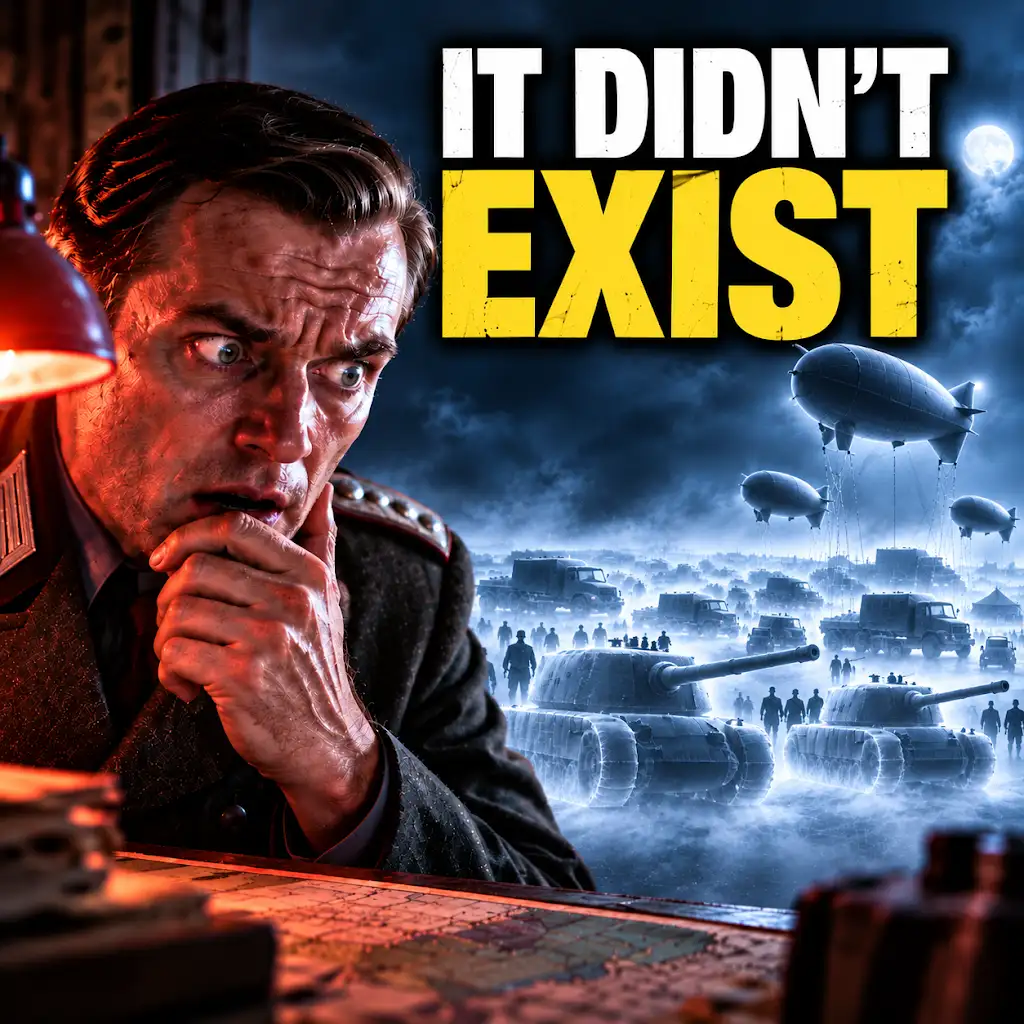
The creation of entirely fictional military formations was a critical component of the radio deception. These were not mere suggestions of troop presence; they were elaborated upon with detailed operational parameters. Units with names like the First US Army Group (FUSAG) were conjured, complete with fictitious commanders and extensive logistical footprints. The idea was to imbue these phantom armies with a sense of immense scale and readiness. Their radio traffic would speak of troop concentrations, training exercises, and equipment deployments that would strongly suggest an imminent invasion, with Pas-de-Calais as their target.
The meticulous development of these phantom units went beyond simply assigning names. Their operational tempo, their supposed equipment needs, and their command hierarchies were all carefully considered. For instance, if FUSAG was purportedly amassing for a cross-channel assault, its radio communications would reflect the need for specialized landing craft, the coordination of air support for specific sectors of the French coast, and the movement of troops and materiel from various staging areas. This level of detail lent an air of authenticity to the deception, making it far more challenging for German analysts to dismiss. The very existence of FUSAG, though entirely fabricated, would have required a considerable logistical and command infrastructure, and the radio traffic was designed to imply this very infrastructure was in place and active.
The Symphony of Static: Orchestrating the Airwaves
The radio traffic itself was a complex performance. It was not simply about broadcasting random messages; it involved the careful timing and sequencing of transmissions to mimic real operational activity. This required a dedicated team of operators, trained in the specific protocols and jargon of Allied military communications. They had to be convincing, but not too perfect, as an overly polished or predictable pattern might arouse suspicion. The traffic was designed to sound like the usual, sometimes chaotic, communications of a large military operation.
The content of these transmissions was also crucial. It ranged from routine logistical requests – the supposed need for more fuel, ammunition, or medical supplies for the phantom invasion force – to tactical communications that suggested troop movements and reconnaissance missions. The use of authentic call signs, frequencies, and codewords was paramount. This required access to or a deep understanding of German signal intelligence capabilities, so the Allied operators could craft messages that would blend in or, conversely, stand out just enough to be noticed and misinterpreted. The operators were, in essence, actors on a radio stage, performing their roles with the utmost professionalism and a deep understanding of the script they were meant to convey. The sheer volume of traffic was also a deliberate tactic, designed to overwhelm German monitoring stations and make it difficult to discern genuine signals from the fabricated ones.
The Human Element: Agents, Double Agents, and Misdirection
While radio traffic formed the backbone of Operation Fortitude’s deception, it was amplified and validated by the crucial human element. The success of the illusion relied not only on what the Germans heard but also on what they were told and by whom. This involved the use of double agents, carefully cultivated sources within the German intelligence apparatus, and the strategic dissemination of false information through a variety of channels. The interplay between the electronic and human dimensions of the deception was essential for its overall effectiveness.
The goal was to create a multi-pronged attack on German perception, ensuring that their intelligence picture was as muddled and misleading as possible. This included feeding them information that corroborated the existence and intentions of the phantom armies, making the radio traffic seem like a natural consequence of these fabricated plans. The risks involved in managing double agents were immense, but the potential rewards of successfully manipulating the enemy’s understanding of Allied intentions were incalculable. The human element provided a critical layer of credibility to the electronic signals, transforming a collection of fabricated transmissions into a seemingly robust intelligence picture.
The Puppets of Deception: Double Agents in Play
Double agents, individuals who were controlled by Allied intelligence but also believed to be working for the Germans, played a pivotal role in Operation Fortitude. These agents were fed carefully crafted misinformation that reinforced the narrative of an impending invasion at Pas-de-Calais. They would then relay this information to their German handlers, who would in turn incorporate it into their intelligence assessments. The agents were not simply passive conduits; they were active participants in shaping the German understanding of the situation.
The most famous of these double agents was likely Juan Pujol García, codenamed “Garbo.” Garbo was a Spanish double agent who, through his extensive network and fabricated stories, convinced the Germans that he was a valuable source of Allied information. He was instrumental in convincing them that the primary invasion force was indeed FUSAG, preparing to land at Pas-de-Calais. His intricate web of lies, woven with a compelling personal narrative, made his reports appear highly credible to the Abwehr. The Germans, blinded by their desire to believe in Garbo’s efficacy, accepted his information without sufficient scrutiny, thereby falling victim to the deception. The careful nurturing of such agents and the meticulous crafting of the information they disseminated were vital to the overall success of Fortitude.
Whispers in the Corridors: Human Intelligence and Disinformation
Beyond the controlled network of double agents, Operation Fortitude also involved the strategic dissemination of disinformation through other human channels. This could include deliberately “leaked” documents or information passed through unwitting intermediaries. The objective was to ensure that the narrative of an invasion at Pas-de-Calais permeated the German command structure at multiple levels. This layered approach made it far more difficult for the Germans to dismiss the intelligence as originating from a single, potentially compromised, source.
The targeting of various German intelligence agencies and military branches was also a key aspect of this human-led deception. Different agencies might have been fed slightly different pieces of the puzzle, but all would point towards the same conclusion: Pas-de-Calais was the target. This created a sense of confirmation bias within the German military, where pieces of information, even if independently weak, coalesced into a seemingly irrefutable picture. The human element, therefore, provided the crucial validation for the radio traffic, transforming a cacophony of signals into a compelling, albeit false, intelligence report.
The Echoes of Normandy: How Fake Traffic Shaped Reality
The ultimate success of Operation Fortitude was measured by its impact on German military dispositions. The meticulously crafted fake radio traffic, buttressed by human intelligence, achieved its primary objective: the vast majority of German elite forces, particularly the Panzer divisions, were held in reserve far from the actual landing zones in Normandy. This significantly reduced the Allied casualties and allowed for the rapid establishment of a secure beachhead. The invisible war waged on the airwaves had a tangible, battlefield-altering consequence.
The sheer scale of the deception meant that when the D-Day landings commenced on June 6, 1944, the German response was hesitant and largely ineffective in the crucial early hours. The belief that a much larger, more immediate threat existed elsewhere tied down vital reserves that could have been deployed to repel the initial assaults. The phantom armies, existing only in radio waves and carefully constructed narratives, had effectively held the real German armies at bay.
The Pas-de-Calais Deception: A Magnetic Pull
The constant barrage of radio traffic, coupled with the intelligence provided by double agents, created an almost irresistible pull towards the Pas-de-Calais. The Germans believed that the Allied forces, particularly the fictional FUSAG, were amassing in southeastern England, poised to cross the narrowest stretch of the English Channel. This meant that when the actual landings began in Normandy, many German commanders were reluctant to commit their reserves, still convinced that the main thrust was yet to come, and in the wrong location.
The presence of fake radio transmissions indicating troop movements, air raids against Pas-de-Calais, and extensive amphibious training exercises in that region convinced the German high command that this was the primary objective. The sheer volume and seeming authenticity of these signals created a powerful psychological effect. The Nazis, desperate to prevent a repeat of the failures of previous invasions, were willing to believe what they wanted to believe – that they had foreknowledge of the real invasion. This wishful thinking, amplified by the deception, proved to be their undoing.
Normandy’s Relatively Clear Skies: The Payoff of Misdirection
The consequence of this successful misdirection was that the Normandy beaches, while facing determined opposition, were not met with the overwhelming force that the Germans could have mustered had their attention not been so firmly fixed on Pas-de-Calais. The Allied airborne landings in Normandy also benefited from the confusion, facing less coordinated anti-aircraft fire and ground resistance than they might have otherwise. The freedom of movement and relative lack of intense armored counter-attacks in the initial hours were direct results of the success of Fortitude’s radio deception.
The genuine Allied forces were able to push inland with a speed and efficiency that surprised even themselves. The German response, when it eventually came, was often piecemeal and too late to decisively impact the initial landings. The radio signals, the ghosts in the machine, had effectively drawn the German army away from the critical points of engagement, paving the way for Allied victory on D-Day. The deception had not only created an illusion of strength but had also acted as a powerful deterrent, effectively holding back the enemy’s most potent weapons.
Operation Fortitude was a crucial part of the Allied deception strategy during World War II, utilizing fake radio traffic to mislead the Germans about the location of the D-Day invasion. This elaborate ruse not only involved the creation of fictitious units but also the careful orchestration of communications to create a convincing narrative. For a deeper understanding of the tactics employed in this operation, you can explore a related article that delves into the intricacies of these deceptions and their impact on the war effort. To read more about it, visit this insightful resource.
The Legacy of Invisible Warfare: Lessons from Fortitude
| Metric | Details |
|---|---|
| Operation Name | Operation Fortitude |
| Purpose | Deception to mislead German forces about the location of the D-Day invasion |
| Type of Deception | Fake radio traffic simulating phantom army units |
| Phantom Units Created | Two main: First U.S. Army Group (FUSAG) and fictitious British formations |
| Duration of Fake Radio Traffic | Several months leading up to June 1944 |
| Volume of Messages | Hundreds of radio transmissions daily |
| Key Locations Simulated | Pas de Calais, Southeast England |
| Impact on German Intelligence | Successfully convinced Germans to hold forces at Pas de Calais |
| Primary Communication Method | Encrypted radio transmissions mimicking real unit traffic |
Operation Fortitude, and particularly its radio deception component, stands as a testament to the power of psychological warfare and misinformation. It demonstrated that the intangible battlefield of the airwaves could be as decisive as any physical engagement. The meticulous planning, the execution, and the sheer ingenuity involved in creating and sustaining the illusion of fake radio traffic continue to be studied and admired in military and intelligence circles.
The operation serves as a potent reminder that in modern conflict, perception can be as potent a weapon as any missile or tank. The ability to manipulate the enemy’s understanding of reality, to sow doubt and confusion, and to guide their decision-making towards self-defeating conclusions is a critical element of strategic success. The whispers on the radio waves of Fortitude, though silent now, continue to echo as a profound lesson in the art of war.
The Enduring Power of Deception in the Information Age
In an era where information flows instantaneously and is often overwhelming, the principles demonstrated by Operation Fortitude remain remarkably relevant. The sophisticated digital tools of today might offer new avenues for deception, but the fundamental human desire to believe, the cognitive biases that can be exploited, and the strategic advantage gained by controlling the narrative are timeless. The success of Fortitude in shaping German intelligence assessments through radio traffic highlights the enduring power of manipulating information to achieve strategic objectives.
The operation’s legacy underscores the importance of robust counter-intelligence, the critical analysis of all incoming information, and the understanding that what appears to be fact may well be a carefully constructed illusion. The invisible warfare waged by Operation Fortitude’s radio traffic was not just a tactic of the past; it is a foundational principle of deception that continues to inform modern strategic thinking in the complex and ever-evolving landscape of information warfare.
How the Allies Built an Army for Germany to Discover
FAQs
What is Operation Fortitude?
Operation Fortitude was a military deception operation employed by the Allied forces during World War II. It involved the creation of fake radio traffic to deceive the Axis powers about the location and intentions of Allied forces.
How was fake radio traffic used in Operation Fortitude?
Fake radio traffic was used in Operation Fortitude to create the illusion of a large military presence in areas where there were actually few troops. This was done to mislead the Axis powers and divert their attention away from the actual locations of Allied forces.
Why was Operation Fortitude significant?
Operation Fortitude was significant because it played a crucial role in the success of the D-Day landings in Normandy. By deceiving the Axis powers about the Allied invasion plans, Operation Fortitude helped to ensure the element of surprise and contributed to the overall success of the operation.
Who was involved in planning and executing Operation Fortitude?
Operation Fortitude was planned and executed by a team of military strategists, intelligence officers, and communication experts from the Allied forces. The operation involved coordination between various branches of the military, including the British, American, and Canadian forces.
What impact did Operation Fortitude have on the outcome of World War II?
Operation Fortitude played a significant role in the outcome of World War II by helping to deceive the Axis powers and secure the success of the D-Day landings. The operation demonstrated the effectiveness of military deception in warfare and contributed to the eventual defeat of the Axis powers.