The Audacious Dream of Air-Launched Balloons
The late 1970s and early 1980s were a time of heightened tension and technological one-upmanship between the United States and the Soviet Union. In this shadow of the Cold War, a peculiar and audacious idea began to take shape within the halls of the U.S. military: a way to launch a payload into space, not from the ground with a roaring rocket, but from the belly of an airplane. This was the genesis of Operation Credible Sport, a project born out of necessity and fueled by ingenuity, aiming to create a mobile, flexible, and potentially survivable space launch capability. The core concept was revolutionary: to bypass the vulnerability of fixed launch sites and instead harness the speed and mobility of aircraft to loft satellites into orbit. The rationale was compelling. Soviet missile technology was perceived as a significant threat, capable of striking American launch facilities with devastating accuracy. A system that could be deployed and launched from a variety of locations, including remote airbases or even aircraft carriers, offered a tantalizing prospect of strategic resilience.
The heart of this ambitious undertaking lay in the development of a specialized launch vehicle, one that could be carried aloft by a conventional aircraft and then ignited in free flight. This was no small feat. The physics of igniting a rocket engine at high altitude and speed, while ensuring stability and controlled ascent, presented a formidable engineering challenge. The chosen platform for this audacious experiment was none other than the Lockheed C-130 Hercules, a workhorse of military aviation renowned for its ruggedness and versatility. The C-130, already a symbol of American air power, was envisioned as a flying launchpad, capable of carrying the specialized missile payload within its cargo bay. The idea was to release the missile from the aircraft, and then, after a brief period of freefall and stabilization, ignite its engines for the journey into space. This provided the flexibility of choosing launch windows and locations, making it significantly harder for any adversary to preemptively strike. The concept, while innovative, also carried inherent risks. The complexity of coordinating the release, ignition, and ascent of a powerful rocket from a moving aircraft required unprecedented levels of precision and reliability.
The ‘Stardust’ Missile: A Compact Powerhouse
At the core of Operation Credible Sport was the development of a unique missile designed to fit the unconventional launch profile. Known colloquially as “Stardust” or the “Credible Sport missile,” this vehicle was a departure from traditional rocket designs. Its primary objective was to be compact enough to fit within the C-130’s cargo bay and robust enough to withstand the stresses of air launch. The missile was a two-stage design, with each stage equipped with its own solid rocket motor. The first stage was responsible for providing the initial thrust to carry the payload out of the aircraft and into the upper atmosphere, while the second stage would provide the final push into orbit. The development of these solid rocket motors was a critical aspect of the program. Solid propellant rockets are generally simpler and more reliable than liquid-fueled rockets, making them a suitable choice for an air-launched system where complexity needed to be minimized. However, ensuring consistent and predictable performance from these motors under the unique conditions of an air launch, including atmospheric pressure and temperature variations, was a significant engineering hurdle.
The missile’s design also incorporated advanced stabilization systems to ensure it remained upright and on course after release from the C-130. This involved a complex interplay of reaction control thrusters and aerodynamic surfaces. The initial moments after release were crucial. The missile would be subject to aerodynamic forces as it descended from the aircraft. The stabilization system needed to counteract these forces and bring the missile to a stable attitude before the first stage ignited. The payload itself, typically a satellite, was housed within a protective shroud to shield it from the aerodynamic stresses and heat generated during ascent. The entire system was a testament to the ingenuity of the engineers involved, who had to balance the requirements of performance, reliability, and miniaturization in a highly unconventional operational environment. The sheer audacity of attempting to launch a satellite from the back of a cargo plane highlighted the desperate measures considered during the Cold War to maintain a strategic advantage.
The Operation Credible Sport test crash was a significant event in military aviation history, showcasing the challenges and innovations in aircraft design for special operations. For a deeper understanding of the implications and outcomes of this operation, you can read a related article that explores the strategic importance of such missions and their impact on modern warfare. Check out the article here: Operation Credible Sport Analysis.
The C-130 as a Flying Launchpad
The choice of the Lockheed C-130 Hercules as the launch platform was a pragmatic one, driven by its widespread availability, robust design, and extensive operational experience. However, transforming this military transport aircraft into a mobile space launch system required significant modifications. The C-130 was not designed to carry the immense weight and thrust of a rocket, nor was it equipped with the specialized systems needed for a controlled missile release. The primary challenge was the structural integrity of the aircraft and the modifications required to accommodate the missile and its associated launch equipment. Engineers had to reinforce the cargo bay floor and the aircraft’s structure to withstand the forces generated during the release and initial ascent of the missile. This involved extensive stress analysis and the integration of specialized hardware designed to securely hold and then release the missile.
Beyond structural considerations, the C-130 needed to be equipped with systems that could manage the complex launch sequence. This included an electronic interface to control the missile’s ignition sequence and a sophisticated guidance and control system to ensure the aircraft maintained the precise altitude, airspeed, and attitude required for a successful launch. The flight crew would have to fly the C-130 in a highly specialized manner, potentially involving specific pitch and roll maneuvers to aid in the missile’s initial trajectory. The goal was to provide the missile with as stable and predictable an environment as possible at the moment of release. Furthermore, the C-130 would need to be modified to carry the necessary fuel and equipment for extended flights, as well as to protect the crew from any potential hazards associated with the launch operation. The integration of these systems demanded a close collaboration between aerospace engineers, avionics specialists, and experienced test pilots. The C-130, a symbol of logistical support and tactical airlift, was being reimagined as a cutting-edge launch vehicle, a testament to the adaptability of military hardware in the face of evolving threats.
Navigating the Challenges of Air Launch Dynamics
The dynamics of launching a rocket from a moving aircraft presented a unique set of challenges that were unlike any encountered in traditional ground-based launches. The primary concern was ensuring a clean and stable separation of the missile from the C-130. Any residual aerodynamic interference or imbalance could send the missile tumbling, rendering the launch a failure. This required meticulous aerodynamic modeling and testing to understand the airflow around the C-130 and the missile at the point of release. The goal was to minimize any buffeting or unpredictable forces acting on the missile as it detached. Furthermore, the C-130 itself had to be flown with extreme precision. The pilot’s ability to maintain a specific altitude, airspeed, and attitude during the launch window was critical. Even small deviations could have a significant impact on the missile’s initial trajectory and its ability to achieve orbit.
The ignition sequence itself was another complex piece of the puzzle. The missile’s engines had to ignite at precisely the right moment after release, once it had stabilized and achieved a safe separation from the aircraft. This involved a sophisticated timing mechanism and a reliable ignition system. The solid rocket motors, once ignited, would generate immense thrust, and the aircraft had to be clear of the blast radius. The C-130 was designed to fly away from the missile immediately after release, giving the rocket a clear path to ascend. The potential for catastrophic failure was ever-present. Any malfunction in the separation system, the stabilization system, or the ignition sequence could lead to the destruction of the missile, the aircraft, or both. The test flights were therefore conducted with the utmost caution and with extensive safety protocols in place. The sheer novelty of the endeavor meant that engineers were constantly pushing the boundaries of what was known about aerospace dynamics.
The Unforeseen Hiccups and the Dramatic Test Crash
Operation Credible Sport, like many ambitious technological endeavors, was not without its share of unforeseen challenges and setbacks. The inherent complexity of air-launching a rocket meant that even meticulously planned operations could encounter unexpected difficulties. The program progressed through several phases of testing, each designed to incrementally validate different aspects of the system. These tests involved unmanned launches of the missile from the C-130 to assess its stability, separation, and the performance of its rocket motors. While some of these tests were successful, others encountered issues that highlighted the delicate nature of the operation. These problems ranged from minor glitches in the electronic systems to more significant anomalies in the missile’s flight path.
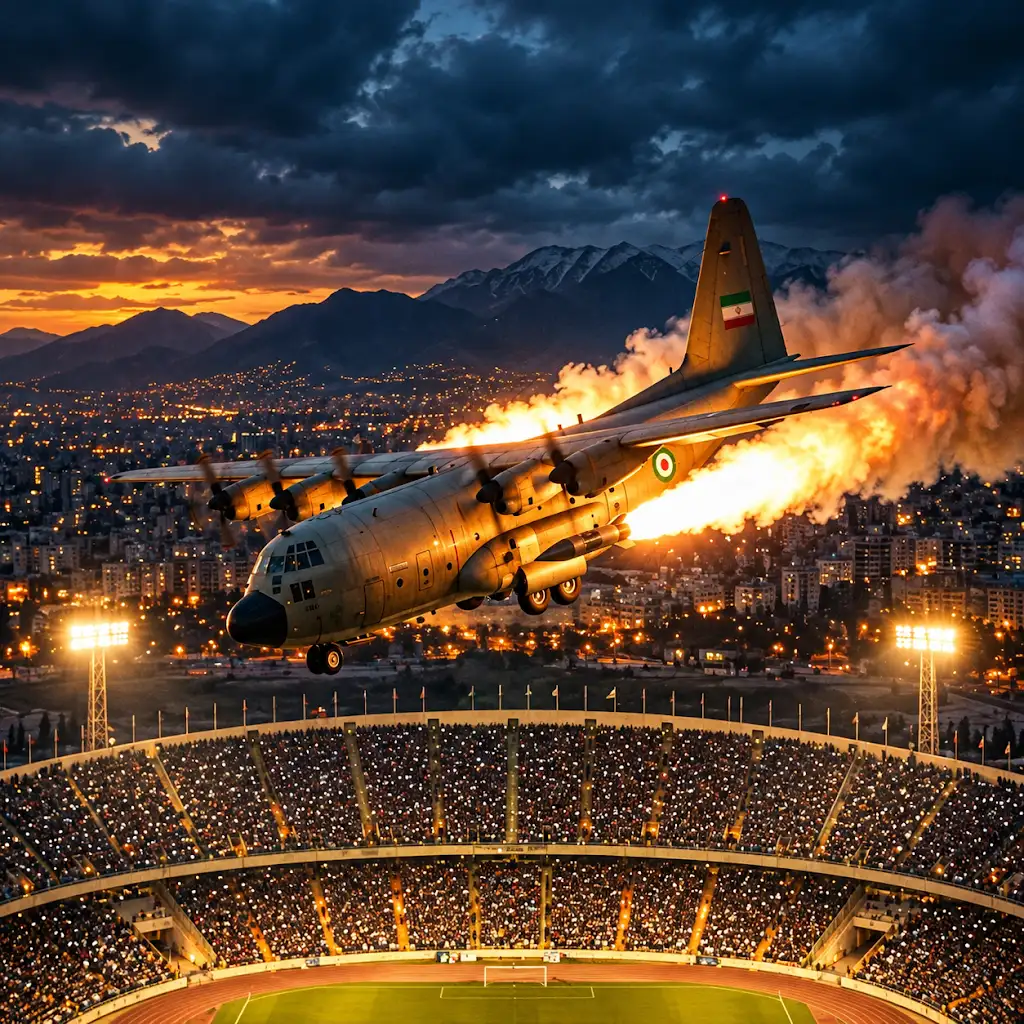
The most dramatic and ultimately defining moment of Operation Credible Sport occurred during a critical test flight on October 27, 1987. The objective of this particular test was to simulate a full-up launch sequence, including the ignition of the missile’s first stage. The C-130 aircraft, carrying the modified missile, took off from Vandenberg Air Force Base in California. The flight proceeded as planned until the crucial moment of release. As the missile was ejected from the cargo bay, a catastrophic failure occurred within the ignition system of the first stage rocket motor. Instead of igniting in a controlled manner, the motor experienced an uncontrolled burn, leading to an explosive detonation. The force of the explosion was immense, and while the C-130 managed to successfully disengage and fly away, the missile was destroyed in mid-air. The sight of the rocket disintegrating in a fireball over the Pacific Ocean was a stark and unforgettable testament to the risks involved in such pioneering work.
The Flaming Finale: A Spectacular Failure
The test crash of October 27, 1987, remains etched in the annals of military aviation history. It was a spectacular and public display of the inherent dangers of pushing the envelope of aerospace technology. The sequence of events leading to the explosion was meticulously documented by observers and through post-incident analysis. As the missile separated from the C-130, the onboard systems initiated the ignition sequence for the first stage. However, a critical flaw in the rocket motor’s design or manufacturing manifested itself at this pivotal moment. Instead of a controlled and sustained burn, the propellant ignited prematurely and unevenly, leading to an internal explosion. The resulting detonation ripped the missile apart, scattering debris across a wide area.
The C-130, piloted by experienced flight crews, performed admirably. The pilots reacted swiftly to the unfolding disaster, disengaging the aircraft and executing evasive maneuvers to ensure their safety. The successful escape of the C-130 and its crew was a testament to their training and the aircraft’s resilience. However, the destruction of the missile represented a significant and costly setback for Operation Credible Sport. The visual spectacle of the explosion, captured by numerous cameras, served as a powerful reminder of the unpredictable nature of rocketry and the immense forces at play. It was a dramatic and fiery end to a test that was intended to showcase the program’s potential, but instead highlighted its vulnerabilities in the most dramatic fashion imaginable. The aftermath of the crash initiated a thorough investigation into the exact cause of the failure, with engineers and safety experts poring over every detail of the recovered data and any remaining fragments.
The Aftermath and the Legacy of a Bold Experiment
The devastating outcome of the October 1987 test flight effectively sounded the death knell for Operation Credible Sport. The immense financial investment, coupled with the critical safety concerns highlighted by the spectacular failure, led to the program’s cancellation shortly thereafter. The U.S. military re-evaluated its strategic launch capabilities, and while the concept of an air-launched space system remained intriguing, the risks and complexities proven by Credible Sport proved too significant to overcome at that time. The project, once hailed as a potential game-changer in space warfare and satellite deployment, was relegated to the footnotes of military history, a bold experiment that ultimately fell short of its ambitious goals.
Despite its ultimate failure, Operation Credible Sport left behind a valuable legacy of lessons learned. The program pushed the boundaries of aerospace engineering, forcing innovations in missile design, aircraft modification, and flight dynamics. The extensive testing and data gathered, even from the failed attempts, contributed to a deeper understanding of the challenges associated with air-launching payloads. The knowledge gained by the engineers and scientists involved in Credible Sport was not lost. It informed subsequent research and development in related fields, influencing the design of future launch systems and contributing to the overall advancement of aerospace technology. The story of Operation Credible Sport serves as a powerful case study in the pursuit of innovation, demonstrating both the immense potential and the inherent risks of venturing into uncharted technological territory. It is a reminder that even in failure, there can be valuable lessons that pave the way for future successes.
Lessons Learned and Technological Threads
The cancellation of Operation Credible Sport did not signify an end to the pursuit of air-launched space capabilities. Instead, the lessons learned from its successes and its ultimate dramatic failure proved invaluable for future endeavors. The program highlighted the critical need for robust and reliable ignition systems for solid rocket motors, especially under extreme environmental conditions. The development of specialized stabilization and control systems for air-launched missiles also provided a foundation for future guidance technologies. Furthermore, the extensive testing conducted provided a wealth of data on the aerodynamic interactions between an aircraft and a free-falling projectile, information that proved useful in a variety of military aviation applications beyond just space launch.
While Credible Sport itself was shelved, the fundamental idea of leveraging aircraft for space launch continued to be explored by various entities, both governmental and private, in different forms. Concepts involving large cargo aircraft carrying rockets or even reusable spaceplanes have seen continued development. The challenges encountered in Credible Sport, such as the structural modifications to the aircraft and the precise control required during release, became key considerations in the design of these newer systems. The program’s legacy, therefore, lies not just in its ultimate cancellation, but in the technological threads it wove into the broader tapestry of aerospace innovation. It demonstrated that while some ambitious dreams may not be realized in their initial conception, the pursuit of those dreams often leads to advancements that benefit future generations of explorers and engineers. The story of Operation Credible Sport is a testament to human ingenuity, perseverance, and the enduring quest to reach for the stars, even when the path is fraught with peril.
The Secret Plane Built to Land Inside a Stadium
FAQs
What was the purpose of Operation Credible Sport test crash?
The purpose of Operation Credible Sport test crash was to test the feasibility of using a modified C-130 Hercules aircraft to rescue American hostages in Iran.
When did the Operation Credible Sport test crash take place?
The Operation Credible Sport test crash took place on October 29, 1980.
What caused the failure of the Operation Credible Sport test crash?
The failure of the Operation Credible Sport test crash was caused by a hydraulic failure in the modified C-130 Hercules aircraft during the landing attempt.
Were there any casualties during the Operation Credible Sport test crash?
Fortunately, there were no casualties during the Operation Credible Sport test crash. The crew members were able to escape the aircraft before it crashed.
Did the failure of the Operation Credible Sport test crash impact the rescue mission in Iran?
Yes, the failure of the Operation Credible Sport test crash led to the cancellation of the rescue mission in Iran, known as Operation Eagle Claw.