The winds howled across the desolate landscape, whipping sand into a blinding frenzy. In the heart of this unforgiving terrain, a small group of American citizens found themselves in dire straits, their diplomatic mission abruptly transformed into a desperate struggle for survival. Cut off from any conventional escape routes and facing mounting hostility, their situation was rapidly deteriorating. It was a scenario that demanded an audacious solution, a rescue plan so unconventional that it bordered on the impossible. This was the backdrop for “Operation Credible Sport,” a mission where the unassuming Lockheed C-130 Hercules, a workhorse of air transport, was tasked with an extraordinary role: a vertical insertion and extraction under the most challenging circumstances imaginable.
The Perilous Predicament and the Unconventional Call
The year was 1980, and the political climate in the region was volatile. A small contingent of American personnel, embedded in a neutral country for what was intended to be a diplomatic delegation, found themselves trapped. Escalating internal conflict had rendered the capital city a no-go zone, effectively isolating the Americans. Their safety was paramount, but traditional military extraction methods, such as a heliborne operation, were deemed too risky due to a lack of sufficient air superiority and the potential for well-equipped adversaries to intercept. The terrain offered no viable runways for conventional aircraft, and the limited number of available helicopters and their payload capacity made a mass evacuation logistically improbable. Faced with dwindling options and a ticking clock, the United States military began to explore highly unconventional approaches.
A Diplomacy Under Siege
The initial diplomatic efforts to secure a safe passage for the trapped Americans had met with insurmountable obstacles. The fragile ceasefires were frequently violated, and the lines of communication were unreliable. The group’s safe house was becoming increasingly precarious, with supplies dwindling and the threat of capture or worse looming large. The urgency of the situation was amplified by the understanding that any prolonged delay could have severe international repercussions. The State Department, in conjunction with the Pentagon, initiated a series of high-level meetings to devise a plan that could extract the personnel without escalating the regional conflict or compromising the safety of the mission itself.
The Improvised Solution: The C-130’s Unexpected Role
It was within this crucible of necessity that the C-130 Hercules, a veteran of countless cargo and troop transport missions, was eyed for a role it was never designed for. The aircraft’s robust construction and its ability to operate from unimproved surfaces made it a potential candidate, but the absence of any prepared airstrip presented a monumental challenge. The idea that emerged was nothing short of revolutionary: modify a C-130 to perform a vertical landing and takeoff (VTOL) maneuver, akin to a helicopter, in a confined and unprepared area. This would allow the aircraft to reach the isolated Americans directly, bypassing the need for a runway, and extract them in a single, decisive operation.
Operation Credible Sport was a significant military operation that aimed to rescue hostages during the Iran hostage crisis, utilizing modified C-130 aircraft for rapid deployment. For a deeper understanding of the strategic implications and challenges faced during this operation, you can read a related article that explores the intricacies of military logistics and airborne operations at this link: In The War Room. This resource provides valuable insights into the planning and execution of such high-stakes missions.
Engineering the Impossible: The C-130’s Radical Transformation
The concept of a VTOL C-130 was a significant departure from its standard operational profile. The aircraft’s inherent design, with its four turboprop engines mounted on fixed wings, made vertical flight impossible without substantial modification. The challenge was to overcome the limitations of lift generation in a static hover and the immense power required to achieve vertical ascent and descent. This necessitated a series of groundbreaking engineering solutions, pushing the boundaries of aerospace technology and demanding unprecedented ingenuity from the teams tasked with the modification.
The Rocket-Assisted Ascent and Descent System
The core of the radical transformation lay in the integration of a sophisticated rocket system. The solution involved mounting multiple JATO (Jet Assisted Take Off) rockets to the fuselage and wings of a C-130. These rockets, typically used to provide a short burst of thrust for conventional takeoff from short runways, were reconfigured to provide the immense downward thrust required for vertical landing and ascent. The system was designed to be jettisoned after use, minimizing the aircraft’s weight and restoring it to a more conventional flight profile. The precise timing and controlled firing of these rockets were critical for the success of the mission, demanding intricate calculations and extensive testing.
Structural Reinforcements and Control Modifications
Beyond the rocket system, the C-130 underwent significant structural reinforcements. The airframe needed to be strengthened to withstand the stresses of vertical landings and takeoffs, which exert forces on the aircraft in ways it was not originally designed for. Specialized landing gear modifications were also implemented to absorb the shock of vertical landings and to provide stability on uneven terrain. Furthermore, the flight control systems required adjustments to allow for precise maneuvering in hover and during the critical transition between vertical and horizontal flight. This involved sophisticated adjustments to the engine thrust control and the integration of external guidance systems.
The Rehearsals and the Calculated Risks
The development and testing phase of Operation Credible Sport was characterized by an intense pace and a high degree of secrecy. The stakes were incredibly high, and any misstep during the development or execution of the plan could have catastrophic consequences. The modified C-130, designated for the mission, underwent a series of rigorous tests, pushing its capabilities to the absolute limit. These rehearsals were crucial for identifying and mitigating potential risks, ensuring the crew was fully prepared for the unprecedented demands of the operation.
Ground Simulations and Mockery Landings
Initial testing focused on ground simulations and mock landings on prepared surfaces that mimicked the expected conditions. Engineers and test pilots worked tirelessly to refine the rocket firing sequences, the control inputs, and the overall descent profile. These simulations allowed for the collection of invaluable data on the aircraft’s stability, fuel consumption, and the effectiveness of the braking systems during a vertical descent. The goal was to achieve a controlled descent that minimized the risk of the aircraft tipping or crashing upon contact with the ground.
Live Flight Testing and Incremental Successes
The transition to live flight testing was a monumental step. The modified C-130 conducted a series of progressively more challenging vertical takeoffs and landings in controlled environments. Each successful test brought the team closer to their goal, but also highlighted areas that required further refinement. The crew had to master the delicate art of managing a massive aircraft in a hover, a skill typically reserved for helicopter pilots. The sound of the rockets firing and the immense forces exerted on the airframe were a constant reminder of the immense power being harnessed and the inherent danger of the operation. The psychological aspect of these tests was also significant, as the crew had to build unwavering confidence in the technology and their ability to execute the mission flawlessly.
The Climax: Operation Credible Sport Unfolds
With the modified C-130 and its crew as ready as they could be, the signal was given for the operation to commence. The mission was fraught with uncertainty, and the window of opportunity was narrow. Every element had to be executed with pinpoint precision, from the initial launch to the final egress. The success of the entire operation hinged on the combined efforts of the aircrew, the ground support, and the intelligence gathered about the hostile environment.
The Descent into the Unknown
Under the cover of darkness, the modified C-130, carrying a specialized crew and rescue equipment, began its journey. The approach to the extraction site was undertaken with extreme caution, navigating potential threats and relying on updated intelligence. As the aircraft neared its target, the crew initiated the VTOL sequence. The powerful rockets roared to life, generating an immense downward thrust. The C-130 descended vertically, a behemoth of metal defying gravity. The pilot’s skill was paramount, maneuvering the aircraft with precise control, compensating for any crosswinds or ground irregularities. The sight of the massive cargo plane hovering precariously above the desolate ground must have been a beacon of hope for those waiting below.
The Swift Extraction and Ascent to Safety
Upon reaching the designated hover altitude, the ramp of the C-130 lowered, and the waiting Americans were quickly ushered aboard. The entire extraction process was designed to be as rapid as possible, minimizing the time the aircraft and its occupants were vulnerable on the ground. Once the last person was secured inside, the pilot initiated the ascent sequence. More rockets fired, this time propelling the aircraft upwards with incredible force. The C-130 ascended vertically, clearing the immediate area of danger. Once a safe altitude was reached and the rockets were expended, the aircraft transitioned to a conventional horizontal flight, disappearing into the night sky, carrying its precious cargo to safety.
Operation Credible Sport was a pivotal moment in military aviation history, showcasing the innovative use of the C-130 Hercules in a high-stakes rescue mission. For those interested in exploring the intricacies of this operation further, a related article provides an in-depth analysis of the challenges faced and the strategies employed during this extraordinary event. You can read more about it in this insightful piece on military operations by visiting this link.
Legacy of Ingenuity and Courage
| Metric | Details |
|---|---|
| Operation Name | Operation Credible Sport |
| Aircraft Used | Lockheed C-130 Hercules |
| Purpose | Rescue mission to extract hostages from Iran |
| Date | April 1980 |
| Modifications | Rocket-assisted takeoff and landing system |
| Number of Rockets Installed | 30 (including forward, aft, and downward-facing rockets) |
| Takeoff Distance Required | Approximately 1,200 feet |
| Landing Distance Required | Approximately 1,200 feet |
| Outcome | Operation aborted after crash during testing |
| Significance | Innovative use of rocket-assisted short takeoff and landing (STOL) technology |
Operation Credible Sport stands as a testament to human ingenuity, courage, and the remarkable adaptability of military technology. While the operation itself was a closely guarded secret for many years, its eventual revelation highlighted the extraordinary lengths to which nations will go to protect their citizens and the unconventional solutions that can be devised in the face of seemingly insurmountable challenges. The C-130, a symbol of steadfastness and utility, proved its mettle in a role far beyond its original design.
A Defining Moment in Rescue Operations
The success of Operation Credible Sport demonstrated that even the most challenging extraction scenarios could be overcome with innovative thinking and dedicated execution. It pushed the boundaries of what was considered possible in aerial rescue and evacuation. The principles and lessons learned from this operation likely influenced subsequent rescue mission planning and the development of specialized aircraft and equipment designed for unconventional operations in hostile or inaccessible environments.
The Unsung Heroes of Credible Sport
The individuals involved in Operation Credible Sport, from the engineers who conceived the radical modifications to the aircrew who executed the perilous mission, deserve recognition for their bravery and professionalism. They operated under immense pressure and with a profound understanding of the risks involved. Their actions ensured the safe return of the trapped Americans, preventing a potential international crisis and serving as a powerful example of dedication to duty. The story of Operation Credible Sport, with the C-130 at its heart, remains an inspiring chapter in the annals of military aviation and a powerful reminder of the human capacity for extraordinary achievement.
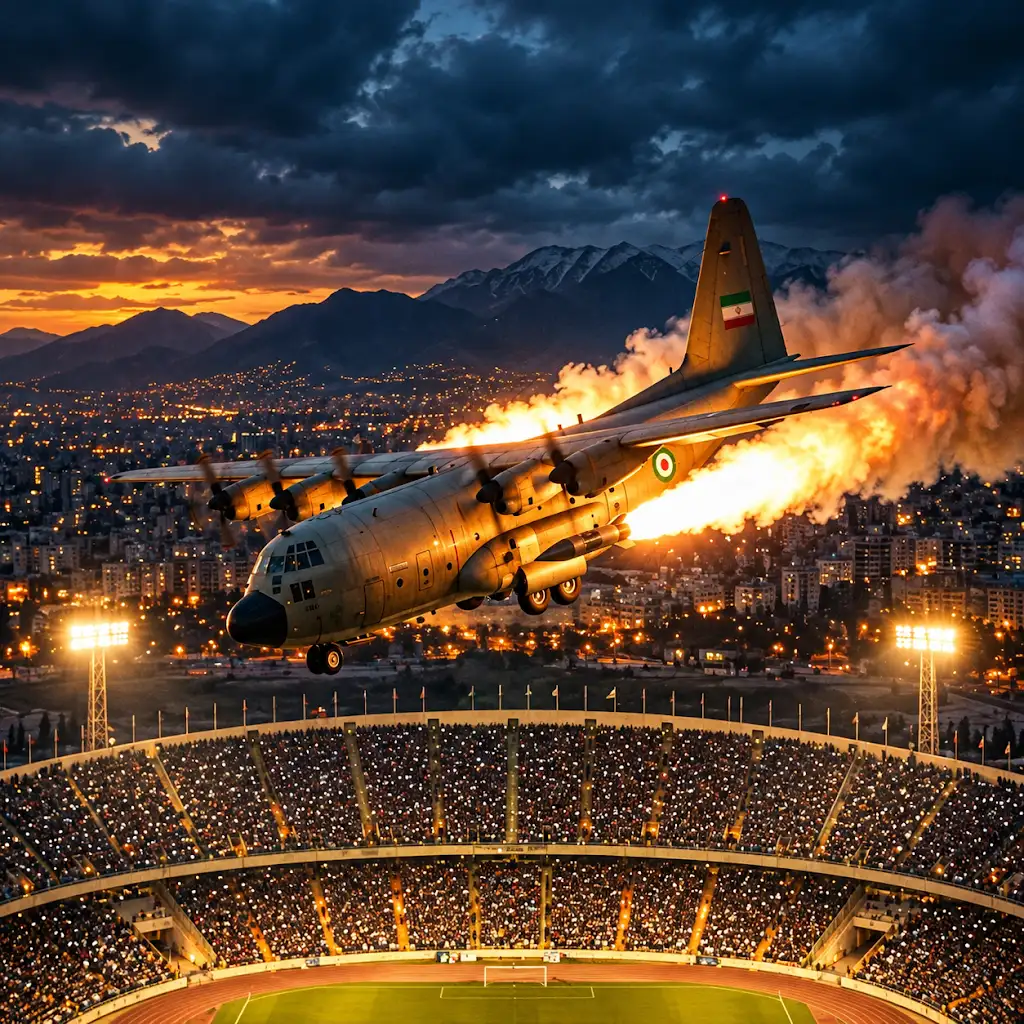
The Secret Plane Built to Land Inside a Stadium
FAQs
What is Operation Credible Sport C-130?
Operation Credible Sport C-130 was a military operation conducted by the United States in 1980 to rescue American hostages held in Iran. It involved modifying a C-130 aircraft to land and take off in a short distance.
How was the C-130 aircraft modified for Operation Credible Sport?
The C-130 aircraft was modified by adding rocket boosters to assist with short takeoffs and landings. These rocket boosters helped the aircraft achieve the necessary performance for the mission.
What was the purpose of using a modified C-130 aircraft in Operation Credible Sport?
The purpose of using a modified C-130 aircraft in Operation Credible Sport was to create a viable option for a rescue mission that required landing in a confined space with a short runway, such as a soccer stadium in Tehran, Iran.
Did Operation Credible Sport C-130 successfully rescue the hostages in Iran?
Operation Credible Sport C-130 was ultimately not used to rescue the hostages in Iran. The mission was canceled before it could be executed due to logistical and operational challenges.
What impact did Operation Credible Sport C-130 have on military aviation technology?
Operation Credible Sport C-130 demonstrated the potential for using modified aircraft for unconventional missions. It also highlighted the importance of innovation and adaptability in military operations.