The desert winds howled, carrying with them the grit of a failed ambition. Operation Credible Sport, a daring and desperate attempt to rescue American hostages held in Iran in 1980, stands as a stark monument to the perils of high-stakes rescue missions. It was a plan born of urgency, fueled by national pride, and ultimately undone by a confluence of technical failures, unforeseen circumstances, and a chilling underestimation of the logistical complexities involved. The echoes of its spectacular collapse offer profound and enduring lessons for military planners, policymakers, and anyone contemplating the audacious act of intervention.
The Genesis of a Desperate Gamble
The crisis that precipitated Operation Credible Sport was the seizure of the U.S. Embassy in Tehran in November 1979. This act of defiance, which saw 52 American diplomats and citizens taken hostage, plunged the United States into a diplomatic and psychological quagmire. Months turned into a year, and diplomatic avenues appeared to be exhausted. The pressure on the Carter administration to secure the release of the hostages mounted with each passing day, fueled by public outcry and the perceived impotence of the United States on the global stage. It was within this charged atmosphere that the idea of a direct military intervention began to gain traction.
The Strategic Imperative and Political Pressure
The Iranian hostage crisis was not merely a humanitarian concern; it was a profound challenge to American prestige and global standing. The image of American citizens held captive by a revolutionary regime was a potent symbol of perceived weakness. For President Jimmy Carter, already facing a challenging re-election campaign, the ability to resolve the crisis without further escalation or humiliation was paramount. The administration was under immense pressure from Congress, the public, and the international community to act decisively. This pressure, while understandable, undoubtedly contributed to a sense of urgency that could have potentially overridden meticulous planning and risk assessment. The perceived lack of viable diplomatic progress created a vacuum that a military solution seemed, to some, to be the only remaining option.
The Illusion of a Quick Fix
The allure of a swift, surgical strike to liberate the hostages was undoubtedly appealing. The historical successes of such operations, albeit often in different contexts, likely provided a psychological blueprint. However, the specific circumstances in Iran – a hostile nation with advanced air defenses and a population largely sympathetic to the revolutionaries – presented a far more formidable challenge than previous rescue attempts. The belief that a well-equipped and determined force could overcome these obstacles with relative ease proved to be a dangerous oversimplification. The focus on the “how” of the rescue sometimes overshadowed a thorough assessment of the “what ifs” and the inherent dangers involved in operating within hostile airspace and territory.
The failure of Operation Credible Sport, which aimed to rescue hostages in Iran using modified C-130 aircraft, has been extensively analyzed in various military studies. A related article that delves into the operational challenges and lessons learned from this mission can be found at this link. This article provides valuable insights into the complexities of executing high-stakes military operations and the importance of thorough planning and execution.
The Ingenious Yet Flawed “Credible Sport” Concept
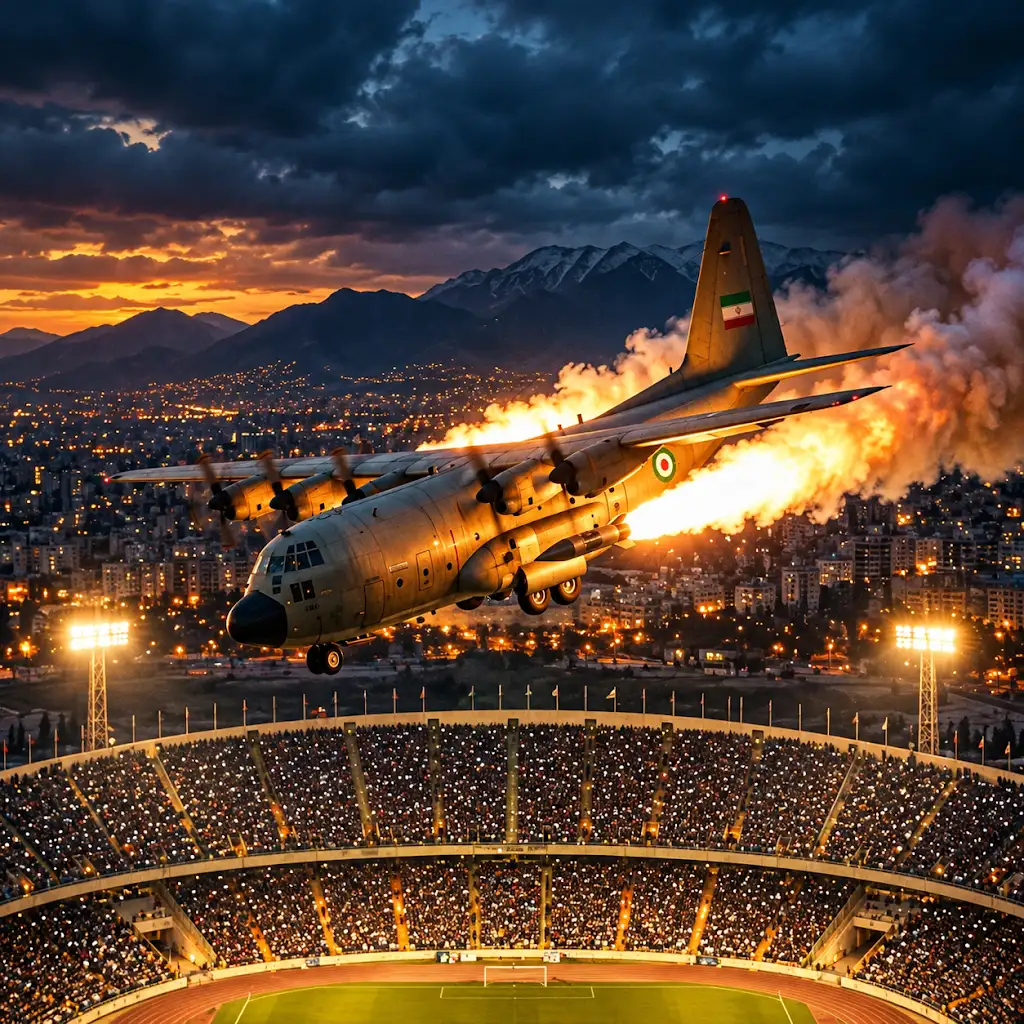
At the heart of Operation Credible Sport lay a novel and audacious concept: the use of a modified C-130 Hercules transport aircraft as a ground-attack and troop-carrying vehicle for a rapid insertion and extraction. This was not a typical cargo plane; it was a beast of burden reimagined for a combat role, a testament to the ingenuity of the engineers and planners involved. However, this very ingenuity also introduced a layer of complexity and a degree of technological risk that would ultimately prove its undoing.
The Modified C-130: A Beast of Burden Reimagined
The C-130 Hercules, a workhorse of military aviation known for its ruggedness and versatility, was deemed the most suitable aircraft for the mission. Its ability to operate from relatively short and unimproved airstrips made it a prime candidate for a clandestine landing in or near Tehran. However, to transform it into an offensive weapon, significant modifications were necessary. These included the addition of aerial refueling capabilities to extend its range, the installation of defensive countermeasures to ward off potential threats, and, crucially, the fitting of rocket boosters to enable rapid takeoff from a potentially compromised or short landing zone. This “boosted takeoff” capability was intended to overcome the logistical nightmare of establishing a secure landing zone and preparing for a conventional takeoff under duress. The aircraft was, in essence, being asked to perform a feat of engineering and piloting it had never been designed for.
The Role of the Delta Force and Special Operations Forces
The ground element of Operation Credible Sport was to be executed by the elite Delta Force, a unit specifically trained for counter-terrorism and hostage rescue operations. These highly skilled soldiers were tasked with a daring infiltration, neutralizing guards, and securing the hostages within a tight timeframe. Their training and dedication were undoubtedly beyond question. However, the success of their mission was inextricably linked to the flawless execution of the aerial component and the ability of the C-130 to land and take off under extreme pressure. The mission’s reliance on a single, highly complex aircraft for both insertion and extraction meant that any failure in the aircraft’s performance would have catastrophic consequences for the ground force and the hostages.
The Unraveling of the Plan: A Cascade of Failures

The execution of Operation Credible Sport was a masterclass in how multiple, seemingly minor, failures can coalesce into a catastrophic outcome. The mission, launched with immense anticipation, was plagued by a series of critical events that began even before the aircraft reached its intended destination, leading to its ignominious end.
The Desert Scramble and the First Setback
The initial phase of the operation involved a complex, multi-aircraft deployment to a remote staging area in the Iranian desert. This “staging” was designed to allow for final preparations and a coordinated push towards Tehran. However, even before the main assault force could be fully assembled, a critical incident occurred: a mid-air collision between two U.S. helicopters involved in the staging operation. This tragic accident resulted in the loss of eight American servicemen and severely damaged several other aircraft. The collision not only inflicted a heavy toll in human lives but also significantly degraded the available resources and compromised the secrecy of the operation. The element of surprise, a cornerstone of any successful rescue mission, was irrevocably damaged. The sound of helicopters crashing in the desert served as a grim omen of the challenges to come.
The Ill-Fated Landing: A Spectacle of Failure
The centerpiece of Operation Credible Sport, the landing of the modified C-130 at the abandoned soccer stadium near Tehran, was intended to be a swift, decisive maneuver. However, as the aircraft descended, the reality of the situation began to assert itself. The landing strip, believed to be clear, was found to be inadequately prepared and obstructed by debris. The pilot, battling difficult conditions and the inherent limitations of the heavily modified aircraft, attempted to land. The rocket boosters, meant to provide the necessary thrust for takeoff, were deployed prematurely. This, combined with the uneven terrain and the weight of the aircraft, resulted in a dramatic and uncontrolled descent. The C-130 skidded, veered off the rudimentary runway, and crashed, sparking fires. The intended rescue had devolved into a fiery spectacle of failure, broadcast to the world.
The Abandonment and the Echoes of Defeat
With the rescue aircraft disabled and the mission compromised, the order was given to abandon the operation. The remaining American forces were forced to withdraw, leaving behind wreckage and the bitter taste of defeat. The symbolic power of the crashed C-130, sitting as a monument to a failed ambition in the Iranian desert, was immense. It served as a stark visual representation of the risks taken and the price paid for a mission that could not be achieved. The hostages remained captive, and the United States was left to grapple with the consequences of this ambitious yet ultimately disastrous endeavor.
The Post-Mortem: Unpacking the Lessons
The aftermath of Operation Credible Sport was a period of intense scrutiny and soul-searching. The failed rescue attempt triggered a comprehensive review of the planning, execution, and intelligence gathering that underpinned the mission. The lessons learned, though born of tragedy and failure, were invaluable and have undoubtedly shaped the future of special operations and hostage rescue.
The Perils of Intelligence Gaps and Underestimation
A significant contributing factor to the operation’s failure was a critical lack of accurate and up-to-date intelligence. The assessment of the landing zone, the presence of potential threats, and the overall security situation in Tehran appears to have been insufficient. The belief that a deserted soccer stadium would provide a secure and unimpeded landing site was a critical miscalculation. Similarly, the operational capabilities of the Iranian forces were likely underestimated. The assumption that a swift in-and-out operation could be conducted without encountering significant resistance proved to be a dangerous gamble. This underscores the paramount importance of rigorous intelligence gathering and analysis in any high-risk military operation. Understanding the environment, the adversary, and the potential obstacles is not a supplementary task but a foundational requirement.
The Fragility of Complex Systems and Single Points of Failure
Operation Credible Sport highlighted the inherent fragility of complex systems that rely on multiple, perfectly synchronized components. The C-130, with its extensive modifications and reliance on rocket boosters for a critical takeoff maneuver, represented a single point of failure. Any malfunction or unforeseen issue with the aircraft or its systems could doom the entire mission. The collision of the helicopters earlier in the operation further illustrated this point, showcasing how the degradation of one element could have cascading effects on the entire operation. Future planning would need to incorporate redundancy and contingency measures to mitigate the impact of such single points of failure.
The Ethical and Psychological Toll of Failure
Beyond the tactical and strategic implications, the failure of Operation Credible Sport carried a significant ethical and psychological toll. The loss of American lives during the staging operation, the inability to rescue the hostages, and the public spectacle of failure weighed heavily on the nation and its leadership. This underscores the profound responsibility inherent in launching military interventions. The decision to risk lives in pursuit of a goal, however noble, must be accompanied by a clear-eyed assessment of the potential for failure and its consequences. The psychological impact on the special operations forces involved, who trained rigorously for a mission that ended in disaster, is also a critical consideration.
The failure of Operation Credible Sport highlights the complexities and challenges faced during military operations, particularly in the context of rapid response and logistics. For a deeper understanding of the implications and lessons learned from such operations, you can explore a related article that discusses the broader impact of military strategy and planning. This insightful piece can be found at In The War Room, where it delves into various military operations and their outcomes, providing valuable context to the discussions surrounding Operation Credible Sport.
The Enduring Legacy of a Flawed Endeavor
| Metric | Details |
|---|---|
| Operation Name | Operation Credible Sport |
| Date | April 1980 |
| Objective | Rescue American hostages in Iran by landing modified C-130 aircraft on a soccer stadium |
| Aircraft Used | Modified Lockheed C-130 Hercules |
| Failure Cause | Crash landing due to miscalculated rocket thrust and timing |
| Casualties | No fatalities; minor injuries reported |
| Outcome | Operation aborted; mission never executed |
| Impact on Future Operations | Led to development of alternative rescue plans, including Operation Eagle Claw |
While Operation Credible Sport is often remembered as a cautionary tale of military misadventure, its legacy extends far beyond its immediate failure. The lessons learned from this ambitious but ultimately doomed rescue attempt have had a lasting impact on how special operations forces are trained, equipped, and deployed. The experience informed subsequent, more successful rescue operations and continues to serve as a touchstone for evaluating the risks and rewards of such endeavors.
The Evolution of Special Operations Doctrine
The failures of Operation Credible Sport spurred significant revisions in special operations doctrine. The emphasis on meticulous planning, robust intelligence gathering, and thorough risk assessment became even more pronounced. The development of more advanced equipment, enhanced communication systems, and improved training methodologies can be traced, in part, to the lessons learned from this operation. The concept of over-reliance on a single, complex piece of technology was re-evaluated, leading to a greater emphasis on distributed capabilities and redundancy. The mission’s shortcomings served as a powerful catalyst for innovation and refinement in the realm of special operations.
A Symbol of Resilience and Learning
Despite the overt failure, Operation Credible Sport can also be viewed as a testament to the resilience of the human spirit and the capacity for learning from mistakes. The commitment of the individuals involved, the willingness of the nation to confront its failures, and the subsequent dedication to improving future operations all speak to a deeper strength. The operation, though unsuccessful in its primary objective, ultimately contributed to the development of more effective and ultimately more successful rescue missions in the years that followed. It serves as a potent reminder that even in the face of devastating setbacks, valuable lessons can be gleaned and applied to forge a stronger path forward. The desert sands may have buried the wreckage, but the lessons of Operation Credible Sport endure, etched into the annals of military history.
The Secret Plane Built to Land Inside a Stadium
FAQs
What was Operation Credible Sport Failure?
Operation Credible Sport Failure was a military operation conducted by the United States in 1980 to rescue American hostages held in Iran.
What was the objective of Operation Credible Sport Failure?
The objective of Operation Credible Sport Failure was to rescue 52 American hostages held at the U.S. Embassy in Tehran, Iran.
Why did Operation Credible Sport Failure ultimately fail?
Operation Credible Sport Failure failed due to a mechanical failure during the mission, specifically with one of the helicopters involved in the operation.
How did the failure of Operation Credible Sport Failure impact US-Iran relations?
The failure of Operation Credible Sport Failure further strained relations between the United States and Iran, leading to increased tensions between the two countries.
What were the consequences of the failed Operation Credible Sport Failure?
The failed operation had significant consequences, including the loss of American lives and a blow to the reputation of the United States military.