The hushed whispers of a clandestine operation, one born from desperation and fueled by audacious ingenuity, began to coalesce into the legend of Operation Credible Sport. This wasn’t a mission forged in the heat of conventional warfare, but rather a daring gamble, a testament to human resolve against seemingly insurmountable odds. Its story, long shrouded in secrecy, offers a profound glimpse into the lengths nations will go to when faced with a crisis demanding immediate and unconventional intervention. The operation’s name itself, a deliberate irony, masked the gravity of the undertaking and the immense stakes involved. It was a mission designed to defy expectations, to snatch victory from the jaws of defeat, and to rewrite the narrative of a deeply challenging geopolitical situation.
The Unforeseen Crisis: A Nation Held Hostage
The genesis of Operation Credible Sport lay not in a planned military maneuver, but in a sudden, cataclysmic event that plunged a nation into chaos and ignited international alarm. The political landscape of Iran, already volatile, erupted into a crisis that threatened to destabilize the region and ensnare innocent lives. The seizure of American hostages in Tehran in November 1979 was not merely a diplomatic incident; it was a direct affront to national sovereignty and a deeply personal affront to the families of those held captive. The world watched with bated breath as the standoff dragged on, diplomatic avenues proving fruitless, and the specter of prolonged imprisonment casting a dark shadow.
The Hostage Situation Escalates
The initial seizure of the U.S. embassy in Tehran by radical student followers of the Ayatollah Ruhollah Khomeini marked the beginning of 444 days of agonizing uncertainty. The young revolutionaries, fueled by anti-American sentiment and a desire to protest U.S. support for the deposed Shah, transformed the diplomatic compound into a prison. The 52 Americans held within its walls became pawns in a complex geopolitical chess game, their freedom contingent on demands that were both political and deeply symbolic. The news coverage was relentless, amplifying the anguish of the families and fueling a growing sense of helplessness within the United States. Every passing day deepened the national resolve to find a solution, but the options seemed increasingly limited and fraught with peril.
Diplomatic Dead Ends and Growing Desperation
As months bled into one another, the efficacy of traditional diplomatic channels became painfully apparent. The U.S. administration, under President Jimmy Carter, engaged in a series of negotiations, back-channel communications, and international appeals. However, these efforts were consistently met with intransigence from the Iranian government, which seemed unwilling or unable to secure the hostages’ release. The stalemate fostered a deep sense of frustration and desperation within the American public and among policymakers. The continued detention of American citizens was seen as a direct challenge to the United States’ global standing and its commitment to the safety of its people. This growing sense of urgency, coupled with the perceived failure of conventional methods, created fertile ground for more radical and unconventional solutions to be considered.
Operation Credible Sport was a pivotal military operation aimed at rescuing hostages during the Iran hostage crisis, showcasing innovative tactics and the use of modified aircraft. For a deeper understanding of the strategic implications and the challenges faced during this operation, you can read a related article that delves into the complexities of military interventions and their outcomes. Check it out here: In the War Room.
The Birth of an Audacious Plan: Innovation Under Pressure

With diplomacy faltering and the clock ticking ominously, the need for an alternative, a Plan B, became paramount. It was in this crucible of pressure and desperation that the concept of Operation Credible Sport began to take shape. The idea was born not from existing military doctrines, but from a profound understanding of the unique constraints of the situation and a willingness to explore unconventional avenues. The goal was ambitious, bordering on the fantastical: to orchestrate a rescue mission that bypassed the immediate dangers of the embassy itself and extracted the hostages from a more vulnerable location. The key to this audacious plan lay in a novel application of technology and a bold logistical undertaking.
The Strategic Imperative for a New Approach
The established intelligence suggested that a direct assault on the U.S. embassy was too risky. The compound was heavily guarded by militants, and any overt military action could easily lead to the deaths of the hostages. Furthermore, the international political climate made overt military intervention highly problematic. Thus, the strategic imperative was to find a way to extract the hostages without triggering a violent response or further escalating the international crisis. This required a plan that was swift, covert, and relied on surprise and technical superiority rather than brute force. The challenge was to identify a target of opportunity, a pathway to extraction that was less fortified and more amenable to a rapid infiltration and exfiltration.
The Role of Unconventional Technology: The Osprey and Beyond
The cornerstone of Operation Credible Sport’s innovative approach was the utilization of cutting-edge, and in some respects, experimental technology. The most significant element was the proposed use of the V-22 Osprey, a tiltrotor aircraft then in its early development stages. The Osprey offered the unique capability of vertical takeoff and landing (VTOL) like a helicopter, but with the speed and range of a fixed-wing aircraft. This duality was critical: it allowed for deployment into potentially unprepared landing zones and provided the speed necessary for a rapid strike and escape. However, the Osprey was not the only technological marvel considered. The mission planners also looked at advanced communication systems, specialized insertion and extraction equipment, and intelligence gathering technologies that could provide real-time battlefield awareness. The very nature of the technology involved underscored the experimental and high-stakes nature of the operation.
The Intricacies of the Mission: A Symphony of Precision
Operation Credible Sport was not simply a matter of brute force or a single decisive action. It was a meticulously planned and intricately choreographed endeavor, requiring the coordination of numerous moving parts and specialized units. The success of the mission hinged on the precise execution of each phase, from the initial intelligence gathering to the final extraction. Every detail was scrutinized, every potential contingency considered, in the relentless pursuit of a flawless operation. The inherent risks were immense, and the margin for error infinitesimally small.
The Critical Intelligence Gathering and Reconnaissance
Before any boots could hit the ground, a vast and sophisticated intelligence apparatus was mobilized. Dedicated teams worked tirelessly to gather every scrap of information about the terrain, the security apparatus of the Iranian regime, the disposition of the militants, and the precise location and condition of the hostages. This involved a combination of human intelligence, signals intelligence, and aerial reconnaissance. Sophisticated imaging technologies were employed to map out potential landing zones, identify escape routes, and assess the defensive capabilities of any likely targets. The goal was to build an almost perfect picture of the operational environment, leaving no stone unturned and no detail unexamined. The intelligence gathered was not static; it was continuously updated, ensuring that the mission planners had the most current and accurate information available.
The Specialized Forces: Elite Units for an Elite Task
The execution of Operation Credible Sport would fall to the most highly trained and skilled special operations forces available. These were not ordinary soldiers; they were individuals who had undergone rigorous training in unconventional warfare, hostage rescue, and specialized insertion and extraction techniques. Units like Delta Force (Task Force 160, then known as Task Force 17) were reportedly involved in the planning and potential execution phases. These elite soldiers were proficient in everything from close-quarters combat and silent movement to the operation of specialized equipment. Their ability to operate effectively in high-stress, low-visibility environments, and their unwavering discipline were essential for the success of such a perilous undertaking. The selection of these units was as critical as the planning of the mission itself, ensuring that the right personnel were tasked with an unprecedented challenge.
The Logistics of Extraction: A Delicate Dance
The logistical challenges of Operation Credible Sport were monumental. The mission required the deployment of personnel and equipment into a hostile foreign territory, deep behind enemy lines. This involved not only the transport of troops but also the provision of essential supplies, specialized weaponry, and medical support. The selection of a suitable landing zone, capable of accommodating the unique needs of the Osprey aircraft, was paramount. The mission planners had to account for factors such as terrain, visibility, and the potential for detection. The extraction phase itself was equally complex, involving the rapid boarding of the hostages under potentially adversarial conditions and a swift departure to safety. This was a delicate dance, requiring flawless timing and coordination between the ground forces and the aircrews, with every second counting.
The Ill-Fated Attempt: The Reality of the Unforeseen
Despite the meticulous planning and the cutting-edge technology, the best-laid plans of mice and men, as the saying goes, often go awry. Operation Credible Sport, despite its brilliant conception, ultimately faltered not due to a lack of planning or bravery, but because of the unforgiving realities of operating in a complex and unpredictable environment. The mission encountered obstacles that could not have been fully anticipated, leading to its ultimate and tragic abandonment. The lessons learned from this endeavor, however, were invaluable and continue to inform future special operations planning.
The Initial Deployment and the Seeds of Doubt
The mission began with a degree of optimism, buoyed by the confidence in the planning and the capabilities of the deployed forces. However, as the operation commenced, subtle but significant issues began to emerge. The exact circumstances of the initial deployment and the specific problems encountered remain a subject of historical debate and declassified information. Yet, it is understood that the operational environment proved more challenging than anticipated. Factors such as unexpected weather conditions, unforeseen technical malfunctions, or intelligence gaps could have contributed to the growing unease among the mission commanders. The very nature of a clandestine operation means that details are often obscured, but the outcome suggests that the initial phases did not proceed as smoothly as envisioned.
The Inevitable Decision: A Mission Aborted
As the operation progressed, and as unforeseen difficulties mounted, the mission commanders were faced with an agonizing decision: to press on into an increasingly perilous situation or to abort the mission and preserve the lives of their personnel. The paramount concern in any rescue operation is the safety of the rescuers. With the situation deteriorating and the risks escalating, the decision was made to call off the operation. This was not a decision taken lightly, but rather a testament to the pragmatism and responsibility of the leadership involved. The abandonment of Operation Credible Sport was a bitter pill to swallow, a stark reminder of the inherent dangers and uncertainties that accompany such high-stakes missions.
The Aftermath and the Unsung Heroes
The immediate aftermath of the aborted mission was one of profound disappointment and reflection. The operatives involved, having risked their lives for a cause, faced the somber reality of their mission’s conclusion. The focus shifted from rescue to ensuring the safe return of the deployed forces. While Operation Credible Sport did not achieve its ultimate objective, the bravery and dedication of the individuals involved were never in question. These were unsung heroes, who stepped forward when called upon, prepared to make the ultimate sacrifice. Their commitment, even in the face of failure, represents a profound aspect of military service and national duty. The intelligence gathered and the lessons learned from this operation, though born out of a difficult experience, would prove invaluable for future endeavors.
Operation Credible Sport was a significant military operation that aimed to rescue hostages in Iran during the 1980s, showcasing innovative tactics and strategies. For a deeper understanding of the complexities involved in such operations, you can explore a related article that discusses the broader implications of military interventions and their outcomes. This insightful piece can be found here, providing valuable context to the challenges faced during Operation Credible Sport.
The Legacy of Operation Credible Sport: Lessons Learned and Lasting Impact
| Metric | Details |
|---|---|
| Operation Name | Operation Credible Sport |
| Purpose | To develop a modified Lockheed C-130 Hercules capable of very short takeoff and landing (VSTOL) for a rescue mission |
| Timeframe | Early 1980s |
| Aircraft Used | Lockheed C-130 Hercules (modified) |
| Key Modifications | Installation of multiple rocket engines for vertical lift and short landing/takeoff |
| Rocket Engine Count | Up to 30 rockets installed on the aircraft |
| Mission Objective | Rescue of American hostages in Iran (Operation Eagle Claw) |
| Outcome | Operation was canceled after a crash during testing; concept influenced future VSTOL designs |
| Significance | Demonstrated feasibility of rocket-assisted short takeoff and landing for large transport aircraft |
While Operation Credible Sport may not have culminated in the triumphant liberation of hostages, its impact extends far beyond the immediate events of its execution. The mission served as a critical learning experience, shaping future strategies and highlighting the indispensable role of innovation and specialized training in national security. The boldness of the concept, even in its failure, continues to inspire and inform. The story of Operation Credible Sport is not just about a single mission; it is a testament to the enduring human spirit of resilience and the constant evolution of tactics in the face of evolving threats.
The Evolution of Special Operations Capabilities
The challenges encountered during Operation Credible Sport provided invaluable insights into the practical application of emerging technologies and the logistical complexities of deep-penetration rescue missions. The experience directly influenced the development and refinement of special operations forces, their training methodologies, and their operational doctrines. The emphasis on inter-service cooperation, advanced intelligence gathering, and the use of unconventional assets was significantly bolstered. The lessons learned about the limitations of certain technologies, the importance of robust contingency planning, and the critical need for precise intelligence were integrated into the operational DNA of elite units, making them more capable and adaptable for future crises.
The Importance of Innovation in Crisis Response
Operation Credible Sport stands as a powerful testament to the fact that sometimes, the most effective solutions emerge from the most unconventional thinking. The willingness to explore uncharted territory, to leverage nascent technologies, and to deviate from traditional approaches is crucial when faced with unprecedented challenges. The mission underscored the vital importance of fostering a culture of innovation within military and intelligence agencies, encouraging creative problem-solving, and investing in research and development that can provide asymmetric advantages. The bold concept, even if ultimately unsuccessful, demonstrated that when conventional methods fail, a willingness to innovate can be the difference between inaction and a viable, albeit risky, solution.
A Reminder of the Human Element
Ultimately, the story of Operation Credible Sport is a profound reminder of the human element at the heart of all such endeavors. It highlights the courage, sacrifice, and unwavering dedication of the individuals who volunteer for the most dangerous missions. It also underscores the agonizing decisions faced by leaders when the lives of their people are on the line. The mission’s legacy is not solely in its technological advancements or strategic implications, but in the indelible mark it left on the individuals involved and the enduring narrative of their commitment to protecting lives, even when faced with insurmountable odds. The echoes of Operation Credible Sport continue to resonate, serving as a benchmark for bravery, innovation, and the relentless pursuit of solutions in the face of adversity.
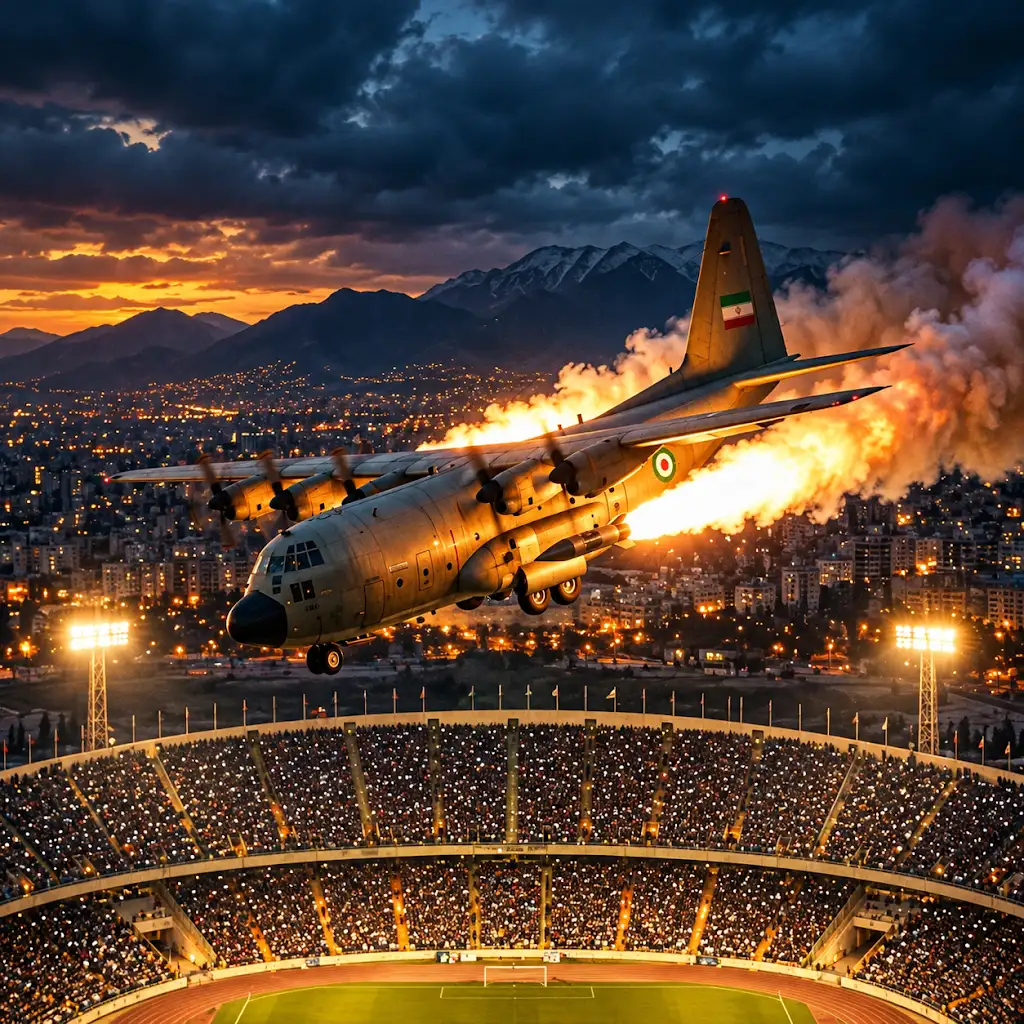
The Secret Plane Built to Land Inside a Stadium
FAQs
What is Operation Credible Sport?
Operation Credible Sport is a joint initiative by law enforcement agencies and sports organizations to combat doping in sports.
How does Operation Credible Sport work?
Operation Credible Sport involves investigations, intelligence gathering, and coordinated efforts to identify and prosecute individuals involved in doping activities in sports.
Which organizations are involved in Operation Credible Sport?
Operation Credible Sport typically involves collaboration between national and international law enforcement agencies, anti-doping agencies, sports federations, and other relevant stakeholders.
What are the goals of Operation Credible Sport?
The main goals of Operation Credible Sport are to protect the integrity of sports, ensure fair competition, safeguard the health of athletes, and uphold the values of sportsmanship.
Has Operation Credible Sport been successful in combating doping in sports?
Operation Credible Sport has led to significant arrests, sanctions, and deterrent effects on doping activities in sports, contributing to a cleaner and more transparent sporting environment.