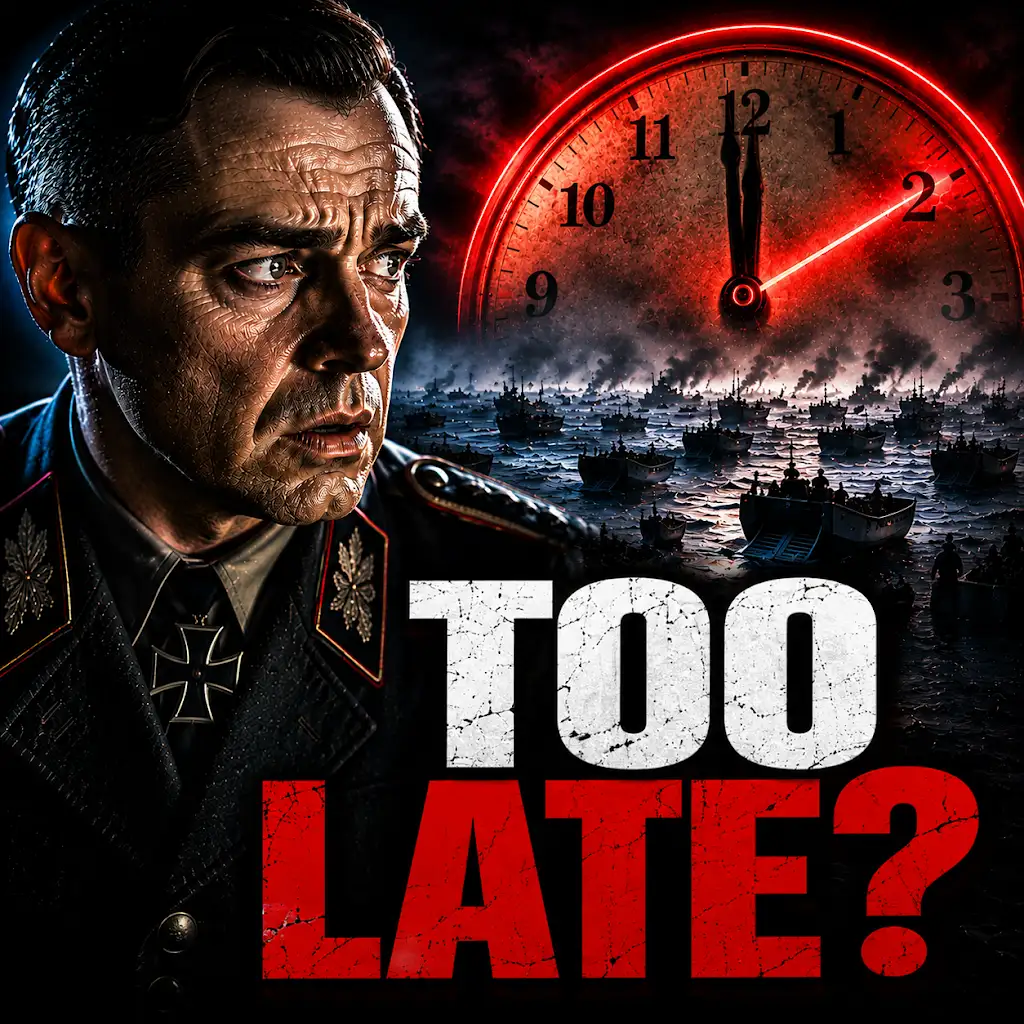
The D-Day landings, codenamed Operation Overlord, stand as a monumental turning point in the Second World War, marking the beginning of the end for Nazi Germany’s tyranny in Western Europe. On June 6, 1944, a colossal amphibious assault by Allied forces descended upon the beaches of Normandy, France, unleashing a torrent of steel, fire, and unwavering resolve. This meticulously planned and executed operation, fraught with immense risk and sacrifice, irrevocably shifted the momentum of the war, opening a vital second front against Hitler’s war machine and ultimately paving the way for liberation.
The necessity of a Western Front had been debated and planned for years by the Allied leadership. Following the fall of France in 1940 and the prolonged struggle in North Africa, the Soviet Union, bearing the brunt of the Eastern Front, repeatedly urged for a diversion of German resources. The strategic imperative was clear: to relieve pressure on the Eastern Front, to prevent Germany from concentrating its forces, and to directly liberate occupied Western Europe.
The Long Road to Overlord
The genesis of Operation Overlord can be traced back to the Tehran Conference in late 1943, where the “Big Three” – Roosevelt, Churchill, and Stalin – agreed to a cross-channel invasion in 1944. This commitment, however, was the culmination of years of preliminary planning, intelligence gathering, and smaller-scale operations.
Early Amphibious Assaults and Lessons Learned
The disastrous raid on Dieppe in August 1942 served as a harsh but invaluable lesson. The near-total failure of this Canadian-led assault highlighted the critical need for overwhelming air and naval superiority, detailed reconnaissance, and specialized landing craft. The losses at Dieppe spurred the development of new amphibious technologies and tactics.
The Deception Campaign: Masking the True Intent
A crucial element of Overlord’s success was the elaborate deception campaign, codenamed Operation Fortitude. This intricate web of misinformation aimed to convince the German high command that the main Allied invasion would occur at the Pas-de-Calais, the narrowest point of the English Channel.
Phantom Armies and Double Agents
To bolster the illusion of an impending invasion in the Pas-de-Calais, the Allies created a fictional First U.S. Army Group (FUSAG) under the command of the highly visible General George S. Patton. This phantom army, complete with dummy tanks, aircraft, and radio traffic, kept German forces pinned in that region. Double agents played a vital role in feeding fabricated intelligence to the German war machine, further solidifying their belief in the Pas-de-Calais as the primary target.
Exploiting German Intelligence Gaps
The Germans, particularly Field Marshal Erwin Rommel, who was tasked with defending the Atlantic Wall, recognized the threat of an invasion. However, their intelligence was often fragmented and prone to misinterpretation. The Allied deception, coupled with Allied control of the air and sea, effectively masked the true invasion area of Normandy.
The Invading Force: Assembling the Allied Juggernaut
Operation Overlord represented the largest seaborne invasion in history, a testament to the industrial might and organizational prowess of the Allied nations, primarily the United States, the United Kingdom, and Canada. The sheer scale of manpower, materiel, and logistical support required was unprecedented.
The Naval Armada: The Unseen Shield and Sword
The naval component of D-Day was colossal, involving thousands of ships and vessels of all types. This armada was responsible for transporting troops, providing naval gunfire support, and ensuring control of the sea lanes.
The Assault Fleets
The invasion was divided into distinct assault fleets, each tasked with landing troops on specific sectors of the Normandy coast. These fleets comprised troop transports, landing craft, destroyers, cruisers, and battleships, all working in concert.
Landing Craft Variations
A diverse array of landing craft were developed and deployed, each with a specific purpose. The Landing Craft, Assault (LCA) carried infantry, while the Landing Craft, Mechanized (LCM) could transport tanks and heavier equipment. The Landing Craft, Vehicle, Personnel (LCVP), often referred to as the “Higgins boat,” was a workhorse, capable of carrying a platoon of soldiers or smaller vehicles.
Naval Gunfire Support: Softening the Defenses
Before the troops even hit the beaches, Allied warships unleashed a thunderous barrage of naval gunfire onto the German defenses. This bombardment aimed to neutralize coastal artillery, pillboxes, and other fortifications, thereby reducing the casualties the landing troops would face.
The Air Supremacy: Dominating the Skies
The Allies’ achievement of air superiority over Normandy was a critical prerequisite for the invasion’s success. Without this dominance, German aircraft could have wreaked havoc on the invasion fleets and landing forces.
Bomber Command’s Role
The Royal Air Force (RAF) Bomber Command and the United States Army Air Forces (USAAF) conducted extensive pre-invasion bombing raids. These operations targeted German airfields, radar installations, railway lines, and other infrastructure vital to the German war effort.
Bombing of Transportation Hubs
Key railway junctions and bridges were relentlessly bombed to disrupt German troop movements and supply lines. This bombing campaign aimed to isolate the Normandy battlefield and delay any significant German reinforcement.
Tactical Air Support: The Guardian Angels
On D-Day itself, Allied fighter-bombers provided crucial tactical support to the landing troops. They engaged German armor, artillery positions, and any enemy aircraft that dared to challenge them, offering a vital shield for the advancing infantry.
The Ground Forces: The Spearhead of Liberation
The Allied ground forces, comprised of hundreds of thousands of soldiers, were the direct instrument of liberation. They faced heavily fortified defenses, determined German resistance, and the unforgiving terrain of Normandy.
The Five Beaches: Utah, Omaha, Gold, Juno, Sword
The invasion beaches were strategically divided and codenamed: Utah and Omaha for American forces, and Gold, Juno, and Sword for British and Canadian forces. Each beach presented unique challenges and faced varying degrees of German opposition.
Omaha Beach: The Bloody Sands
Omaha Beach, assigned to the American V Corps, became infamous for the ferocity of its defense and the exceptionally high casualties sustained by the landing troops. The sheer lack of effective pre-invasion bombardment in some sectors, coupled with the rugged terrain and entrenched German positions, made it a harrowing ordeal.
The German Defenses at Omaha
The German defenders on Omaha Beach, primarily from the 352nd Infantry Division, were well-positioned on the bluffs overlooking the beach. Their machine-gun nests, artillery, and mortar emplacements inflicted devastating casualties on the American GIs as they disembarked from their landing craft.
The Role of Leadership and Resilience
Despite the overwhelming odds, the courage and initiative of individual officers and soldiers, such as Brigadier General Norman Cota, were instrumental in overcoming the stalemate. Their determination to push inland, even when communication and command structures were fractured, prevented a catastrophic collapse.
Utah Beach: A More Fortunate Landing
In contrast to Omaha, the landings on Utah Beach, also undertaken by American forces, were comparatively less costly. This was due in part to a more effective pre-invasion aerial bombardment and the fact that the German defenses, while present, were less concentrated.
The Successful Seizure of the Causeway
The securing of the causeways leading inland from Utah Beach was a critical objective. These were vital for the rapid movement of troops and equipment off the beach and into the interior.
Airborne Operations: Securing the Flanks and Disrupting the Enemy
Alongside the amphibious assault, a massive airborne operation was launched to secure the flanks of the invasion beaches and disrupt German communications and reinforcements.
The 82nd and 101st Airborne Divisions
The American 82nd and 101st Airborne Divisions were tasked with securing vital bridges and road junctions inland, preventing German counterattacks. The British 6th Airborne Division performed similar operations on the eastern flank, securing the crucial bridges over the Orne River and the Caen Canal.
The Challenges of Night Parachuting
The paratroopers faced immense challenges, including dropping into enemy territory at night, often dispersed over a wide area. Many landed far from their intended drop zones, leading to isolated pockets of intense fighting and heroic individual actions.
The Battle for the Beaches: The Crucible of D-Day
The initial hours and days of the Normandy landings were a brutal and chaotic struggle. Allied soldiers faced not only the formidable German defenses but also the psychological shock of battle, the loss of comrades, and the sheer exhaustion of their ordeal.
The Fierce German Resistance
The German defenders, though often outnumbered and outgunned, fought with tenacity. They were defending their homeland, and many were seasoned veterans of the Eastern Front.
The Atlantic Wall: A Formidable Barrier
The Atlantic Wall, a series of coastal fortifications stretching from Denmark to the Spanish border, was intended to repel any Allied invasion. While not a continuous concrete barrier as often portrayed, it comprised a formidable network of bunkers, gun emplacements, minefields, and anti-tank obstacles.
Inadequacies and Adaptations
Despite its formidable reputation, the Atlantic Wall had inherent weaknesses. It was unevenly manned, and some sectors were less heavily defended than others. The Germans also made significant adaptations in the weeks leading up to D-Day, placing more emphasis on inland defenses.
The Role of the Panzer Divisions
The potential deployment of German Panzer divisions to counter the invasion was a major concern for the Allies. The timely arrival and deployment of these armored units could have severely hampered the Allied advance.
Hitler’s Hesitation and Rommel’s Plea
Crucially, Hitler’s indecision and his belief that the Pas-de-Calais was the true invasion target delayed the commitment of several Panzer divisions to the Normandy front. Rommel, recognizing the dire situation, had repeatedly urged for greater freedom to deploy these reserves.
The Infamous “Mulberry” Harbours: Artificial Ports of Life
A testament to Allied ingenuity and foresight were the “Mulberry” harbours. These prefabricated, artificial ports were towed across the English Channel and assembled off the coast of Normandy to facilitate the rapid unloading of supplies and reinforcements.
The Engineering Marvel
The Mulberries were colossal structures, comprising two interconnected sections: an outer breakwater of large concrete caissons and an inner harbour with floating piers and roadways. Their construction and deployment represented an unparalleled feat of engineering.
Resilience in the Face of Storms
One of the Mulberry harbours, located at Arromanches for the British sector, proved remarkably resilient and vital for months. The other, at Omaha Beach for the Americans, suffered significant damage from a severe storm shortly after its assembly, highlighting the challenges of operating such structures in the English Channel.
The Long Road to Victory: The Aftermath and Legacy of D-Day
The success of the Normandy landings was not an end in itself but the beginning of a protracted and brutal campaign across Western Europe. The liberation of France and the subsequent push towards Germany were marked by intense fighting, strategic maneuvering, and immense human cost.
The Battle of Normandy: Grinding Advance and Heavy Losses
The period immediately following D-Day, often referred to as the Battle of Normandy, was characterized by a grinding advance against determined German resistance. The bocage country of Normandy, with its dense hedgerows, proved a challenging environment for armored warfare.
Operation Cobra: Breaking the German Lines
A critical turning point in the Battle of Normandy was Operation Cobra, launched in late July 1944. This offensive, employing massive aerial bombardment followed by a ground assault, finally broke through the German defenses west of Saint-Lô, opening the path for a rapid Allied advance.
The Impact of Aerial Bombardment
The intense aerial bombardment preceding Operation Cobra, while effective in breaking the German lines, also resulted in unintended friendly fire casualties for the American ground troops, a stark reminder of the unpredictable nature of modern warfare.
The Falaise Pocket: The Encirclement of German Forces
The Falaise Pocket, formed in August 1944, saw the encirclement and destruction of a significant portion of the German Army Group B. This decisive victory effectively neutralized German offensive capabilities in Normandy and paved the way for the liberation of Paris.
The Liberation of Paris: A Symbol of Hope
On August 25, 1944, after four years of occupation, Paris was liberated by Allied forces, marking a profound moment of joy and relief for the French people and a significant symbolic victory for the Allied cause.
The Role of the French Resistance
The French Resistance played a crucial role in the liberation of Paris, disrupting German communications, providing intelligence to the Allies, and engaging in acts of sabotage.
The Path to Berlin: The Final Push
Following the liberation of France, the Allied armies continued their relentless advance towards Germany. The arduous campaigns of 1944 and 1945, marked by fierce battles such as the Battle of the Bulge and the crossing of the Rhine, ultimately led to the unconditional surrender of Nazi Germany on May 8, 1945.
The Human Cost of Liberation
The D-Day landings and the subsequent campaign in Normandy came at an immense human cost. Hundreds of thousands of Allied soldiers, sailors, and airmen made the ultimate sacrifice. The civilian population of Normandy also endured immense suffering, with countless lives lost and cities and villages devastated by the fighting.
The Enduring Legacy: A Defining Moment in History
The Normandy landings remain an iconic event, etched in the collective memory of the world. Its legacy extends far beyond the military sphere, embodying themes of courage, sacrifice, international cooperation, and the unwavering pursuit of freedom.
A Symbol of Allied Unity
D-Day was a powerful demonstration of the unity and determination of the Allied nations. The seamless coordination between the American, British, Canadian, and other Allied forces underscored the strength that could be achieved through shared purpose and sacrifice.
The Importance of Combined Arms
The success of Operation Overlord highlighted the critical importance of integrated operations between land, sea, and air forces. The meticulous planning and execution of combined arms tactics were essential for overcoming the formidable German defenses.
The Genesis of Modern Amphibious Warfare
The innovations and lessons learned from the D-Day landings had a profound and lasting impact on the development of modern amphibious warfare. The tactics, technologies, and strategic considerations employed on that historic day continue to influence military doctrine today.
Innovations in Landing Craft and Support
The development of specialized landing craft, amphibious vehicles, and specialized support units, driven by the demands of D-Day, revolutionized the ability to project power from the sea onto land.
The Preservation of Freedom and Democracy
Ultimately, the success of the Normandy landings was a pivotal moment in the preservation of freedom and democracy in the face of totalitarian aggression. The courage and sacrifice of those who landed on the beaches of Normandy allowed for the liberation of millions and the subsequent shaping of a post-war world order.
Remembering the Sacrifice
The memory of D-Day serves as a powerful reminder of the sacrifices made by those who fought for peace and freedom. Memorials, museums, and historical sites across Normandy stand as enduring testaments to their bravery, ensuring that their legacy will never be forgotten. The lessons learned from this monumental undertaking continue to resonate, underscoring the enduring importance of vigilance, cooperation, and the unwavering commitment to democratic values.