Early Life and Education
Nicholas Christofilos was born in Athens, Greece, in 1916. From a young age, he displayed an exceptional aptitude for mathematics and physics. His academic journey began at the National Technical University of Athens, where he earned a degree in electrical engineering. It was during his university years that he first encountered the burgeoning field of nuclear physics, a subject that would captivate his intellect and shape his scientific career. His early fascination with the fundamental forces of nature, coupled with a keen engineering mind, set him apart. Even in his student days, he was known for his unconventional thinking and his ability to visualize complex physical phenomena. After graduation, he pursued postgraduate studies in physics, further immersing himself in the theoretical and experimental frontiers of the discipline. His initial academic pursuits were marked by a deep curiosity and a relentless drive to understand the underlying principles governing the universe. This foundational period was crucial in shaping his analytical skills and his readiness to tackle challenging scientific problems that would define his later contributions. His professors recognized his raw talent, noting his innate ability to grasp abstract concepts and his persistence in solving intricate problems. The intellectual atmosphere of Athens in the interwar period, a hub of scientific and philosophical thought, undoubtedly played a role in nurturing his budding scientific curiosity. He was exposed to the latest scientific journals and debates, fueling his ambition to contribute to the global scientific discourse.
A Passion for the Unseen
Christofilos’s initial interest in physics was not merely academic; it was driven by a profound sense of wonder about the invisible forces that govern reality. He was particularly drawn to the subatomic world, a realm where classical intuition often failed. His engineering background provided him with a practical perspective, allowing him to bridge the gap between abstract theory and potential technological applications. This duality of mind, the theorist who could also envision practical devices, would become a hallmark of his work. He saw the potential for physics to not only explain the universe but also to reshape it. This early passion was not confined to textbooks; it manifested in independent study and a constant questioning of established paradigms. He possessed an innate ability to see connections where others saw disparate elements, a skill that would prove invaluable in his groundbreaking work. The exploration of nuclear phenomena, with its inherent mysteries and immense power, ignited a fire within him, propelling him towards a life dedicated to unraveling its secrets. He was not content with simply accepting existing models; he sought to delve deeper, to uncover the fundamental mechanisms at play. This persistent pursuit of knowledge, this drive to understand the “why” and “how” of the universe, was the bedrock of his scientific character.
Nicholas Christofilos was a prominent nuclear physicist known for his groundbreaking work in the field of particle physics and his contributions to the development of nuclear technology. His legacy is explored in detail in a related article that discusses the impact of his research on modern physics and its applications. For more information on his life and achievements, you can read the article here: Nicholas Christofilos: A Pioneer in Nuclear Physics.
Early Career and the Dawn of the Nuclear Age

The mid-20th century was a period of unprecedented scientific advancement, particularly in the realm of nuclear physics. Following the discovery of the neutron and the subsequent understanding of nuclear fission, the world stood on the precipice of a new era. Christofilos, with his sharp intellect and keen engineering insights, was perfectly positioned to contribute to this burgeoning field. He began his professional career working in industry, applying his electrical engineering skills to practical problems. However, the allure of fundamental research in nuclear physics was too strong to resist. He soon transitioned to academic and research institutions, where he could dedicate his full attention to the theoretical and experimental challenges of the atom’s core. His early work involved a deep dive into the theoretical frameworks that were emerging to describe nuclear forces and particle interactions. He was not afraid to challenge established ideas and to propose novel explanations for observed phenomena. This period was characterized by a rapid exchange of ideas within the scientific community, and Christofilos was an active participant, often contributing dissenting opinions that, upon closer examination, proved to be remarkably prescient. His ability to think outside the box and to question conventional wisdom was a defining characteristic of his early career, setting the stage for his later, more significant breakthroughs.
Navigating the Theoretical Landscape
The early days of nuclear physics were a landscape of rapidly evolving theories. Concepts like quantum mechanics, the strong and weak nuclear forces, and the nature of subatomic particles were being debated and refined. Christofilos immersed himself in this complex theoretical environment. He possessed a unique ability to synthesize disparate theoretical concepts and to identify potential areas of overlooked or under-explored phenomena. His engineering background served him well, providing a grounding in practical application and a critical eye for theoretical elegance that might not translate to reality. He would spend countless hours poring over research papers, engaging in spirited discussions with colleagues, and meticulously working through complex mathematical derivations. His mind was a fertile ground for innovative ideas, and he was not afraid to pursue them, even if they diverged from the prevailing scientific consensus. This intellectual rigor and willingness to engage with challenging theoretical problems were instrumental in shaping his unique perspective and preparing him for the monumental discoveries that lay ahead. He understood that true scientific progress often came from questioning the status quo and from daring to propose alternative explanations.
The Christofilos Conjecture and its Profound Implications
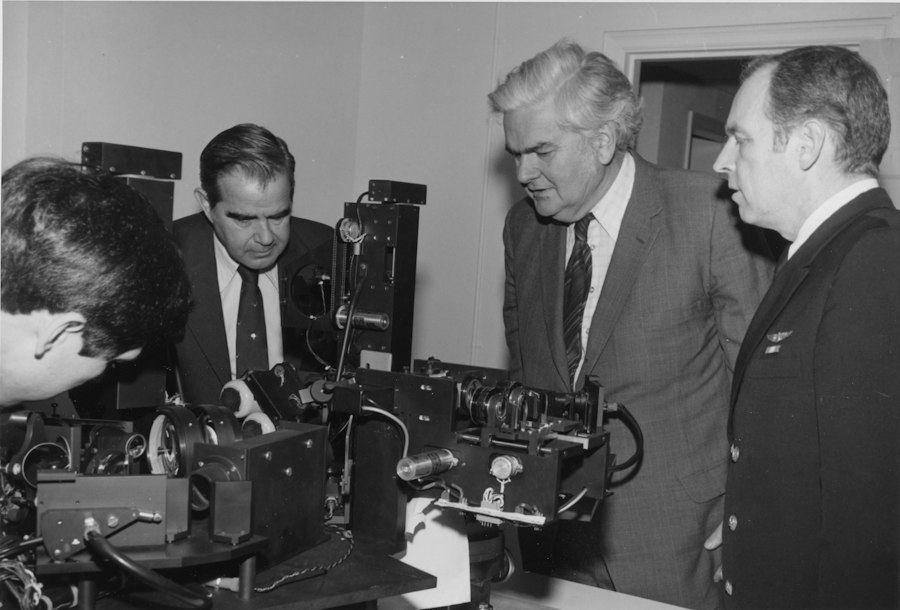
Nicholas Christofilos is perhaps most famously known for his groundbreaking theoretical work on the acceleration and containment of charged particles in magnetic fields. This work culminated in what is now often referred to as the Christofilos conjecture, a theoretical framework that laid the groundwork for several key technological advancements, most notably in the realm of controlled fusion and particle accelerators. His insights into the behavior of charged particles at high energies and in the presence of strong magnetic fields were revolutionary. He proposed that by introducing a specific type of oscillating electric field within a magnetic containment system, it would be possible to create a stable, confined plasma capable of sustaining fusion reactions. This was a radical departure from many contemporary approaches, which focused primarily on static magnetic fields. Christofilos’s vision was one of dynamic control, of actively manipulating the plasma to maintain stability. The implications of this conjecture were immense, suggesting a potential pathway to harness the immense power of nuclear fusion for energy generation. His theoretical work, though initially met with skepticism by some, was meticulously developed and mathematically robust, providing a solid foundation for future experimental validation.
Unlocking Controlled Fusion
The dream of controlled nuclear fusion – replicating the power of the sun on Earth – has long been a holy grail of physics. In the mid-20th century, as the understanding of fusion processes deepened, so too did the challenges associated with achieving it. Christofilos’s theoretical contributions offered a novel and elegant solution to the problem of plasma confinement. His conjecture proposed using a time-varying electromagnetic field, specifically an oscillating electric field synchronized with the magnetic field, to create a stabilizing effect on the charged particles within the plasma. This dynamic approach was designed to counteract the inherent instabilities that plagued earlier confinement attempts. He theorized that this oscillating field would create a potential barrier, effectively “pushing” the particles back into the center of the containment device, thereby preventing them from escaping and quenching the fusion reaction. This insight was pivotal, as it shifted the focus from passive containment to active, controlled manipulation of the plasma. His work provided a theoretical blueprint for devices that could potentially achieve the extreme temperatures and densities required for sustained fusion. The elegance of his proposed mechanism lay in its ability to exploit the very forces that were causing instability, turning them into a tool for control. This paradigm shift in thinking was a testament to his profound understanding of electromagnetism and plasma physics.
Advancements in Particle Accelerators
Beyond the pursuit of fusion energy, Christofilos’s theoretical insights also had a profound impact on the design and capabilities of particle accelerators. The ability to generate and control high-energy charged particles is fundamental to much of modern physics research, enabling scientists to probe the structure of matter and discover new particles. His theoretical work on the dynamic stabilization of charged particle beams provided crucial theoretical underpinnings for the development of more efficient and powerful accelerators. Specifically, his ideas contributed to the development of techniques for focusing and controlling intense beams of particles over long distances, a critical requirement for accelerators like synchrotrons. The ability to maintain beam stability in such devices is paramount to achieving higher energies and conducting more precise experiments. Christofilos’s theoretical frameworks offered a more sophisticated understanding of how to manage the complex electromagnetic interactions within these machines, leading to designs that could accelerate particles to unprecedented energies. His contributions, though perhaps less directly visible to the public than the potential of fusion energy, were essential in pushing the boundaries of fundamental physics research. The techniques he theorized allowed for the creation of smaller, more powerful, and more stable particle beams, opening up new avenues for scientific exploration in particle physics and beyond.
The Secret Project and a Delayed Recognition
While Christofilos’s theoretical contributions were significant, his most practical application of these ideas, particularly concerning the creation of a high-altitude radiation belt, was shrouded in secrecy for many years. In the late 1950s, during the Cold War, Christofilos was involved in a classified project, codenamed Project Argus. This project aimed to explore the feasibility of creating artificial radiation belts around the Earth by detonating nuclear devices at high altitudes. The underlying principle was to inject a large number of energetic electrons into the Earth’s magnetosphere, where they would be trapped by the planet’s magnetic field, forming a temporary, artificial radiation belt. Christofilos’s theoretical understanding of charged particle behavior in magnetic fields was central to the planning and execution of these experiments. The detonations were successful in creating these belts, which persisted for a considerable period. However, due to the highly classified nature of Project Argus, Christofilos’s direct contributions and the full extent of his theoretical work remained largely unknown to the wider scientific community for decades. This meant that his groundbreaking ideas were not immediately integrated into the mainstream of physics research, delaying the broader recognition he deserved.
The Power of the Van Allen Belt
Project Argus, though controversial due to its environmental and potential military implications, provided invaluable data on the behavior of charged particles in the Earth’s magnetosphere. The successful creation of artificial radiation belts, which essentially mimicked and amplified the natural Van Allen belts, offered scientists an unprecedented opportunity to study these phenomena. Christofilos’s theoretical predictions about the trapping and circulation of these injected particles were largely borne out by the experimental results. The data gathered from Project Argus contributed significantly to our understanding of space weather, the interaction of solar wind with the Earth’s magnetic field, and the long-term effects of radiation on satellites and spacecraft. The fact that these artificial belts could be created and sustained, even for a limited time, was a powerful testament to the correctness of Christofilos’s theoretical models. While the project was conducted for strategic purposes, its scientific legacy was undeniable, providing a real-world laboratory for testing fundamental principles of plasma physics and magnetohydrodynamics. The secrets surrounding Project Argus meant that the scientific community was unaware for years that the very phenomena they were studying had been deliberately engineered based on the pioneering theoretical work of Nicholas Christofilos.
A Life Behind the Scenes
Nicholas Christofilos lived a life largely outside the public spotlight. While his contemporaries might have been publishing widely and engaging in public discourse, Christofilos often worked on highly specialized and often classified projects. This meant that his genius, though recognized within certain circles, did not achieve the widespread public acclaim it warranted until much later. His dedication was to the science itself, to solving the complex puzzles that nature presented, rather than to personal recognition. This quiet determination, this focus on the intellectual challenge, defined his career. He was a scientist’s scientist, admired by those who understood the depth and originality of his thinking. His contributions were often foundational, providing the theoretical underpinnings for technologies and discoveries that would later emerge and gain prominence. This behind-the-scenes influence, while perhaps less glamorous, was arguably more impactful, shaping the trajectory of entire fields of research and technological development. He was a builder of foundations, a quiet architect of scientific progress, whose work resonated long after the initial experiments were concluded.
Nicholas Christofilos was a prominent nuclear physicist whose contributions significantly advanced the field of nuclear science. His innovative work in particle acceleration and nuclear reactions has been documented in various articles, including one that explores the impact of his research on modern physics. For those interested in learning more about his legacy, you can read a detailed account in this related article that highlights his achievements and the broader implications of his discoveries.
Legacy and Enduring Influence
| Year | Event | Contribution |
|---|---|---|
| 1916 | Birth of Nicholas Christofilos | Born in Boston, Massachusetts, USA |
| 1940s | Early Career | Worked on particle accelerators and nuclear physics research |
| 1950 | Invention of the Strong Focusing Principle | Developed the concept of strong focusing in particle accelerators, improving beam stability and efficiency |
| 1950s | Development of the Electron Ring Accelerator | Applied strong focusing to design more compact and powerful accelerators |
| 1960s | Work on the Astron Project | Proposed the Astron, a magnetic mirror fusion device concept |
| 1970s | Recognition and Awards | Received several honors for contributions to accelerator physics and fusion research |
| 1972 | Death | Passed away, leaving a legacy in nuclear and accelerator physics |
The legacy of Nicholas Christofilos in nuclear physics and related fields is profound and continues to be recognized. Although he may not have achieved the same level of household name recognition as some of his contemporaries, his theoretical insights have had a lasting and transformative impact. His work on plasma confinement and the dynamics of charged particles in magnetic fields laid crucial theoretical groundwork for the development of magnetic confinement fusion devices, such as tokamaks and stellarators. The pursuit of clean and sustainable fusion energy remains a global priority, and Christofilos’s early theoretical contributions are a vital part of that ongoing endeavor. Furthermore, his insights were instrumental in the advancement of particle accelerators, enabling scientists to explore the fundamental building blocks of the universe with greater precision and at higher energies. The ability to generate and control high-intensity particle beams, a cornerstone of modern particle physics research, owes a significant debt to his theoretical formulations. His contributions also extended to the understanding of Earth’s magnetosphere and space physics, providing key theoretical frameworks for interpreting experimental data from satellites and space probes.
The Quiet Architect of Future Energy
The quest for controlled nuclear fusion, a theoretically inexhaustible and environmentally benign energy source, is one of humanity’s most pressing scientific and technological challenges. Nicholas Christofilos’s theoretical work on plasma confinement offered a revolutionary new approach that continues to influence modern fusion research. His conjecture of using oscillating electric fields within magnetic fields to stabilize plasma was a departure from earlier, more static approaches and provided a sophisticated theoretical basis for dynamic plasma control. This concept has been integrated into the design principles of many experimental fusion reactors, guiding the efforts of scientists and engineers worldwide. While the realization of practical fusion power is still a complex undertaking, Christofilos’s pioneering theoretical contributions represent a critical early step in understanding how to harness this immense power. His insights provided a glimpse into the possibilities of actively manipulating the very forces that make fusion so difficult to control, thereby offering a pathway towards its eventual achievement. His theoretical blueprint continues to inspire and inform the ongoing global effort to make fusion energy a reality.
Advancing the Frontiers of Particle Physics
The study of fundamental particles and forces is a cornerstone of modern physics, and its progress is inextricably linked to the development of increasingly sophisticated particle accelerators. Nicholas Christofilos’s theoretical contributions played a significant role in this advancement. His understanding of the complex dynamics of charged particle beams, particularly in the context of magnetic confinement and acceleration, provided essential theoretical underpinnings for the design of more powerful and stable accelerators. The ability to precisely control and focus intense beams of particles over extended distances, a requirement for achieving higher energies and conducting more sensitive experiments, was significantly advanced by his theoretical work. These advancements have allowed physicists to probe deeper into the subatomic world, leading to the discovery of new particles and a more profound understanding of the fundamental laws governing the universe. His influence, though often operating behind the scenes, has been crucial in enabling the groundbreaking experiments that have reshaped our perception of reality at its most fundamental level. His theoretical innovations, by enhancing the capabilities of these scientific instruments, have directly contributed to the ongoing exploration of the universe’s deepest secrets.

The 1958 Space Nukes Meant to Destroy Soviet Missiles
FAQs
Who was Nicholas Christofilos?
Nicholas Christofilos was a Greek-American nuclear physicist known for his work in the field of particle accelerators and his contributions to the development of the betatron.
What is the betatron and how did Nicholas Christofilos contribute to its development?
The betatron is a type of particle accelerator used to accelerate electrons. Nicholas Christofilos made significant contributions to the design and development of the betatron, which played a crucial role in the advancement of nuclear physics research.
What are some of Nicholas Christofilos’ notable achievements in the field of nuclear physics?
Nicholas Christofilos is known for his work on particle accelerators, particularly the betatron, as well as his research on plasma physics and controlled nuclear fusion. He also made important contributions to the development of magnetic confinement for plasma in fusion reactors.
Where did Nicholas Christofilos conduct his research and work in the field of nuclear physics?
Nicholas Christofilos conducted his research and work in the field of nuclear physics at various institutions, including the Lawrence Berkeley National Laboratory and the University of California, Berkeley.
What is Nicholas Christofilos’ legacy in the field of nuclear physics?
Nicholas Christofilos is remembered for his pioneering work in particle accelerators, plasma physics, and controlled nuclear fusion. His contributions have had a lasting impact on the field of nuclear physics and continue to influence research in these areas today.