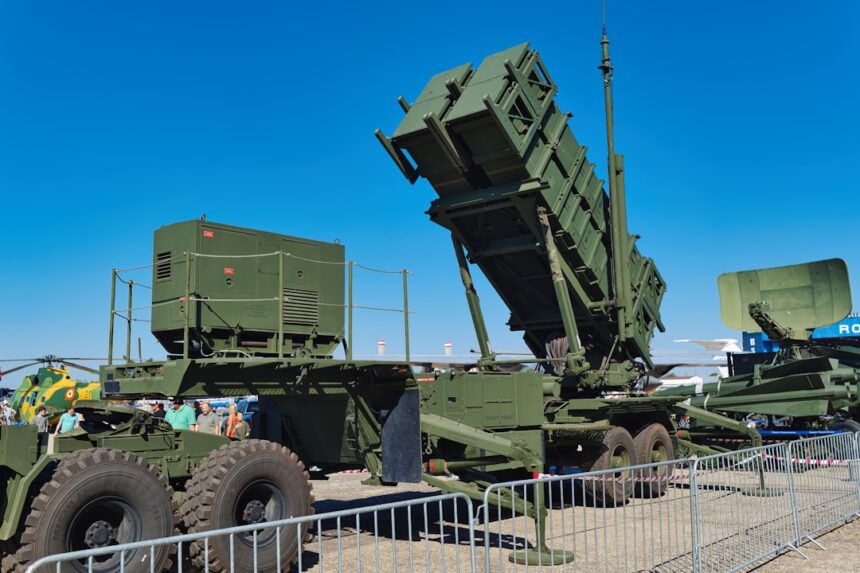
The contemporary geopolitical landscape is characterized by an increasingly complex and dynamic threat environment. Nations globally are facing an array of aerial adversaries, ranging from advanced manned aircraft and sophisticated unmanned aerial systems (UAS) to ballistic and cruise missiles. The effective negation of these threats necessitates a robust and integrated air defense (IAD) capability. This document explores the foundational principles and critical components of mission-ready integrated air defense solutions, examining the technological, operational, and strategic considerations that underpin their development and deployment.
The Evolving Air Threat Landscape
The nature of aerial threats has undergone a significant transformation in recent decades. Historically, air defense primarily focused on countering bomber formations and fighter aircraft. However, modern warfare introduces a far more heterogeneous set of challenges.
Diversification of Aerial Platforms
- Manned Aircraft: While traditional threats like fighter jets and bombers persist, their capabilities have advanced considerably. Modern aircraft boast improved stealth characteristics, enhanced electronic warfare (EW) suites, and increasingly sophisticated weapon systems, making their detection and engagement more challenging.
- Unmanned Aerial Systems (UAS): The proliferation of UAS, from small, commercially available drones to larger, military-grade reconnaissance and combat platforms, presents a pervasive and adaptable threat. Their low cost, ease of deployment, and ability to operate in swarms or autonomously complicate traditional air defense paradigms. They can be used for reconnaissance, direct attack, electronic warfare, or even as kamikaze drones.
- Missile Threats: The range, accuracy, and evasive capabilities of ballistic missiles and cruise missiles have significantly increased. This includes shorter-range tactical ballistic missiles (SRBMs), medium-range ballistic missiles (MRBMs), and intercontinental ballistic missiles (ICBMs), as well as low-flying, agile cruise missiles and hypersonic glide vehicles (HGVs), which pose unique challenges due to their speed and maneuverability.
The Rise of Swarm Tactics and Asymmetric Warfare
The concept of swarm tactics, where multiple aerial assets operate in a coordinated manner, is a growing concern. Swarms can overwhelm traditional single-target engagement systems and saturate defenses. This asymmetric approach, often employed by less conventionally equipped adversaries, leverages the sheer volume and coordinated action of cheaper, numerous assets to overcome more expensive, technologically advanced defenses.
Electronic Warfare as a Force Multiplier
Electronic warfare (EW) plays a crucial role in modern aerial conflict. Adversaries are increasingly employing jamming, spoofing, and other EW techniques to disrupt radar systems, communication links, and weapon guidance. This necessitates air defense systems that are resilient to electronic attack and capable of employing their own EW measures.
Mission Ready Solutions has been making significant strides in the field of integrated air defense systems, enhancing the capabilities of military forces worldwide. For a deeper understanding of the strategic implications and technological advancements in this area, you can read a related article on air defense systems at In The War Room. This resource provides valuable insights into the evolving landscape of defense technologies and their impact on national security.
Foundational Pillars of Integrated Air Defense
An effective IAD solution is not merely a collection of individual weapon systems. It is a synergistic architecture designed to provide layered, overlapping, and resilient protection across the entire spectrum of aerial threats.
Multi-layered Defense Architecture
The concept of layered defense is central to IAD. This involves deploying sensor and effector assets at different ranges and altitudes to create multiple opportunity windows for detection, tracking, and engagement.
- Early Warning and Surveillance: This layer focuses on long-range detection and tracking of incoming threats, providing critical time for response. This typically involves high-power, long-range surveillance radars and potentially space-based sensors.
- Medium-Range Engagement: This layer is designed to intercept threats that have penetrated the outer layers, employing medium-range surface-to-air missile (SAM) systems and increasingly, directed energy weapons.
- Close-In Weapon Systems (CIWS): The innermost layer provides last-ditch defense against targets that have evaded earlier engagement rings. This often includes rapid-fire autocannons and short-range missiles, specifically designed to engage fast-moving, low-altitude threats and even incoming projectiles.
Sensor Fusion and Network-Centric Operations
The effectiveness of IAD is heavily reliant on the ability to collect, process, and disseminate information rapidly and accurately.
- Sensor Fusion: Data from disparate sensor platforms – including various radar types (e.g., ground-based, airborne, naval), electro-optical/infrared (EO/IR) sensors, acoustic sensors, and even intelligence feeds – are fused into a single, coherent operational picture. This overcomes the limitations of individual sensors and provides a more comprehensive understanding of the battlespace.
- Network-Centricity: All elements of the IAD system are interconnected through a robust communication network. This allows for real-time data sharing between sensors, command and control (C2) nodes, and engagement platforms, enabling rapid decision-making and coordinated engagements. This also facilitates distributed engagement, where a target detected by one platform can be engaged by another.
Command, Control, and Communications (C3)
The C3 element is the “brain” of the IAD system. It is responsible for receiving sensor data, identifying threats, allocating engagement resources, and issuing orders.
- Decision Support Systems: Advanced algorithms and artificial intelligence (AI) can assist human operators in making rapid and informed decisions, especially in high-pressure situations.
- Secure and Resilient Communications: The communication backbone must be secure, jam-resistant, and redundant to ensure continuous operation even under attack. This may involve a mix of radio, satellite, and fiber optic links.
Key Technological Components
The realization of an effective IAD solution hinges on the sophisticated integration of various technological elements.
Advanced Radar Systems
Radar remains a cornerstone of air defense, providing the primary means of detecting and tracking airborne targets. Modern radar technology has evolved significantly.
- Phased Array Radars: Active Electronically Scanned Array (AESA) and Passive Electronically Scanned Array (PESA) radars offer significant advantages over traditional mechanically scanned radars. Their ability to electronically steer beams allows for rapid search patterns, simultaneous tracking of multiple targets, and increased resilience to jamming.
- Multi-functionality: Modern radars are increasingly designed to perform multiple roles, including surveillance, tracking, target illumination for missile guidance, and even electronic warfare.
- Low-Power, Wide-Area Surveillance: The proliferation of small UAS has spurred the development of specialized radars capable of detecting and tracking these low-observable, low-signature targets.
Sophisticated Missile Systems
The offensive capabilities of air defense are embodied by its missile systems, which must be capable of intercepting a wide range of threats.
- Surface-to-Air Missiles (SAMs): This category encompasses a broad spectrum of missiles designed for different ranges and interception profiles.
- Long-Range SAMs: Designed for strategic air defense, capable of engaging high-altitude bombers and ballistic missiles at considerable distances.
- Medium-Range SAMs: Tactical SAMs for defending critical assets and formations against fighter aircraft, cruise missiles, and some ballistic missile threats.
- Short-Range SAMs: For immediate point defense, often shoulder-fired or integrated into vehicle-mounted systems for close-in protection.
- Interceptor Missiles: Specialized missiles designed for the rapid destruction of high-speed ballistic missile warheads during their mid-course or terminal phases.
- Guidance Systems: Modern SAMs employ sophisticated guidance technologies, including inertial navigation systems (INS), active radar homing, semi-active radar homing, and infrared homing, often in combination for enhanced accuracy and target acquisition.
Directed Energy Weapons (DEWs)
DEWs, such as high-energy lasers (HELs) and high-power microwaves (HPMs), are emerging as a significant complement to traditional kinetic interceptors.
- High-Energy Lasers (HELs): These weapons can intercept and destroy targets by focusing a concentrated beam of light. They offer the potential for unlimited magazine depth (limited only by power generation) and precise targeting, making them particularly effective against drones and guided munitions.
- High-Power Microwaves (HPMs): HPMs generate intense bursts of microwave energy that can disrupt or disable electronic systems, effectively disabling targets without physically destroying them. This can be useful against UAS equipped with sensitive electronics.
Counter-UAS (C-UAS) Technologies
The specific threat posed by UAS has led to the development of dedicated C-UAS solutions.
- Detection and Tracking: This includes specialized radars, acoustic sensors, EO/IR cameras, and radio frequency (RF) detection systems designed to identify small, low-flying drones.
- Interdiction Methods: C-UAS systems employ a variety of methods:
- Kinetic Interceptors: Small, fast drones or projectiles designed to physically disable or destroy the target UAS.
- Electronic Warfare (EW): Jamming communication links, spoofing GPS signals, or disrupting flight control systems.
- Directed Energy: Lasers or microwaves to disable the UAS.
- Nets and Capture Systems: Physical methods to restrain or capture drones.
Operational Considerations for Mission Readiness
Technological sophistication alone does not guarantee effectiveness. Operational readiness requires careful consideration of deployment, training, logistics, and integration.
Strategic Deployment and Force Configuration
The optimal deployment of IAD assets is dictated by the nature of the anticipated threats and the strategic importance of the defended area.
- Area Defense: Establishing broad defensive envelopes around major cities, industrial centers, or critical infrastructure.
- Point Defense: Protecting high-value, mobile assets such as airbases, naval vessels, or command centers.
- Mobile Air Defense: Deploying IAD units that can rapidly relocate to respond to emerging threats or provide protection for moving forces.
Training and Human Factors
The human element is indispensable in operating complex IAD systems.
- Operator Proficiency: Rigorous training programs are essential to ensure operators can effectively manage sensor systems, interpret data, make critical decisions, and operate engagement systems under duress.
- Integrated Training: Training exercises must simulate realistic threat scenarios and involve cross-functional teams from different air defense echelons and supporting elements.
- Human-Machine Teaming: As AI and automation play a larger role, training must focus on effective human-machine teaming, where operators can leverage autonomous capabilities while maintaining oversight and control.
Logistics and Sustainment
A mission-ready IAD solution requires a robust logistical framework to ensure continuous operational capability.
- Maintenance and Repair: Maintaining complex radar systems, missile launchers, and C2 infrastructure requires specialized technical expertise and readily available spare parts.
- Ammunition and Consumables: Ensuring a sufficient supply of missiles, fuel, and other consumables is critical for sustained operations.
- Power and Infrastructure: IAD sites require reliable power generation and appropriate infrastructure, which may include hardened shelters and secure communication links.
Mission Ready Solutions has been making significant strides in integrated air defense systems, ensuring that military operations are equipped with the latest technology to counter aerial threats effectively. For a deeper understanding of how these advancements are shaping modern defense strategies, you can explore a related article that discusses the implications of such systems in contemporary warfare. This insightful piece can be found here.
Strategic Implications and Future Trends
The development and deployment of mission-ready IAD solutions have profound strategic implications, shaping the balance of power and influencing future warfare.
Deterrence and Force Protection
A robust IAD capability serves as a significant deterrent by raising the cost and risk for potential adversaries contemplating aerial attacks. It also provides essential force protection, safeguarding critical assets and personnel.
Integration with Joint and Combined Operations
Modern IAD systems are not designed for isolated operation. They must seamlessly integrate with other military branches and allied forces.
- Interoperability: Ensuring that different IAD systems and C2 platforms can communicate and share data effectively across national and service lines.
- Shared Situational Awareness: Creating a unified battlespace picture accessible to all relevant units, enhancing coordination and preventing fratricide.
The Impact of Emerging Technologies
The IAD landscape is constantly evolving with the advent of new technologies.
- Artificial Intelligence and Machine Learning: AI will play an increasingly vital role in threat detection, identification, tracking, and C2 decision support, enabling faster and more efficient responses.
- Hypersonic Threats: The development of hypersonic missiles and advanced countermeasures will necessitate new interception technologies and strategies.
- Cybersecurity: As IAD systems become more networked, their vulnerability to cyberattacks increases, requiring robust cybersecurity measures.
- Space-Based Capabilities: Satellites for surveillance, missile launch detection, and communication will become increasingly integral to IAD.
In conclusion, achieving “mission-ready” status for integrated air defense solutions is a multifaceted and ongoing endeavor. It demands a holistic approach that integrates cutting-edge technology with robust operational planning, rigorous training, and a deep understanding of the evolving threat environment. The continuous adaptation and advancement of these systems are paramount to ensuring national security and regional stability in an increasingly unpredictable world.
FAQs
What is Mission Ready Solutions Integrated Air Defense?
Mission Ready Solutions Integrated Air Defense is a comprehensive system that combines various air defense technologies and capabilities to protect against aerial threats. It integrates radar systems, missile launchers, command and control centers, and other components to create a seamless and effective defense network.
What are the key components of Mission Ready Solutions Integrated Air Defense?
The key components of Mission Ready Solutions Integrated Air Defense typically include radar systems for early detection of aerial threats, missile launchers for intercepting and neutralizing incoming threats, command and control centers for coordinating defense operations, and communication systems for seamless integration and coordination.
How does Mission Ready Solutions Integrated Air Defense work?
Mission Ready Solutions Integrated Air Defense works by using radar systems to detect incoming aerial threats, then coordinating with command and control centers to assess the threat and deploy appropriate countermeasures. Missile launchers are then used to intercept and neutralize the threats, providing a layered defense against a wide range of aerial threats.
What are the benefits of Mission Ready Solutions Integrated Air Defense?
The benefits of Mission Ready Solutions Integrated Air Defense include enhanced protection against aerial threats, improved situational awareness, rapid response capabilities, and the ability to defend against a variety of threats including aircraft, drones, and missiles. It also provides a scalable and adaptable defense solution for different operational environments.
Where is Mission Ready Solutions Integrated Air Defense used?
Mission Ready Solutions Integrated Air Defense is used in a variety of military and defense applications, including protecting military bases, critical infrastructure, and high-value assets from aerial threats. It can also be deployed in homeland defense and security operations to safeguard against airborne threats.