The MC-130H Combat Talon II is a marvel of aeronautical engineering, a specialized aircraft designed and operated by the United States Air Force’s Special Operations Command (AFSOC). While not a sport in the conventional sense, its role and capabilities lend themselves to a fascinating exploration of “tactical excellence,” a concept that resonates with the rigorous demands and precision required in its operations. This article delves into the MC-130H, examining its unique attributes, the missions it undertakes, and why its operational paradigm can be viewed as a credible sport of tactical prowess, demanding unparalleled skill, meticulous planning, and unwavering execution.
The Airframe as a Canvas for Precision
The MC-130H Combat Talon II is not merely an aircraft; it is a highly sophisticated platform engineered for the most challenging and clandestine aerial operations. Its design is a testament to the fusion of raw power and delicate control, a duality that defines its “sporting” nature.
A Design for Dominance and Stealth
At its core, the MC-130H is a derivative of the Lockheed Martin C-130 Hercules, a venerable workhorse of military aviation. However, the Combat Talon II is a significantly re-engineered variant, purpose-built for special operations. Its most striking visual characteristic, aside from its formidable size, is its advanced electronic warfare suite and specialized sensor systems. These are not mere add-ons; they are integral to the aircraft’s identity, allowing it to navigate contested airspace, gather intelligence, and deploy assets with an unprecedented level of discretion.
The airframe itself has been reinforced to withstand the stresses of low-level flight and demanding operational profiles. Its extended range, facilitated by internal fuel tanks and the ability to accept aerial refueling, enables it to reach distant targets and remain on station for extended periods. This endurance is crucial for its strategic deployment, allowing for sustained operations that are akin to an athlete’s ability to maintain peak performance over a long duration.
The Symphony of Advanced Avionics
The true “sport” of the Combat Talon II lies within its cockpit, where a complex interplay of advanced avionics governs its every move. The aircraft is equipped with sophisticated navigation systems, including GPS, inertial navigation, and terrain-following radar, allowing it to operate in all weather conditions and at extremely low altitudes, often masking its presence from hostile radar. This precision navigation is akin to a golfer executing a perfect shot, where minute adjustments and a deep understanding of the course are paramount.
Furthermore, its communication systems are designed for secure and reliable contact with ground forces and other airborne assets, a critical element in coordinating complex operations. The integration of these systems requires a highly trained crew to manage the deluge of information and make split-second decisions. This constant processing and adaptation mirrors the mental agility and strategic thinking required in high-stakes competitive events. The ability to seamlessly integrate diverse technological inputs and translate them into effective action is a hallmark of tactical excellence, and the MC-130H is the embodiment of this principle.
Performance Under Pressure
The Combat Talon II’s engines, typically Allison T56 turboprops, are known for their reliability and power, enabling the aircraft to perform a variety of demanding maneuvers. These include steep descents, rapid altitude changes, and precise slow-speed flight for insertion and extraction operations. The pilots must have an exceptional understanding of the aircraft’s performance envelope, knowing precisely how much power to apply, how to manage airflow, and how to maintain stability in challenging flight regimes. This mastery of the airframe’s capabilities is not dissimilar to a race car driver pushing their vehicle to its limits while maintaining absolute control. The margin for error is vanishingly small, and success hinges on a profound connection between pilot and machine.
The MC-130H Combat Talon II is a versatile aircraft known for its critical role in special operations, particularly in delivering personnel and equipment in challenging environments. For those interested in exploring more about its capabilities and operational history, a related article can be found at this link. This article delves into the unique features of the Combat Talon II and its significance in modern warfare, providing valuable insights for aviation enthusiasts and military strategists alike.
The Crucible of Mission Sets: Defining Tactical Excellence
The MC-130H is not a general-purpose transport; its mission set is extraordinarily specialized, pushing the boundaries of what is considered feasible in military aviation. These missions are the “competitions” where its tactical excellence is truly tested and proven.
Covert Infiltration and Exfiltration
One of the most defining roles of the MC-130H is the covert insertion and extraction of special operations forces into and out of hostile or denied territory. This involves navigating treacherous terrain at very low altitudes, often at night or in adverse weather, to reach remote drop zones or landing strips. The pilots must execute precise approaches and departures, often with minimal visual cues, relying heavily on their instruments and a deep understanding of the operational environment.
The crew’s ability to maintain a low and undetectable profile is paramount. This involves managing the aircraft’s acoustic signature, minimizing its radar cross-section, and employing electronic countermeasures to deceive or evade enemy detection systems. The success of these operations hinges on the crew’s ability to blend into the operational environment, becoming almost invisible until their mission is accomplished. This requires a level of stealth and precision that is difficult to achieve, demanding extensive training and constant vigilance. It is a ballet of the skies, performed in absolute silence and with the highest stakes.
Psychological Operations and Unconventional Warfare Support
Beyond direct force projection, the MC-130H plays a crucial role in psychological operations and unconventional warfare support. This can include the dissemination of leaflets, the broadcast of messages, or the delivery of supplies to resistance groups behind enemy lines. These operations often require sustained presence in an area, or the ability to operate from unconventional locations.
The aircraft’s capacity to carry specialized equipment for these missions, such as high-power loudspeakers or broadcast transmitters, further enhances its versatility. The planning and execution of such operations demand a deep understanding of the geopolitical landscape, the local populace, and the enemy’s capabilities. It is a strategic game played out in the air, requiring foresight, adaptability, and the ability to influence events without overt engagement. This multifaceted approach to warfare, where information and influence are as potent as kinetic force, underscores the MC-130H’s role as a tool of strategic acumen.
Combat Search and Rescue (CSAR) and Personnel Recovery
In times of crisis, the MC-130H can be a vital asset in combat search and rescue (CSAR) and personnel recovery operations. Its ability to operate in hazardous environments and its capacity to carry specialized rescue equipment, including HH-60 Pave Hawk helicopters, allow it to reach downed airmen or isolated personnel in contested areas.
These missions are characterized by extreme urgency and high risk. The MC-130H crew must locate the individuals in distress, often under fire, and provide a safe haven for their recovery. This requires rapid decision-making, precise maneuvering, and close coordination with other assets. The success of a CSAR mission can be the difference between life and death for a fellow service member, and the MC-130H’s role in these operations highlights its contribution to the warrior ethos and the commitment to bringing personnel home, no matter the cost. This is a testament to the moral and ethical dimensions of tactical excellence, where the preservation of life is the ultimate objective.
The Crew: Architects of Aerial Strategy
The MC-130H Combat Talon II is not operated by a single individual; it is a team effort, a testament to the power of collective skill and synchronized execution. The crew, a highly specialized unit, are the true “athletes” in this sport of tactical excellence.
The Pilot’s Precision and Intuition
The pilots of the MC-130H are at the forefront of its operational success. They are not simply operators of a machine; they are artists who sculpt the aircraft’s trajectory through the sky. Their training emphasizes not only the technical aspects of flight but also the psychological fortitude required to perform under extreme pressure. They must possess an exceptional level of situational awareness, constantly monitoring their environment, the aircraft’s performance, and the unfolding mission parameters.
Their decision-making process is a delicate balance of instinct honed by experience and rigorous adherence to doctrine. In the chaotic environment of a special operations mission, a pilot might need to make split-second adjustments to their flight path to avoid detection, compensate for unexpected weather, or react to threats. This requires a profound understanding of aerodynamics, aircraft systems, and the tactical context of the mission. It is akin to a chess grandmaster anticipating their opponent’s moves and executing a complex strategy with flawless precision.
The Navigator’s Guiding Hand
The navigator on an MC-130H is more than just a map reader; they are a master of spatial orientation and temporal precision. Their role is to plot the most efficient and secure route, often through complex and unmapped terrain, while accounting for factors such as enemy air defenses, weather patterns, and time constraints.
Their expertise in celestial navigation, inertial navigation systems, and terrain recognition is crucial, especially when operating in GPS-denied environments. The navigator’s ability to maintain precise track over long distances, often at low altitudes, ensures that the aircraft arrives at its target precisely when and where it needs to be. This is a vital component of the mission’s success, and their calm, methodical approach under pressure is a cornerstone of the crew’s effectiveness. It is a solitary endeavor of immense responsibility, where every calculation directly impacts the safety and success of the entire operation.
The Mission Specialist: The Eyes and Ears of the Operation
The mission specialist crew members, including flight engineers, loadmasters, and electronic warfare officers, form the backbone of the MC-130H’s operational capability. The flight engineer is responsible for monitoring and managing the aircraft’s complex systems, ensuring optimal performance and identifying any potential issues. The loadmaster ensures the safe and efficient deployment of personnel and equipment, a critical task during insertion and extraction phases.
The electronic warfare officer (EWO) is arguably the most vital member in terms of tactical advantage. They are the guardians against aerial threats, responsible for detecting, identifying, and countering enemy radar and missile systems. Their constant vigilance and mastery of complex electronic warfare equipment are essential for the aircraft’s survival in hostile airspace. This multifaceted role requires a deep understanding of electromagnetic spectrum warfare, advanced sensor operation, and the ability to coordinate defensive measures in real-time. They are the silent sentinels, ensuring the crew’s ability to operate unhindered.
The Training Regimen: Forging Tactical Prowess
The caliber of the MC-130H crew is not a matter of chance; it is the result of an exceptionally rigorous and demanding training regimen. This continuous process of education and refinement is what elevates their operations to the level of a credible “sport” of tactical excellence.
Simulating the Unsimulatable
The training for MC-130H crews is designed to replicate the extreme conditions and unpredictable scenarios they are likely to encounter. This often involves extensive simulator training, where crews can practice a wide range of mission profiles, from low-level ingress and egress in challenging terrain to complex personnel recovery scenarios. These simulators are highly sophisticated, offering a realistic representation of the aircraft’s flight dynamics, avionics, and the environmental factors that can influence a mission.
The goal is to build muscle memory and foster a deep understanding of emergency procedures. Crews will repeatedly practice responses to engine failures, system malfunctions, and unexpected threats, ensuring that they can react effectively and decisively even when under immense stress. This constant repetition and refinement are akin to an athlete’s dedication to mastering a specific skill through countless hours of practice.
Realistic Scenario-Based Exercises
Beyond simulator training, MC-130H crews participate in regular, large-scale exercises that simulate real-world operational environments. These exercises often involve coordination with other special operations forces, conventional military units, and allied nations. The emphasis is on testing the crew’s ability to integrate into a larger operational plan, communicate effectively, and execute their specific mission objectives within a complex, multi-faceted scenario.
These exercises provide invaluable opportunities to identify weaknesses, refine tactics, and build cohesion within the crew and across different units. They also allow for the testing of new equipment and procedures in a controlled, yet realistic, environment. The competitive nature of these exercises, where units are evaluated on their performance, further reinforces the idea of a “sport” of tactical excellence, with success measured by mission accomplishment and adherence to tactical doctrine.
Continuous Learning and Adaptation
The threat landscape is constantly evolving, and so too must the tactics and training of the MC-130H crews. A commitment to continuous learning and adaptation is a fundamental aspect of their operational readiness. This involves staying abreast of new technologies, enemy capabilities, and evolving geopolitical situations.
Crews will regularly undergo debriefings after real-world missions and exercises, analyzing what worked well and what could be improved. This feedback loop is critical for refining tactics and ensuring that the crew remains at the forefront of special operations aviation. The dedication to perpetual improvement, to always seeking to be better, is a defining characteristic of true tactical excellence, and it is deeply embedded in the culture of MC-130H operations.
The MC-130H Combat Talon II is a remarkable aircraft known for its versatility and advanced capabilities in special operations. For those interested in exploring more about its role and significance in military operations, a related article can be found on In The War Room. You can read more about its unique features and missions by visiting this insightful resource.
The Legacy and Future: Enduring Tactical Supremacy
| Metric | Specification | Details |
|---|---|---|
| Aircraft Model | MC-130H Combat Talon II | Special operations transport aircraft |
| Role | Special Operations / Infiltration, Exfiltration, and Resupply | Supports covert missions and low-level penetration |
| Length | 99 ft 1 in (30.2 m) | Overall length of the aircraft |
| Wingspan | 132 ft 7 in (40.4 m) | Distance from wingtip to wingtip |
| Height | 38 ft 3 in (11.7 m) | Vertical height of the aircraft |
| Maximum Takeoff Weight | 155,000 lbs (70,307 kg) | Maximum weight at takeoff |
| Engines | 4 × Allison T56-A-15 turboprop engines | Each engine produces approximately 4,910 shp |
| Maximum Speed | 300 knots (345 mph, 555 km/h) | Maximum cruising speed |
| Range | 3,000 nautical miles (3,452 miles, 5,556 km) | Unrefueled range with typical payload |
| Service Ceiling | 24,700 ft (7,530 m) | Maximum operational altitude |
| Crew | 6 to 7 | Pilot, co-pilot, navigator, flight engineer, loadmaster(s), and special mission crew |
| Payload Capacity | Up to 42,000 lbs (19,050 kg) | Includes personnel, equipment, and cargo |
| Special Features | Low-level terrain-following radar, infrared countermeasures, and advanced avionics | Enables covert night and adverse weather operations |
| Credible Sport Modification | Experimental STOL (Short Takeoff and Landing) enhancements | Tested for rapid assault and recovery on short runways |
The MC-130H Combat Talon II has a storied history and continues to be a critical asset for the United States military. Its legacy is one of quiet professionalism and unwavering dedication to mission success, a testament to the enduring value of tactical excellence.
A Proven Track Record of Success
Throughout its service life, the MC-130H has been instrumental in numerous critical missions, often operating in the shadows, far from public scrutiny. Its ability to deliver special operations forces and their equipment to the most challenging environments has made it an indispensable tool for achieving strategic objectives. The aircraft’s reliability and the crew’s unparalleled skill have consistently ensured mission accomplishment, even in the face of overwhelming odds.
This track record is not just a historical footnote; it is a testament to the inherent design principles and the operational ethos that define the Combat Talon II. It represents a lineage of tactical mastery that has been passed down through generations of crews and aircraft.
Evolving Threats and the Need for Adaptability
The nature of warfare is in constant flux. Emerging threats, from advanced air defense systems to cyber warfare, demand continuous adaptation. The MC-130H, while a highly capable platform, must evolve to meet these new challenges. This may involve upgrades to its avionics, electronic warfare suites, and potentially modifications to its airframe to improve its survivability and stealth.
The “sport” of tactical excellence is not static. It requires constant innovation and a willingness to embrace new technologies and strategies. The future of the MC-130H, and the crews that operate it, will depend on their ability to remain agile and adaptable in the face of an ever-changing operational landscape.
The Enduring Spirit of Special Operations Aviation
Ultimately, the MC-130H Combat Talon II is more than just an aircraft; it is a symbol of the enduring spirit of special operations aviation. It represents a commitment to excellence, a dedication to mission success, and a willingness to operate at the cutting edge of what is possible. The “sport” of tactical excellence, as embodied by the MC-130H and its crews, is a testament to the human capacity for skill, courage, and unwavering resolve in the pursuit of critical objectives. It is a legacy that continues to inspire and a capability that remains vital to national security.
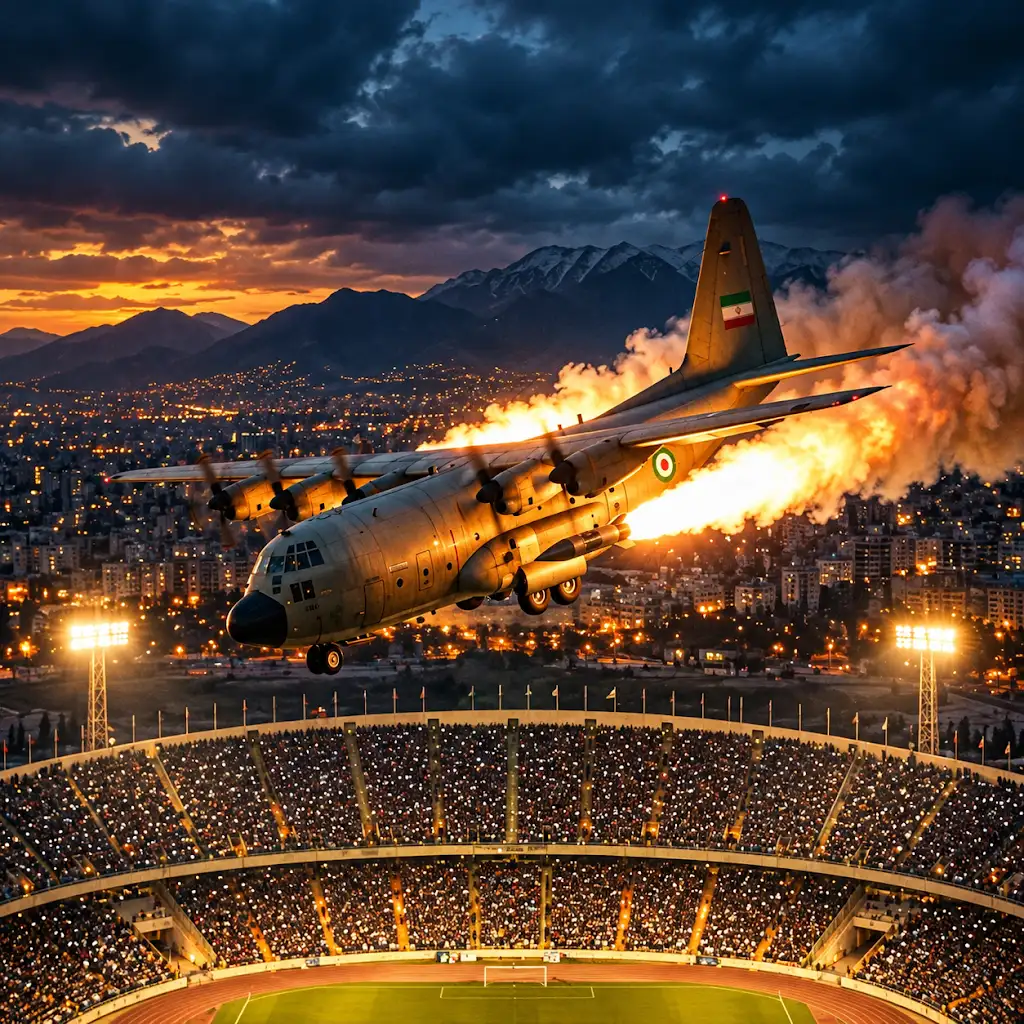
The Secret Plane Built to Land Inside a Stadium
FAQs
What is the MC-130H Combat Talon II aircraft?
The MC-130H Combat Talon II is a special operations aircraft used by the United States Air Force for infiltration, exfiltration, and resupply missions. It is designed to operate in low-visibility and adverse weather conditions.
What are some key features of the MC-130H Combat Talon II?
The MC-130H Combat Talon II is equipped with advanced avionics, terrain-following radar, inflight refueling capability, and a rear-loading ramp for personnel and cargo. It also has specialized equipment for aerial refueling of helicopters and tilt-rotor aircraft.
How does the MC-130H Combat Talon II support special operations missions?
The MC-130H Combat Talon II is used to insert and extract special operations forces, conduct psychological operations, and provide humanitarian assistance in remote or hostile environments. It can operate from short and unprepared airstrips, making it ideal for unconventional missions.
What makes the MC-130H Combat Talon II a credible sport aircraft?
The MC-130H Combat Talon II’s versatility, range, and ability to operate in challenging conditions make it a credible sport aircraft for special operations forces. It can deliver personnel and equipment quickly and discreetly to support a wide range of missions.
How does the MC-130H Combat Talon II compare to other aircraft in its class?
The MC-130H Combat Talon II is known for its unique capabilities, including its ability to conduct airdrops, air refueling, and infiltration/exfiltration missions. It is considered a highly specialized aircraft that plays a crucial role in supporting special operations forces around the world.