You’re a shipping professional, or perhaps considering an entry into this complex and often lucrative industry. You understand that profitability isn’t just about moving cargo efficiently; it’s about shrewd market navigation, identifying opportunities where others see only routine operations. One such avenue, often overlooked or poorly executed, is time arbitrage. This isn’t about simply beating the clock; it’s about strategically leveraging discrepancies in timing across different markets to generate a profit.
At its core, time arbitrage in shipping capitalizes on the fact that the value of a shipping service, or a particular capacity, can fluctuate based on its availability and demand at different points in time. This isn’t a speculative gamble; it’s a calculated strategy grounded in predictable market dynamics. You’re essentially buying time (or the availability of time) at a lower price and selling it at a higher price, not necessarily in terms of duration, but in terms of market value.
The Concept of Spot vs. Forward Markets
Your understanding of the shipping market will naturally lead you to recognize the dichotomy between spot and forward markets.
Spot Market Dynamics
The spot market operates on immediate needs and current availabilities. When a shipper has cargo that needs to move now, and a carrier has a vessel available to move it now, that’s the spot market in action. Prices here are highly sensitive to real-time supply and demand. A sudden surge in demand for a specific route, or an unexpected shortage of vessels, can drive spot rates considerably higher. Conversely, an oversupply of capacity can depress spot rates. You’re constantly monitoring these fluctuations, looking for instances where prices are elevated due to immediate pressures.
Forward Market Considerations
The forward market, on the other hand, involves agreements for shipping services at a future date. This might be a charter agreement booked months in advance or a contract for container space. Forward prices are influenced by a broader set of factors, including projected demand, anticipated vessel availability, and even geopolitical events that might impact trade flows. Crucially, forward prices often reflect a more stable, albeit potentially lower, valuation than peak spot rates.
Temporal Discrepancies as Profit Drivers
The profit within time arbitrage arises directly from the differences in these market prices across different timeframes.
Identifying Price Inefficiencies
You’re trained to look for situations where the market overvalues immediate availability or undervalues future availability. For instance, if you can secure a shipping service for a future date at a price that is significantly lower than what you anticipate the price to be for immediate execution of the same service, you have a potential arbitrage. This difference in perceived value, driven solely by the timing of the service, is where your profit lies.
The Role of Information Asymmetry
While perfectly efficient markets are an theoretical ideal, the shipping industry, with its inherent complexities and regional variations, often presents pockets of information asymmetry. You, as a diligent professional, are working to bridge this gap. If you possess better foresight into future demand shifts or can anticipate supply adjustments more accurately than the general market, you can exploit this temporal price discrepancy.
In the dynamic world of shipping, trading houses often engage in time arbitrage to capitalize on price discrepancies across different markets. A related article that delves deeper into this topic is available at this link, where you can explore how trading houses leverage their strategic positions to optimize shipping schedules and maximize profits. Understanding these mechanisms is crucial for anyone looking to navigate the complexities of global trade effectively.
Strategic Chartering for Time Arbitrage
Chartering is your primary tool for executing time arbitrage. It involves acquiring the right to use a vessel for a specific period, and by doing so strategically, you can lock in advantageous rates that differ from future market expectations.
Time Charters vs. Voyage Charters
Your choice of charter type is critical in how you structure your arbitrage.
Time Charter Advantages
A time charter gives you control over the vessel for a set period, typically months or even years. This allows you to align the charter period with your arbitrage strategy. You might charter a vessel for a longer term at a stable, historically lower rate, anticipating that future spot demand will necessitate higher rates during that charter period. The fixed cost of the time charter provides a predictable base against which you can measure potential gains from fluctuating spot markets.
Voyage Charter Considerations
Voyage charters are for a single voyage. While useful for executing a specific, immediate need, they offer less flexibility for longer-term arbitrage plays. However, you might use a series of voyage charters to exploit short-term price discrepancies if you have a keen understanding of imminent market movements. The challenge here is the higher risk associated with predicting very near-term price volatility.
Long-Term Charters as Arbitrage Instruments
Securing long-term charters at what you perceive to be an undervalued rate is a cornerstone of time arbitrage.
Locking in Historical Lows
You’ll analyze historical rate data and market trends to identify periods where charter rates were exceptionally low. If you can secure a time charter during such a period for a duration that overlaps with anticipated periods of higher demand and thus higher spot rates, you’ve effectively locked in a lower cost for your shipping capacity. Your profit comes from the difference between the secured charter rate and the elevated rates you can charge or benefit from during the period of high demand.
Hedging Against Future Volatility
Beyond pure profit generation, long-term charters can also serve as a hedging instrument against future rate increases. If you anticipate a period of significant market volatility, a long-term charter at a fixed rate provides certainty and protects you from potentially crippling price spikes. While not direct arbitrage, this risk mitigation contributes to overall profitability by preserving margins.
Container Shipping Arbitrage: Navigating the Global Trade Network
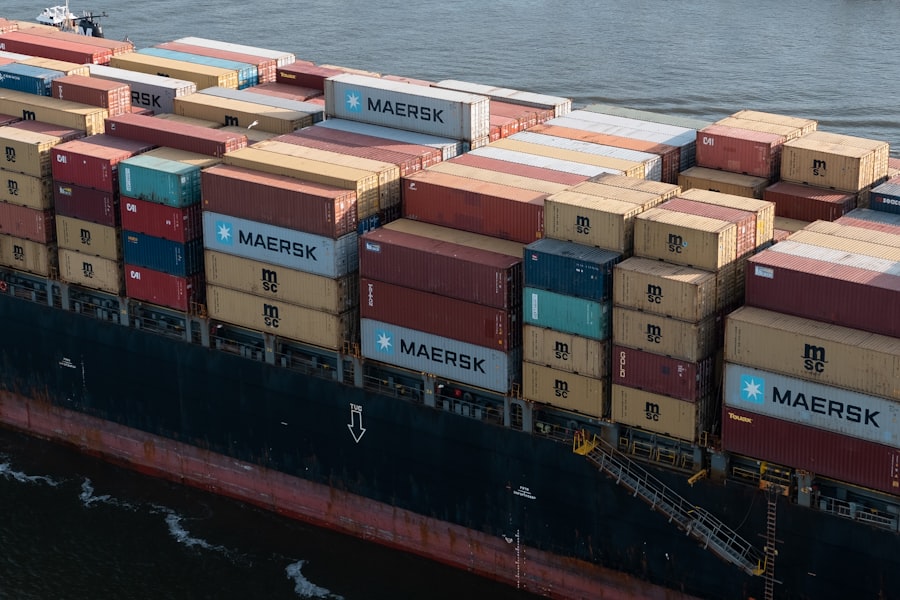
The container shipping sector, with its standardized units and extensive global routes, presents distinct opportunities for time arbitrage. The rhythmic nature of global trade, coupled with port congestion and seasonal demand, creates predictable, yet exploitable, temporal price differentials.
The Impact of Port Congestion
Port congestion is a persistent issue that directly impacts shipping times and, consequently, shipping costs.
Congestion as a Demand Signal
When vessels are stuck waiting to berth, unload, or load, that time represents a loss of productive capacity. This reduced effective supply for the market drives up spot rates for available, un-congested capacity. If you can anticipate congestion on key routes, you can pre-emptively secure capacity before the congestion fully materializes and prices surge. Alternatively, you might charter a vessel at a time when congestion is lower, planning its deployment to a route where congestion is expected to worsen.
Preempting Congestion-Driven Rate Hikes
Your strategy here would involve booking capacity well in advance of anticipated congestion events. For example, if intelligence suggests that a major port is likely to experience delays due to upcoming construction or increased seasonal cargo, you would secure your shipping slots or charter a vessel at current, lower rates, effectively sidestepping the inflated prices that will likely follow.
Seasonal Demand Fluctuations
Certain goods have clear seasonal demand patterns, a phenomenon you can leverage.
Holiday Season Surges
The lead-up to major holidays, such as Christmas or lunar New Year, invariably sees a spike in demand for containerized goods. This demand surge often outstrips available shipping capacity, driving up freight rates. By anticipating these surges, you can book container space or charter vessels at a discount in the months preceding the peak season, and then benefit from the higher prices or more profitable cargo movements during the surge.
Off-Season Planning
Conversely, the off-season for certain commodities or trade lanes presents an opportunity to secure capacity at lower prices. If you can identify markets with predictable off-peak periods, you can ink deals for capacity then, with the intention of utilizing that capacity during their peak seasons, or simply to have it available at a lower cost base when demand rises.
Bulk Shipping Arbitrage: Leveraging Commodity Flows

Bulk shipping, whether dry bulk or liquid bulk, is intrinsically linked to the global demand for raw materials. The cyclical nature of commodity prices and the associated shipping demand creates fertile ground for time arbitrage.
Spot Rate Volatility in Dry Bulk
The dry bulk market is notoriously volatile, and you can exploit this volatility.
Anticipating Commodity Price Swings
Changes in commodity prices often precede or coincide with changes in shipping demand. For example, a significant increase in the price of iron ore might indicate a strong demand for steel production, which in turn will require a surge in the transport of iron ore. If you can predict these price swings and their impact on shipping demand, you can charter vessels at lower rates before the demand surge hits and drives prices up.
Leveraging Charter Rate Lag
There’s often a lag between a spike in commodity prices and the corresponding increase in dry bulk charter rates. This lag is where your arbitrage opportunity lies. You secure capacity for transport at a rate that hasn’t yet caught up to the emerging market demand, and then benefit from the higher freight rates that will inevitably follow.
Tanker Market Arbitrage: Responding to Energy Demand
The tanker market, focused on oil and refined products, is also susceptible to temporal price discrepancies.
Responding to Geopolitical Events
Geopolitical events, such as conflicts or sanction changes, can dramatically impact the global supply and demand of oil, thereby influencing tanker rates. If you can anticipate the ripple effects of such events on shipping routes and demand, you can position your chartered vessels or secure space at rates that don’t yet reflect the full market impact.
Seasonal Energy Consumption
While less pronounced than consumer goods, energy consumption also exhibits seasonal patterns. Higher demand for heating fuels in winter or increased industrial activity in summer can affect the need for crude oil and refined product transport. You can utilize this seasonality by securing tanker capacity during periods of lower demand at more favorable rates, anticipating the increased demand and subsequent rate hikes.
In the complex world of shipping, trading houses often leverage time arbitrage to optimize their operations and maximize profits. This strategy involves taking advantage of price discrepancies across different markets or timeframes, allowing them to make informed decisions about when to buy or sell cargo. For a deeper understanding of the dynamics at play in this sector, you can explore a related article that delves into the intricacies of shipping and trading strategies. Check out this insightful piece on In the War Room to learn more about how trading houses navigate these challenges.
Implementing a Time Arbitrage Strategy Effectively
| Trading House | Arbitrage Strategy | Time Frame |
|---|---|---|
| Glencore | Buy low, sell high | Short-term |
| Vitol | Exploit price differences | Medium-term |
| Trafigura | Take advantage of market inefficiencies | Long-term |
Successful time arbitrage in shipping requires more than just identifying an opportunity; it demands meticulous planning, rigorous execution, and robust risk management.
Data Analysis and Forecasting
Your foundation for any arbitrage play is robust data analysis and accurate forecasting.
Historical Rate Analysis
You must delve into historical charter and freight rate data for the specific vessel classes and trade routes relevant to your strategy. Identifying historical patterns, cycles, and predictable fluctuations is paramount to understanding where and when price discrepancies are likely to occur.
Market Intelligence Gathering
Beyond historical trends, you need to actively gather real-time market intelligence. This includes monitoring commodity prices, economic indicators, geopolitical developments, port performance data, and any news that could influence supply or demand for shipping services. This proactive information gathering allows you to anticipate future shifts.
Risk Management and Mitigation
Arbitrage, while less risky than pure speculation, still carries inherent risks that you must manage.
Scenario Planning
Develop detailed scenario plans for your arbitrage plays. What happens if demand doesn’t materialize as expected? What if a competitor secures capacity at an even lower rate? By thinking through various outcomes, you can develop contingency plans and pre-defined exit strategies.
Diversification of Arbitrage Plays
Avoid concentrating all your resources on a single arbitrage opportunity. Diversify your strategies across different trade lanes, vessel types, and timeframes. This diversification helps to mitigate the impact of any single unsuccessful arbitrage.
Currency and Interest Rate Risk Assessment
If your operations involve international transactions or financing, you must also consider currency fluctuations and interest rate changes. These can significantly impact the profitability of your arbitrage plays, even if the core shipping market dynamics play out as predicted. You might need to employ hedging strategies to protect against these financial risks.
Operational Execution and Logistics
The success of your arbitrage ultimately hinges on your ability to execute the logistics flawlessly.
Vessel Chartering Proficiency
You need a deep understanding of vessel chartering contracts, terms, and conditions. This includes negotiation skills, clause interpretation, and the ability to secure favorable terms that align with your arbitrage strategy. Negotiating for flexible laycan periods or favorable cancellation clauses can be critical.
Cargo Management and Scheduling
Efficient cargo management and precise scheduling are essential. You must ensure that the cargo you secure or the operations you plan align perfectly with the timing of your chartered capacity. Any delays or inefficiencies in cargo handling can erode or eliminate your profit margin. This might involve close collaboration with freight forwarders, cargo owners, and port authorities to ensure smooth transitions.
FAQs
What is time arbitrage in shipping?
Time arbitrage in shipping refers to the practice of taking advantage of price differences in freight rates at different points in time. This can involve buying cargo space when rates are low and selling it when rates are high, or chartering vessels for longer periods to lock in lower rates.
How do trading houses participate in time arbitrage in shipping?
Trading houses participate in time arbitrage in shipping by leveraging their market knowledge and relationships to identify opportunities to buy and sell cargo space or charter vessels at advantageous rates. They may also use financial instruments to hedge against price fluctuations.
What are the benefits of time arbitrage in shipping for trading houses?
The benefits of time arbitrage in shipping for trading houses include the potential for significant profits by capitalizing on price discrepancies in freight rates. It also allows them to manage their risk exposure and optimize their shipping operations.
What are the risks associated with time arbitrage in shipping?
Risks associated with time arbitrage in shipping include exposure to volatile freight rates, potential for unexpected changes in market conditions, and the need to accurately forecast future rate movements. Additionally, there may be financial risks associated with using leverage or derivatives.
How does time arbitrage in shipping impact the overall shipping industry?
Time arbitrage in shipping can impact the overall shipping industry by influencing freight rate dynamics and vessel chartering activity. It can also contribute to market efficiency by helping to balance supply and demand for cargo space and vessels.