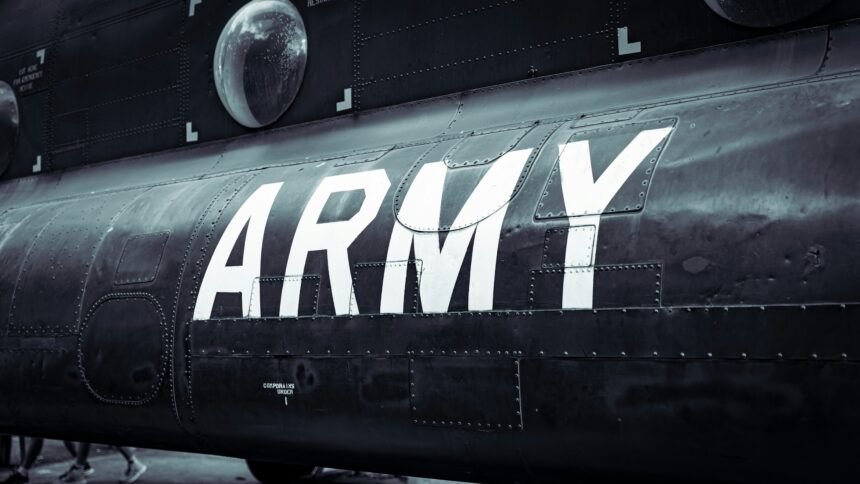
Mastering Warfare: A Military Strategy Documentary
The drone of the helicopter blades faded into the distance, leaving behind a palpable silence that amplified the weight of the words that had been spoken. The screen, once alive with archival footage of fierce battles and strategic maneuvers, now displayed a lingering shot of a desolate, windswept battlefield, a stark reminder of the human cost of conflict. “Mastering Warfare: A Military Strategy Documentary,” a sweeping and incisive exploration of the art and science of war, had just concluded, leaving viewers with a profound sense of awe and a pressing need for contemplation. This groundbreaking documentary, crafted with meticulous research and cinematic brilliance, delves into the timeless principles and ever-evolving doctrines that have shaped humanity’s approach to conflict for millennia, while simultaneously highlighting the critical need for adaptation in the face of modern technological advancements and geopolitical complexities.
The documentary’s strength lies in its ability to weave together historical analysis, expert commentary, and visceral visual narratives, creating an immersive experience that transcends mere academic study. It is a journey not just through epochs of warfare, but through the very evolution of human thought, ambition, and the enduring quest for dominance. The filmmakers have not shied away from the brutal realities of war, yet they have also managed to illuminate the intellectual rigor, the logistical prowess, and the sheer willpower that underpin successful military endeavors. From the phalanxes of ancient Greece to the cyber warfare operations of the 21st century, “Mastering Warfare” provides a comprehensive and unflinching examination of how strategies have been devised, executed, and ultimately, how they have determined the fate of nations and the course of history.
The initial segment of “Mastering Warfare” transports the audience back to the nascent stages of organized conflict, demonstrating that the fundamental principles of strategy are far from new. The documentary masterfully illustrates how the very foundations of military thought were laid by brilliant minds thousands of years ago, principles that continue to resonate in the modern battlefield.
The Art of Deception and Misdirection
One of the most compelling aspects of this section is the exploration of ancient art of deception. The filmmakers present vivid examples of how leaders like Hannibal, with his legendary crossing of the Alps and his tactical genius at Cannae, employed cunning stratagems to outmaneuver and overwhelm numerically superior foes. The documentary highlights the psychological warfare inherent in these tactics, emphasizing how sowing confusion and false expectations in the enemy’s ranks was as crucial as the clash of arms. Through animated reconstructions and expert interviews with historians specializing in ancient warfare, viewers gain a visceral understanding of how a well-placed feint or a delayed deployment could shatter an opponent’s morale and create exploitable weaknesses.
The documentary underscores that deception is not merely about trickery; it is a sophisticated application of intelligence gathering and analysis. It required understanding the enemy’s perceptions, their biases, and their vulnerabilities. Sun Tzu’s “The Art of War,” a text revered even today, is extensively quoted and analyzed, showcasing how its ancient wisdom on knowing oneself and knowing the enemy remains remarkably relevant. The documentary offers specific historical instances where armies that failed to anticipate enemy stratagems suffered catastrophic defeats, serving as stark reminders of the perpetual need for vigilance and adaptability.
Logistics: The Unsung Hero of Victory
Beyond the heroic charges and strategic brilliance, “Mastering Warfare” sheds light on the often-overlooked but critically important domain of logistics. The documentary argues that no army, however courageous or well-equipped, can march to victory without a robust and efficient supply chain. The Roman Legions, for instance, are presented not just as formidable warriors, but as masters of engineering and logistical planning. Their ability to build roads, establish supply depots, and maintain lines of communication across vast distances was instrumental in their imperial expansion.
The film showcases how the success of major military campaigns, from Alexander the Great’s conquests to the logistical challenges faced during the D-Day landings, were intimately tied to the ability to sustain troops with food, ammunition, and reinforcements. Interviews with modern military logistics experts draw direct parallels between the challenges faced by ancient commanders and the complex logistical puzzles that contemporary armies must solve. The visual depiction of vast convoys, meticulous inventory management, and the sheer human effort involved in keeping an army supplied is both awe-inspiring and sobering, revealing the bedrock upon which battlefield victories are built.
For those interested in exploring the intricacies of military strategy, the documentary “The Art of War: Strategies Through the Ages” offers a compelling look at historical and contemporary tactics employed by various military leaders. This documentary delves into the evolution of warfare and the principles that have shaped successful campaigns throughout history. To gain further insights into military strategy, you can check out a related article at this link.
The Industrial Revolution and the Dawn of Mass Warfare
The documentary then transitions to the seismic shifts brought about by the Industrial Revolution, a period that irrevocably transformed the nature and scale of warfare. The ability to mass-produce weaponry and transport troops on an unprecedented scale ushered in an era of total war, where the entire societal infrastructure became inextricably linked to military objectives.
Technological Escalation and the Changed Face of Combat
Here, “Mastering Warfare” delves into the terrifying acceleration of technological innovation in warfare. The advent of the machine gun, the artillery barrage, and later, the tank and the airplane, are presented not just as new tools of destruction, but as fundamental game-changers that rendered old tactics obsolete. The documentary vividly depicts the horrific trench warfare of World War I, illustrating how the industrial capacity of nations fueled a meat grinder of unprecedented scale. The strategic implications of these new technologies are explored, highlighting how they forced commanders to rethink positioning, defense, and offensive maneuvers.
The filmmakers employ a mix of chilling archival footage, expert analysis from military historians, and even CGI reconstructions to convey the sheer destructive power unleashed during this era. The shift from the individual soldier as the primary combatant to vast armies deployed as disposable units in service of industrial output is a central theme. The dehumanizing effect of industrial-scale warfare is palpable, as the documentary explores the psychological toll on soldiers and the profound societal impact of such mechanized slaughter.
The Rise of Total War and Its Consequences
Beyond the battlefield, the documentary examines the concept of “total war,” a philosophy that blurs the lines between combatants and civilians and mobilizes entire nations towards the war effort. World War II serves as the primary case study, with “Mastering Warfare” meticulously detailing how industrial might was harnessed for wartime production, how propaganda became a crucial weapon, and how the civilian population endured immense hardship and sacrifice. The strategic implications of this shift are explored, including the development of strategic bombing campaigns and the concept of economic warfare.
The documentary doesn’t shy away from the ethical and moral quandaries raised by total war, and it explores the devastating consequences for civilian populations, from widespread destruction to immense loss of life. Interviews with survivors and historians specializing in the social history of war provide poignant human perspectives, underscoring the profound and lasting scars left by conflicts of this magnitude. The interconnectedness of industrial capacity, technological advancement, and ideological fervor is presented as the volatile cocktail that characterized this era of warfare.
The Nuclear Age and the Dawn of Existential Threat

The documentary’s narrative arc then plunges into the chilling reality of the Nuclear Age, a period defined by the existential threat posed by weapons of mass destruction. This section explores how the advent of nuclear weapons fundamentally altered strategic thinking, ushering in an era of deterrence and precarious peace.
Mutually Assured Destruction (MAD) and Strategic Deterrence
The concept of Mutually Assured Destruction (MAD) is presented as the paradoxical cornerstone of global security during the Cold War. “Mastering Warfare” meticulously explains how the possession of nuclear arsenals by opposing superpowers created a terrifying equilibrium, where any first strike would inevitably lead to the annihilation of both sides. The documentary features insights from former strategists and diplomats who navigated the high-stakes diplomacy of this era, emphasizing the constant tension and the delicate balance of power.
The film uses infographics and historical simulations to illustrate the terrifying calculus of nuclear deterrence. The documentary explores the psychological warfare, the espionage, and the constant brinkmanship that characterized the Cold War, highlighting the immense pressure on leaders to maintain stability in the face of unimaginable destructive potential. The inherent irrationality of nuclear war is underscored, yet the documentary also acknowledges the grim logic that, for decades, prevented large-scale conflict between major powers.
The Evolution of Conventional Warfare in a Nuclear Shadow
Despite the looming threat of nuclear annihilation, the documentary also examines how conventional warfare continued to evolve. The arms race extended beyond nuclear weapons, with both sides developing increasingly sophisticated conventional forces. “Mastering Warfare” explores how proxy wars and limited conflicts became the primary arenas for superpower competition, allowing for the projection of power without triggering a full-scale nuclear exchange. The strategies employed in conflicts like the Korean War and the Vietnam War are analyzed, demonstrating how they reflected the geopolitical anxieties and the strategic limitations imposed by the nuclear paradigm.
The documentary explores the development of doctrines such as flexible response and the emphasis on maneuver warfare, attempting to adapt military capabilities to a world where direct confrontation between superpowers was unthinkable. Expert interviews with military theorists and historians highlight the complex interplay between nuclear strategy and the planning of conventional operations, revealing a strategic landscape fraught with nuanced calculations and ever-present risks.
The Information Age and the New Frontiers of Conflict
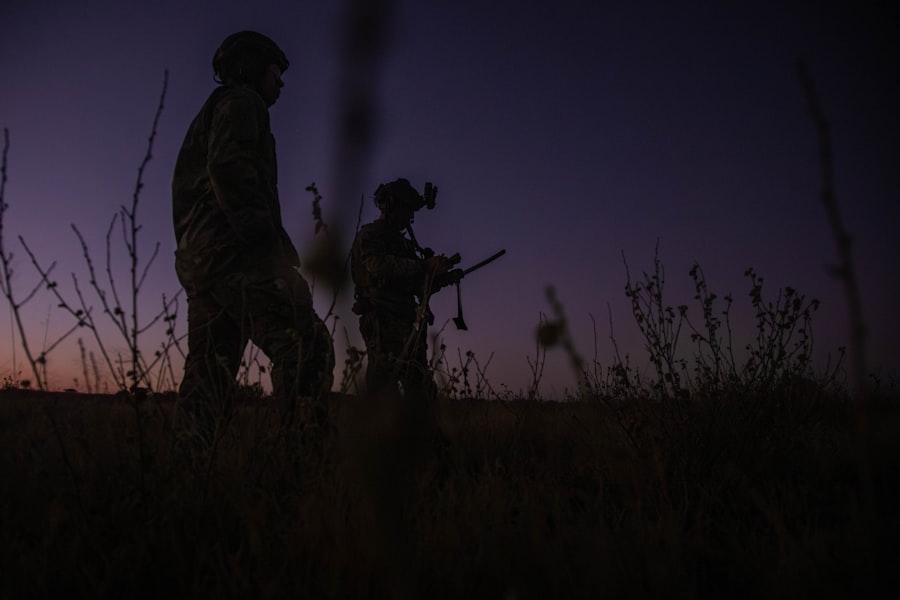
The documentary’s focus then shifts dramatically to the contemporary era, highlighting how the Information Age has revolutionized the battlefield, introducing new domains of conflict and unprecedented challenges. The speed of information dissemination and the interconnectedness of the global network have fundamentally reshaped how wars are planned, fought, and perceived.
Cyber Warfare: The Invisible Battlefield
Perhaps the most striking development explored in this section is the rise of cyber warfare. “Mastering Warfare” meticulously illustrates how digital infrastructure has become a critical target, capable of crippling nations without a single shot being fired. The documentary provides compelling examples of cyberattacks targeting power grids, financial systems, and military command and control networks, demonstrating the vulnerability of modern societies. Expert interviews with cybersecurity professionals and intelligence analysts reveal the sophistication and the clandestine nature of these operations.
The film highlights the strategic implications of cyber warfare, including its potential for espionage, sabotage, and the disruption of enemy operations. The documentary explores the difficulty of attribution, the legal and ethical challenges associated with cyber conflict, and the constant arms race between offensive and defensive cyber capabilities. The visual representation of data streams, code, and interconnected networks creates a compelling, albeit abstract, picture of this new frontier of warfare.
Asymmetric Warfare and the Adaptable Adversary
The documentary also delves into the persistent challenge of asymmetric warfare, where conventionally weaker actors employ unconventional tactics to counter technologically superior adversaries. The rise of insurgencies, terrorism, and irregular warfare throughout the late 20th and early 21st centuries is examined through the lens of strategic adaptation. “Mastering Warfare” highlights how non-state actors, by leveraging local knowledge, popular support, and innovative tactics, can pose significant threats to established powers.
The film explores the strategic dilemmas faced by conventional forces when confronting such adversaries. Interviews with counterinsurgency experts and former special operations personnel offer insights into the complexities of fighting in urban environments, winning hearts and minds, and the importance of intelligence gathering and adaptation. The documentary underscores the limitations of traditional military might when faced with ideologically driven and adaptable opponents, emphasizing the need for flexible and nuanced strategic approaches.
In exploring the complexities of military strategy, the documentary available on the website provides an in-depth analysis of historical battles and their implications for modern warfare. For those interested in further reading, a related article discusses the evolution of military tactics and the impact of technology on combat effectiveness. You can find this insightful piece by following this link, which delves into how strategic thinking has transformed over the decades.
The Future of Warfare: Adaptation, Ethics, and the Human Element
| Documentary Title | Release Year | Director | Runtime |
|---|---|---|---|
| The Fog of War | 2003 | Errol Morris | 107 minutes |
| Restrepo | 2010 | Sebastian Junger, Tim Hetherington | 93 minutes |
| Inside Combat Rescue | 2013 | National Geographic | 60 minutes per episode |
The concluding segment of “Mastering Warfare” looks towards the horizon, contemplating the future trajectory of conflict and the enduring human element within it. The documentary argues that while technology will continue to advance at an astonishing pace, the core principles of strategy and the ethical considerations surrounding warfare will remain paramount.
Artificial Intelligence and Autonomous Systems
The film explores the increasing role of artificial intelligence (AI) and autonomous systems in warfare. The potential applications, from sophisticated battlefield analysis to the development of lethal autonomous weapons systems (LAWS), are discussed with a blend of fascination and apprehension. Interviews with AI researchers and ethicists grapple with the profound questions raised by the prospect of machines making life-or-death decisions.
“Mastering Warfare” presents hypothetical scenarios and expert opinions on how AI could revolutionize reconnaissance, logistics, and even combat operations. However, the documentary also emphasizes the significant ethical and moral debates surrounding LAWS, including issues of accountability, unintended escalation, and the potential for algorithmic bias. The filmmakers pose critical questions about the future of human control and the inherent risks associated with delegating such critical decisions to machines.
The Enduring Importance of Human Leadership and Morality
Despite the increasing reliance on technology, “Mastering Warfare” concludes with a powerful affirmation of the enduring importance of human leadership, judgment, and morality. The documentary argues that even in an era of advanced AI and cyber warfare, the ability to inspire troops, to make difficult ethical choices, and to understand the broader geopolitical context remains the bedrock of successful strategy. The human element, with its capacity for empathy, critical thinking, and strategic foresight, is presented as the ultimate differentiator in the complex landscape of modern conflict.
The film revisits historical examples where flawed human judgment, driven by hubris or a lack of understanding, led to disastrous outcomes, underscoring the persistent need for wisdom and ethical grounding in military decision-making. The documentary emphasizes that mastering warfare is not simply about acquiring superior technology or devising clever tactics; it is about understanding the human condition, the motivations of adversaries, and the profound consequences of conflict. “Mastering Warfare: A Military Strategy Documentary” is not just a historical account; it is a timeless lesson that transcends generations, a stark reminder that the pursuit of victory in war, however skillful, must always be tempered by a profound respect for the value of human life and the pursuit of a just and lasting peace. The final images linger, not just of armies and arsenals, but of the individuals who have shaped and been shaped by the enduring shadow of warfare, leaving the viewer to ponder the delicate balance between the art of war and the imperative of peace.

Why Armies Fear 4:30 AM
FAQs
What is a military strategy documentary?
A military strategy documentary is a film or video production that explores and analyzes various military strategies, tactics, and historical battles. It often includes interviews with military experts, historical reenactments, and archival footage to provide a comprehensive understanding of military strategy.
What are the benefits of watching a military strategy documentary?
Watching a military strategy documentary can provide viewers with a deeper understanding of historical and contemporary military tactics, leadership, and decision-making. It can also offer insights into the complexities of warfare and the impact of strategic decisions on the outcome of battles and conflicts.
Where can I find military strategy documentaries to watch?
Military strategy documentaries can be found on various streaming platforms, such as Netflix, Amazon Prime Video, and YouTube. Additionally, they may be available for purchase or rental on DVD or Blu-ray, and some may be broadcast on television channels dedicated to history or military topics.
What are some popular military strategy documentaries?
Some popular military strategy documentaries include “The Fog of War,” “Restrepo,” “The Battle of Midway,” “The World at War,” and “The Civil War” by Ken Burns. These documentaries cover a wide range of historical periods and military conflicts, offering diverse perspectives on military strategy.
Are military strategy documentaries suitable for all audiences?
While military strategy documentaries can be educational and informative, they often contain graphic content related to warfare, including violence and death. As such, they may not be suitable for all audiences, particularly young children or individuals sensitive to such content. Viewers should exercise discretion when choosing to watch military strategy documentaries.