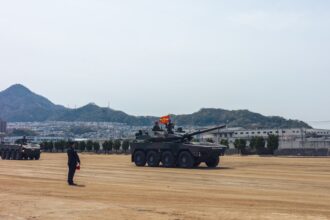
The fog of war has long been a defining characteristic of military operations, a nebulous realm where clarity is elusive, and the ground beneath a commander’s feet can shift with alarming speed. In this perpetual state of uncertainty, the ability to make sound, timely decisions is not merely a desirable skill; it is a prerequisite for survival and success. Mastering military decision-making in uncertainty, therefore, represents a critical pursuit for any military professional seeking to navigate the complexities of modern conflict. This endeavor involves a multifaceted approach, encompassing the development of cognitive agility, the cultivation of robust analytical frameworks, and the fostering of an organizational culture that embraces adaptability.
Military operations are inherently unpredictable. The battlefield is a dynamic and contested environment, shaped by a confluence of factors – the actions of adversaries, the intentions of allies, the terrain, the weather, and the ever-present element of human behavior. Commanders must operate within a reality where perfect information is a myth, and predictions are often educated guesses.
The Ubiquitous Fog of War
The term “fog of war,” popularized by Carl von Clausewitz, encapsulates the confusion, uncertainty, and lack of clarity that pervades military engagements. This fog descends from multiple sources:
Limited and Contradictory Information
Intelligence reports are rarely complete or entirely accurate. Information can be delayed, misinterpreted, or deliberately falsified by adversaries. Commanders often find themselves making decisions based on fragmented, conflicting, and sometimes unreliable data. This necessitates a constant process of filtering, verifying, and synthesizing information, understanding that complete certainty is an unattainable ideal. The pressure to act, even with incomplete knowledge, is a constant companion in the decision-making process.
The Enemy’s Unpredictability
Adversaries are not static entities; they adapt, innovate, and exploit vulnerabilities. Their reactions to friendly actions are often unforeseen, leading to rapid shifts in the operational landscape. Understanding enemy doctrine, capabilities, and likely courses of action is crucial, but it is equally important to acknowledge that the enemy commander is also making decisions under uncertainty and may deviate from predictable patterns.
The Tempo of Operations
Modern warfare is characterized by its accelerated pace. Decisions must often be made rapidly, with little time for exhaustive analysis. This temporal pressure amplifies the impact of uncertainty, as hesitation can be as detrimental as a flawed decision. Commanders must develop the capacity to think and act decisively under significant time constraints.
Human Factors and Psychological Stress
The human element, both friendly and enemy, introduces a significant layer of unpredictability. Fear, courage, morale, and individual psychological states can all influence actions and outcomes. The stress of combat can impair cognitive function, leading to errors in judgment. Understanding these human factors, and mitigating their negative impacts on decision-making, is paramount.
Distinguishing Types of Uncertainty
Not all uncertainty is the same. Recognizing the different forms it takes can help commanders tailor their decision-making strategies.
Known Unknowns vs. Unknown Unknowns
A crucial distinction is between “known unknowns” – situations where a commander is aware of potential variables but lacks specific details – and “unknown unknowns” – those factors that are entirely unforeseen. While known unknowns can be anticipated and contingency plans developed, unknown unknowns require a more flexible and reactive approach. The challenge lies in identifying potential known unknowns and preparing for a wide range of possibilities, while simultaneously building the resilience to cope with emergent, unexpected challenges.
Strategic vs. Operational vs. Tactical Uncertainty
Uncertainty manifests at different levels of warfare. Strategic uncertainty might involve the long-term intentions of a nation-state or the global geopolitical landscape. Operational uncertainty could relate to the enemy’s overall campaign plan or the logistical implications of a major operation. Tactical uncertainty is the most immediate, concerning the disposition of enemy forces in a specific engagement or the immediate consequences of a particular maneuver. Each level requires a different scope of analysis and a different timeframe for decision-making.
Military decision-making under uncertainty is a critical area of study, as it directly impacts the effectiveness of operations in unpredictable environments. For a deeper exploration of this topic, you can refer to a related article that discusses various strategies and frameworks used by military leaders to navigate complex scenarios. This article can be found at In the War Room, where it delves into the challenges and methodologies associated with making informed decisions amidst uncertainty.
Frameworks for Navigating Uncertainty
While uncertainty is inherent, it does not necessitate paralysis. Established frameworks and methodologies can provide a structured approach to decision-making, even when faced with ambiguity.
The OODA Loop: A Dynamic Decision-Making Model
The Observe, Orient, Decide, Act (OODA) loop, developed by military strategist John Boyd, is a fundamental concept for understanding how to operate effectively in uncertain and rapidly changing environments. It emphasizes the importance of speed and agility in the decision cycle.
Observe: Gathering Information in Real-Time
This phase involves actively collecting information from all available sources, including intelligence, reconnaissance, surveillance, and even anecdotal reports. It requires a conscious effort to see what is happening, to be aware of the unfolding situation, and to actively seek out data.
Orient: Making Sense of the Data
This is arguably the most critical phase. It involves processing the observed information, filtering out noise, identifying patterns, and understanding the context. Orientation is influenced by a commander’s prior experiences, cultural background, training, and mental models. It is about translating raw data into meaningful understanding, a process that can be heavily impacted by bias and preconceived notions.
Decide: Formulating a Course of Action
Based on the orientation, the commander selects a course of action. This decision should be the most appropriate response given the current understanding of the situation and the desired end state. It is crucial to recognize that this decision is not a final one, but rather a step in an ongoing cycle.
Act: Executing the Decision
The chosen course of action is implemented. This involves issuing orders, allocating resources, and directing forces. The act of execution generates new observations, feeding back into the OODA loop, and initiating a new cycle.
The Military Decision Making Process (MDMP)
The Military Decision Making Process (MDMP) provides a standardized, methodical approach for military planning and decision-making. While it is a structured process, its effectiveness in uncertainty lies in its adaptability and the emphasis on critical thinking at each step.
Receipt of Mission
The process begins with understanding the commander’s intent and the mission assigned. This requires careful analysis of the order, identifying its key elements and the desired outcomes.
Mission Analysis
This critical phase involves a deep dive into the mission. It includes identifying the tasks to be accomplished, understanding the constraints and limitations, and assessing the enemy’s capabilities and likely courses of action. This is where the commander begins to grapple with the inherent uncertainties of the operational environment.
Course of Action Development
Based on the mission analysis, friendly capabilities, and enemy assessment, multiple potential courses of action (COAs) are developed. This phase encourages creative thinking and the exploration of different approaches.
Course of Action Analysis
Each developed COA is rigorously analyzed, often through wargaming, to identify its strengths, weaknesses, opportunities, and threats. This is where potential friction points and unexpected consequences are surfaced, especially in the context of uncertainty.
Course of Action Comparison
The analyzed COAs are compared against defined criteria, such as their likelihood of success, feasibility, and resource requirements. This comparison helps in selecting the most promising course of action.
Commander’s Decision
The commander reviews the analysis and makes a decision on the preferred course of action. This is a moment where experience, intuition, and an understanding of the operational context come into play, especially when faced with incomplete information.
Orders Production
The selected course of action is translated into clear, concise, and executable orders for subordinate units.
Cultivating Cognitive Agility and Resilience
Beyond structured frameworks, the individual commander’s mental capacity and psychological fortitude are crucial for effective decision-making under duress and uncertainty.
Enhancing Cognitive Skills
The ability to think critically, creatively, and adaptively is paramount.
Critical Thinking and Analysis
This involves the ability to question assumptions, evaluate evidence objectively, and identify logical fallacies. Commanders must be able to dissect complex problems, break them down into manageable components, and draw sound conclusions, even with incomplete data. This requires a skeptical mindset that is tempered by a willingness to consider all possibilities.
Creative Problem Solving
When faced with unprecedented challenges or when standard solutions prove inadequate, creative thinking becomes essential. This involves generating novel ideas, exploring unconventional approaches, and envisioning solutions that may not be immediately obvious. Encouraging a culture where subordinates feel empowered to offer innovative ideas is also vital.
Mental Models and Scenario Planning
Developing robust mental models of potential future states allows commanders to anticipate a range of possibilities. Scenario planning, a technique where multiple plausible future events are envisioned, helps to prepare for a variety of outcomes, thereby reducing the impact of unexpected developments. This proactive approach allows for the development of pre-planned responses for various contingencies.
Building Psychological Resilience
The stresses of command and combat can profoundly impact decision-making.
Stress Inoculation and Management
Training programs can help individuals develop coping mechanisms for stress. This includes understanding the physiological and psychological effects of stress and learning techniques to maintain cognitive function and emotional control under pressure. Practicing mindfulness and employing breathing exercises can also be beneficial.
Self-Awareness and Bias Mitigation
Understanding one’s own biases, assumptions, and cognitive limitations is crucial for making objective decisions. Commanders must be aware of how their personal experiences and perspectives might color their judgment and actively work to mitigate these influences. Regular reflection and seeking feedback from trusted advisors can aid in this process.
Emotional Regulation and Composure
Maintaining composure in the face of adversity is essential. Commanders who can manage their emotions are better equipped to think clearly, make rational decisions, and inspire confidence in their subordinates. This involves cultivating a sense of detachment from immediate emotional reactions and focusing on the objective demands of the situation.
Fostering an Adaptive Organizational Culture
Individual capabilities are amplified by an organizational environment that supports adaptability and learning.
Encouraging Initiative and Empowering Subordinates
A rigid, top-down command structure can stifle initiative and hinder responsiveness in uncertain environments.
Decentralized Execution and Mission Command
Mission Command, a philosophy that emphasizes empowering subordinates to exercise disciplined initiative within the commander’s intent, is crucial. This allows for faster decision-making at lower echelons, closer to the point of friction, and enables a more agile response to unfolding events. Subordinates are trusted to understand the overall intent and to adapt their actions accordingly.
Learning from Experience and After-Action Reviews
A culture that embraces learning from both successes and failures is vital. Rigorous after-action reviews (AARs) are essential for identifying lessons learned, disseminating best practices, and improving future decision-making processes. These reviews must be conducted in a blame-free environment to encourage honesty and open discussion.
Embracing Innovation and Experimentation
The nature of warfare is constantly evolving, and military organizations must be prepared to adapt.
Encouraging a Culture of Experimentation
Military units should be encouraged to experiment with new tactics, technologies, and organizational structures. This allows for the discovery of novel solutions and the identification of potential weaknesses in existing approaches. Embracing calculated risks in the pursuit of innovation is key.
Adapting to Technological Advancements
New technologies can fundamentally alter the character of warfare and introduce new forms of uncertainty. Military leaders must stay abreast of these advancements, understand their implications, and adapt their decision-making processes accordingly. This includes not only adopting new tools but also understanding how they can be integrated into broader operational concepts.
Military decision-making under uncertainty is a complex process that requires leaders to navigate various unpredictable factors while making strategic choices. A related article that delves into this topic can be found at In the War Room, where it explores the challenges and methodologies that military leaders employ to enhance their decision-making capabilities in uncertain environments. Understanding these dynamics is crucial for effective leadership in military operations.
The Role of Technology and Intelligence in Mitigating Uncertainty
| Metrics | Data |
|---|---|
| Probability of enemy actions | 0.75 |
| Level of intelligence | High |
| Number of possible outcomes | 5 |
| Decision-making time frame | 48 hours |
While technology cannot eliminate uncertainty, it can provide commanders with enhanced situational awareness and analytical tools to better understand and navigate complex environments.
Leveraging Intelligence for Enhanced Understanding
Robust intelligence capabilities are indispensable for reducing uncertainty.
All-Source Intelligence Integration
The ability to gather, fuse, and analyze information from a wide range of sources – human intelligence, signals intelligence, imagery intelligence, and open-source intelligence – is critical. This comprehensive approach provides a more complete picture of the operational environment.
Predictive Analysis and Pattern Recognition
Advanced analytical techniques, including artificial intelligence and machine learning, can assist in identifying patterns, predicting adversary behavior, and forecasting potential future developments. These tools can help commanders anticipate threats and opportunities with greater accuracy.
Dissemination and Actionable Intelligence
Intelligence is only valuable if it is disseminated effectively and in a timely manner to those who need it to make decisions. Ensuring that intelligence is actionable and integrated into the commander’s planning and execution cycle is paramount.
Utilizing Technology for Situational Awareness and Wargaming
Technological advancements can provide real-time information and sophisticated simulation tools.
Real-Time Situational Awareness Tools
Modern command and control systems provide commanders with a dynamic, real-time view of friendly and enemy forces, terrain, and other relevant factors. This enhanced situational awareness reduces the “fog” by providing a clearer, albeit still imperfect, picture of the battlefield.
Advanced Wargaming and Simulation
Sophisticated wargaming and simulation tools allow commanders to test various courses of action in a controlled environment. This enables them to identify potential risks, refine their plans, and gain a deeper understanding of the potential consequences of their decisions, particularly in complex and uncertain scenarios.
In conclusion, mastering military decision-making in uncertainty is an ongoing process, not a destination. It requires a commitment to continuous learning, the development of individual cognitive and psychological strengths, and the cultivation of an organizational culture that embraces adaptability and innovation. By understanding the multifaceted nature of military uncertainty, employing robust analytical frameworks, fostering agile thinking, and leveraging the power of intelligence and technology, commanders can increase their chances of making effective decisions and achieving success, even when operating in the most challenging and ambiguous of environments. The battlefield of the future will undoubtedly remain a realm of uncertainty, and those who can master its complexities will be the ones who prevail.

The Military Machine That Didn’t Need a Napoleon
FAQs
What is military decision-making under uncertainty?
Military decision-making under uncertainty refers to the process of making strategic and tactical decisions in a military context when there is a lack of complete information or when the situation is unpredictable.
What are the challenges of military decision-making under uncertainty?
The challenges of military decision-making under uncertainty include the need to assess and analyze incomplete or conflicting information, the potential for unexpected developments on the battlefield, and the pressure to make timely and effective decisions in high-stakes situations.
How do military leaders approach decision-making under uncertainty?
Military leaders approach decision-making under uncertainty by using a combination of experience, training, intelligence analysis, and risk assessment. They may also employ scenario planning, contingency planning, and the use of decision support tools to help mitigate uncertainty.
What are some strategies for mitigating uncertainty in military decision-making?
Strategies for mitigating uncertainty in military decision-making include conducting thorough intelligence gathering and analysis, developing flexible and adaptable plans, maintaining open lines of communication, and empowering subordinates to make decisions based on their expertise and situational awareness.
Why is military decision-making under uncertainty important?
Military decision-making under uncertainty is important because it allows military leaders to effectively respond to dynamic and unpredictable situations, adapt to changing circumstances on the battlefield, and maintain a competitive advantage over adversaries.