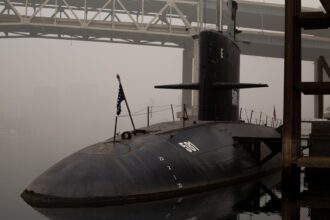
The Cold War, a period marked by ideological conflict and a high-stakes arms race, witnessed a relentless pursuit of technological advantage by both the United States and the Soviet Union. Beneath the surface of the world’s oceans, this struggle took on a particularly opaque and perilous form: submarine warfare. The ability to track and, conversely, to evade tracking, was paramount. While much has been written about active and passive sonar, hydrophone arrays, and anti-submarine warfare (ASW) aircraft, a less explored but equally significant dimension was the Soviet KGB’s sophisticated efforts in metadata tracking of enemy submarines. This article delves into the intricacies of this clandestine operation, illuminating how seemingly innocuous information became a potent weapon in the shadows.
The KGB’s remit extended far beyond internal security; it was a sprawling intelligence apparatus with a global reach. Its operations were characterized by an unwavering commitment to detailed information collection and analysis.
The KGB’s Mandate and Resources
The Komitet Gosudarstvennoy Bezopasnosti (Committee for State Security), commonly known as the KGB, was the principal security agency of the Soviet Union from 1954 until 1991. Its intelligence directorates were tasked with gathering information on foreign adversaries, including military capabilities, technological advancements, and strategic intentions. The KGB had access to vast resources, encompassing human intelligence (HUMINT), signal intelligence (SIGINT), imagery intelligence (IMINT), and open-source intelligence (OSINT). This multifaceted approach was crucial for establishing a comprehensive picture of enemy activities.
The Importance of Naval Intelligence
Within the KGB’s hierarchy, naval intelligence held a privileged position. The Soviet Union, a continental power, was acutely aware of the strategic significance of naval power, particularly the burgeoning fleets of the United States and its NATO allies. Tracking submarines, especially those armed with nuclear ballistic missiles, was a top priority. These silent hunters represented a direct threat to Soviet security, and understanding their movements, patterns, and operational capabilities was seen as essential for deterrence and defense.
The KGB’s innovative use of metadata to track submarines during the Cold War highlights the intricate relationship between intelligence gathering and technological advancements. This method allowed them to analyze patterns and behaviors that could indicate the presence of submarines, showcasing the importance of data in military strategy. For a deeper understanding of how intelligence agencies have evolved their techniques over the years, you can read more in this related article: Intelligence in the Modern Age.
The Metadata Paradigm: Unconventional Tracking
When one typically considers submarine tracking, the image of sonar pings resonating through the water often comes to mind. However, the KGB recognized that a wealth of information, a kind of “digital exhaust,” was being generated by naval operations, even those conducted in secrecy. This “metadata” – data about data – provided invaluable insights.
What is Metadata in a Naval Context?
In the context of submarine tracking, metadata refers to any information that describes an event, an object, or an action, without necessarily revealing the core content of that event, object, or action itself. For instance, the exact content of a classified radio message might be encrypted and impenetrable. However, the metadata associated with that message – its sender, receiver, time of transmission, frequency used, and even its length – could be highly revealing. It’s akin to knowing that a letter was sent from Moscow to Washington, DC, at a specific time, without knowing the contents of the letter itself. Such seemingly peripheral details, when meticulously collected and analyzed, began to paint a profound picture.
Sources of Metadata for Submarine Tracking
The KGB cast a wide net in its metadata collection efforts. No detail was deemed too insignificant.
Communications Interception (COMINT)
Perhaps the most potent source of metadata was the interception and analysis of communications. While cryptographic techniques protected the content of messages, metadata was often left exposed.
- Traffic Analysis: This involved examining patterns in communication traffic. High volumes of traffic between a specific port and a known operational area might indicate a submarine deployment or a significant exercise. Irregularities in communication patterns could suggest a change in operational tempo or an emergency.
- Direction Finding (DF): Intercepted radio signals, even if encrypted, allowed the KGB to discern the physical location of the transmitter. If a submarine maintained radio silence, its accompanying support vessels, shore stations, or even associated aircraft would still emit signals, offering clues to the submarine’s general vicinity or intended operating area.
- Frequency Analysis: Different naval units utilized specific frequencies for various purposes. Observing unusual frequency usage or changes in established communication protocols could signal new deployments or tactical shifts.
Open-Source Intelligence (OSINT) Exploitation
Even publicly available information, when aggregated and analyzed, could yield significant metadata.
- Port Calls and Ship Movements: Public records of naval exercises, port visits by surface vessels associated with submarine operations, and even commercial shipping movements could provide contextual clues. The presence of a submarine tender in a particular port, for example, could indicate impending deployments or maintenance schedules.
- Naval Publications and Journals: While often sanitized, naval journals, news articles, and even technical papers sometimes contained subtle metadata. A report on a new technology being integrated into a submarine class, or an article highlighting the training of specific naval personnel, could indirectly inform intelligence analysts.
- Academic and Scientific Research: Publicly funded research in areas like oceanography, acoustics, or naval engineering could inadvertently reveal information about areas of operational interest or technological priorities of the adversary.
Human Intelligence (HUMINT) and Agent Networks
While often associated with espionage and direct information gathering, HUMINT also played a crucial role in collecting metadata.
- Port Observers: Agents or sympathizers in key ports could observe the departure and arrival of naval vessels, including support ships that might accompany submarines or indicate their presence. Details such as cargo loading, specific types of provisions, or unusual activity around facilities could all be observed and reported.
- Logistical Data: Information about fuel consumption, spare parts orders, or even personnel deployments could be gleaned through human sources within allied logistical chains. Such “mundane” data points, when pieced together, provided a rich tapestry of operational metadata.
- Social Engineering: Exploiting vulnerabilities in personnel or using less direct means to gather anecdotal evidence about naval routines, crew movements, or maintenance schedules contributed to the metadata picture.
The Processing and Analysis Engine: Turning Data into Intelligence

Collecting vast quantities of metadata was only half the battle. The true art lay in processing, analyzing, and synthesizing this information into actionable intelligence. The KGB’s analytical departments were akin to intricate weaving looms, transforming disparate threads of data into comprehensive tapestries of understanding.
Centralized Data Collection and Indexing
The KGB established sophisticated systems for collecting and indexing the torrent of metadata flowing into its intelligence pipelines. Early systems, while rudimentary by modern standards, were meticulously organized.
- Card Index Systems: Physical card indexes, cross-referenced by parameters such as date, location, frequency, and suspected unit, were the backbone of early analysis. Imagine hundreds of thousands of handwritten cards, each representing a tiny fragment of information, waiting to be connected.
- Early Computing Systems: As computing technology advanced, early punch-card systems and primitive databases began to automate aspects of data storage and retrieval, allowing for more complex queries and pattern recognition. These were the nascent whispers of big data analytics.
Pattern Recognition and Anomaly Detection
The core of metadata analysis revolved around identifying patterns and detecting anomalies.
- Baseline Establishment: Analysts worked to establish baselines of “normal” operational activity for adversary naval forces. This involved understanding typical communication schedules, exercise patterns, and deployment cycles for specific submarine classes.
- Deviation Identification: Any deviation from these established baselines immediately flagged for further investigation. An unusual increase in communications from a specific area, the sustained presence of a support vessel beyond its expected duration, or a change in frequency usage could all be indicators of new or altered submarine operations. It was like noticing a single discordant note in a familiar symphony, signaling something amiss.
- Correlation Analysis: The true power arose from correlating multiple, seemingly unrelated metadata points. For example, an intercepted radio transmission at a specific time, coupled with a report from a port observer about a submarine tender departing the same day, and a later open-source report about a new sonar buoy deployment drill in a particular ocean area, could collectively point to the deployment of a new submarine model to that region.
Predictive Modeling and Threat Assessment
Beyond understanding current operations, the ultimate goal was to predict future movements and assess potential threats.
- Behavioral Models: By analyzing historical metadata, the KGB developed behavioral models for various submarine classes and their crews. These models informed predictions about patrol durations, transit routes, and likely escalation responses.
- Scenario Planning: Intelligence assessments often included scenario planning, using metadata to project adversary actions under different geopolitical circumstances. This allowed Soviet leadership to anticipate potential conflicts and formulate counter-strategies.
- Vulnerability Identification: Metadata analysis could also reveal vulnerabilities in adversary operations. For instance, if communication patterns consistently showed a period of reduced activity at certain times, it might indicate a window of opportunity for Soviet assets.
Impact and Legacy of Metadata Tracking

The KGB’s metadata tracking efforts had a profound impact on Soviet military strategy and naval operations during the Cold War. It was an invisible hand guiding Soviet decision-making.
Informing Soviet Naval Strategy
The intelligence derived from metadata tracking directly influenced the deployment of Soviet naval forces, particularly its own submarine fleet and anti-submarine warfare assets.
- Targeting and Counter-Targeting: Understanding the patrol areas and transit routes of enemy ballistic missile submarines allowed Soviet commanders to position their own attack submarines for targeting or counter-targeting operations.
- ASW Deployment: Knowledge of enemy submarine movements guided the deployment of Soviet ASW aircraft, surface ships, and hydrophone arrays, increasing the effectiveness of their tracking and interdiction efforts.
- Strategic Deterrence: The ability to demonstrate an awareness of enemy submarine operations, even implicitly, contributed to the overall Soviet strategic deterrence posture. It signaled that Soviet intelligence was deeply attuned to adversary moves, potentially dissuading aggressive actions.
The Arms Race Beneath the Waves
The constant cat-and-mouse game of submarine tracking fueled technological innovations on both sides.
- Stealth Technology: As metadata tracking became more sophisticated, the imperative for adversary forces to reduce their “signature” – both acoustic and electromagnetic – intensified. This spurred advancements in submarine stealth technology, including quieter propulsion systems, anechoic coatings, and reduced electromagnetic emissions.
- Communication Security: The realization that metadata could be exploited led to heightened efforts in communication security. This included developing more robust encryption, implementing more complex communication protocols, and adopting strict radio silence procedures during sensitive operations.
- Deception and Counter-Intelligence: Both sides engaged in elaborate deception tactics to mislead the other’s intelligence efforts. This included creating false communication patterns, simulating deployments, and deliberately injecting misleading metadata into their operational streams. It was a war of mirrors, reflecting and distorting reality.
Lessons for Modern Intelligence
Even with the advent of satellite surveillance, advanced computing, and the internet, the principles behind the KGB’s metadata tracking remain remarkably relevant.
- The Enduring Value of “Small Data”: The Cold War demonstrated that even seemingly insignificant pieces of information, when systematically collected and analyzed, can yield profound insights. In an age of “big data,” the lesson endures that context and correlation are as crucial as sheer volume.
- Non-Interventional Intelligence: Metadata tracking is fundamentally non-interventional. It does not require direct engagement with the target, thus reducing risks and maintaining operational secrecy. This principle remains a cornerstone of modern intelligence gathering.
- The Evolving Nature of Signatures: Just as acoustic and electromagnetic signatures were analyzed during the Cold War, modern intelligence agencies constantly seek to identify and exploit new digital signatures – the “data exhaust” of connected devices, online activity, and global networks. The ocean of cyberspace, in many ways, represents a new frontier for metadata tracking.
The KGB’s metadata tracking of submarines serves as a powerful historical object lesson. It illustrates that intelligence, at its core, is a relentless process of observation, deduction, and synthesis. By looking beyond the obvious and meticulously piecing together the peripheral, the Soviet Union gained a crucial, if often unseen, advantage in the silent, underwater struggle of the Cold War. The echoes of these clandestine efforts continue to reverberate in the contemporary intelligence landscape, reminding us that in the realm of national security, every piece of information, no matter how small, can hold profound strategic significance.
FAQs
What is metadata and how was it used by the KGB?
Metadata refers to data that provides information about other data, such as the time, location, and source of a communication. The KGB used metadata to analyze patterns and connections in communications, which helped them track and locate submarines by identifying signal sources and movement patterns.
How did the KGB collect metadata related to submarines?
The KGB collected metadata through various intelligence methods, including intercepting radio transmissions, monitoring communication networks, and using electronic surveillance equipment. This allowed them to gather information about the timing, frequency, and origin of signals emitted by submarines.
Why was metadata important for finding submarines during the Cold War?
Submarines are difficult to detect using traditional methods due to their stealth capabilities. Metadata provided the KGB with indirect clues about submarine locations by revealing communication patterns and signal origins, enabling them to narrow down search areas and improve tracking accuracy.
Did the use of metadata by the KGB influence modern submarine detection techniques?
Yes, the KGB’s use of metadata demonstrated the value of signal analysis and electronic intelligence in submarine detection. Modern naval forces continue to use advanced metadata analysis, combined with sonar and satellite technology, to monitor submarine activity more effectively.
What challenges did the KGB face when using metadata to locate submarines?
The KGB faced challenges such as signal encryption, the vastness of ocean areas, and the need to distinguish submarine signals from other maritime communications. Additionally, submarines often used countermeasures to minimize detectable emissions, making metadata analysis complex and requiring sophisticated intelligence techniques.