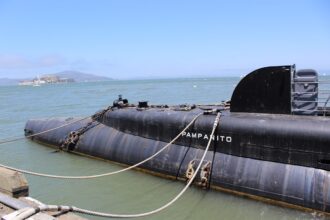
The Silent Watcher Beneath the Waves
The year is 1976. The Mediterranean Sea, a cradle of civilizations and a vital artery of global trade, hummed with a complex interplay of geopolitical tensions. Amidst this simmering atmosphere, a silent, steel behemoth moved with purpose beneath the shimmering surface: the K-22 submarine. This was no mere training exercise; it was a meticulously planned operational patrol, a crucial element in a larger strategic dance being choreographed by the Soviet Navy. The K-22, a product of advanced Soviet engineering, was tasked with a multifaceted mission, the specifics of which remain cloaked in the usual layers of Cold War secrecy. However, by examining the broader strategic context of the era, the likely objectives, and the inherent capabilities of such a vessel, a comprehensive picture of the K-22’s vital role in 1976 can be painted.
The K-22 submarine incident in the Mediterranean in 1976 is a fascinating topic that highlights the complexities of Cold War naval operations. For those interested in exploring this subject further, a related article can be found at In The War Room, which delves into the strategic implications and historical context surrounding submarine warfare during that era.
Geopolitical Crucible of the Mediterranean
Shifting Sands of Power
The mid-1970s represented a period of significant flux in the Mediterranean. The aftermath of the Yom Kippur War in 1973 had left the region with a volatile balance of power. Israel, bolstered by significant US military aid, maintained a strong presence, while its Arab neighbors grappled with the political and economic consequences of the conflict. The Soviet Union, a staunch supporter of several Arab nations, sought to assert its influence and counter the growing sway of the United States and its NATO allies. The presence of Soviet naval forces, particularly submarines, was a key component of this strategy.
The Shadow of NATO
NATO, led by the United States, maintained a formidable naval presence in the Mediterranean, with the Sixth Fleet serving as its spearhead. This fleet comprised aircraft carriers, cruisers, destroyers, and its own contingent of submarines. For the Soviet Navy, the presence of NATO’s powerful surface and subsurface assets represented both a challenge and an intelligence-gathering opportunity. The K-22’s patrol would undoubtedly have involved navigating this complex tactical environment, operating in close proximity to, but deliberately concealed from, NATO forces. The constant threat of detection and potential confrontation underscored the need for extreme caution and sophisticated operational procedures.
Soviet Ambitions and Mediterranean Strategy
The Soviet Union viewed the Mediterranean as strategically vital for several reasons. Firstly, it provided access to the Middle East, a region rich in oil and of immense geopolitical significance. Secondly, it served as a potential launching point for operations against vital Western European supply lines. Thirdly, a strong Soviet naval presence in the Mediterranean served as a potent symbol of Soviet power and a deterrent against perceived Western aggression. The K-22, as a part of this naval projection, was an instrument of Soviet foreign policy, designed to secure these interests and project power to the southern flank of Europe.
The K-22: A Technological Marvel of its Time
The K-22 submarine, which played a significant role during its deployment in the Mediterranean in 1976, has been the subject of various analyses regarding its strategic importance and technological advancements. For those interested in exploring more about the historical context and implications of submarine warfare during that era, a related article can be found at this link. This piece delves into the broader narrative of naval operations and the evolution of submarine technology, providing valuable insights into the geopolitical landscape of the time.
Design and Capabilities
| Metric | Details |
|---|---|
| Submarine Name | K-22 |
| Class | November-class (Project 627) |
| Year of Operation | 1976 |
| Region | Mediterranean Sea |
| Displacement | 6,900 tons surfaced, 8,000 tons submerged |
| Length | 107.5 meters |
| Beam | 8.8 meters |
| Propulsion | Nuclear-powered, 2 pressurized water reactors |
| Speed | 30+ knots submerged |
| Armament | 8 x 533 mm torpedo tubes, torpedoes and possible nuclear torpedoes |
| Mission Type | Patrol and reconnaissance in Mediterranean |
| Notable Events | Cold War patrols and intelligence gathering |
The K-22, a Project 671 “Yorsh” class submarine, was a formidable hunter-killer submarine. These vessels were designed primarily for anti-ship warfare and for shadowing enemy submarines. The “Yorsh” class was characterized by its relatively quiet operation, advanced sonar systems for its era, and a potent array of torpedoes. Its sleek hull design and powerful propulsion system allowed for considerable underwater speed and endurance, essential for long patrols in the vast expanse of the Mediterranean. The K-22, as one of these vessels, represented a significant investment in Soviet naval technology and doctrine.
Stealth and Subsurface Dominance
The primary mission of a hunter-killer submarine like the K-22 was to remain undetected while actively seeking out and potentially engaging enemy vessels, particularly other submarines. This required a sophisticated understanding of hydroacoustics and advanced techniques for minimizing noise generation. The K-22’s hull was designed to reduce cavitation, and its machinery was carefully insulated to minimize acoustic signatures. The success of its mission hinged on its ability to operate in the “silent service,” blending seamlessly with the ambient underwater noise and using its advanced sonar to perceive the enemy while remaining unseen and unheard. This cat-and-mouse game beneath the waves was a hallmark of Cold War naval operations.
Armament and Offensive Potential
While primarily an intelligence-gathering and shadowing platform, the K-22 was also equipped with a significant offensive capability. It carried a formidable array of torpedoes, including both anti-ship and anti-submarine variants. The ability to launch these weapons effectively and accurately from a concealed position was a critical component of its deterrent value. In the event of hostilities, the K-22 could have posed a significant threat to NATO naval assets operating in the region, capable of inflicting substantial damage and disrupting vital sea lines of communication. The mere knowledge of its presence could force enemy forces to divert resources to antisubmarine warfare, impacting their overall operational effectiveness.
The K-22’s Mediterranean Mission: Objectives and Operations
Strategic Surveillance and Intelligence Gathering
One of the K-22’s paramount objectives would have been intelligence gathering. This encompassed a wide range of activities, from tracking the movements and operational patterns of NATO naval forces, particularly the US Sixth Fleet, to monitoring ship traffic in vital shipping lanes. The submarine’s advanced sonar would have been crucial for identifying and classifying other vessels, collecting acoustic signatures for later analysis, and potentially intercepting electronic communications. This information was invaluable for understanding enemy capabilities, intentions, and force deployments, feeding directly into Soviet strategic planning.
Shadowing High-Value Targets
A key aspect of the K-22’s mission would have been the shadowing
A Soviet Submarine Hit a U.S. Frigate. Was It the Wrong Ship?
FAQs
What was the purpose of the K-22 submarine’s deployment in the Mediterranean in 1976?
The K-22 submarine was deployed in the Mediterranean in 1976 as part of the Soviet Navy’s routine naval exercises and patrols in the region.
How long did the K-22 submarine stay in the Mediterranean in 1976?
The K-22 submarine stayed in the Mediterranean for several weeks in 1976, conducting various naval operations and training exercises.
Did the K-22 submarine encounter any incidents during its deployment in the Mediterranean in 1976?
During its deployment in the Mediterranean in 1976, the K-22 submarine reportedly encountered some minor technical issues but did not face any major incidents or conflicts.
Which other countries’ naval forces were active in the Mediterranean during the K-22 submarine’s deployment in 1976?
During the K-22 submarine’s deployment in the Mediterranean in 1976, naval forces from NATO countries, such as the United States, Italy, and France, were also active in the region.
Was the K-22 submarine’s deployment in the Mediterranean in 1976 considered a significant event in naval history?
While the K-22 submarine’s deployment in the Mediterranean in 1976 was part of routine naval activities, it did not stand out as a particularly significant event in naval history.