
The K-22 submarine, a titan of the deep, represents a significant leap forward in the realm of underwater warfare. Its development and deployment herald a new era, characterized by enhanced stealth, extended operational reach, and the integration of cutting-edge missile technology. This article delves into the multifaceted advancements embodied by the K-22, focusing on its nuclear missile capabilities and the broader implications for strategic deterrence and naval power projection.
The Genesis of the K-22: A New Generation of Deterrence
The genesis of the K-22 submarine can be traced to a global strategic imperative: the need for a more survivable and effective nuclear deterrent in an increasingly complex geopolitical landscape. Traditional land-based missile silos, while robust, are vulnerable to preemptive strikes. Submarine-launched ballistic missiles (SLBMs), however, offer a degree of invulnerability due to their elusive nature. The K-22 builds upon this fundamental advantage, pushing the boundaries of what is technologically feasible in underwater operations. Its design philosophy prioritized not only the delivery of strategic nuclear payloads but also the ability to operate undetected for extended periods, making it a truly formidable force multiplier.
Strategic Context and the Evolving Threat Landscape
The development of the K-22 is inextricably linked to the evolving global threat landscape. As nations continue to modernize their arsenals and as the potential for conventional conflicts to escalate into nuclear exchanges remains a persistent concern, the role of strategic nuclear submarines has become even more critical. The K-22’s advanced capabilities are designed to counter emerging threats, including sophisticated anti-submarine warfare (ASW) systems. Its stealth features, coupled with its ability to launch intercontinental ballistic missiles (ICBMs) from submerged positions, provide a credible and survivable second-strike capability, a cornerstone of nuclear deterrence.
Design Philosophy: Stealth, Endurance, and Survivability
The K-22’s design is a testament to a philosophy that prioritizes stealth, endurance, and survivability above all else. Extensive research and development efforts have focused on minimizing its acoustic signature, electromagnetic emissions, and wake. This has resulted in a submarine that is exceptionally difficult to detect by even the most advanced sonar systems. Furthermore, the K-22 boasts an extended operational range and an advanced life support system, allowing it to remain submerged and on station for unprecedented durations. This sustained presence capability ensures its readiness and provides a constant deterrent against potential adversaries.
The K-22 submarine, a key asset in Russia’s naval arsenal, is equipped with advanced nuclear missile capabilities that enhance its strategic deterrence. For a deeper understanding of the implications of such military advancements, you can read the related article on this topic at In The War Room, which explores the broader context of submarine warfare and nuclear strategy in contemporary geopolitics.
Revolutionary Missile Systems: The K-22’s Nuclear Payload
The K-22 submarine is fundamentally defined by its advanced nuclear missile systems. These weapons are not merely an upgrade of existing technology; they represent a paradigm shift in strategic nuclear delivery. The integration of these missiles with the submarine’s sophisticated launch systems and targeting capabilities creates a potent and highly accurate strategic deterrent. The ability to launch these weapons from the silent depths of the ocean adds a layer of unpredictability and survivability that is unmatched by other nuclear delivery platforms.
Next-Generation Ballistic Missiles: Range and Precision
At the heart of the K-22’s offensive capability lies its suite of next-generation ballistic missiles. These missiles are designed for intercontinental ranges, capable of striking targets thousands of miles away with pinpoint accuracy. Advancements in solid propellant technology have likely contributed to increased thrust and a flatter trajectory, making them harder to intercept. Furthermore, the integration of advanced inertial navigation systems and potentially even terminal guidance capabilities ensures that these warheads will reach their intended targets, regardless of countermeasures. The development of MIRVed (Multiple Independently targetable Reentry Vehicle) warheads further amplifies the K-22’s strategic impact, allowing a single missile to strike multiple targets.
Submerged Launch Capabilities: The Ultimate Stealth Advantage
The K-22’s most significant tactical advantage lies in its ability to launch its nuclear missiles from a submerged state. This capability eliminates the vulnerability associated with raising a missile silo or preparing a surface vessel for launch. The submarine can maintain its stealthy posture, executing a launch without prior warning. This element of surprise is crucial in a crisis scenario, ensuring that the K-22 remains a viable retaliatory option even in the face of an initial nuclear attack. The complex engineering required to manage the immense forces involved in a submerged missile launch, including the expulsion of water and the precise timing of ignition, highlights the technological prowess behind this system.
Enhancements in Submarine Technology: Beyond the Missiles
While the nuclear missiles are the K-22’s primary offensive threat, the submarine itself is a marvel of engineering and technological innovation. Significant advancements have been made in virtually every aspect of its design and operation, contributing to its overall effectiveness and survivability. These enhancements ensure that the K-22 can operate undetected, unhindered, and for extended periods, making it a truly formidable platform.
Advanced Sonar and Stealth Systems: The Art of Invisibility
The K-22’s ability to remain undetected is paramount to its mission. Its advanced sonar systems are designed to detect a wide range of underwater threats while remaining virtually silent themselves. This includes sophisticated passive sonar arrays capable of identifying faint acoustic signatures from great distances, as well as active sonar systems that can be employed judiciously for tactical purposes. Coupled with these are revolutionary stealth technologies, including anechoic coatings that absorb sonar waves, optimized hull shapes that minimize hydrodynamic noise, and advanced propulsion systems that operate at near-silent levels. The integration of these systems creates a truly invisible presence in the underwater domain.
Extended Endurance and Operational Autonomy
A key limitation of previous submarine generations was their relatively short operational endurance, often requiring frequent returns to port for refueling and resupply. The K-22 overcomes this limitation through significant advancements in its power generation and life support systems. Nuclear reactors, already a standard for strategic submarines, have likely seen further efficiency improvements, allowing for longer deployments between refueling. Furthermore, advancements in water purification, air regeneration, and food preservation technologies enable the crew to operate autonomously for unprecedented periods. This extended endurance means the K-22 can maintain a continuous deterrent presence and respond to evolving strategic needs with greater flexibility.
Command, Control, and Communication (C3) Systems: The Nerve Center
The operational effectiveness of any advanced weapon system hinges on its command, control, and communication (C3) capabilities. The K-22 is equipped with state-of-the-art C3 systems that allow for secure, reliable, and real-time communication with higher command authorities. This includes advanced towed sonar arrays for long-range communication, potentially employing extremely low-frequency (ELF) or very low-frequency (VLF) radio waves, which can penetrate seawater effectively. Furthermore, the integration of secure satellite communication channels ensures that the submarine can receive updated targeting information or strategic directives even from the deepest ocean depths. The internal network infrastructure of the K-22 is also highly sophisticated, facilitating rapid data processing and decision-making for the crew.
Strategic Implications: The Shifting Balance of Power
The introduction of the K-22 submarine and its advanced nuclear missile capabilities has profound strategic implications, reshaping the global balance of power and the dynamics of nuclear deterrence. Its survivability and offensive potential force adversaries to re-evaluate their own strategic postures and defensive capabilities.
Reinforcing Strategic Deterrence: The Credibility of Second Strike
The K-22’s primary strategic role is to reinforce nuclear deterrence by providing a highly credible and survivable second-strike capability. In the event of a first strike against a nation’s land-based nuclear forces, the K-22, hidden beneath the waves, remains operational. This ensures that the attacked nation can retaliate with devastating force, making a first strike an unacceptably risky proposition for any potential aggressor. The psychological impact of knowing that a retaliatory nuclear strike can be launched from an undetectable platform cannot be overstated.
Power Projection and Naval Supremacy
Beyond its nuclear deterrent role, the K-22 also signifies a significant advancement in naval power projection. Its stealth, endurance, and offensive capabilities allow it to operate with impunity in contested waters, projecting influence and deterring conventional aggression. The ability to deploy a strategic nuclear deterrent anywhere on the globe, undetected, grants a nation unparalleled leverage in international affairs. This also has implications for conventional naval engagements, as the mere presence of such a submarine can force an adversary to divert significant resources to ASW efforts, thereby reducing their offensive capabilities elsewhere.
The Arms Race and Counter-Development
The development of the K-22 inevitably triggers a response from other major powers. This advanced submarine will undoubtedly spur a renewed arms race, with adversaries seeking to develop equally sophisticated counter-measures, including more advanced ASW technologies and potentially their own next-generation ballistic missile submarines. The pursuit of technological superiority in this domain is a continuous cycle, driven by the perpetual need to maintain a strategic advantage and ensure national security.
The K-22 submarine nuclear missile has garnered significant attention due to its advanced capabilities and strategic importance in modern naval warfare. For those interested in exploring the implications of such military advancements, a related article can provide deeper insights into the evolving landscape of underwater combat technology. You can read more about this topic in the article found here, which discusses the broader context of submarine warfare and its impact on global security.
Future Outlook and Technological Trajectories
| Metric | Specification |
|---|---|
| Submarine Class | K-22 (Project 627 “Kit”) |
| Type | Nuclear-powered ballistic missile submarine (SSBN) |
| Displacement | Approximately 7,500 tons (surfaced), 9,000 tons (submerged) |
| Length | 114 meters |
| Beam | 9.2 meters |
| Propulsion | 1 × Nuclear reactor, steam turbine |
| Speed | Up to 30 knots submerged |
| Armament | 16 × R-11FM (SS-N-4 Sark) ballistic missiles |
| Missile Range | Approximately 270 km (R-11FM) |
| Missile Warhead | Single nuclear warhead, yield approx. 600 kilotons |
| Commissioned | 1959 |
| Operational Role | Strategic nuclear deterrence |
The K-22 submarine represents a significant milestone, but it is unlikely to be the final word in underwater warfare. Continuous innovation and technological advancements will undoubtedly shape the future of strategic submarines and their missile capabilities.
Advancements in Hypersonic Missiles and Underwater Launch
The integration of hypersonic missiles, which travel at speeds exceeding Mach 5, with submarine launch platforms is a logical next step. While the technological challenges of launching such high-speed missiles from a submerged platform are immense, the strategic advantage they would offer – significantly reduced warning times for targets – would be considerable. Research into advanced materials and propulsion systems capable of withstanding the stresses of both underwater launch and hypersonic flight is likely already underway.
Unmanned Underwater Vehicles (UUVs) and Swarming Tactics
The future may also see a greater integration of Unmanned Underwater Vehicles (UUVs) with nuclear submarines. UUVs could be deployed from the K-22 to conduct reconnaissance, electronic warfare, or even to launch smaller, tactical strike packages. The concept of “swarming tactics,” where multiple UUVs operate in coordinated fashion, could revolutionize underwater combat and intelligence gathering, further enhancing the operational effectiveness of the mothership submarine.
AI and Autonomous Operations
Artificial intelligence (AI) is poised to play an increasingly significant role in submarine operations. AI algorithms could enhance decision-making, optimize navigation and sensor interpretation, and even manage certain aspects of weapon systems. The eventual development of highly autonomous submarines, capable of operating independently for extended missions, is a distinct possibility, though ethical and strategic considerations will undoubtedly shape this trajectory. The K-22, as a platform embodying the cutting edge of current technology, serves as a crucial stepping stone towards these future evolutions in underwater warfare.
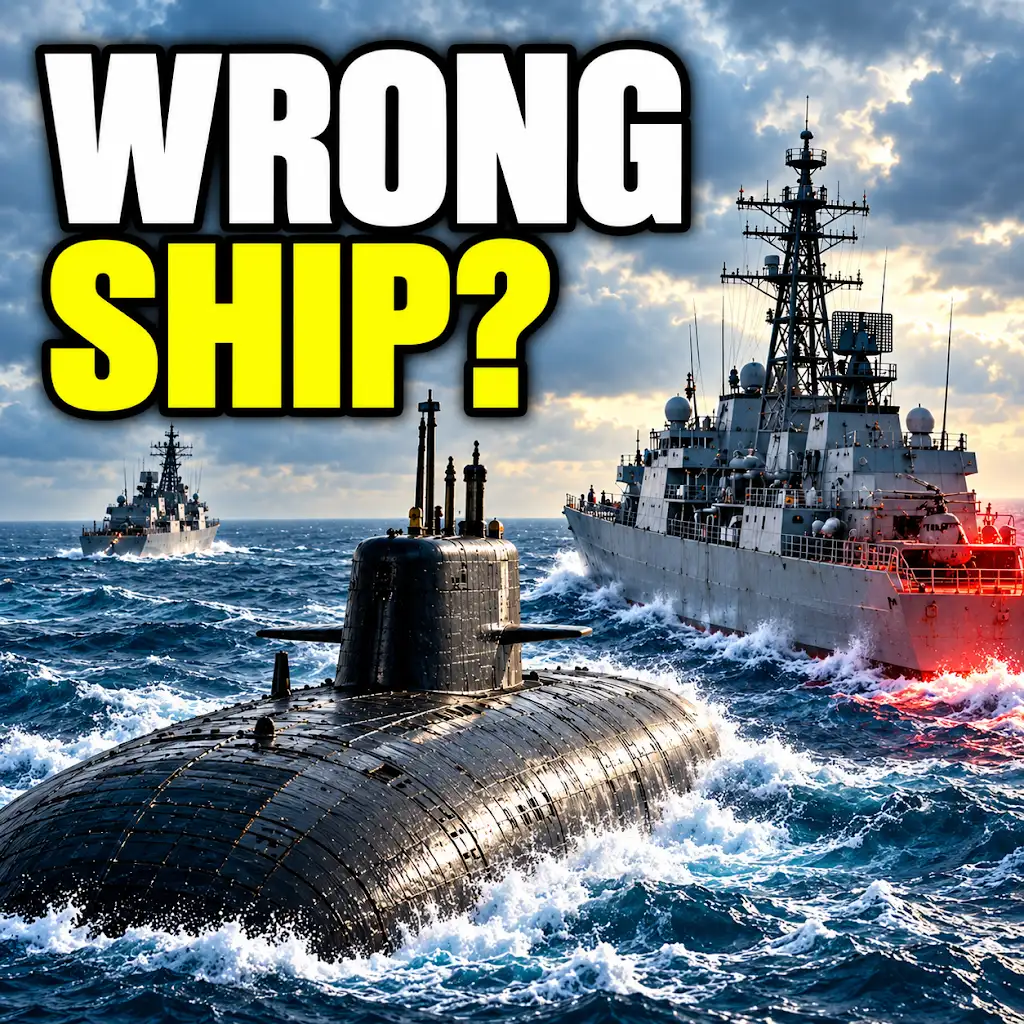
A Soviet Submarine Hit a U.S. Frigate. Was It the Wrong Ship?
FAQs
1. What is the K-22 submarine nuclear missile?
The K-22 submarine nuclear missile is a type of ballistic missile designed to be launched from submarines. It is a strategic weapon system used by the Russian Navy.
2. How many warheads can the K-22 submarine nuclear missile carry?
The K-22 submarine nuclear missile is capable of carrying multiple warheads, with reports suggesting it can carry up to 10 warheads with a yield of 100 kilotons each.
3. What is the range of the K-22 submarine nuclear missile?
The K-22 submarine nuclear missile has an estimated range of around 10,000 kilometers, allowing it to reach targets across continents from underwater launch platforms.
4. Which submarines are equipped with the K-22 nuclear missile?
The K-22 submarine nuclear missile is primarily deployed on the Russian Navy’s Delta IV-class submarines, which are part of the country’s strategic nuclear deterrent forces.
5. How does the K-22 submarine nuclear missile contribute to Russia’s nuclear deterrence strategy?
The K-22 submarine nuclear missile is a key component of Russia’s nuclear deterrence strategy, providing the country with a second-strike capability in the event of a nuclear attack. Its stealthy nature and long-range capabilities make it a potent weapon system.