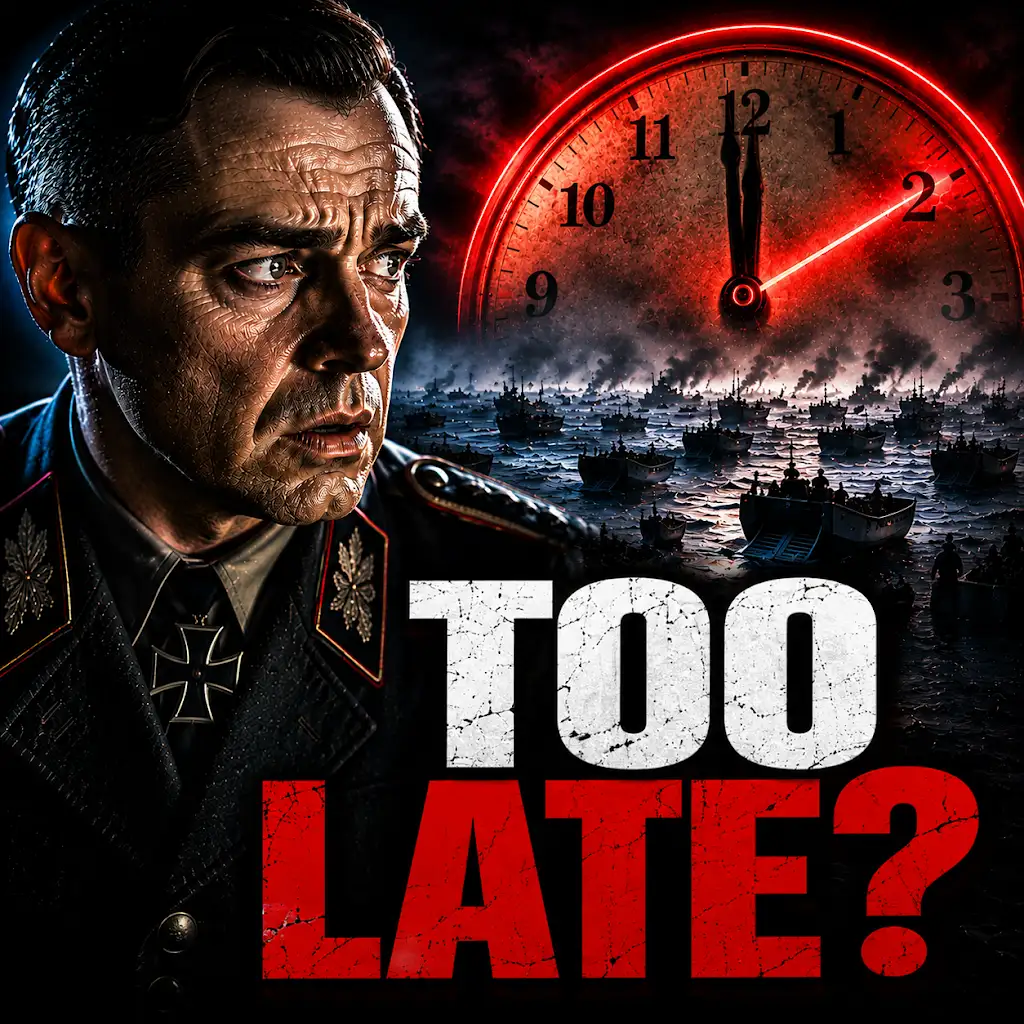
June 6, 1944, marked a pivotal moment in the Second World War: D-Day, the Allied invasion of Normandy. While the Allied forces meticulously planned and executed their offensive, the German command grappled with the unfolding reality of the largest seaborne invasion in history. Their responses, or lack thereof, on this momentous day were shaped by a complex interplay of intelligence failures, strategic miscalculations, and internal friction. This article delves into the German command’s perspective, exploring their understanding, reactions, and ultimately, their struggles to comprehend and counter the D-Day landings.
The German military leadership had long anticipated an Allied invasion of Western Europe. The question was not if, but when and where. This anticipation, however, was colored by a series of strategic assumptions and a degree of overconfidence that would prove to be their undoing.
The Phoney War and the Illusion of Security
Following the successful German campaigns in France in 1940, a period known as the “Phoney War” descended upon the Western Front. This lull in major operations contributed to a sense of complacency within some German circles. While the Atlantic Wall fortifications were being constructed, the perception of their impregnability, coupled with the sheer distance from Allied bases, fostered a belief that a full-scale invasion was still a considerable time away.
The Importance of the Pas-de-Calais
German intelligence, despite its considerable resources, was significantly misled regarding the likely landing zones. The Allies, through sophisticated deception operations like “Operation Bodyguard,” successfully convinced the German command that the main invasion would occur at the Pas-de-Calais, the narrowest point of the English Channel. This focus on the Pas-de-Calais drew significant German defensive resources away from Normandy.
Deception Tactics and their Impact
- Operation Fortitude: This elaborate deception aimed to convince the Germans that a large Allied army, under the command of General George S. Patton, was poised to invade the Pas-de-Calais. Dummy landing craft, inflatable tanks, and false radio traffic were all employed to create a convincing illusion.
- “Ghost Armies”: The creation of entirely fictitious military formations, complete with their own commanders and communications, further reinforced the belief in a Pas-de-Calais invasion.
Intelligence Gaps and Wishful Thinking
While some German intelligence reports hinted at increased Allied activity in the Channel, these were often filtered through the lens of existing assumptions. Wishful thinking also played a role. Many commanders found it difficult to conceive of the sheer scale and complexity of an amphibious assault across the open sea, believing it to be an almost insurmountable logistical and tactical challenge.
The Fog of War: Confusion on D-Day
As the first waves of Allied troops landed on the beaches of Normandy, the German command was plunged into a state of confusion and uncertainty. The initial reports were fragmented, often contradictory, and lacked the full picture of the unfolding invasion.
Early Reports and Unconfirmed Sightings
The initial German reports on the morning of June 6th were a mixed bag. Coastal batteries and air patrols reported enemy aircraft and naval activity. However, the sheer number of these sightings, and the lack of clear confirmation of large-scale troop landings, led to a degree of skepticism.
Coastal Defenses Under Pressure
- Obstacles and Minefields: The Atlantic Wall, while not the impenetrable barrier it was envisioned to be, did pose initial challenges for the landing craft. However, the Allied forces had developed specialized equipment and tactics to overcome many of these obstacles.
- Artillery Duels: German artillery batteries engaged the Allied landing craft, inflicting some casualties, but they were often outmatched by naval bombardments and air attacks.
The Role of Erwin Rommel and the Outer Defensive Perimeter
Field Marshal Erwin Rommel, commander of Army Group B, was responsible for the defenses in Normandy. He had a keen understanding of the importance of the beaches themselves and advocated for a more forward defense, placing tanks and mobile reserves closer to the coast to counter an invasion as soon as it began. However, his authority was not absolute, and his strategic vision clashed with that of other high-ranking officers.
Rommel’s Absence and its Consequences
Rommel himself was away from the front on June 6th, having traveled to Germany to visit his family and brief Hitler on the defensive situation. This absence, while coincidental, meant that the crucial initial hours of the invasion lacked his direct command and decisive influence.
The Misidentification of the Invasion Force
The sheer scale of the Allied deception meant that many German commanders initially struggled to grasp the true nature and size of the invasion. Some interpreted the landings as mere diversionary raids, expecting the main assault elsewhere.
The Importance of Airborne Landings
The airborne drops, undertaken by British and American paratroopers behind the invasion beaches, were particularly disruptive and confusing for the German command. These landings isolated key communication lines, disrupted road and rail networks, and created pockets of resistance that were difficult to pinpoint and suppress.
The Strategic Dilemma: Where is the Main Assault?
The primary strategic dilemma for the German command on D-Day revolved around the persistent question: where was the main Allied thrust? The elaborate deception had sown so much doubt that a definitive answer remained elusive for too long.
The Pas-de-Calais vs. Normandy Debate
Even as reports of landings in Normandy grew, the ingrained belief in the Pas-de-Calais as the primary objective persisted. This led to a frustrating debate within the German high command, with different factions advocating for different courses of action.
Key Figures and their Opinions
- Alfred Jodl: Chief of Operations of the OKW (Oberkommando der Wehrmacht), Jodl was hesitant to commit reserves to Normandy without a clearer understanding of the overall Allied strategy.
- Gerd von Rundstedt: Commander-in-Chief of Army Group D, Rundstedt, like Rommel, had strong opinions on the defensive posture but found his views often overruled or ignored.
The Question of Hitler’s Decision-Making
Adolf Hitler himself was not immediately available to make crucial decisions. He was at his headquarters in Berchtesgaden and was not woken until later in the morning. This delay in his personal involvement further exacerbated the confusion and hampered swift decision-making.
The “Panzer Reserve” and its Allocation
The crucial Panzer reserves, designated to counter any invasion, were stationed further inland. Their release was contingent on Hitler’s explicit authorization, and the debate over the location of the main invasion delayed this critical decision.
The “No Reinforcements” Policy
Hitler’s general directive was not to release major Panzer divisions from the reserve until the main Allied thrust was confirmed. This policy, while intended to prevent premature commitment, proved to be a significant impediment to effectively repelling the initial landings.
The Frantic Response: Committing Reserves Too Late
As the Allied invasion gained momentum and the true scale of the operation became undeniable, the German command scrambled to mount a counter-offensive. However, the delays and misjudgments of the early hours had already put them at a severe disadvantage.
The Commitment of Local Units
Initially, only local German units, often understrength and ill-equipped for the task, were available to confront the Allied landings. These units fought bravely but were ultimately overwhelmed by the sheer force and coordination of the Allied assault.
The Battles on the Beaches
- Omaha Beach: This beach saw the fiercest fighting, with German defenses inflicting heavy casualties on the American 1st and 29th Infantry Divisions.
- Utah Beach: The landings here were more successful, with fewer German defenses and a more opportune terrain.
- Gold, Juno, and Sword Beaches: These beaches saw British and Canadian forces engage in sustained combat to secure their objectives.
The Delayed Release of Panzer Divisions
The commitment of the Panzer divisions, the German army’s most powerful mobile striking force, was tragically delayed. By the time these units were authorized to move, the Allied beachheads were already being consolidated, and the Allies had gained crucial air superiority.
The 12th SS Panzer Division Hitlerjugend and the 21st Panzer Division
These elite Panzer divisions were among the first major armored formations to be committed. However, their movements were hampered by Allied air attacks and the need to navigate a battlefield where Allied air power dominated the skies.
Air Superiority and its Impact
The overwhelming superiority of Allied air power was a critical factor in the German struggle. Allied fighter-bombers and reconnaissance aircraft harassed German troop movements, disrupted supply lines, and provided invaluable intelligence on German dispositions.
The Luftwaffe’s Limited Role
The Luftwaffe, once the dominant force in European skies, was severely depleted by this stage of the war. On D-Day, their response was largely ineffective, with only a handful of aircraft able to sortie and engage the vast Allied air armada.
The Aftermath: Acknowledging the Disaster
By the end of June 6, 1944, the German command had to confront a grim reality: their defenses had been breached, and a massive Allied force was firmly entrenched in Normandy. The initial shock and confusion began to give way to a dawning realization of the strategic catastrophe.
The Loss of the Atlantic Wall
The supposed impregnability of the Atlantic Wall had been shattered. The defenses, while formidable in places, had not been able to withstand the coordinated onslaught of the Allied invasion.
Weaknesses in the Defenses
- Incomplete Construction: Many sections of the Atlantic Wall were still under construction or lacked the full complement of troops and heavy weaponry.
- Poor Deployment: The distribution of troops and defenses was not optimized for the actual landing zones, thanks to the Allied deception.
The Strategic Shift: From Defense to Offense
The German command now faced the daunting task of trying to push the Allies back into the sea. This required a shift from defensive preparations to an offensive counter-attack, a role for which their depleted forces were ill-prepared.
The Battle of Normandy Begins
The D-Day landings marked the beginning of the long and brutal Battle of Normandy. The German forces, despite their valiant efforts, were fighting a war of attrition against an enemy that possessed overwhelming material superiority and increasingly effective command and control.
The Erosion of Confidence and Morale
The failure on D-Day, coupled with the continuous pressure from Allied forces on multiple fronts, began to erode the confidence and morale of the German military leadership. The belief in ultimate victory, which had sustained them for so long, started to wane.
The Long Road to Defeat
June 6, 1944, was not the end of the war, but it was a decisive turning point. For the German command, it was a day of missed opportunities, flawed intelligence, and ultimately, a stark realization that the tide had irrevocably turned against them. The strategic and tactical blunders of this day would have profound and lasting consequences for the remainder of the Second World War.