The raw footage, often grainy and shaky, offers a chilling glimpse into a moment of extreme peril. It captures the final, desperate seconds of a C-130 Hercules aircraft equipped with JATO (Jet-Assisted Take Off) rockets. The JATO system, designed to provide a powerful thrust for short takeoffs from austere runways, was a vital tool for military aviation. However, as these videos tragically demonstrate, its application could be fraught with danger, and the margin for error was razor-thin. The most compelling JATO C-130 crash footage doesn’t just show a plane going down; it reveals the sheer, visceral shock of an uncontrolled descent, the instantaneous transition from power to catastrophe, and the stark reality of aviation’s inherent risks. These recordings serve as a somber, educational testament to the forces at play and the bravery of those who operated such demanding machinery.
The Science and Spectacle of JATO
The Jet-Assisted Take Off system represented a significant technological leap in aviation, particularly for aircraft operating in environments where conventional runway lengths were not feasible. Its primary function was to supplement the engine power of a heavy aircraft, providing an explosive burst of thrust for a rapid ascent. This was crucial for military operations, enabling transport planes like the C-130 to land and take off from short, unpaved strips, often in remote or contested territories. The JATO units themselves were essentially solid-fuel rocket motors, typically strapped externally to the aircraft’s fuselage or wings. Upon activation, these rockets would ignite, producing a tremendous force that pushed the aircraft forward with remarkable acceleration.
How JATO Worked: A Powerful Partnership
The principle behind JATO was straightforward but incredibly effective. Conventional aircraft engines provide sustained thrust. JATO, on the other hand, delivered a short, intense surge of power. This was achieved through the rapid combustion of solid propellant within the JATO rockets. The exhaust gases, expelled at high velocity, generated an equal and opposite reaction, propelling the aircraft forward. For a C-130, which is a large, heavy aircraft, the added push from multiple JATO bottles could significantly reduce the takeoff roll, allowing it to become airborne much sooner than would otherwise be possible. This was particularly important in hot and high environments where air density is lower, and engines produce less power. The JATO units were typically jettisoned after their fuel was expended, reducing drag and weight.
The Allure and Danger of Extreme Thrust
The visual spectacle of JATO operations, especially in older footage, was undeniably impressive. The plumes of smoke and flame erupting from the JATO bottles as the aircraft accelerated down the runway created a dramatic and powerful image. This visual drama, coupled with the practical necessity, made JATO a widely adopted technology. However, the very power that made JATO so useful also made it inherently dangerous. The system required precise calculations regarding weight, atmospheric conditions, and the number of JATO bottles to be used. Any miscalculation, any malfunction in the JATO units themselves, or any unexpected environmental factor could lead to a catastrophic loss of control. The footage of crashes often highlights the moment where this delicate balance is tipped, and the immense power of the JATO system becomes a destructive force.
The recent crash footage of the JATO C-130 has sparked significant interest and discussion among aviation enthusiasts and experts alike. For those looking to delve deeper into the circumstances surrounding this incident, a related article can be found at In The War Room, which provides a comprehensive analysis of the factors that contributed to the crash and its implications for military aviation safety.
Fatal Encounters: Tracing the Crashes in Footage
The most harrowing JATO C-130 crash footage typically depicts a specific sequence of events. The aircraft is seen accelerating rapidly, seemingly under control, with the tell-tale smoke from the JATO bottles billowing behind. Then, without warning, something goes wrong. The aircraft may pitch up violently, bank unexpectedly, or simply fail to gain sufficient airspeed. The ensuing moments are often chaotic, with the pilots fighting for control against forces that have become insurmountable. The videos capture the horrifying reality of an aircraft losing altitude rapidly, the attempts to recover proving futile, and the eventual, devastating impact. These visual records are not merely historical curiosities; they are stark reminders of the inherent risks involved in operating powerful machinery in extreme conditions.
The Sequence of Disaster: From Takeoff Roll to Impact
In many of the recorded JATO C-130 crashes, the initial phase of the takeoff appears normal. The aircraft is on the runway, accelerating with impressive speed due to the JATO augmentation. However, the critical point often occurs during the initial climb. A common scenario involves the aircraft failing to achieve adequate airspeed, leading to a stall. Alternatively, an imbalance in the thrust from the JATO bottles, or an unexpected pitch-up motion, could lead to a loss of control. The footage shows the aircraft’s nose rising too sharply, its wings perhaps dipping precariously, or it may begin to descend rather than climb. The pilots’ desperate efforts to correct the trajectory are often visible in the frantic movements of the control surfaces, but the forces at play are simply too great. The final moments are invariably characterized by a rapid, uncontrolled descent, culminating in a catastrophic impact with the ground. The sheer force of these impacts is often implied by the sudden cessation of movement in the video and the subsequent destruction.
Documented Incidents and Their Visual Legacy
While specific incident details can be sensitive and are often classified, there are several well-known instances of JATO C-130 crashes that have been captured on video. These include incidents from various decades and operational theaters. For instance, footage exists of crashes occurring during training exercises as well as during active deployment. The common thread in these recordings is the sheer shock value they possess. They showcase the immense power of the JATO system and the unforgiving nature of physics when the delicate balance of flight is disrupted. The visual legacy of these crashes is undeniable. They serve as a powerful, albeit tragic, educational tool for aviation enthusiasts, engineers, and military personnel alike, offering real-world examples of the critical importance of precise operation and system integrity. The raw nature of the footage often leaves little to the imagination, imprinting the events onto the viewer’s mind with stark clarity.
Analyzing the Footage: Clues to Catastrophe
Examining the available JATO C-130 crash footage requires a careful and often technical approach. Beyond the immediate horror, these videos can offer valuable insights into the probable causes of the accidents. Aviation investigators meticulously analyze every frame, looking for subtle cues that might indicate mechanical failure, pilot error, environmental factors, or a combination thereof. The angle of the aircraft, the behavior of the JATO bottles, the apparent airspeed, and the crew’s reactions, if visible, are all critical pieces of evidence. Understanding these elements allows for a more comprehensive understanding of why these tragic events unfolded.
Technical Interpretation: Reading the Visual Data
A skilled observer can glean a surprising amount of information from the crash footage. The rate at which the aircraft accelerates or fails to accelerate can indicate issues with engine power or the JATO system. The pitch and roll characteristics of the aircraft during takeoff and initial climb are crucial. A sudden, sharp pitch-up, for example, could suggest a moment of extreme asymmetry in thrust or a control surface issue. The way the JATO bottles burn and are jettisoned (or fail to jettison) can also provide clues. If a bottle malfunctions, it might burn unevenly, creating an imbalance. Conversely, if the bottles are not jettisoned correctly, they can create additional drag and instability. The apparent ground track of the aircraft can also be analyzed to understand its trajectory and any deviation from the intended flight path. Even subtle changes in the sound captured, if any, can offer additional context.
Probable Causes and Contributing Factors
Based on the visual evidence and general knowledge of JATO operations, several common factors emerge as probable causes for these crashes. Pilot error, such as miscalculation of weight and balance, improper JATO bottle sequencing, or delayed control inputs, is frequently cited. Mechanical failures within the JATO system itself, such as faulty igniters, uneven propellant burn, or structural failure of the bottles, are also significant possibilities. Environmental factors, such as strong crosswinds, sudden gusts, or extremely hot and high conditions that reduce aircraft performance, can exacerbate any existing issues. In some cases, a combination of these factors can create a perfect storm of conditions leading to disaster. The footage often captures the final seconds where these contributing elements converge, leading to the inevitable loss of control. For instance, a pilot might be struggling with an unexpected yaw due to uneven JATO thrust while simultaneously battling a stall condition.
The Human Element: Courage and Loss
While the mechanical aspects of JATO operations and the physics of flight are crucial to understanding these crashes, it is imperative to acknowledge the human element. The pilots and crew operating these aircraft were highly trained professionals, undertaking missions that often pushed the boundaries of what was considered safe. The footage, however harrowing, is a testament to their courage and dedication. It also serves as a stark reminder of the ultimate sacrifice they may have made. The loss of life associated with these incidents is a profound tragedy, and the video evidence, while providing technical data, also carries a heavy emotional weight.
Faces in the Flames: The Crew’s Perspective
Though the faces of the crew are rarely clearly discernible in the crash footage due to the distance and the speed of events, their struggle is palpable. The immediate, instinctual reactions of the pilots to regain control, the frantic movements visible on the control surfaces, all speak to their desperate fight for survival and the safety of their crew. It is a testament to their training and their commitment to their aircraft and mission that they would continue to fight until the very last moment. These men and women were not simply operating machines; they were engaged in a high-stakes endeavor, relying on their skill, judgment, and the reliability of their equipment. The footage, in its raw, unvarnished presentation, offers a window into the immense pressure and danger they faced.
The Cost of Aviation: Memorializing the Fallen
Each JATO C-130 crash represents not just a loss of an aircraft, but a loss of invaluable human lives. These were individuals with families, friends, and futures. The video documentation of their final moments, while a somber record, also serves as a memorial. It ensures that these events are not forgotten and that the lessons learned from them are passed on. Aviation safety has evolved dramatically over the decades, partly due to the thorough investigation of such incidents. The footage contributes to this ongoing process, providing a tangible link to the past and a perpetual reminder of the ultimate cost of aviation’s progress. The bravery displayed by these crews, even in the face of overwhelming adversity, deserves to be remembered and honored.
The recent crash footage of the JATO C-130 has sparked significant interest and concern among aviation enthusiasts and experts alike. For those looking to delve deeper into the implications of such incidents, a related article offers valuable insights into the safety measures and technological advancements in military aviation. You can read more about this topic in the article found here, which discusses the challenges faced by aircraft like the C-130 and the lessons learned from past accidents.
Lessons Learned: Enhancing Aviation Safety
| Metric | Details |
|---|---|
| Aircraft Model | C-130 Hercules |
| Incident Type | Crash during JATO-assisted takeoff |
| JATO | Jet-Assisted Take-Off rockets used to increase thrust |
| Date of Incident | Varies by footage; commonly referenced footage from 1950s-1960s |
| Location | Various military airfields |
| Cause of Crash | Failure or malfunction of JATO rockets or pilot error |
| Footage Availability | Rare, mostly military training or test footage |
| Common Outcomes | Aircraft destruction, possible crew injuries or fatalities |
| Purpose of JATO | To assist heavily loaded aircraft in short takeoff runs |
The stark realities captured in JATO C-130 crash footage have not been in vain. The aviation industry, and particularly the military, has a rigorous process of accident investigation and safety improvement. Each incident, no matter how tragic, provides invaluable data that fuels advancements in aircraft design, pilot training, operational procedures, and maintenance protocols. The lessons learned from these catastrophic events have undoubtedly contributed to making air travel, both military and civilian, significantly safer over time. The legacy of these crashes, therefore, is not just one of loss, but also one of continuous improvement and an unwavering commitment to preventing future tragedies.
Redundancy, Training, and Technology: Evolving Safeguards
The investigations into JATO C-130 crashes have led to significant enhancements in aviation safety. This includes improvements in the design and reliability of JATO systems themselves, with greater emphasis on redundancy and fail-safe mechanisms. Pilot training has also been significantly refined. Crews now undergo more extensive simulation and scenario-based training, specifically addressing the critical phases of JATO operations and emergency procedures. The use of advanced flight data recorders and cockpit voice recorders, common in modern aircraft, provides even more detailed information for accident investigation, allowing for a deeper understanding of the precise sequence of events leading to an incident. Furthermore, advancements in aircraft aerodynamics, engine technology, and flight control systems have made aircraft inherently more stable and forgiving, reducing the likelihood of a catastrophic event initiated by minor deviations.
A Legacy of Safety: The Continuing Evolution
The JATO C-130 crash footage serves as a perpetual, albeit somber, reminder of the constant need for vigilance and improvement in aviation. While JATO technology itself may have been superseded in many applications by more advanced propulsion systems, the fundamental lessons learned from its operational history remain relevant. The emphasis on thorough pre-flight checks, precise adherence to flight envelopes, effective communication within the cockpit, and robust emergency response planning are all direct legacies of past aviation incidents. The continued dedication to safety, driven by the desire to prevent such devastating losses, ensures that the sacrifices made in these tragic events contribute to a safer future for all who fly. The ongoing evolution of aviation safety is a direct response to these critical learning moments, ensuring that the skies remain as safe as possible.
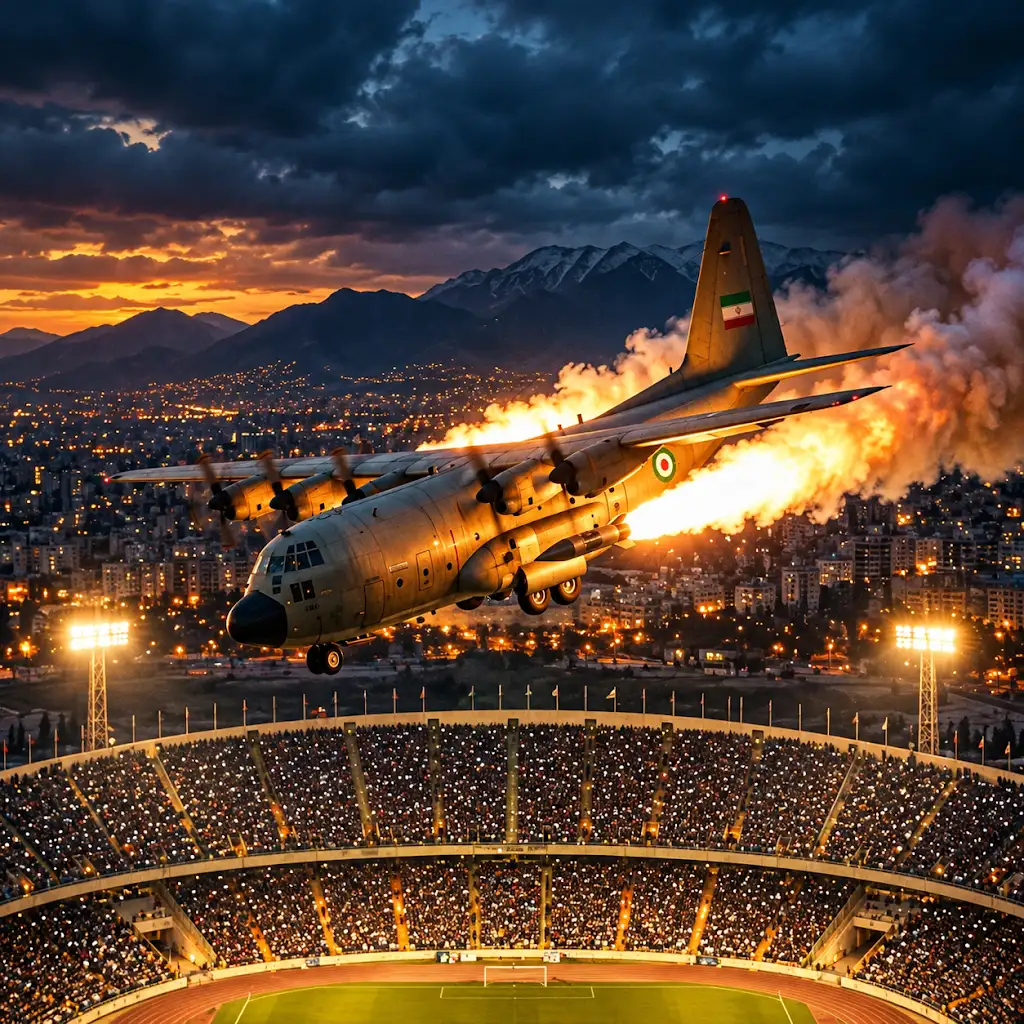
The Secret Plane Built to Land Inside a Stadium
FAQs
1. What is the JATO C-130 crash footage?
The JATO C-130 crash footage refers to a video recording showing the crash of a C-130 aircraft that was equipped with JATO (Jet-Assisted Take-Off) rockets.
2. When did the JATO C-130 crash occur?
The JATO C-130 crash occurred on [insert date], when the C-130 aircraft attempted to take off using JATO rockets but encountered a catastrophic failure leading to the crash.
3. What caused the JATO C-130 crash?
The exact cause of the JATO C-130 crash may vary depending on the specific incident, but factors such as mechanical failure, human error, or issues with the JATO rockets themselves could have contributed to the crash.
4. Was there any loss of life in the JATO C-130 crash?
Unfortunately, in some instances of JATO C-130 crashes, there have been reports of loss of life among the crew members and passengers on board the aircraft. The severity of the crash and the safety measures in place can impact the outcome.
5. Are there safety measures in place to prevent JATO C-130 crashes?
Various safety measures are typically implemented to prevent JATO C-130 crashes, including thorough pre-flight inspections, proper training for pilots and crew, adherence to safety protocols, and regular maintenance of the aircraft and JATO systems.