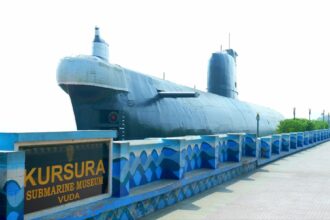
The Silent Shadows: Japanese Submarine Technology During the Cold War
The Cold War, a period of intense geopolitical tension between the United States and the Soviet Union, cast a long shadow over the entire globe. For Japan, a nation emerging from the ashes of World War II and under the security umbrella of the US, this era presented a unique set of strategic challenges. While officially restricted by its pacifist constitution from possessing offensive military capabilities, the nation’s rapidly developing technological prowess, particularly in the realm of shipbuilding, began to be subtly channeled into the development of a sophisticated defensive submarine force. This article delves into the evolution of Japanese submarine technology during the Cold War, exploring its motivations, key developments, operational roles, and the unique constraints and advantages that shaped its trajectory.
The post-war period saw Japan’s defense posture fundamentally redefined. The initial Allied occupation dismantled its pre-war military apparatus, and the subsequent Security Treaty with the United States established a framework where Japan relied heavily on American power for its external security. However, the escalating tensions of the Cold War, particularly the perceived threat from Soviet naval power in the Pacific, prompted a reassessment of Japan’s defense needs. The Self-Defense Forces (SDF) were established in 1954, initially with a focus on land and air defense. The maritime component, the Maritime Self-Defense Force (MSDF), grew in importance, and the need for a credible anti-submarine warfare (ASW) capability became increasingly apparent. Submarines, by their very nature, posed a significant threat to Japan’s vital sea lanes, and therefore, developing an effective means to counter them, as well as to possess a deterrent of their own, became a strategic imperative.
Post-War Rebirth and the Shadow of Restrictions
The immediate aftermath of World War II brought about a complete dismantling of Japan’s formidable submarine fleet, a key weapon in its wartime arsenal. The Potsdam Declaration mandated the surrender and destruction of all naval vessels capable of offensive action, including submarines. This left Japan with no submarine assets and, initially, no legal framework to develop them. The Allied occupation, particularly under American influence, aimed to demilitarize Japan and prevent its re-emergence as a military threat. However, as the geopolitical landscape shifted with the onset of the Cold War and the rise of the Soviet Union as a global power, the strategic calculus began to change. The United States, concerned about Soviet naval expansion in the Pacific, began to encourage Japan to build a self-defense capability, albeit within strict limitations.
The Japanese constitution, enacted in 1947, famously renounced war and the maintenance of military forces capable of offensive action. This presented a significant hurdle for the development of a submarine force, as submarines, while capable of defensive roles, are inherently offensive weapons systems. The interpretation of this constitutional constraint became a recurring theme in the debate surrounding Japan’s defense capabilities. The initial focus was on defensive roles, such as anti-submarine warfare and intelligence gathering, rather than power projection. This interpretation allowed for the gradual development of a submarine force, framed as essential for the protection of Japan’s archipelago and its crucial maritime trade routes.
During the Cold War, Japan’s advancements in submarine technology played a crucial role in the balance of power in the Pacific region. The evolution of these submarines not only reflected Japan’s growing naval capabilities but also its strategic responses to regional threats. For a deeper understanding of this topic, you can explore the article on submarine technology and its implications during the Cold War era at In The War Room.
Early Designs and Technological Foundations
The genesis of Japan’s post-war submarine program can be traced to the early 1950s. With no indigenous design experience and limited resources, Japan initially relied heavily on foreign assistance and salvaged technology. The United States played a crucial role in this early phase, providing technical guidance and even surplus submarines that were extensively modified and rebuilt. These early efforts were instrumental in re-establishing a foundational understanding of submarine design and operation within the MSDF.
The first submarines of the post-war era were not entirely Japanese creations. The United States provided several submarines, including the USS Mingo (SS-261) and USS Carp (SS-338), which were decommissioned by the US Navy and transferred to Japan, where they were renamed the JS Kuroshio and JS Natsushio respectively. These vessels, though dating from World War II, provided invaluable practical experience for Japanese crews and engineers. Crucially, the process of refitting and maintaining these submarines allowed Japanese naval architects and engineers to gain hands-on experience with advanced American submarine technology of the time. This direct exposure to operational diesel-electric submarines was a critical stepping stone in their learning curve.
Beyond acquiring operational vessels, Japan also benefited from the transfer of design knowledge and blueprints. The US Navy provided access to technical documentation and expertise, enabling Japanese engineers to understand the principles of hull design, propulsion systems, and sonar technology. This collaborative approach was a pragmatic solution to the complex challenge of rebuilding a naval capability from scratch while navigating constitutional limitations and the need for rapid technological acquisition. The focus during this initial period was on establishing a robust anti-submarine warfare (ASW) capability, meaning the submarines themselves were designed and operated with the primary goal of detecting and neutralizing enemy submarines.
Evolution of Diesel-Electric Submarine Designs
As Japan’s industrial capacity and technological expertise grew, so too did the sophistication of its submarine designs. The post-war submarine program steadily moved from reliance on foreign-provided platforms to developing indigenous designs, tailored to Japan’s specific strategic needs and operating environment. This evolution was characterized by a relentless pursuit of improved performance, quieter operation, and enhanced operational endurance.
The early indigenous designs, such as the S-class submarines (e.g., Oyashio and Hayashio), were largely based on lessons learned from the refitted US submarines and existing Japanese wartime designs, albeit with significant upgrades. These submarines were characterized by their diesel-electric propulsion systems, a common technology for submarines of that era. The diesel engines were used for surface running and battery charging, while electric motors powered the submarine underwater. However, the limitations of this system, particularly the need to snorkel frequently to recharge batteries and replenish air, made them vulnerable to detection. Therefore, a significant portion of Japanese design efforts focused on improving snorkel systems and making them quieter.
A major leap forward came with the development of the D-class submarines (e.g., Daidaiyo and Natsushio). These submarines represented a significant improvement in hull design, with a more hydrodynamic shape that reduced drag and increased underwater speed. Innovations in battery technology also allowed for longer submerged endurance. Furthermore, Japanese engineers began to pay particular attention to reducing the acoustic signature of their submarines. This involved the meticulous design of machinery mounts, insulation, and propeller technology to minimize noise, a crucial factor in the cat-and-mouse game of submarine warfare. The emphasis on quietness was not merely an engineering challenge; it was a strategic necessity for a nation that could not afford to be easily detected by its more powerful adversaries.
The pinnacle of Japanese diesel-electric submarine development during the Cold War was arguably the A-class (Asashio class) and later the B-class (Uzushio class). The Asashio class, introduced in the early 1970s, was a substantial improvement, featuring a double hull design for better buoyancy and shock resistance, and a more powerful diesel-electric propulsion system. These submarines were also equipped with more advanced sonar systems, enhancing their ability to detect enemy submarines. The Uzushio class, developed in the latter half of the Cold War, further refined these features. They were designed with an even greater emphasis on stealth, incorporating noise reduction technologies that placed them among the quietest diesel-electric submarines in the world. The introduction of a towed array sonar system, capable of detecting submarines at greater distances and with greater accuracy, was another significant advancement. These submarines were a testament to Japan’s ability to not only build submarines but to innovate and excel in submarine design and technology.
Advancements in Sonar and Fire Control Systems
The effectiveness of any submarine, especially in a defensive role, hinges critically on its ability to detect and track enemy vessels. During the Cold War, this meant a constant arms race in sonar technology, and Japan invested heavily in this crucial area. Its submarine force was designed with an acute awareness of the need to overcome the acoustic advantages that potential adversaries might possess.
Early Japanese submarines were equipped with relatively basic sonar systems, primarily passive sonar for listening and active sonar for ranging. However, as the MSDF matured, so did its sonar capabilities. The development of more sophisticated passive sonar systems became a priority. These systems allowed submarines to listen for the faint sounds of other vessels, such as engine noise, propeller cavitation, and hull vibrations, without emitting any sound themselves, thus maintaining their own stealth. The design of sonar arrays, the processing of acoustic signals, and the development of sophisticated algorithms to differentiate between various sound sources were areas where Japanese engineers made significant strides.
The introduction of flank arrays, sonar arrays mounted along the sides of the submarine’s hull, provided a wider field of detection. This was a significant improvement over the spherical sonar arrays mounted on the bow. Furthermore, the development of towed sonar arrays, as mentioned in relation to the Uzushio class, marked a revolutionary step. These arrays, towed behind the submarine at a considerable distance, could detect low-frequency sounds from distant submarines, providing an early warning and a significant tactical advantage. The ability to deploy and operate these towed arrays effectively, while maintaining the submarine’s own stealth, was a complex engineering and operational challenge that the MSDF successfully tackled.
Complementing the advanced sonar systems were equally sophisticated fire control systems. These systems integrated data from various sensors, including sonar, periscopes, and electronic support measures (ESM), to provide the submarine’s combat system with a complete tactical picture. The fire control system then calculated the optimal firing solution for torpedoes or other weapons. Japanese fire control systems were characterized by their accuracy, reliability, and user-friendliness, allowing submarine crews to react quickly and effectively to threats. The integration of digital computer technology into these systems further enhanced their capabilities, enabling faster calculations and more precise targeting. The success of the MSDF’s sonar and fire control development was a testament to Japan’s strong foundation in electronics and computer engineering, sectors where the nation excelled throughout the Cold War.
During the Cold War, Japan’s submarine technology underwent significant advancements, driven by both domestic innovation and international collaboration. An insightful article that delves into this topic can be found at this link, where it explores the strategic implications of Japan’s evolving naval capabilities in the context of regional security dynamics. The development of advanced submarines not only enhanced Japan’s defense posture but also played a crucial role in the broader geopolitical landscape of the time.
Operational Roles and Strategic Significance
While officially restricted to defensive roles, the operational contributions of Japan’s submarine force during the Cold War were multifaceted and strategically significant. Their primary mission was to provide an effective countermeasure against potential Soviet naval incursions into Japanese waters, thereby safeguarding the nation’s vital sea lanes and territorial integrity.
The most prominent role was Anti-Submarine Warfare (ASW). Japanese submarines were trained and equipped to hunt and neutralize enemy submarines, particularly those that might attempt to disrupt Japanese shipping or threaten naval bases. The development of advanced sonar and torpedo technology, coupled with rigorous training, allowed these submarines to effectively conduct ASW operations within the confined and complex underwater environment of the Western Pacific. Their ability to operate in a stealthy manner and their sophisticated detection capabilities made them a formidable deterrent.
Intelligence gathering was another critical, albeit often covert, function. Submarines, with their inherent stealth and ability to loiter undetected, were ideally suited for intelligence, surveillance, and reconnaissance (ISR) missions. They could gather valuable information on the movements and capabilities of potential adversaries, including Soviet naval exercises, ship deployments, and the characteristics of their submarine forces. This intelligence was crucial for Japan and its US allies in understanding the regional security environment and formulating effective defensive strategies.
Furthermore, Japanese submarines played a role in demonstrating presence and maintaining maritime security. While not an offensive force projection capability, their patrols in regional waters served as a subtle but clear signal of Japan’s commitment to its own defense and the security of the region. This contributed to regional stability by deterring potential aggressors and reassuring allies. Their operational presence, even within their constitutional limitations, was a quiet but powerful statement of Japan’s growing maritime strength and its determination to protect its interests.
The strategic significance of Japan’s submarine force extended beyond its immediate operational capabilities. The development of this advanced, yet constitutionally constrained, force demonstrated Japan’s technological prowess and its ability to adapt and innovate within strict geopolitical boundaries. It showcased a unique model of defense development for a pacifist nation, one that prioritized technological excellence and defensive capabilities. This silent fleet, operating in the shadows of the Cold War, was a vital component of Japan’s security architecture and a testament to its enduring commitment to peace through strength. The legacy of these submarines continues to inform the design and deployment of modern Japanese underwater warfare capabilities, a direct continuation of the technological journey that began in the challenging decades of the Cold War.
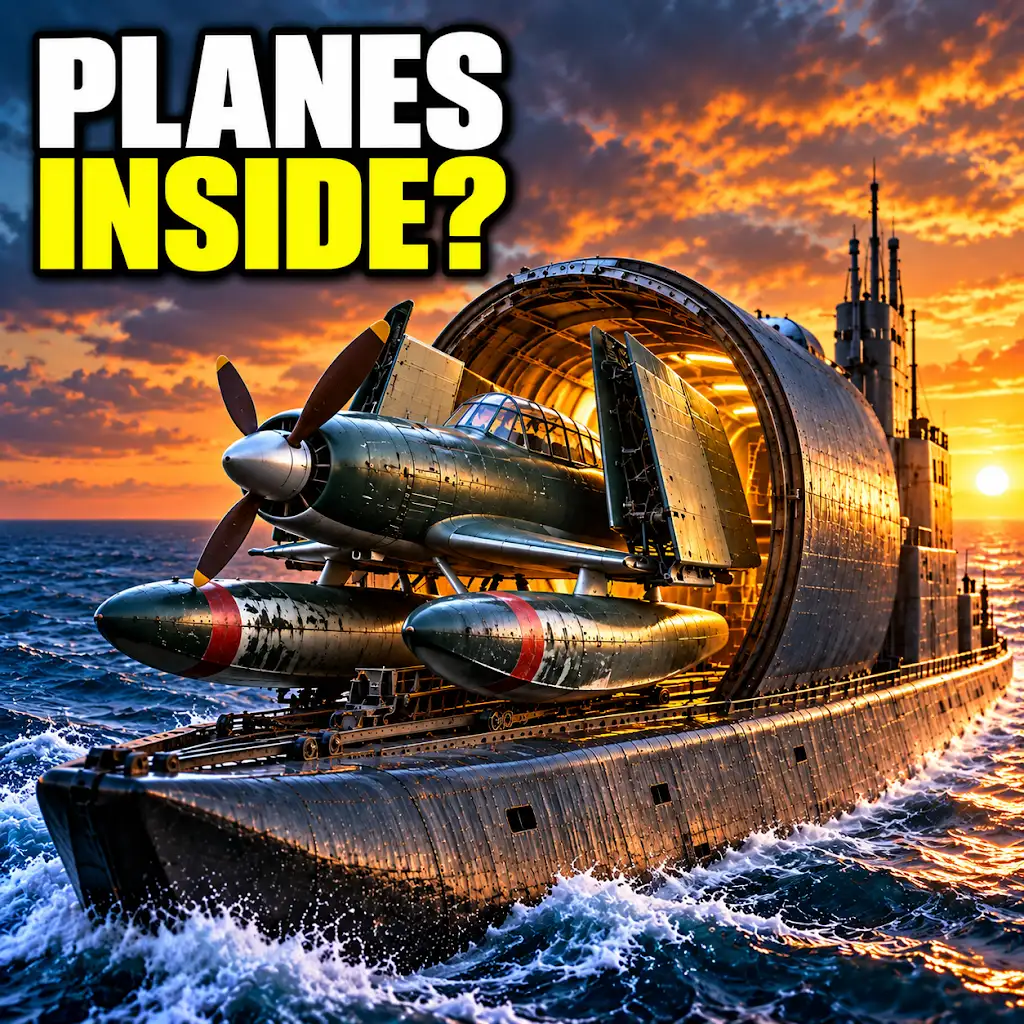
Japan Built a Submarine That Could Launch Three Planes
FAQs
What was the significance of Japanese submarine technology during the Cold War?
Japanese submarine technology played a crucial role during the Cold War as Japan developed advanced submarines equipped with cutting-edge technology to enhance its maritime defense capabilities.
How did Japanese submarine technology compare to other countries during the Cold War?
During the Cold War, Japanese submarine technology was considered to be on par with other major naval powers such as the United States and the Soviet Union, showcasing Japan’s advancements in underwater warfare.
What were some key features of Japanese submarines developed during the Cold War?
Japanese submarines developed during the Cold War were known for their stealth capabilities, advanced sonar systems, and improved underwater propulsion systems, making them formidable assets in naval operations.
Did Japanese submarines play a role in any Cold War conflicts?
While Japanese submarines did not directly participate in any Cold War conflicts, their presence and capabilities served as a deterrent and contributed to the overall balance of power in the Asia-Pacific region during that period.
How has Japanese submarine technology evolved since the Cold War?
Since the Cold War, Japanese submarine technology has continued to advance, with the development of more sophisticated submarines equipped with state-of-the-art systems, further solidifying Japan’s position as a key player in maritime defense.