The concept of launching aircraft from a submarine, a seemingly paradoxical marriage of stealth and aerial reconnaissance, was a significant and often overlooked innovation during World War II. While the technological hurdles were substantial, the Imperial Japanese Navy, ever seeking an edge, pursued this audacious idea with a determination that led to the development of specialized submarines and operational doctrines. The desire to extend the range and effectiveness of aerial observation and attack, particularly against vast ocean distances and heavily defended targets, drove this unique branch of naval warfare.
The Strategic Imperative for Submarine Aviation
The vastness of the Pacific Ocean presented a formidable challenge to naval operations during World War II. Traditional aircraft carriers, while powerful, were vulnerable to enemy attack and required extensive logistical support. The Japanese Navy, facing a numerically superior American fleet, sought ways to enhance its intelligence-gathering capabilities and to strike at targets beyond the reach of conventional naval aviation. Submarines, with their inherent stealth and ability to operate independently, offered a potential solution. The idea was to combine the submarine’s ability to infiltrate enemy waters undetected with the reconnaissance and limited offensive capabilities of aircraft. This synergy promised a way to scout enemy fleet movements, identify targets for torpedo attacks, and even potentially launch aerial attacks on land installations or shipping from a concealed position. The strategic thinking behind this innovation was rooted in a desire for asymmetric warfare, using ingenuity to overcome numerical disadvantages.
Overcoming the Tyranny of Distance
The immense distances involved in the Pacific theater made traditional reconnaissance difficult. Long-range patrol aircraft were necessary, but these were expensive to build and operate, and their range was still limited by fuel capacity. Submarines, however, could penetrate deep into enemy territory. By equipping them with aircraft, the Japanese Navy envisioned extending their reconnaissance reach significantly. The aircraft could be launched to scout ahead, gather intelligence on enemy positions and strengths, and then return to the submarine for debriefing and refueling. This allowed the submarine to remain submerged and undetected for longer periods, gathering crucial information without exposing itself. The submarine acted as a mobile, clandestine airbase, capable of deploying its aerial eye into areas where fixed bases were impossible or too vulnerable.
The Challenge of Operational Integration
Integrating aircraft into submarine operations was a complex undertaking. The primary challenges revolved around storage, launch, recovery, and maintenance of the aircraft. Submarines, by their very nature, have limited internal space. Finding a way to house aircraft without compromising the submarine’s primary warfighting capabilities was a significant engineering feat. Furthermore, launching and recovering aircraft from a submerged or partially submerged vessel presented unique environmental and logistical problems. The sea state, the submarine’s stability, and the aircraft’s design all had to be carefully considered to ensure successful operations.
Japanese submarines played a significant role in naval warfare during World War II, particularly with their innovative capability to launch aircraft. This unique feature allowed them to extend their operational range and conduct reconnaissance missions far beyond their submerged positions. For a deeper understanding of this fascinating aspect of naval history, you can read more in the related article found here: Japanese Submarines and Their Aircraft Launching Capabilities.
Engineering Marvels: The Cai-Class Submarines
The realization of Japanese submarine aircraft launching capabilities hinged on the development of specialized submarines. The Cai-class (sometimes referred to as “mother submarines”) were specifically designed and modified for this unique role. These were not your typical attack submarines; they were gargantuan vessels, some of the largest submarines ever built, designed to carry and support a small contingent of aircraft. The engineering behind these submarines represented a departure from conventional submarine design, prioritizing space for aircraft and associated equipment over torpedo armament or speed.
The Cai-I and Cai-II Designs
The primary examples of these specialized submarines were the Cai-I and Cai-II classes. The Cai-I, the first iteration, was built on the hull of a Sen-Toku class submarine. It was a behemoth, exceeding 300 feet in length and displacing over 5,000 tons. The most distinctive feature was the hangar located on the main deck, designed to house two floatplane reconnaissance aircraft. This hangar was essentially a large, enclosed compartment that provided shelter for the aircraft during transit and served as the launch platform. The Cai-II class, while similar in concept, incorporated further refinements and improvements based on the operational experience gained from the Cai-I. These later submarines were even larger, with expanded hangar facilities and improved launch and recovery mechanisms. The sheer scale of these submarines was a testament to the commitment the Japanese Navy had to this innovative, albeit ultimately limited, concept.
The Aircraft: Seaplanes Designed for the Mission
The aircraft themselves were also crucial to the success of the submarine aviation program. The Japanese Navy commissioned the development of specialized floatplane reconnaissance aircraft for these submarines. The most prominent was the Yokosuka E1Y, a two-seat, biplane reconnaissance seaplane. These aircraft were designed to be relatively compact and rugged, capable of operating from the open sea or from a catapult. They were equipped with cameras for reconnaissance and, in some cases, light armament for self-defense. The float design was essential, allowing the aircraft to land on the water for recovery. The integration of these aircraft with the submarines required careful design considerations, including the provision of a catapult system for launching and a crane for recovery.
The Launch and Recovery Process: A Delicate Ballet
Launching and recovering aircraft from a submarine was a complex and time-consuming process, fraught with danger. It required precise coordination between the submarine crew and the aircraft pilots, and was heavily dependent on weather conditions. The process was not designed for speed or efficiency in the way a carrier launch is, but rather for calculated risk mitigation. The primary goal was to get the aircraft airborne for its mission and then safely retrieve it without compromising the submarine’s security or the crew’s safety.
Catapult Launching: The Initial Ascent
The launch of the aircraft involved the use of a catapult. The submarine would typically surface in relatively calm seas, and the aircraft would be moved from its hangar onto the catapult track on the deck. The catapult, often powered by gunpowder charges or steam, would then propel the aircraft forward with significant force, enabling it to gain enough airspeed for takeoff. This process exposed the submarine to potential enemy detection, making it a critical decision to surface and launch. The speed and efficiency of this launch were paramount to minimizing the submarine’s vulnerable time on the surface.
Recovery Operations: A Nautical Challenge
Recovering the aircraft was arguably the more challenging aspect. Once the mission was complete, the pilot would guide the seaplane to a landing on the water near the surfaced submarine. A crane, often mounted on the submarine’s deck, would then be used to hoist the aircraft out of the water and back into its hangar. This operation was particularly difficult in rough seas, where the risk of damage to the aircraft or the crane, or even the loss of the aircraft, was significant. The recovery process could also take a considerable amount of time, again increasing the submarine’s exposure.
Operational Use and Limitations
Despite the significant engineering effort and strategic thinking, the Japanese submarine aircraft program never reached its full potential. While the submarines were built and the aircraft were developed, their operational deployment was limited, and their impact on the war was ultimately minor. Several factors contributed to this underutilization, ranging from strategic miscalculations to inherent technological limitations.
Strategic Deployments and Reconnaissance Missions
The primary role envisioned for these submarine-launched aircraft was reconnaissance. They were intended to scout enemy fleet movements, identify targets, and provide vital intelligence to the Japanese Navy. During the war, there were indeed instances where these submarines were deployed on such missions. However, the sheer size and immobility of the Cai-class submarines made them relatively easy targets if detected. Their slow speed and the lengthy process of launching and recovering aircraft made them less effective in fast-paced naval engagements. The reconnaissance they provided, while valuable, was often gathered too late to influence decisive battles.
The “Bombardment” of Fort Stevens: A Notable but Limited Strike
One of the most publicized, and in hindsight, somewhat anticlimactic, uses of Japanese submarine aircraft was the attempted “bombardment” of Fort Stevens in Oregon in September 1942. The submarine I-25 launched an aircraft, piloted by Warrant Officer Nobuo Fujita, which dropped incendiary bombs in an attempt to start forest fires. While the bombs did ignite a small blaze, it was quickly extinguished. This event, while demonstrating the theoretical capability, had no strategic impact on the war effort. It was more of a symbolic gesture and a propaganda opportunity than a genuine military threat. The aircraft that dropped the bombs was a Mitsubishi F1M “Pete,” launched from the submarine.
Inherent Drawbacks and Strategic Misalignment
Several inherent drawbacks plagued the Japanese submarine aircraft program. The sheer size of the Cai-class submarines made them difficult to conceal and vulnerable to anti-submarine warfare efforts. The time required for launch and recovery operations exposed them to enemy attack. Furthermore, the aircraft themselves, while capable for their time, were relatively slow and fragile. The strategic focus on these specialized submarines also diverted resources that might have been better employed in other areas of naval development. The concept, while innovative, was ultimately a niche solution to a problem that was being addressed more effectively by other means, such as land-based patrol aircraft and carrier-based aviation. The limitations of the technology and the evolving nature of naval warfare meant that this unique approach to submarine aviation, while a testament to Japanese ingenuity, was ultimately a strategic dead end.
Japanese submarines have a fascinating history, particularly in their innovative use of aircraft during World War II. These submarines were equipped with catapults that allowed them to launch reconnaissance planes and even bombers, providing a unique tactical advantage. For those interested in exploring this topic further, a related article can be found at In The War Room, which delves into the strategic implications of these underwater aircraft operations. This aspect of naval warfare highlights the ingenuity and adaptability of military technology during that era.
Legacy and Historical Significance
| Aspect | Details |
|---|---|
| Submarine Type | I-400 class (Sen Toku class) |
| Aircraft Carried | Seaplane (Aichi M6A “Seiran”) |
| Number of Aircraft | 3 per submarine |
| Aircraft Storage | Watertight cylindrical hangar on deck |
| Launch Method | Catapult system on deck to launch seaplanes |
| Aircraft Assembly Time | Approximately 7 minutes to assemble and prepare for launch |
| Recovery Method | Seaplanes landed on water and were hoisted back aboard by crane |
| Operational Purpose | Reconnaissance and surprise attacks |
The story of Japanese submarine aircraft launching during World War II is a fascinating chapter in military history. It represents a bold attempt to push the boundaries of naval technology and operational doctrine. While its practical impact was limited, the concept itself highlights the creative problem-solving that characterized wartime innovation. The Cai-class submarines and their associated aircraft stand as a testament to the Imperial Japanese Navy’s willingness to explore unconventional avenues in its struggle for naval supremacy.
A Symbol of Innovative Spirit
The development of these “aircraft-carrying submarines” serves as a powerful symbol of the innovative spirit that can emerge in the crucible of war. Faced with significant strategic disadvantages, the Japanese Navy sought to leverage every technological and tactical advantage, no matter how unconventional. The idea of transforming a stealthy submersible into a temporary airbase was audacious and required immense engineering skill and operational planning. Even though the ultimate success of the program was modest, the very attempt to realize such a concept speaks volumes about the drive for ingenuity and the relentless pursuit of strategic advantage.
A Case Study in Technological Limits and Strategic Misdirection
The program also serves as a valuable case study in the interplay between technological capabilities, strategic objectives, and operational realities. It demonstrates that even the most ingenious technological solutions can fall short if they are not aligned with the broader strategic needs of a nation or if they are hampered by inherent technological limitations and logistical complexities. The significant resources invested in these specialized submarines and aircraft might have yielded greater returns if directed towards other, more conventional, but perhaps more impactful, areas of naval warfare. The experience of the Japanese submarine aircraft program underscores the importance of a holistic approach to military innovation, where technological advancement must be coupled with sound strategic planning and realistic operational assessment. The dream of a submarine air force, while captivating in its novelty, ultimately proved to be a bridge too far for the technology and circumstances of World War II.
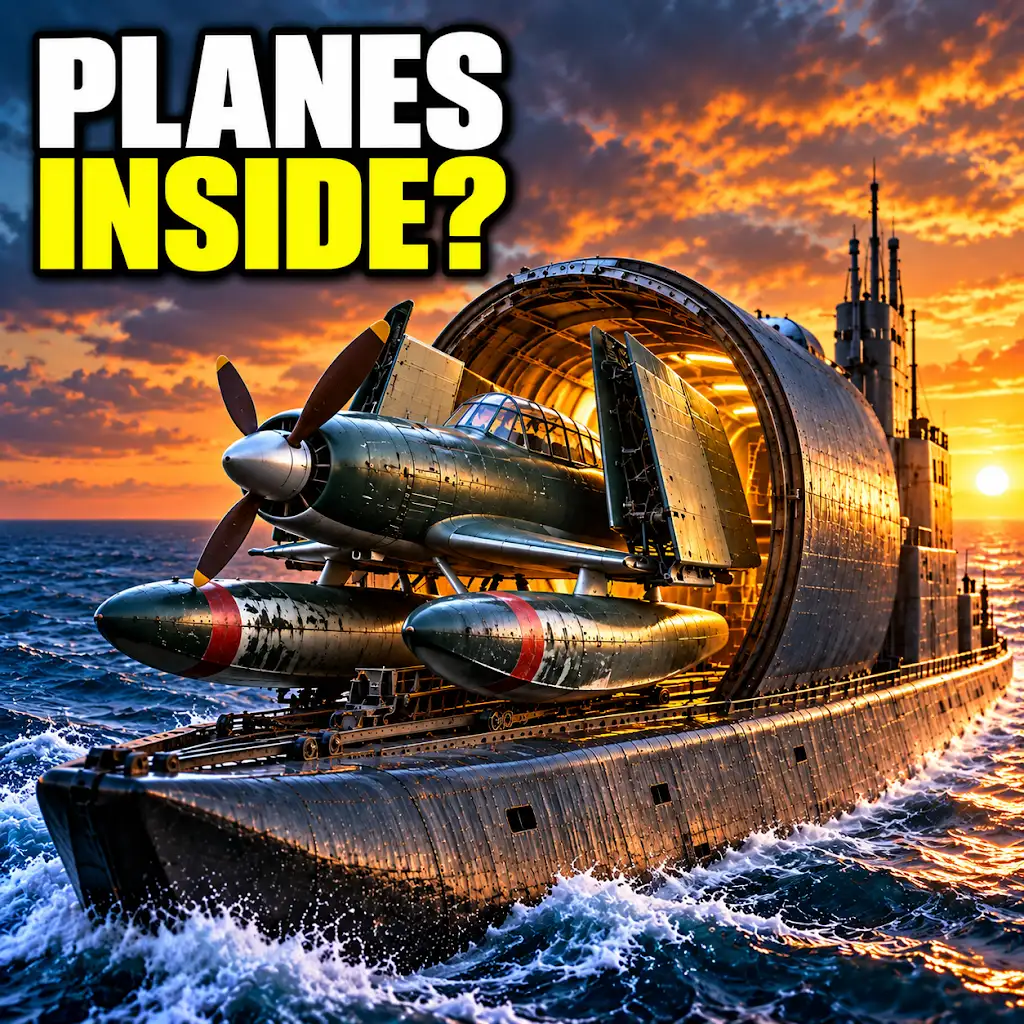
Japan Built a Submarine That Could Launch Three Planes
FAQs
What is the history behind Japanese submarines launching aircraft?
Japanese submarines were equipped with aircraft during World War II as a way to extend their reach and conduct reconnaissance missions.
How were aircraft launched from Japanese submarines?
Japanese submarines used specially designed aircraft, such as the Yokosuka E14Y, which were launched from a catapult on the submarine’s deck.
What role did Japanese submarine-launched aircraft play in World War II?
Japanese submarine-launched aircraft were primarily used for reconnaissance missions, scouting enemy positions and reporting back valuable information to the Japanese military.
Were Japanese submarine-launched aircraft successful in their missions?
While Japanese submarine-launched aircraft were able to gather valuable intelligence, they were limited in their capabilities and were not as effective as traditional aircraft carriers.
How did the use of submarine-launched aircraft by the Japanese compare to other naval powers during World War II?
The Japanese were one of the few naval powers to experiment with submarine-launched aircraft during World War II, with limited success compared to traditional aircraft carriers used by other countries.