The Vast Pacific: A Crucial Barrier
The immensity of the Pacific Ocean presented an almost insurmountable logistical and technological hurdle for any nation seeking to project air power across its expanse. For Japan, in the lead-up to and during World War II, this oceanic chasm was not merely a geographical feature but a strategic Achilles’ heel that profoundly shaped its military ambitions and ultimately, its ability to wage war effectively against the United States. The distances involved were staggering. From the Japanese home islands to the western coast of North America, the shortest traversable routes stretched for thousands of miles, a distance far exceeding the operational range of virtually every aircraft developed by Japan. This was not a minor inconvenience; it was a fundamental limitation that dictated the scope and scale of Japanese aerial operations in the Pacific theater.
The sheer fuel requirements alone were daunting. To cover such distances, aircraft would need to carry an enormous quantity of fuel, drastically reducing their payload capacity for either bombs or weaponry. This meant that even if an aircraft could reach its target, its offensive capabilities would be severely compromised. Furthermore, the challenges extended beyond fuel. Navigation over such vast, featureless expanses of water was notoriously difficult, especially with the rudimentary navigation technology of the era. Without reliable ground references, aircraft were susceptible to getting lost, encountering severe weather, or simply running out of fuel due to miscalculation. The risks of engine failure, a common occurrence even on shorter flights, became exponentially greater when hundreds or thousands of miles from friendly territory, with no hope of rescue or recovery. The psychological toll on aircrews undertaking such perilous journeys, knowing that a single mechanical issue or navigational error could lead to a watery grave, cannot be overstated.
During World War II, Japanese aircraft faced significant limitations that prevented them from reaching the American mainland, a topic explored in depth in the article found at In the War Room. The article discusses the technological constraints of Japanese aviation, including fuel capacity and range, as well as the strategic decisions that influenced their military operations. These factors ultimately contributed to the inability of Japanese forces to launch a successful attack on the continental United States, highlighting the importance of logistical planning in warfare.
Endurance Limitations of Japanese Aircraft

The technological development of aircraft in the interwar period and the early years of World War II placed significant constraints on range. While some aircraft were designed for long-range reconnaissance or bombing missions, the extreme distances required for trans-Pacific flight pushed these designs to their absolute limits, and in most cases, far beyond them. Japanese aircraft, while often innovative in design and performance in specific areas, generally lagged behind their American and European counterparts in the crucial aspect of operational range.
Early Long-Range Aspirations
Even before the war, Japan harbored ambitions of long-range aviation. The Yokosuka P1Y Frances bomber, for instance, was envisioned with a decent operational radius. However, its actual combat radius, particularly when carrying a meaningful bomb load, fell far short of trans-Pacific capabilities. Similarly, the Mitsubishi G4M Betty bomber, while renowned for its range on its own merits and famous for being the aircraft that sank the USS Arizona at Pearl Harbor (though it was not directly involved in attacking mainland America), was still insufficient for sustained operations against the continental United States. Its range was optimized for striking targets within the vast island chains of the Pacific, not for bridging the immense gap to America’s mainland. The operational ceiling and speed of these aircraft, while respectable, were not sufficient to outrun or outclimb potential threats across such a vast distance, adding another layer of risk.
The Tyranny of Distance in Strategic Planning

The inability to reach the American mainland with any significant offensive capability profoundly shaped Japan’s strategic thinking. It meant that direct assault on American industrial centers, major cities, or military bases on the continent was simply not a viable option. This limitation forced Japan to adopt a defensive and island-hopping strategy, aiming to secure resources and create a buffer zone around its home islands. The focus shifted to conquering territories in Southeast Asia and the Pacific islands, which were strategically important for resources and to push the United States further away from Japan.
The “Fortress America” Doctrine
The geographical isolation of the continental United States, coupled with Japan’s aerial limitations, inadvertently contributed to the perception of “Fortress America.” The vastness of the Pacific served as a natural moat, making a direct invasion by Japanese forces incredibly difficult, if not impossible. This allowed the United States to mobilize its industrial might and military power with a degree of security that was not afforded to the embattled island nations of the Pacific or the war-torn countries of Europe. The American industrial capacity, once fully engaged, would far outstrip Japan’s ability to sustain a protracted conflict, especially when Japan could not effectively strike at its source.
Fuel and Infrastructure Deficiencies
Even if theoretical aircraft designs existed with sufficient range, the practical realities of fuel availability and the necessary supporting infrastructure for such long-range operations were major stumbling blocks for Japan. Refueling points, maintenance facilities, and trained personnel capable of supporting such extensive flights were not readily available across the Pacific on a scale that would allow for sustained offensive operations against the United States.
The Lack of Forward Operating Bases
The concept of forward operating bases was critical for any air force aiming to project power over long distances. For Japan, these bases would have needed to be established deep within enemy territory or on strategically located islands. However, the rapid expansion of American forces and naval power in the Pacific quickly made it impossible for Japan to establish and maintain such bases in proximity to the American mainland. Each island captured by the Allies became a potential threat and a lost opportunity for Japan. The vast distances between potential refueling and rearming points also meant that aircraft would have to fly at extremely low altitudes to conserve fuel, increasing their vulnerability to detection and attack. The absence of a robust air-sea rescue network for such hypothetical long-range missions also presented a significant deterrent.
During World War II, Japanese aircraft faced significant limitations that prevented them from reaching the American mainland, a topic explored in detail in a related article. The challenges of long-range bombing missions and the technological constraints of the time are examined, highlighting how these factors influenced military strategies on both sides. For further insights into this fascinating aspect of aviation history, you can read more in this article.
The Limited Scope of Japanese Air Raids
| Metric | Value | Notes |
|---|---|---|
| Maximum Range of Japanese Aircraft (e.g., Mitsubishi A6M Zero) | 1,600 miles (2,575 km) | Typical combat radius without external fuel tanks |
| Distance from Japan to West Coast of America | Approximately 5,000 miles (8,000 km) | Direct flight distance to California |
| Longest Japanese Aircraft Ferry Range (with modifications) | Up to 2,400 miles (3,860 km) | Using drop tanks and reduced payload |
| Operational Limitations | Fuel capacity, payload, and lack of mid-air refueling | Prevented direct flights to mainland America |
| Notable Exceptions | Attack on Dutch Harbor and Aleutian Islands | Closer targets within range of Japanese aircraft |
The direct consequence of these limitations was that Japanese air raids on American territory were extremely rare and had a negligible strategic impact. The most notable, and perhaps the only significant, instance of Japanese aircraft targeting the continental United States was the balloon bomb program. While ambitious in its conception, this initiative was largely a desperate measure, plagued by low effectiveness and unpredictable results.
The Unsuccessful Balloon Bomb Campaign
Beginning in late 1944, Japan launched a program to send thousands of hydrogen-filled balloons, each carrying an incendiary or fragmentation bomb, across the Pacific. These “Fu-Go” balloons were designed to ride the jet stream and land in the United States, causing fires and disrupting civilian life. The concept was ingenious, leveraging a natural phenomenon to bypass the technological limitations of conventional aircraft. However, the reality was far less impactful. Most balloons were lost to weather, fell harmlessly into the ocean, or landed in unpopulated areas. Only a small fraction reached populated areas, and the damage caused was minimal. The most tragic incident occurred in Oregon in May 1945, when six civilians, including a pregnant woman and five children, were killed by an exploding balloon. While a devastating loss of life for those involved, it was a stark contrast to the widespread destruction anticipated by the program’s designers. The campaign ultimately proved to be an enormous waste of resources with virtually no strategic benefit, highlighting the desperation and the fundamental inability of Japan to project significant air power against the American homeland. The resources expended on this program could have been better utilized elsewhere, perhaps in defending their dwindling island territories or bolstering their naval forces.
The Strategic Implication of Unreachable Targets
The inability of Japanese aircraft to reach and effectively strike the American mainland had profound strategic implications for the course of the war. It meant that the United States could operate with a significant degree of invulnerability on its home front, allowing for the unimpeded build-up of its war machine. This created an asymmetry in the conflict that Japan could never overcome.
The Unthreatened American Industrial Might
While American cities and military installations in the Pacific were under constant threat, the continental United States remained largely untouched by direct aerial attack. This allowed American factories to churn out aircraft, ships, and weapons at an unprecedented rate, fueling the Allied war effort. The security of American industry was a critical factor in the eventual Allied victory. Japan, on the other hand, found its own industrial capacity vulnerable to American air and naval power, particularly in the later stages of the war. The inability to retaliate in kind meant that Japan had to endure a relentless bombing campaign without the means to effectively counter it. The psychological impact of this unaddressed threat on the American populace was also minimal, fostering a sense of resolve rather than fear, which would have been the objective of a successful bombing campaign. The war was, therefore, fought largely on Allied terms, dictated by the vast distances and the technological disparities that prevented Japan from effectively bringing the fight to the enemy’s doorstep. The vast Pacific, in essence, acted as a protective shield for the United States, a shield that Japanese aircraft, by their very design and operational limitations, could not penetrate. This fundamental asymmetry dictated the tempo and trajectory of the war, ultimately contributing to Japan’s defeat. The dream of striking at the heart of America remained, for Japan, an unachievable mirage, a testament to the enduring power of geography and technological limitations in shaping the outcomes of global conflicts.
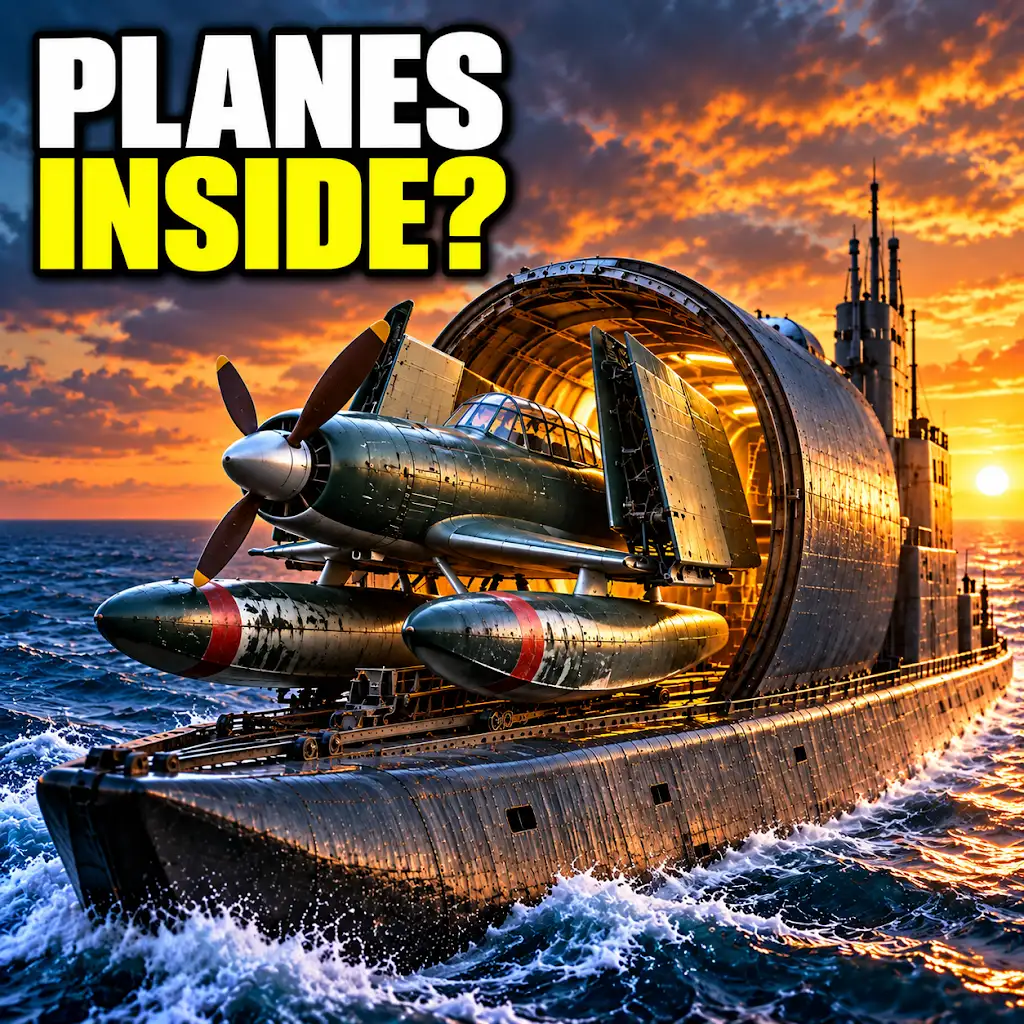
Japan Built a Submarine That Could Launch Three Planes
FAQs
1. Why couldn’t Japanese aircraft reach America during World War II?
Japanese aircraft at the time did not have the necessary range to fly the distance from Japan to America and back without refueling.
2. What was the main limitation of Japanese aircraft during World War II?
The main limitation was the lack of long-range capabilities, which prevented Japanese aircraft from reaching the continental United States.
3. How far could Japanese aircraft typically fly during World War II?
Japanese aircraft during World War II had an average range of around 1,000 to 1,500 miles, which was not sufficient to reach America from Japan.
4. Were there any attempts by Japan to reach America with aircraft during World War II?
There were no successful attempts by Japan to reach America with aircraft during World War II due to the limitations in range and logistical challenges.
5. What were the consequences of Japanese aircraft not being able to reach America during World War II?
The inability of Japanese aircraft to reach America limited their strategic options and prevented them from launching direct attacks on the continental United States, shifting the focus of the war to the Pacific theater.