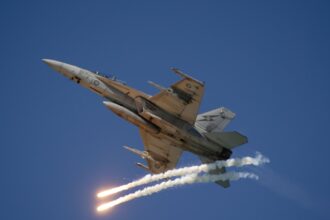
Israel’s ongoing commitment to maintaining its qualitative military edge in a volatile region has spurred significant advancements in its defense capabilities. Among these, the development of sophisticated radar countermeasures stands out as a critical area of innovation, designed to enhance the survivability and effectiveness of its air and naval assets. These technologies are not merely reactive measures but represent a proactive strategy to neutralize evolving threats and maintain a decisive advantage against sophisticated enemy air defense systems and electronic warfare capabilities. The complexity of modern warfare necessitates a multi-layered approach to defense, and advanced radar countermeasures are a cornerstone of this strategy, safeguarding Israel’s strategic interests and its citizens.
The Evolving Landscape of Air and Naval Threats
The operational environment surrounding Israel is characterized by the presence of advanced air defense systems, often supplied by major global powers, and the increasing sophistication of electronic warfare (EW) capabilities employed by state and non-state actors. These threats are designed to detect, track, and engage airborne and maritime targets, posing a significant challenge to military operations. Understanding the nuances of these threats is paramount to developing effective countermeasures.
Sophisticated Radar Technologies in Adversary Arsenals
Adversary nations have invested heavily in developing and deploying a range of radar systems. These include early warning radars, fire control radars, and low-probability-of-intercept (LPI) radars, which are notoriously difficult to detect. The frequency agility, beamforming capabilities, and low-power emissions of modern radars make them exceptionally challenging targets for traditional electronic support measures (ESM) and jamming techniques. Furthermore, the integration of these radar systems into networked air defense architectures creates a comprehensive umbrella that can significantly restrict freedom of maneuver for air assets. The continuous evolution of radar technology, with advancements in solid-state electronics, digital signal processing, and phased-array antennas, means that Israel must constantly innovate to stay ahead. This includes adapting to new waveforms, signal modulation techniques, and stealth technologies that reduce the radar cross-section of platforms.
The Growing Threat of Directed Energy Weapons
While radar countermeasures have traditionally focused on disrupting or deceiving radar systems, the emerging threat of directed energy weapons (DEWs), including lasers and high-power microwave (HPM) weapons, presents a new and formidable challenge. These weapons can directly damage or disable electronic systems, including radar components and sensors, rendering them inoperable. The development of countermeasures against DEWs requires a different set of technological solutions, often involving advanced materials, sophisticated optical systems, and active denial technologies. Israel’s defense research and development efforts are increasingly looking towards addressing this nascent but potentially game-changing threat.
Electronic Warfare Integration and Deception Tactics
Modern warfare increasingly relies on the synergistic integration of electronic warfare capabilities with conventional weapons systems. Adversaries are developing sophisticated EW suites that can not only jam enemy radar but also employ deceptive techniques to mislead pilots and naval commanders. This can involve broadcasting false target information, mimicking friendly radar signatures, or creating electronic “ghosts” to confuse situational awareness. The ability to counter these complex deception tactics requires advanced understanding of signal processing, artificial intelligence, and the psychological aspects of warfare. Israel’s countermeasures must be able to discern genuine threats from sophisticated deceptions, ensuring that defensive actions are appropriately targeted and effective.
Israel has made significant advancements in radar countermeasures, enhancing its defense capabilities against various aerial threats. For a deeper understanding of these developments and their implications, you can read a related article that discusses the latest innovations in military technology and their strategic importance. This article provides insights into how Israel’s radar countermeasures are shaping modern warfare. To explore this topic further, visit this link.
Pillars of Israel’s Advanced Radar Countermeasures

Israel’s approach to developing advanced radar countermeasures is multifaceted, built upon several key pillars of technological innovation and strategic deployment. These pillars work in concert to create a robust defense network capable of adapting to a dynamic threat environment.
Electronic Support Measures (ESM) and Intelligence Gathering
The foundation of any effective electronic warfare strategy lies in robust Electronic Support Measures. Israel has invested heavily in developing highly sensitive and sophisticated ESM systems. These systems are designed to passively detect, identify, and locate enemy radar emissions without revealing their own presence. The data gathered by ESM is crucial for building an accurate and real-time electronic order of battle, understanding enemy capabilities, and informing defensive actions.
Advanced Signal Intelligence (SIGINT) Capabilities
Israel’s commitment to SIGINT is a critical component of its intelligence advantage. This involves not only the collection of raw electronic emissions but also the advanced analysis and interpretation of these signals. Leveraging sophisticated algorithms, artificial intelligence, and vast databases of known radar signatures, Israel can rapidly identify the type, origin, and operational status of enemy radar systems. This deep understanding of enemy emitters allows for the tailoring of specific countermeasures. The continuous improvement of SIGINT platforms, including airborne and naval assets equipped with advanced sensors, ensures that this intelligence stream remains current and comprehensive.
Real-time Threat Assessment and Dissemination
The effectiveness of ESM is directly tied to the speed and accuracy of threat assessment and the dissemination of this information to relevant platforms. Israel employs advanced command and control (C2) systems that integrate data from multiple sources, including ESM, intelligence feeds, and other sensor networks. This integrated approach allows for the rapid identification of critical threats and the immediate communication of actionable intelligence to fighter jets, naval vessels, and ground-based air defense units. This real-time dissemination is crucial for enabling swift and appropriate countermeasure deployment.
Electronic Countermeasures (ECM) and Jamming Technologies
Once a threat is identified and assessed, Electronic Countermeasures are employed to disrupt or neutralize the enemy radar. This typically involves the generation of electronic signals designed to interfere with the radar’s operation, either by overwhelming its receiver or by deceiving its targeting mechanisms.
Sophisticated Jamming Pods and Integrated Systems
Israeli aircraft and naval platforms are equipped with advanced jamming pods and integrated ECM systems. These systems are capable of generating a wide range of jamming signals, tailored to specific radar frequencies and modulation techniques. The development of multi-function jamming systems that can simultaneously address multiple threats, and adaptive jamming techniques that can rapidly change their characteristics to counter evolving radar responses, are key areas of innovation. The integration of these ECM systems with the aircraft’s or vessel’s own radar and other sensors allows for a coordinated and highly effective defensive posture.
Deception Jamming and Spoofing
Beyond simple jamming, Israel is also developing advanced deception jamming techniques. These techniques aim to trick enemy radars into providing false information, such as misidentifying targets, reporting incorrect ranges or altitudes, or even locking onto decoys. This can involve sophisticated signal generation that mimics friendly radar returns or creates entirely new, misleading signatures. The goal is to sow confusion and disrupt the enemy’s targeting process, giving friendly forces the opportunity to engage or evade.
Directed Energy Countermeasures Against Radar Systems
As the threat landscape evolves, Israel is exploring the application of directed energy for counter-radar purposes. While still in developmental stages for many applications, the potential for DEWs to physically disable or damage radar components, rather than just disrupt their signals, is a significant area of research. This could offer a more permanent solution to persistent threats.
Signature Management and Stealth Technologies
Reducing the detectability of platforms is a fundamental aspect of survivability. While not strictly “countermeasures” in the sense of active electronic warfare, signature management and stealth technologies are critical enablers that reduce the reliance on active countermeasures and enhance overall survivability.
Advanced Radar-Absorbent Materials (RAM)
The use of advanced Radar-Absorbent Materials (RAM) is a cornerstone of stealth technology. These materials are designed to absorb incoming radar energy, preventing it from reflecting back to the radar source and thus reducing the target’s radar cross-section. Israel’s research in this area focuses on developing lighter, more durable, and more effective RAM that can be applied to a wider range of platform surfaces and under diverse environmental conditions. This includes exploring novel composite materials and advanced coatings.
Shaping and Aerodynamic Design for Reduced Radar Cross-Section
Beyond materials, the physical shape and aerodynamic design of aircraft and naval vessels play a crucial role in minimizing radar reflections. Israeli engineers employ sophisticated modeling and simulation techniques to design platforms with features that deflect radar waves away from the source. This includes the careful consideration of angles, edges, and surface discontinuities. The integration of stealth design principles from the initial stages of platform development is essential for achieving optimal radar signature reduction.
Electro-Optical and Infrared (EO/IR) Signature Reduction
While radar countermeasures are the primary focus, Israel also recognizes the importance of reducing other detectable signatures, such as those in the electro-optical and infrared spectrum. This involves developing technologies to minimize heat emissions from engines and other components, as well as to reduce visual detectability. By minimizing multiple signature types, platforms become significantly harder to detect and track across the entire electromagnetic spectrum.
Integration and Networked Operations

The true power of Israel’s advanced radar countermeasures lies not in their individual capabilities but in their seamless integration into a networked defense ecosystem. This ensures that countermeasures are employed intelligently and synergistically.
The Role of the C4ISR Network
Command, Control, Communications, Computers, Intelligence, Surveillance, and Reconnaissance (C4ISR) systems form the backbone of Israel’s defense network. This interconnected web of sensors, communication links, and processing centers allows for the sharing of real-time information and the coordinated deployment of countermeasures. The C4ISR network ensures that a detected threat is immediately communicated to all relevant platforms, enabling a unified and effective response.
Collaborative Electronic Warfare and Decoy Employment
Modern warfare demands collaborative efforts. Israeli platforms are increasingly capable of sharing electronic warfare data and coordinating their jamming and deception efforts. This can involve one platform providing targeting information to another that then deploys a specific jamming signal, or multiple platforms working together to create a complex deception scenario that overwhelms enemy defenses. The use of sophisticated decoys, both physical and electronic, further enhances these collaborative tactics, drawing enemy fire or attention away from critical assets.
Artificial Intelligence and Machine Learning in Countermeasure Optimization
The application of Artificial Intelligence (AI) and Machine Learning (ML) is revolutionizing the field of radar countermeasures. AI algorithms can analyze vast amounts of data from ESM systems to identify patterns and predict enemy behavior with unprecedented accuracy. ML can be used to train adaptive jamming systems that learn and evolve their responses to new radar threats in real-time. This intelligent automation allows for faster decision-making and more precise countermeasure deployment, significantly increasing the effectiveness of defensive operations.
Training and Human Factors
Technological sophistication is only one part of the equation. Israel places a strong emphasis on training its personnel to effectively operate and leverage these advanced countermeasures.
Realistic Training Scenarios and Simulation
Elite military units undergo rigorous training designed to simulate the most challenging threat scenarios. This includes extensive use of advanced simulators that replicate the complexities of modern air defense systems and electronic warfare environments. These simulations allow pilots, electronic warfare officers, and naval crews to practice deploying countermeasures, responding to jamming, and executing evasion tactics in a safe and controlled setting. The goal is to build muscle memory and develop instinctive responses to complex threats.
Continuous Adaptation to Evolving Threats
The adversaries’ capabilities are constantly evolving, and so too must Israel’s training methodologies. Training programs are continually updated to reflect the latest developments in enemy radar technology and electronic warfare tactics. This ensures that personnel are always prepared to face the most current and sophisticated threats. This includes cross-training and the sharing of lessons learned across different branches of the military.
The Human-Machine Interface and Cognitive Load Management
Operating advanced countermeasure systems requires significant cognitive effort. Israel’s defense research and development also focuses on optimizing the human-machine interface (HMI) of these systems. This involves designing intuitive controls, clear displays, and intelligent automation that reduces the cognitive load on operators. By making the systems easier to understand and operate, Israel ensures that its personnel can focus on making critical decisions and executing complex maneuvers, rather than struggling with complex interfaces.
Israel has made significant advancements in radar countermeasures, enhancing its defense capabilities against various aerial threats. These developments are crucial in maintaining air superiority and ensuring national security. For a deeper understanding of the technological innovations and strategic implications of these radar systems, you can read a related article that discusses the broader context of Israel’s defense technologies. This insightful piece can be found here.
Future Directions and Ongoing Research
| Metric | Details |
|---|---|
| Country | Israel |
| Technology Type | Radar Countermeasures |
| Primary Applications | Electronic Warfare, Aircraft Defense, Missile Defense |
| Key Systems | ELTA Systems’ Radar Jamming and Deception Systems |
| Development Agencies | Israel Aerospace Industries (IAI), ELTA Systems |
| Operational Range | Varies by system; typically 10-100+ km |
| Countermeasure Techniques | Jamming, Deception, Decoys, Signal Manipulation |
| Deployment Platforms | Aircraft, Naval Vessels, Ground Vehicles |
| Export Status | Exported to allied countries under strict controls |
| Recent Upgrades | Integration with AI for adaptive jamming |
The pursuit of advanced radar countermeasures is an ongoing process, driven by a forward-looking approach to defense innovation. Israel remains at the forefront of research and development in this critical domain.
Next-Generation Radar Jamming and Deception
Future research is focused on developing even more sophisticated jamming techniques, including those that can operate in highly contested electromagnetic environments and overcome advanced radar signal processing. This includes exploring novel waveforms, intelligent beamforming, and the use of distributed jamming assets. Deception technologies are also being advanced, with a focus on creating more convincing and persistent illusions to confuse enemy sensors and decision-makers.
Countering Hypersonic and Novel Weapon Systems
The emergence of hypersonic missiles and other novel weapon systems presents new challenges for radar detection and tracking. Israel is actively researching countermeasures that can address these emerging threats, which often operate at extreme speeds and altitudes, making them difficult to intercept. This may involve entirely new approaches to electronic warfare and defensive strategies.
The Role of Quantum Technologies in Electronic Warfare
The nascent field of quantum computing and quantum sensing holds the potential to revolutionize electronic warfare in the future. While still in its early stages, research is exploring how quantum technologies could be used to develop more powerful radar systems, as well as more advanced countermeasures capable of detecting and defeating these next-generation radars. Israel is investing in research to understand and potentially harness these future capabilities.
International Collaboration and Information Sharing
While maintaining its technological edge, Israel also recognizes the value of international collaboration in defense research. Sharing information and best practices with allied nations can accelerate the development of countermeasures and foster a more secure global environment. This collaboration often focuses on understanding common threats and developing interoperable defensive systems.

A 3-Year Drought Hit the Hittite Empire. Did It Cause the Collapse?
FAQs
What are radar countermeasures?
Radar countermeasures are techniques or devices used to interfere with or deceive radar systems, making it difficult for the radar to detect or track objects accurately.
How did Israel develop radar countermeasures?
Israel has a strong defense industry with advanced research and development capabilities. Over the years, Israeli defense companies have invested in developing innovative radar countermeasure technologies to enhance their military capabilities.
What are some examples of radar countermeasures developed by Israel?
Israel has developed a range of radar countermeasure systems, including electronic warfare systems, radar jamming devices, chaff dispensers, and decoy flares. These technologies are designed to protect military aircraft and other assets from radar detection and tracking.
How effective are Israel’s radar countermeasures?
Israel’s radar countermeasures are known for their effectiveness and reliability. These systems have been tested in various real-world scenarios and have proven to be successful in countering radar threats and enhancing the survivability of military platforms.
Are Israel’s radar countermeasures available for export?
Some of Israel’s radar countermeasure technologies are available for export to allied countries and partners. However, the export of such sensitive defense technologies is subject to strict regulations and approval processes to ensure they are not misused or transferred to unauthorized entities.