The sands of Normandy were a crucible, a testament to a meticulously orchestrated deception that preceded the thunder of boots and the roar of cannons. The success of D-Day, the Allied invasion of occupied France on June 6, 1944, was not solely a product of brute force and logistical might; it was profoundly shaped by a sophisticated and relentless campaign of intelligence warfare. This intricate web of misinformation, double agents, and psychological manipulation created a fog of war so dense that it blinded the German high command, diverting their vital resources and paving the way for an unprecedented amphibious assault. The story of intelligence warfare leading to D-Day is a saga of cunning, sacrifice, and the silent, unseen battles that determined the fate of millions.
The Shadow War: Laying the Groundwork for Deception
The Allied intelligence apparatus understood from the outset that a direct assault on Hitler’s Fortress Europe, heavily defended and strategically positioned, would be a bloodbath of unimaginable proportions. The Atlantic Wall, a formidable network of coastal defenses, represented a significant hurdle. The key to overcoming this barrier lay not in overwhelming its defenses head-on, but in convincing the Germans that the main thrust of the invasion would come elsewhere, or at a different time, or both. This required a monumental effort to sow doubt, confusion, and misdirection within the Nazi military intelligence and command structure. The overarching objective was to create a plausible, yet utterly false, picture of Allied intentions, forcing the Germans to spread their forces thin and reinforcing the wrong locations. This was a game of wits played on a global scale, with the lives of countless soldiers hanging in the balance.
The Art of Double Agents: Double Cross and the German Illusion
At the heart of the Allied deception strategy lay the ingenious use of double agents, men and women who pretended to work for the Germans while secretly serving the Allies. Operation Fortitude, the umbrella name for the deception efforts, relied heavily on these individuals to feed fabricated intelligence to their German handlers. The most famous among them was undoubtedly Juan Pujol García, codenamed “Garbo.” A Catalan nationalist with a deep antipathy for both Franco’s regime and Hitler’s fascism, Garbo began by offering his services to the Germans in Madrid. He was initially deemed unreliable, but his persistence and apparent wealth of fabricated information, meticulously constructed from public sources and cleverly invented details, eventually led him to be activated by the Abwehr, the German military intelligence service.
Garbo’s genius lay in his ability to create a vast network of fictional sub-agents, each with their own personalities, motivations, and sources. He spun tales of troop movements, logistical preparations, and strategic intentions, all designed to reinforce the illusion of an impending invasion in a region other than Normandy. His reports were detailed, consistent, and delivered with an air of authenticity that made them irresistible to his German handlers. He even claimed to be running a network of informants across Britain, further bolstering the credibility of his fabricated intelligence. The Germans, starved for accurate information about Allied plans, saw Garbo as an invaluable asset, investing significant resources in his network and often acting upon the disinformation he provided. The Allies, in turn, used Garbo to meticulously craft the narrative of an imminent invasion of the Pas-de-Calais, a narrow stretch of the English Channel opposite Dover, which was the most obvious and geographically advantageous landing site. This was a masterstroke of psychological warfare, exploiting the German tendency to anticipate the most logical course of action.
Creating Phantom Armies: Operation Bodyguard and the Ghost Divisions
Beyond the individual agents, the Allies created entire phantom armies. Operation Bodyguard was the overarching deception plan that encompassed all Allied efforts to mislead the Germans about the timing and location of the invasion. Within this grand strategy, Operation Fortitude South specifically focused on creating the illusion of a massive Allied force poised to invade the Pas-de-Calais. This involved a sophisticated use of visual deception, radio traffic, and fabricated troop movements. In the months leading up to D-Day, the British meticulously constructed inflatable tanks, dummy landing craft, and plywood aircraft in the fields and ports facing the Pas-de-Calais. These were strategically placed and illuminated at night to suggest a formidable military presence.
The Royal Air Force played a crucial role by engaging in extensive radio traffic that mimicked the communications of a large army preparing for invasion. These transmissions were deliberately “leaked” to German listening posts, appearing as authentic operational chatter. Furthermore, elaborate logistical preparations were staged in southeastern England, including the construction of fake port facilities and the visible movement of large numbers of troops and vehicles, all directed towards the Pas-de-Calais. The ultimate aim was to convince Hitler and his generals that this region was the primary target for Operation Overlord, thereby drawing their reserves and elite units away from Normandy. The effectiveness of this deception was later confirmed by captured German documents and prisoner interrogations, which revealed that the German high command was indeed convinced that the Pas-de-Calais was the main invasion point until well after the landings at Normandy had begun.
Before D-Day, intelligence warfare played a crucial role in the success of the Allied invasion of Normandy. An insightful article that delves into the intricacies of this strategic aspect is available at In the War Room. This piece explores how deception operations, such as Operation Fortitude, misled German forces about the actual landing site, showcasing the importance of intelligence in shaping military outcomes during World War II.
The Intelligence Crucible: Gathering and Distorting the Truth
The success of deception, however, relied on a solid understanding of the enemy’s own intelligence capabilities and vulnerabilities. The Allies engaged in extensive intelligence gathering, not only to understand German defenses and troop dispositions but also to identify the weaknesses in their information network that could be exploited. This was a dual-edged sword, where accurate intelligence about German capabilities was used to craft equally believable, yet false, intelligence about Allied intentions. The pursuit of truth in intelligence gathering was intertwined with the deliberate creation of falsehoods.
Decoding the Enigma: The Power of Cryptanalysis
The breaking of the German Enigma code by Allied cryptanalysts at Bletchley Park provided an unparalleled window into the inner workings of the German military. The intelligence gleaned from these decryptions, codenamed “Ultra,” offered invaluable insights into German troop movements, strategic planning, and their assessment of Allied intentions. However, Ultra was a double-edged sword. The Allies had to be exceedingly careful not to reveal the extent of their code-breaking capabilities, as this would have led the Germans to change their encryption methods, rendering Ultra useless.
Therefore, Ultra-derived intelligence was often corroborated and presented through “normal” intelligence channels, such as aerial reconnaissance, agent reports, and prisoner interrogations. This meant that even when the Allies knew with certainty where German reserves were, they would often “discover” this information through more conventional means, further bolstering the credibility of their own intelligence picture for the Germans. For example, if Ultra revealed that a particular Panzer division was being held in reserve in Belgium, the Allies might then “orchestrate” a series of reconnaissance flights over that area or subtly “leak” agent reports about troop concentrations there. This meticulous process ensured that the Germans continued to believe their own intelligence assessments, which were being skillfully manipulated by the Allies.
Aerial Reconnaissance and Signal Intelligence: Eyes and Ears in the Sky
Beyond code-breaking, aerial reconnaissance and signal intelligence played a vital role. High-altitude reconnaissance aircraft, such as the Spitfire and later the Mosquito, provided crucial photographic evidence of German defenses, troop concentrations, and logistical infrastructure. These images were meticulously analyzed by intelligence officers, forming a detailed map of the enemy’s capabilities. However, this visual intelligence also served the deception effort. Reconnaissance flights were deliberately conducted over areas that the Allies wanted the Germans to believe were of strategic importance, further reinforcing the illusion of imminent invasion in those locations.
Signal intelligence (SIGINT) involved intercepting and analyzing German radio communications. This provided real-time insights into German reactions to Allied actions, their concerns, and their dispositions. By analyzing the patterns of German radio traffic, the Allies could gauge the effectiveness of their deceptions and adjust their strategies accordingly. For instance, if increased radio activity was detected in the Pas-de-Calais region following a particular deception operation, it indicated that the Germans were taking the bait. This constant feedback loop allowed the Allies to refine their misinformation campaigns, ensuring that they remained a step ahead of their adversaries. The combination of visual evidence and intercepted communications painted a comprehensive, albeit carefully curated, picture for the German command.
The Psychological Battlefield: Manipulating Enemy Perceptions
Intelligence warfare extended beyond the battlefield and into the minds of the German leadership. The Allies understood that exploiting psychological vulnerabilities and ingrained biases within the German military could be as effective as any physical assault. This involved understanding Hitler’s personality, his reliance on intuition, and the existing doctrines of the German military. The objective was to play on these factors, creating a narrative that the German command, and particularly Hitler himself, would find compelling and logical, even if it was entirely false.
In the lead-up to D-Day, intelligence warfare played a crucial role in shaping the outcome of the Allied invasion. The meticulous planning and deception strategies employed by the Allies were instrumental in misleading German forces about the true landing sites. For a deeper understanding of these tactics, you can explore a related article that delves into the intricacies of intelligence operations during this pivotal moment in history. The article can be found here, providing insights into how information was used as a weapon to secure victory.
Hitler’s Fixation: The Pas-de-Calais Obsession
Adolf Hitler, despite his dictatorial power, possessed a deep-seated belief in his own strategic acumen. He was also notoriously obsessed with the Pas-de-Calais, viewing it as the most logical point of Allied invasion due to its proximity to England and its relatively shorter crossing distance. This pre-existing bias was a golden opportunity for the Allies. Operation Fortitude South was designed to feed directly into this obsession, providing a constant stream of “evidence” that an invasion was imminent in that sector.
The Allies meticulously manufactured reports suggesting massive troop build-ups, extensive landing craft assembly, and large-scale air support operations being concentrated in southeastern England, all pointed towards the Pas-de-Calais. They even used double agents to feed exaggerated reports of Allied troop strengths in this area. The objective was to keep Hitler and his generals focused on this phantom threat, diverting their attention and their vital armored reserves away from Normandy. The success of this aspect of the deception was monumental. Even after the D-Day landings commenced in Normandy, Hitler was initially reluctant to commit his reserves to the actual invasion site, believing it to be a feint and that the main attack would still come at the Pas-de-Calais. This hesitation, born from weeks of intense deception, proved to be a critical factor in the initial Allied success.
Exploiting German Doubts: The “Second Front” Syndrome
The German military, despite its formidable reputation, was not monolithic in its thinking. There were internal disagreements and strategic uncertainties, particularly regarding the timing and nature of the expected Allied invasion. The Allies skillfully exploited these existing doubts and anxieties. The creation of the phantom First U.S. Army Group (FUSAG), under the nominal command of General George S. Patton, was a prime example. This fictional army, with its extensive radio traffic, dummy installations, and carefully leaked reports, was designed to convince the Germans that a massive American force was being assembled for a major offensive.
The Allies also carefully managed their own public relations and propaganda efforts to reinforce the deception. Carefully worded communiqués and news leaks were used to suggest a vast and powerful Allied war machine being prepared for a decisive blow. The “Second Front” had been a persistent concern for the Soviet Union, and the Germans were well aware of the pressure the Allies were under to open a major Western Front. By constantly hinting at the impending opening of this front, but always directing attention to the Pas-de-Calais, the Allies played on German fears and expectations, further solidifying their misapprehensions. This psychological manipulation was as crucial as any physical preparation, ensuring that when the real invasion began, the German response would be delayed and disorganized.
The Silent Victories: The Impact of Intelligence on D-Day’s Success
The true measure of intelligence warfare’s success is reflected in the outcomes of D-Day itself. The meticulous planning, the elaborate deceptions, and the unwavering commitment of countless individuals operating in the shadows culminated in a victory that shifted the tide of World War II. The confusion sown within the German ranks meant that when the Allied forces landed on the beaches of Normandy, they met a less concentrated and less prepared defense than would have been the case otherwise. The intelligence war was fought and won before the first shot was fired on the beaches.
Reduced Resistance and Strategic Advantage
The most immediate and tangible impact of the intelligence deception was the reduced resistance faced by Allied troops on D-Day. By diverting significant German reserves, particularly Panzer divisions, to the Pas-de-Calais, the Allies were able to achieve a more favorable landing in Normandy. The beaches, while fiercely defended, were not subjected to the overwhelming counter-attacks that might have been launched had those reserves been in place. This allowed the Allied forces to establish a secure beachhead, a crucial first step in the liberation of Europe. The intelligence war effectively bought the invasion force valuable time and breathing room during its most critical initial hours.
Furthermore, the Allied strategic advantage was significantly enhanced. The German command, preoccupied with the phantom threat in the Pas-de-Calais, was slow to react to the unfolding events in Normandy. This delay allowed the Allies to consolidate their gains, reinforce their positions, and begin their advance inland. The illusion of a much larger and more imminent threat in a different location had successfully blinded the enemy, allowing the actual invasion to achieve its initial objectives with a degree of success that might have been unattainable through sheer military might alone. The intelligence warfare campaign had successfully neutralized a significant portion of the German response capability before the main assault even began.
The Long-Term Repercussions: A Foundation for Allied Victory
The success of intelligence warfare in the lead-up to D-Day had profound and lasting repercussions for the remainder of the war. The initial momentum gained in Normandy, facilitated by the successful deception, allowed the Allies to push inland and liberate France. This, in turn, opened up a crucial second front against Nazi Germany, relieving pressure on the Eastern Front and hastening the collapse of the Nazi regime. The resources and attention that the Germans had dedicated to defending against the phantom invasion in the Pas-de-Calais could have been used to bolster defenses in Normandy or to launch more effective counter-attacks.
In essence, the intelligence war created the conditions for D-Day’s success. It was a testament to the power of strategic deception and the critical role of intelligence in modern warfare. The silent victories, won through the manipulation of enemy perceptions and the careful dissemination of misinformation, were as vital as the bravery and sacrifice of the soldiers who stormed the beaches. The legacy of this intelligence campaign serves as a perpetual reminder that in the crucible of conflict, the mind can be a weapon as potent as any bomb or bullet. The intricate dance of deception and counter-deception played out in the shadows proved to be a pivotal factor in the eventual Allied victory.
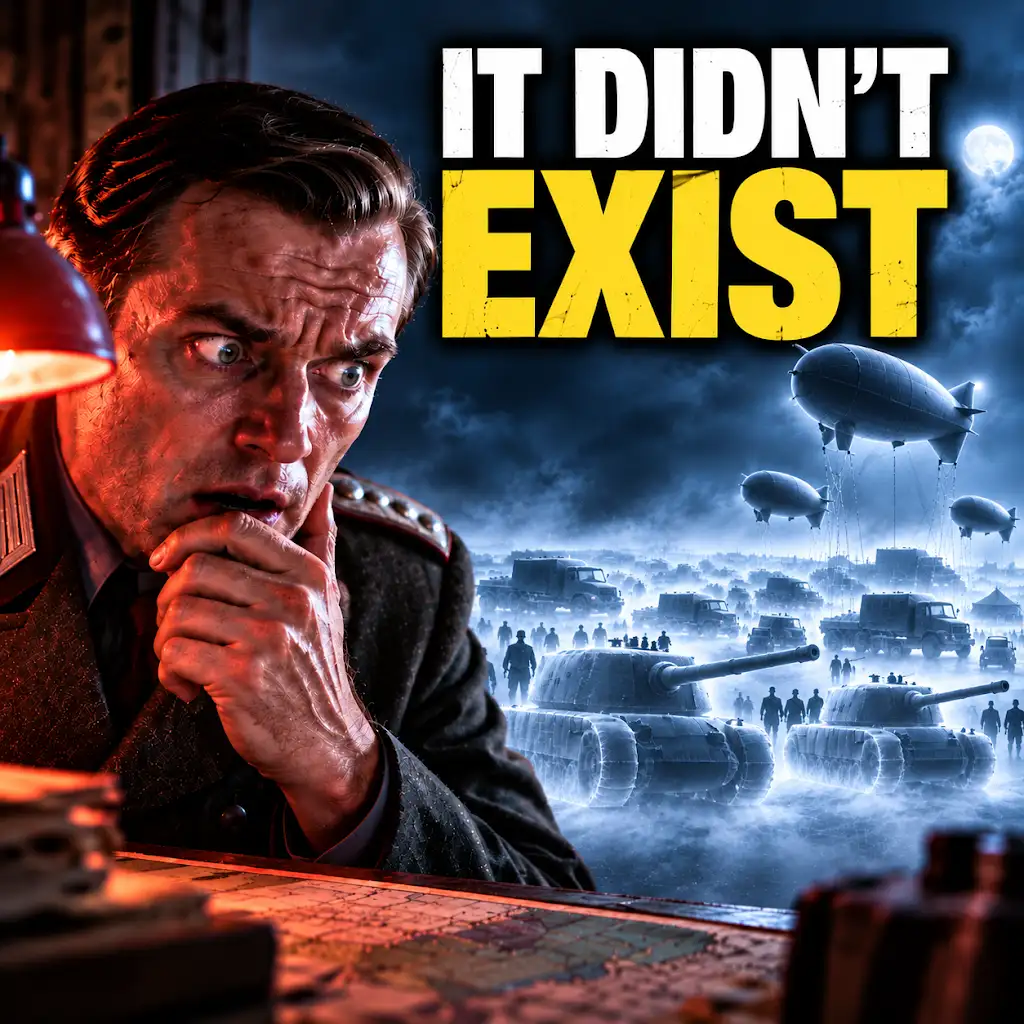
How the Allies Built an Army for Germany to Discover
FAQs
What is intelligence warfare?
Intelligence warfare refers to the use of intelligence gathering, analysis, and dissemination to gain a strategic advantage over an adversary in military operations.
How was intelligence warfare used before D-Day?
Before D-Day, intelligence warfare played a crucial role in planning the Allied invasion of Normandy. Intelligence agencies collected information on enemy troop movements, defenses, and potential landing sites to help strategize the invasion.
Which intelligence agencies were involved in intelligence warfare before D-Day?
Key intelligence agencies involved in intelligence warfare before D-Day included the British Secret Intelligence Service (MI6), the United States Office of Strategic Services (OSS), and the French Resistance. These agencies worked together to gather and analyze intelligence on German forces.
What were some successful intelligence operations before D-Day?
Successful intelligence operations before D-Day included the cracking of the German Enigma code by British codebreakers at Bletchley Park, the use of double agents to deceive the Germans about the invasion location, and the gathering of detailed aerial reconnaissance photos of the Normandy coast.
How did intelligence warfare contribute to the success of D-Day?
Intelligence warfare provided crucial information to Allied commanders, allowing them to plan the D-Day invasion with precision. By knowing the enemy’s strengths and weaknesses, the Allies were able to execute a successful amphibious assault on the beaches of Normandy on June 6, 1944.