Submarine identification through acoustic signature analysis has emerged as a critical component of modern naval warfare and maritime security. As nations invest heavily in submarine technology, the ability to detect and identify these stealthy vessels has become paramount. Acoustic signatures, which are unique sounds produced by submarines during operation, serve as a vital tool for naval forces to monitor and track underwater activities.
The significance of this method lies not only in its potential to enhance national security but also in its role in maintaining a balance of power in international waters. The underwater environment presents unique challenges for detection, making traditional visual identification methods ineffective. Submarines are designed to operate stealthily, often employing advanced technologies to minimize their acoustic footprint.
However, every submarine generates a distinct acoustic signature based on its design, machinery, and operational patterns. By analyzing these signatures, naval analysts can differentiate between various classes of submarines and even identify specific vessels. This article delves into the science behind acoustic signature analysis, the types of signatures produced, and the methodologies employed in identifying submarines.
Key Takeaways
- Submarine identification relies heavily on analyzing unique acoustic signatures produced by their machinery and movement.
- Acoustic signature analysis involves distinguishing between passive and active sonar detection methods.
- Various factors, including submarine design and environmental conditions, influence the acoustic signature.
- Advanced technology and equipment are essential for accurately identifying and differentiating submarine acoustic signatures.
- Ongoing research and future developments aim to enhance the precision and reliability of submarine acoustic signature identification.
The Science of Acoustic Signature Analysis
Acoustic signature analysis is grounded in the principles of sound propagation in water.
This unique environment allows for the transmission of sound over vast distances, making it possible for submarines to be detected even when they are miles away from the source of the sound.
The study of these acoustic signatures involves complex mathematical models and sophisticated algorithms that can interpret the myriad sounds generated by submarines. The analysis begins with the collection of sound data using hydrophones, which are sensitive underwater microphones capable of capturing a wide range of frequencies. Once the data is collected, it undergoes rigorous processing to filter out background noise and other irrelevant sounds.
Analysts then employ various techniques, including spectral analysis and machine learning algorithms, to identify patterns and anomalies within the acoustic data. This scientific approach allows for a more accurate identification of submarines based on their unique sound profiles.
Types of Submarine Acoustic Signatures

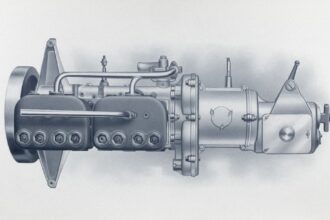
Submarines produce a variety of acoustic signatures that can be categorized into several types. The most prominent among these are the machinery noise, cavitation noise, and radiated noise. Machinery noise is generated by the submarine’s engines, pumps, and other mechanical systems.
This type of noise is often characterized by a steady hum or rumble that can vary depending on the submarine’s operational status. Cavitation noise occurs when a submarine’s propeller creates bubbles in the water that collapse violently, producing a distinctive sound. This phenomenon is particularly pronounced at high speeds or when the submarine is maneuvering sharply.
Radiated noise encompasses all other sounds emitted by the submarine, including those from onboard systems and equipment. Each type of signature contributes to the overall acoustic profile of a submarine, allowing analysts to distinguish between different classes and models.
Passive vs Active Sonar Detection
| Aspect | Passive Sonar | Active Sonar |
|---|---|---|
| Detection Method | Listens for sounds emitted by target | Sends out sound pulses and listens for echoes |
| Range | Longer range in quiet environments | Generally shorter range due to signal attenuation |
| Target Identification | Can identify target type by sound signature | Limited target identification; mainly range and bearing |
| Detection Probability | Depends on target noise level and ambient noise | Higher detection probability in noisy environments |
| Stealth | Passive sonar is covert; does not reveal own position | Active sonar reveals own position to others |
| Environmental Impact | Minimal impact on marine life | Can disturb marine life due to emitted pulses |
| Typical Use Cases | Submarine stealth tracking, surveillance | Navigation, obstacle avoidance, target ranging |
| Signal Processing Complexity | High complexity to filter and analyze ambient sounds | Moderate complexity; processing echoes and timing |
In the realm of submarine detection, two primary sonar techniques are employed: passive and active sonar. Passive sonar systems listen for sounds emitted by submarines without sending out any signals themselves. This method relies on the ability to detect and analyze the acoustic signatures produced by submarines as they operate.
Passive sonar is particularly advantageous because it allows for stealthy monitoring without revealing the listener’s position. Active sonar, on the other hand, involves emitting sound waves into the water and analyzing the echoes that bounce back from objects in the vicinity. While this method can provide precise information about the location and distance of a submarine, it also has drawbacks.
The act of sending out sound waves can alert submarines to the presence of a detecting vessel, potentially compromising any tactical advantage. Consequently, naval forces often employ a combination of both passive and active sonar techniques to maximize their detection capabilities while minimizing risks.
Factors Affecting Submarine Acoustic Signatures
Several factors influence the acoustic signatures produced by submarines, making each vessel’s profile unique. One significant factor is the design and construction materials used in building the submarine. Modern submarines often incorporate sound-dampening technologies and materials that reduce their overall noise output.
The shape of the hull and the configuration of onboard systems also play crucial roles in determining how sound is generated and transmitted.
Variations in water temperature, salinity, and depth can affect how sound travels through water, altering its intensity and frequency.
Additionally, background noise from marine life, weather conditions, and other vessels can mask or distort a submarine’s acoustic signature. Analysts must account for these variables when interpreting data to ensure accurate identification.
Methods for Identifying Submarine Acoustic Signatures
Identifying submarine acoustic signatures involves a multi-faceted approach that combines advanced technology with expert analysis. One common method is template matching, where recorded acoustic signatures are compared against a database of known signatures from various submarine classes. This technique allows analysts to quickly identify potential matches based on similarities in sound patterns.
Another method involves machine learning algorithms that can analyze vast amounts of acoustic data to identify patterns that may not be immediately apparent to human analysts. These algorithms can be trained on large datasets to recognize specific features associated with different submarine types. As technology continues to evolve, these methods are becoming increasingly sophisticated, enabling more accurate and efficient identification processes.
Challenges in Identifying Submarine Acoustic Signatures
Despite advancements in technology and methodology, identifying submarine acoustic signatures remains fraught with challenges. One major obstacle is the sheer volume of data generated by passive sonar systems. Analysts must sift through extensive recordings to isolate relevant sounds while filtering out background noise and other distractions.
This process can be time-consuming and requires significant expertise. Additionally, as submarines become more advanced and stealthy, their acoustic signatures are becoming increasingly difficult to detect. New technologies aimed at reducing noise output complicate identification efforts further.
Analysts must continuously adapt their techniques to keep pace with evolving submarine designs and operational tactics. The dynamic nature of underwater environments also presents challenges; changes in ocean conditions can affect sound propagation and complicate signature analysis.
Technology and Equipment for Acoustic Signature Analysis
The field of acoustic signature analysis has benefited immensely from technological advancements over recent years. Modern hydrophones are equipped with enhanced sensitivity and frequency range capabilities, allowing for more precise sound capture. These devices can be deployed on various platforms, including surface ships, buoys, and underwater drones, providing flexibility in monitoring operations.
Data processing technologies have also evolved significantly. Sophisticated software tools enable real-time analysis of acoustic data, allowing analysts to make quicker decisions based on emerging information. Machine learning applications are increasingly being integrated into these systems to automate parts of the analysis process, improving efficiency while reducing human error.
As technology continues to advance, it is expected that new tools will emerge that further enhance the capabilities of acoustic signature analysis.
Case Studies of Successful Submarine Identification by Acoustic Signature
Several notable case studies illustrate the effectiveness of acoustic signature analysis in identifying submarines. One such instance occurred during a naval exercise where analysts successfully identified an adversary’s submarine using passive sonar data alone. By meticulously analyzing the recorded sounds, they were able to determine not only the class of submarine but also its operational status based on its unique acoustic profile.
Another case involved a multinational task force that utilized advanced machine learning algorithms to detect an enemy submarine operating in contested waters. By comparing real-time acoustic data against a comprehensive database of known signatures, analysts were able to pinpoint the submarine’s location with remarkable accuracy. These examples underscore the importance of acoustic signature analysis as a strategic tool in modern naval operations.
Future Developments in Submarine Acoustic Signature Identification
Looking ahead, the future of submarine acoustic signature identification appears promising as technology continues to evolve at an unprecedented pace. Innovations in artificial intelligence and machine learning are expected to revolutionize data analysis processes further, enabling even more accurate identification capabilities. As computational power increases, algorithms will become more adept at recognizing subtle variations in acoustic signatures that may have previously gone unnoticed.
Moreover, advancements in sensor technology will likely enhance detection capabilities across various platforms. The integration of autonomous underwater vehicles equipped with sophisticated hydrophones could provide new avenues for monitoring underwater environments more effectively than ever before. As nations continue to invest in submarine technology and countermeasures, ongoing research into acoustic signature analysis will remain essential for maintaining maritime security.
Importance of Acoustic Signature in Submarine Identification
In conclusion, acoustic signature analysis plays a pivotal role in modern naval operations by providing an effective means of identifying submarines operating beneath the waves. As submarines become increasingly sophisticated and stealthy, understanding their unique acoustic profiles becomes essential for maintaining national security and ensuring maritime stability. The science behind this analysis is complex yet fascinating, involving advanced technologies and methodologies that continue to evolve.
The challenges faced in identifying submarine acoustic signatures highlight the need for ongoing research and development in this field. As technology advances and new techniques emerge, naval forces will be better equipped to monitor underwater activities effectively. Ultimately, mastering the art of submarine identification through acoustic signatures will remain crucial for safeguarding national interests and maintaining a balance of power on the high seas.
Recent advancements in naval technology have highlighted the importance of identifying submarines by their acoustic signatures, a method that enhances maritime security and situational awareness. For a deeper understanding of this topic, you can explore a related article on the subject at In The War Room, which discusses the implications and techniques involved in submarine detection through sound analysis.
WATCH THIS! The Billion-Dollar Whisper: How One KGB Mole Made Every Soviet Submarine Visible
FAQs
What is an acoustic signature in the context of submarines?
An acoustic signature refers to the unique combination of sounds produced by a submarine, including engine noise, propeller cavitation, and machinery vibrations. These sounds can be detected and analyzed to identify and classify the submarine.
How do navies use acoustic signatures to identify submarines?
Navies use sonar systems to detect underwater sounds. By analyzing the acoustic signature, they can determine the type, class, or even the specific submarine based on known sound profiles stored in databases.
What equipment is used to detect submarine acoustic signatures?
Hydrophones, towed array sonar systems, and fixed sonar arrays are commonly used to detect and record underwater sounds. These devices capture acoustic data that can be processed to identify submarine signatures.
Can acoustic signatures be altered or masked?
Yes, submarines employ noise reduction technologies such as sound-dampening materials, quiet propulsion systems, and operational tactics to minimize or alter their acoustic signatures, making detection and identification more difficult.
Why is identifying submarines by acoustic signature important?
Identifying submarines by their acoustic signature is crucial for naval defense and security. It helps in tracking potential threats, maintaining situational awareness, and ensuring strategic advantage in underwater warfare.
Are acoustic signatures unique to each submarine?
While many submarines of the same class share similar acoustic characteristics, slight variations in machinery, maintenance, and operational conditions can create unique acoustic signatures that allow for individual identification.
What challenges exist in identifying submarines by acoustic signature?
Challenges include background ocean noise, environmental factors affecting sound propagation, the submarine’s noise reduction measures, and the similarity of signatures among submarines of the same class.
Is acoustic signature identification used only in military applications?
Primarily, it is a military technique for submarine detection and classification. However, similar acoustic analysis methods are used in scientific research and underwater monitoring for marine life and environmental studies.