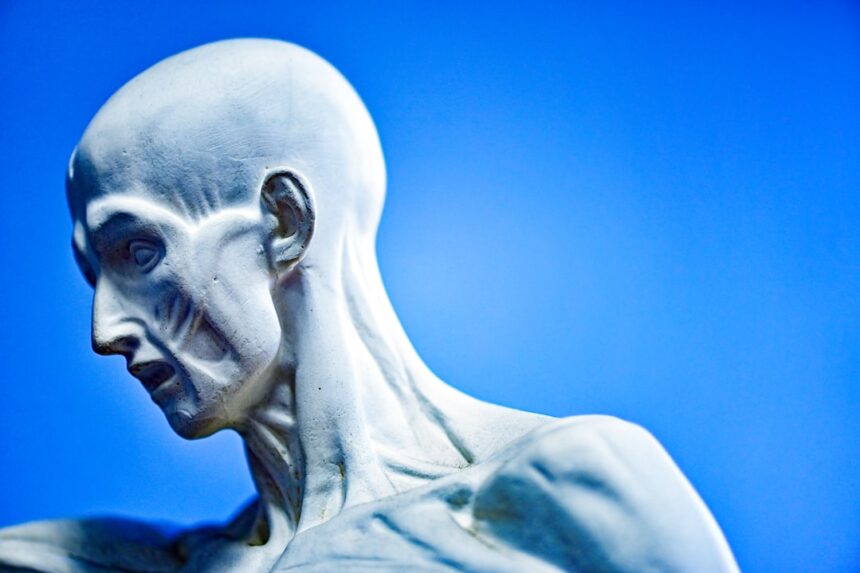
So, are there humanoids on the Moon?
Let’s get straight to it: no, there’s no credible scientific evidence or established proof that humanoids have ever been discovered on the Moon. Despite what some science fiction might suggest or what conspiracy theories might claim, our current understanding of lunar exploration and scientific observation doesn’t support the existence of any form of intelligent, humanoid life on our nearest celestial neighbor.
This isn’t to say we haven’t found anything interesting on the Moon. We’ve discovered a lot about its geology, its history, and its potential for resources. But intelligent life, particularly of the humanoid variety, remains firmly in the realm of imagination for now.
Recent discussions about the possibility of humanoid beings on the Moon have sparked interest in various scientific and speculative articles. One such article explores the implications of extraterrestrial life and the potential for humanoid forms to exist beyond Earth. For a deeper dive into this fascinating topic, you can read more in the article found here: Humanoid Beings on the Moon.
What We Have Found on the Moon: A Quick Look
While we’re waiting for any hypothetical humanoid discoveries, it’s worth touching on what lunar missions have revealed. Think of it as building the foundation of our knowledge before we start speculating about visitors.
Lunar Soil and Rocks: The Basics
The Moon isn’t just a big gray rock. Its surface is covered in a layer of dust and rock fragments called regolith. This stuff is fascinating to scientists because it tells us about the Moon’s formation and its bombardment history.
Composition of Regolith
Lunar regolith is primarily made up of pulverized rocks, minerals, and glass fragments. It’s rich in elements like oxygen, silicon, iron, calcium, and aluminum. There are also trace amounts of other elements, which are of great interest for future lunar resource utilization.
Impact Craters: The Moon’s Scarred Surface
The Moon’s lack of atmosphere means it’s constantly hit by meteoroids. These impacts create craters of all sizes, from tiny pits to massive basins. Studying these craters helps us understand the age of different lunar regions and the frequency of impacts in the solar system.
Water Ice: A Game Changer
One of the most significant discoveries in recent decades has been the confirmation of water ice on the Moon. This isn’t flowing water like on Earth, but rather frozen water molecules found in permanently shadowed craters near the lunar poles.
Where is the Water Ice?
The coldest spots on the Moon are found in craters that never see sunlight. These “permanently shadowed regions” (PSRs) act like natural freezers, trapping water ice that likely arrived via comets and asteroids over billions of years.
Why is Water Ice Important?
This discovery is huge for future lunar exploration. Water can be broken down into hydrogen and oxygen, which are essential for rocket fuel and breathable air. It also means astronauts could potentially live and work on the Moon for extended periods without needing to ship all their supplies from Earth.
The “Humanoid” Question: Where Does It Come From?
So, if there’s no evidence, why do people talk about humanoids on the Moon? This usually stems from a few places: science fiction, misinterpreted observations, and, well, pure speculation.
Science Fiction’s Influence
Hollywood and authors have been playing with the idea of aliens and lunar inhabitants for decades. Think about old sci-fi movies with “moon men” or stories of advanced civilizations hidden away. These narratives are powerful and have shaped popular imagination.
Early Sci-Fi Depictions
From H.G. Wells’ The First Men in the Moon to countless B-movies, the idea of beings on the Moon has been a staple of science fiction. These stories often imagined them as physically similar to humans, perhaps for relatability or because it was easier to depict.
Modern Interpretations
Even today, while sci-fi has become more varied, the concept of alien life, and sometimes humanoid forms, on other celestial bodies, including the Moon, still pops up. It’s a narrative hook that sparks curiosity and wonder.
Misinterpreted Observations and Anomalies
Sometimes, natural lunar features or unusual lighting conditions can be mistaken for something more. When you combine that with a predisposition to believe in something extraordinary, it can lead to unusual claims.
Pareidolia: Seeing Faces in the Clouds (or Craters)
Our brains are wired to find patterns, and sometimes we see familiar shapes where none exist. This phenomenon, called pareidolia, can cause people to see faces or figures in rock formations or shadows on the Moon.
Unexplained Signals or Phenomena
There have been instances where unexplained signals or strange photographic anomalies have been reported. While most of these are eventually explained by natural causes or equipment glitches, they can sometimes fuel speculation about non-human activity.
The Power of Speculation and Conspiracy Theories
Once an idea takes root, especially one as captivating as finding intelligent life, it can be difficult to dislodge. Conspiracy theories thrive on doubt and the absence of definitive answers, making the Moon a fertile ground.
The “Face on Mars” Effect on the Moon
The famous “Face on Mars” image, later revealed to be a mesa shaped by erosion, illustrates how compelling an initial, ambiguous image can be. Similar arguments have been made about features on the Moon.
The Appeal of the Unknown
Human beings are naturally curious. The vastness of space and the possibility of other life forms are deeply intriguing. The Moon, being so close, becomes an obvious target for our curiosity and imagination.
What Would it Take to Prove Humanoids Exist on the Moon?
If we were to find evidence of humanoids on the Moon, it wouldn’t be a quiet whisper or a grainy photograph. It would require concrete, undeniable proof that could withstand intense scientific scrutiny.
Definitive Physical Evidence
This is the gold standard. Finding actual beings, or irrefutable remnants of them, would be the ultimate confirmation.
Biological Samples
Finding organic material that is clearly not from Earth and exhibits signs of complex biological structure would be a massive discovery. This could range from intact bodies to preserved tissues or even fossilized remains.
Artificial Structures
Discovering structures that are clearly not natural geological formations would be strong evidence. Think about buildings, tools, or any form of deliberate construction that shows intelligence and purpose.
Advanced Technological Signatures
Even without direct contact, finding evidence of their technology would be compelling.
Unexplained Energy Signatures
Detecting power sources or energy emissions that cannot be attributed to natural lunar processes would be highly significant. This could include unusual radio frequencies or heat signatures.
Artifacts of Advanced Design
Finding manufactured objects with design principles far beyond our current understanding or capabilities would be another strong indicator of intelligent, non-human creators.
International Scientific Consensus
No single piece of evidence would be enough. Any claim would need to be independently verified and accepted by the global scientific community.
Peer Review and Replication
Any scientific claim undergoes rigorous peer review. If humanoids were discovered, multiple independent research teams would need to examine the evidence and arrive at the same conclusions.
Open Data and Transparency
For such a monumental discovery, transparency would be paramount. All data, imaging, and analysis would need to be made public for scrutiny by scientists worldwide.
Recent discussions about the possibility of humanoid beings on the Moon have sparked interest in various scientific communities. An intriguing article that delves into this topic can be found at In the War Room, where researchers explore the implications of such discoveries and their potential impact on our understanding of extraterrestrial life. As we continue to investigate our celestial neighbor, the idea of encountering intelligent life forms raises both excitement and ethical questions about our future interactions.
The Challenges of Lunar Exploration and Search
Even if we were looking for something, the Moon presents enormous challenges that make any search incredibly difficult.
Harsh Lunar Environment
The Moon is not a hospitable place. Its conditions are extreme, which would make survival for any life form, let alone complex humanoids, a significant hurdle.
Lack of Atmosphere and Radiation
The Moon has virtually no atmosphere, meaning no protection from solar and cosmic radiation, and no air to breathe. This requires any life to have evolved incredibly robust defenses or to live underground.
Extreme Temperature Variations
Temperatures on the Moon swing wildly between searing heat in sunlight and frigid cold in shadow. This makes surface dwelling extremely difficult.
Vastness and Inaccessibility of Lunar Terrain
The Moon is a large place, and much of it remains unexplored in detail. Vast areas are difficult to access, making comprehensive searches impractical.
Permanently Shadowed Regions
While these areas hold water ice, they are also incredibly difficult to explore due to perpetual darkness and extreme cold. Any life there would need specialized adaptations.
Lava Tubes and Subsurface Caves
There’s speculation that life, if it exists or existed, might be found in subsurface lava tubes or caves, offering protection from radiation and temperature extremes. However, exploring these is technically very challenging.
Limitations of Current Technology
Our current technology allows us to explore the Moon, but it has limitations, especially when it comes to detecting life in the most challenging environments.
Remote Sensing and Robotic Exploration
While rovers and orbiters are powerful tools, they can only cover so much ground and have limitations in what they can detect, particularly subtle biological signs.
The Need for Advanced Life Detection
Detecting complex life forms, especially those that might be dormant or hidden, requires incredibly sophisticated equipment and techniques that we may not yet possess.
What If There Were Humanoids? Implications and Speculation
If, by some incredible turn of events, humanoids were discovered on the Moon, the implications would be staggering, reshaping our understanding of life, the universe, and ourselves.
Redefining Life and Intelligence
The very definition of life and intelligence would be broadened. It would confirm that life can arise and evolve in environments vastly different from Earth.
Our Place in the Universe
The discovery would fundamentally alter humanity’s perception of its uniqueness. We would no longer be the sole example of intelligent, complex beings in our immediate cosmic neighborhood.
Philosophical and Religious Shifts
Major philosophical and religious frameworks would likely face significant reevaluation. The existence of another intelligent species would raise profound questions about origins, purpose, and consciousness.
Potential for Interaction and Understanding
This is where speculation gets really interesting, but also very hypothetical.
Communication Challenges
Assuming they are intelligent, the primary challenge would be establishing communication. Their biology, language, and conceptual frameworks could be vastly different from ours.
Cultural Exchange or Conflict
If interaction were possible, the potential for both unprecedented cultural exchange and misunderstanding or conflict would exist. History on Earth offers cautionary tales.
Technological and Scientific Advancement
Their existence could unlock new frontiers of knowledge.
Access to Advanced Knowledge
If the humanoids are more advanced, their technology and scientific understanding could offer breakthroughs in fields ranging from physics and medicine to energy and propulsion.
Understanding Universal Principles
Studying their existence, biology, and technology could provide insights into universal principles that govern life and matter across the cosmos.
In Conclusion: The Moon Remains Earth’s Silent Neighbor
As of now, the Moon is a silent, airless world, a subject of intense scientific study and a canvas for our imagination. The evidence points to a geologically fascinating but lifeless body, at least in the sense of complex, intelligent beings.
While the idea of humanoids on the Moon is a compelling narrative, it’s important to ground our understanding in what we know. Our current scientific endeavors focus on exploring its geological past, its potential resources, and its role in Earth’s history.
Perhaps one day, with more advanced technology and deeper exploration, we might uncover something truly unexpected. Until then, the Moon continues to be a testament to the wonders of our solar system, a place of mystery and ongoing discovery, but not yet a home for humanoid beings. The search for extraterrestrial life continues, but for now, it’s focused on places like Mars, the moons of Jupiter and Saturn, and the distant exoplanets. The Moon, for all its familiarity, remains a blank slate when it comes to intelligent inhabitants.

He Remote Viewed the Moon. Then Something Saw Him.
FAQs
What are humanoid beings on the Moon?
Humanoid beings on the Moon refer to the hypothetical existence of creatures or entities with a similar physical appearance to humans, such as having a head, torso, and limbs.
Is there any scientific evidence of humanoid beings on the Moon?
As of now, there is no scientific evidence to support the existence of humanoid beings on the Moon. All known missions to the Moon have not reported any sightings or encounters with such beings.
What are some theories about humanoid beings on the Moon?
Some theories suggest that humanoid beings on the Moon may be the result of extraterrestrial activity, while others propose that they could be remnants of an ancient civilization that once inhabited the Moon.
What is the general consensus among scientists about humanoid beings on the Moon?
The general consensus among scientists is that there is no credible evidence to support the existence of humanoid beings on the Moon. The scientific community largely considers such claims to be speculative and lacking empirical support.
Are there any ongoing research or missions to investigate humanoid beings on the Moon?
As of now, there are no ongoing research or missions specifically aimed at investigating the existence of humanoid beings on the Moon. Most scientific efforts related to the Moon focus on geological, astronomical, and potential future human exploration aspects.