The success of the Allied invasion of Normandy on June 6, 1944, D-Day, is one of the most celebrated turning points of World War II. However, the immense scale of that victory was not solely due to brute military force. It was also a testament to a sophisticated and audacious deception campaign orchestrated by the Allied High Command, codenamed Operation Fortitude. This elaborate ruse was designed to mislead the German military into believing that the main Allied assault would come not at Normandy, but at the Pas-de-Calais, a location much closer to Great Britain and the logical invasion point. Operation Fortitude, a masterful blend of intelligence, propaganda, and military theatre, played a crucial role in convincing the German leadership to commit their reserves to the wrong part of France, thereby significantly reducing their ability to respond effectively to the actual invasion.
The Genesis of Deception: Why Fortitude Was Essential
The decision to launch Operation Fortitude was born out of a critical strategic imperative: to achieve the element of surprise necessary for a successful invasion of Nazi-occupied Europe. The sheer number of troops, ships, and aircraft required for an operation as large as Overlord meant that secrecy was paramount. Any hint of the true invasion plan would have allowed the Germans to reinforce their defenses, concentrate their mobile reserves, and potentially repel the Allied landings with devastating consequences. The coastline of France was heavily fortified, and the Germans had amassed significant forces, particularly in the Pas-de-Calais, anticipating an invasion at its narrowest point across the English Channel. The challenge for the Allies was to convince the German High Command that this anticipation was correct, while simultaneously preparing for and executing the landings in Normandy, a much wider and more exposed stretch of coastline.
The Strategic Imperative of Surprise
The concept of deception in warfare is as old as warfare itself. However, the scale and complexity of Operation Fortitude elevated it to an unprecedented level. The Allies understood that a frontal assault against the full might of the German defenses, even with overwhelming force, carried a high risk of failure. Surprise was not merely desirable; it was a prerequisite for success. By diverting German attention and resources, Operation Fortitude aimed to create a window of opportunity where the Allied forces could establish a beachhead and begin to expand their operations before the enemy could effectively mobilize their counter-offensive. This involved creating a plausible, yet entirely fabricated, invasion scenario that would absorb the attention and the strategic thinking of the German command.
Identifying the Enemy’s Expectations
The Allied intelligence services meticulously analyzed German defensive preparations and doctrinal thinking. It was clear that the Germans believed an invasion would occur at the Pas-de-Calais. This conviction was based on several factors: the shortest sea crossing from Britain, the concentration of German air and naval assets in the area, and the geographical logic of an invasion route. Operation Fortitude aimed to exploit this existing belief system, reinforcing it with a torrent of carefully curated information that would confirm their worst fears about a Pas-de-Calais landing. The goal was not to invent a completely new threat, but to amplify and solidify the threat the Germans were already anticipating.
The Art of Misdirection: Creating a Plausible Alternative
The core of Operation Fortitude was the creation of a fictional Allied army group, the First United States Army Group (FUSAG), supposedly poised to invade the Pas-de-Calais. This phantom army was to be commanded by the highly respected and notoriously aggressive General George S. Patton Jr., a figure the Germans both admired and feared. The choice of Patton was deliberate; his reputation alone was a powerful tool of deception. The Allies then set about constructing an elaborate, multi-layered illusion to make FUSAG appear not only real but also the primary invasion force.
Operation Fortitude was a crucial part of the Allied strategy during World War II, designed to mislead the German forces about the location of the D-Day invasion. By creating a fictitious army and staging elaborate deception tactics, the Allies successfully diverted German attention away from Normandy. For a deeper understanding of how Operation Fortitude was executed and its impact on the success of the invasion, you can read more in this related article at In the War Room.
The Pillars of Deception: How FUSAG Came to Life

The creation of FUSAG was a masterpiece of elaborate fakery, encompassing every aspect of military presence. From phantom armies to fake radio traffic, no detail was too small to be overlooked. The objective was to saturate German intelligence with evidence that painted a consistent and convincing picture of an impending invasion at the Pas-de-Calais. This involved a combination of physical deception, electronic warfare, and psychological manipulation. The success of Operation Fortitude hinged on its ability to project an overwhelming sense of reality for a force that did not exist in any tangible form capable of launching an invasion.
Physical Deception: The Illusion of a Mighty Army
One of the most visually striking elements of Operation Fortitude was the creation of “ghost armies.” This involved the use of inflatable tanks, trucks, and artillery pieces, strategically placed in areas where they could be observed by German reconnaissance planes or spies. These dummy military assets were carefully positioned to mimic the formations and deployments of real troop concentrations. The visual impact was significant; a field dotted with seemingly real tanks and artillery gave the impression of a vast military force ready for deployment. Furthermore, the Allies constructed fake camps, command posts, and airfields, complete with dummy aircraft, all designed to further the illusion of a massive buildup in southeastern England. Even the noise of military activity was simulated, with carefully orchestrated sounds of marching troops and vehicle movements broadcast in strategic locations.
Electronic Warfare: Confusing the Airwaves
Radio traffic played a vital role in Operation Fortitude. The Allies created and broadcast vast amounts of simulated radio communications, all originating from the supposed FUSAG headquarters and units. This traffic was designed to be intercepted by German listening posts, providing further “evidence” of the planned invasion. These transmissions included operational orders, troop movements, and even casual conversations, all carefully crafted to be authentic-sounding. The sheer volume and perceived legitimacy of this radio chatter were intended to overwhelm German intelligence analysts and reinforce the idea that a major operation was imminent. The Allies also employed jamming techniques and spoofed signals to disrupt German communications and sow further confusion.
The Role of Double Agents and Infiltration
The effective use of double agents was another crucial component of Operation Fortitude. These agents, working for the Allies but seemingly loyal to the Germans, provided a continuous stream of carefully fabricated intelligence. They would report on the supposed strength, location, and intentions of FUSAG, invariably confirming the German belief in a Pas-de-Calais invasion. The information provided by these double agents was meticulously vetted and integrated into the overall deception plan, ensuring its consistency and plausibility. This human element of deception added a layer of credibility that was difficult for the Germans to dismiss.
The Pas-de-Calais Gambit: Luring the Reserves

The ultimate goal of Operation Fortitude was to convince the German command to commit their strategic reserves, particularly the formidable Panzer divisions, to the Pas-de-Calais region. By presenting a convincing threat in this area, the Allies aimed to drain the forces that would otherwise be available to counter the Normandy landings. The success of this gambit was critical to the survival of the Allied beachheads. The Germans, having been successfully misled, would be forced to confront a phantom threat while the real invasion force was facing a comparatively weaker defense.
Reinforcing the Enemy’s Preconceived Notions
The Allied deception plan was designed to play directly into the Germans’ existing biases and expectations. The Pas-de-Calais was the obvious invasion point in the minds of many German strategists. Operation Fortitude amplified this perceived obviousness through a relentless barrage of carefully managed information. Fake reconnaissance reports, intercepted radio messages, and disinformation fed through double agents all pointed towards the Pas-de-Calais as the primary target. The Allies understood that it was easier to reinforce an existing belief than to create an entirely new one.
The “Calais” Deception: Operation Fortitude North
Operation Fortitude was divided into two main parts: Fortitude North and Fortitude South. Fortitude North focused on deceiving the Germans about an invasion of Norway. While less impactful than its southern counterpart, it still served to disperse German attention and resources. However, it was Fortitude South, targeting the Pas-de-Calais, that was the cornerstone of the deception. This section of the operation was designed to create the impression of a massive invasion force preparing to cross the narrowest part of the English Channel. The scale of the physical and electronic deception employed here was immense.
The Normandy Diversion: The Real Threat Under Wraps
While the world’s attention was seemingly fixed on the phantom threat in the Pas-de-Calais, the real invasion preparations for Normandy were being conducted with the utmost secrecy. The Allied forces destined for D-Day were held back, disguised, and their movements carefully controlled to avoid detection. The contrast between the overt, visible preparations for the Pas-de-Calais invasion and the clandestine movements for Normandy was a key element of the deception. The Germans were so focused on the elaborate ruse that they failed to recognize the subtle signs of the true invasion taking place elsewhere.
The Aftermath of Deception: The D-Day Impact
When D-Day arrived, the Allied forces landed on the beaches of Normandy. The German response was significantly hampered by the success of Operation Fortitude. The majority of their mobile reserves, including critical Panzer divisions, were held back in the Pas-de-Calais, waiting for an invasion that would never come. This delay proved to be a decisive factor in allowing the Allies to establish and expand their beachheads. The deception had bought them invaluable time and weakened the German ability to mount an effective counterattack.
Weakened Defenses at the Landing Sites
The most immediate and significant impact of Operation Fortitude was the relative weakness of the German defenses in Normandy on D-Day. While the Atlantic Wall was formidable, the forces tasked with defending the Normandy coast were significantly depleted because many experienced units had been held in reserve, anticipating the “main” invasion at Calais. This meant that the Allied troops faced less concentrated resistance, allowing them to gain a crucial foothold. The absence of key armored units meant that German counterattacks were piecemeal and poorly coordinated in the critical early hours and days of the invasion.
The “Wait and See” Strategy of German Command
The German High Command, particularly Field Marshal Erwin Rommel, who was responsible for the defense of the Atlantic Wall, was deeply suspicious of the Normandy landings initially. However, the overwhelming evidence of the FUSAG buildup in the Pas-de-Calais, coupled with Hitler’s own wavering indecision and his personal belief in the Calais threat, meant that vital reinforcements were not immediately dispatched to Normandy. This hesitation, a direct consequence of the deception, allowed the Allied forces to consolidate their gains and begin the arduous task of liberating Europe.
The Long-Term Consequences of Misinformation
The success of Operation Fortitude had long-lasting consequences for the remainder of the Normandy campaign. The Allies were able to leverage their initial gains and bring in reinforcements and supplies without facing the full fury of the German war machine. While the fighting in Normandy was still incredibly brutal, the initial deception had significantly altered the strategic balance, paving the way for the eventual Allied victory in Europe. The war would have been immeasurably longer and bloodier had Operation Fortitude failed.
Operation Fortitude was a crucial part of the Allied strategy during World War II, designed to mislead the Germans about the location of the D-Day invasion. By creating a fictitious army and using deceptive tactics, the Allies successfully convinced the enemy that the invasion would occur at Pas de Calais rather than Normandy. If you’re interested in learning more about the intricate details of how this operation was executed and its impact on the war, you can read a related article that delves deeper into the strategies employed during this pivotal moment in history at this link.
The Legacy of Fortitude: A Masterclass in Deception
| Aspect | Description | Impact/Metric |
|---|---|---|
| Deception Units | Creation of fictitious armies such as the First U.S. Army Group (FUSAG) led by General Patton | Diverted German forces away from Normandy, concentrating defenses at Pas de Calais |
| Fake Radio Traffic | Simulated communications to suggest troop movements and build-up in southeast England | Maintained illusion of large forces, misleading German intelligence for months |
| Dummy Equipment | Use of inflatable tanks, trucks, and aircraft to simulate real military presence | Visual deception from aerial reconnaissance, reinforcing false troop concentrations |
| Double Agents | Controlled agents like Juan Pujol García (“Garbo”) feeding false information to Germans | Credibility of misinformation increased, leading to strategic German misallocations |
| Timing | Deception intensified in weeks leading up to D-Day (June 6, 1944) | Ensured German forces remained fixed at Pas de Calais even after Normandy landings began |
| German Troop Deployment | Estimated 15 German divisions held in reserve at Pas de Calais due to deception | Reduced German resistance during actual Normandy invasion, aiding Allied success |
Operation Fortitude stands as one of the most successful and elaborate deception campaigns in military history. It demonstrated the power of combining psychological warfare, physical deception, and intelligence manipulation to achieve strategic objectives. The meticulous planning, execution, and adaptability of Operation Fortitude served as a testament to the ingenuity and bravery of the individuals involved. The lessons learned from this operation continue to influence military strategy and intelligence gathering to this day.
The Enduring Influence on Modern Warfare
The principles of deception, misdirection, and the creation of plausible alternative threats, as exemplified by Operation Fortitude, remain relevant in modern warfare and intelligence operations. The use of sophisticated disinformation campaigns, cyber warfare, and psychological operations to influence enemy perceptions and decision-making is a direct descendant of the strategies employed during World War II. The ability to manipulate an adversary’s understanding of reality is a potent weapon, and Operation Fortitude provided a powerful historical precedent for its effective application.
The Human Element: Courage and Ingenuity
Beyond the technical aspects of deception, the success of Operation Fortitude was ultimately a testament to the courage, ingenuity, and dedication of the thousands of individuals who planned and executed its various components. From the soldiers who manned dummy tanks in the pouring rain to the intelligence officers who crafted convincing radio traffic, each played a vital role. The double agents, operating under immense personal risk, provided a critical human dimension to the deception. Their contributions, though often unsung, were indispensable to the Allied victory.
A Cautionary Tale for Future Conflicts
Operation Fortitude serves as a powerful reminder that perception can be as influential as reality on the battlefield. It highlights the importance of critical thinking and independent verification of intelligence in countering sophisticated deception. For adversaries, it offers a stark lesson in the potential consequences of succumbing to preconceived notions and emotional biases when assessing threats. The legacy of Operation Fortitude is not just one of military triumph, but also a profound insight into the complex and often subtle art of war.
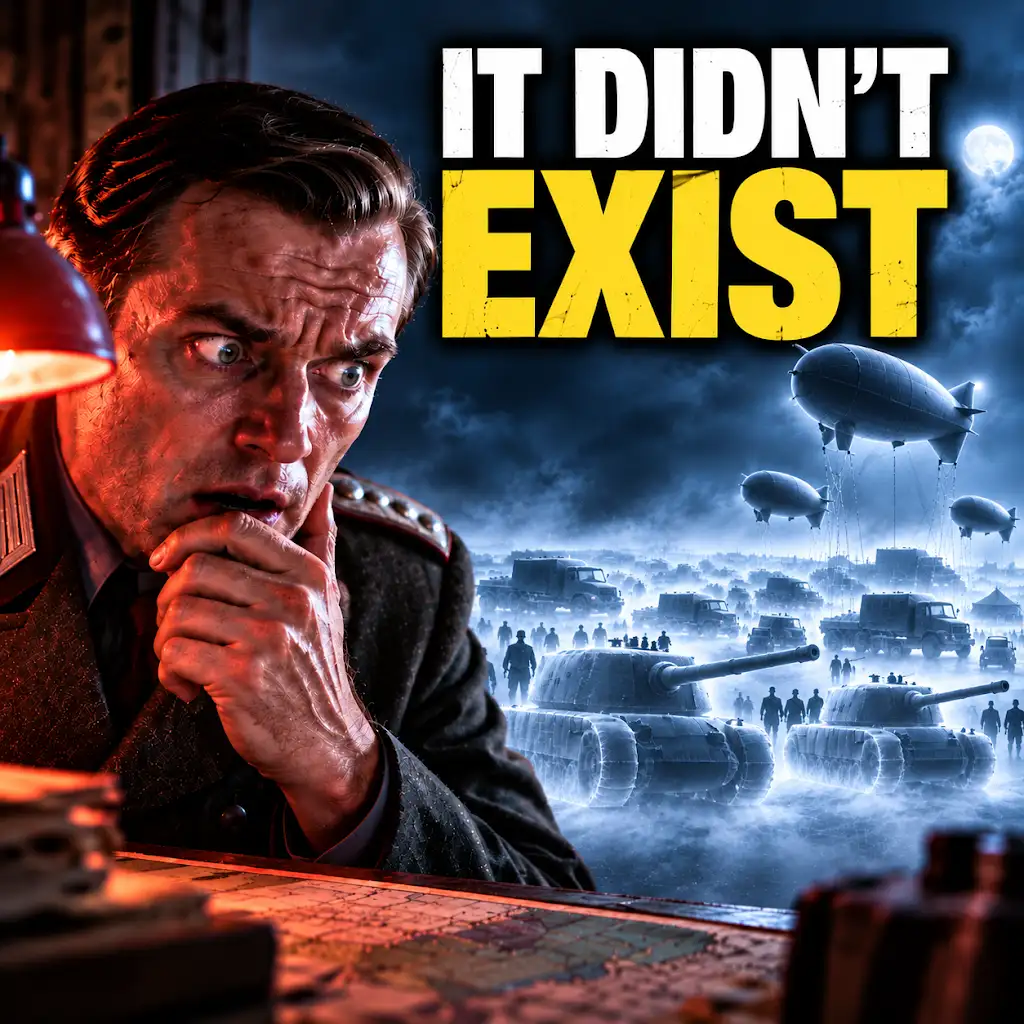
How the Allies Built an Army for Germany to Discover
FAQs
What was Operation Fortitude?
Operation Fortitude was a deception plan employed by the Allied forces during World War II to mislead the German military about the location and timing of the D-Day invasion.
How did Operation Fortitude work?
Operation Fortitude involved creating fake military units, equipment, and communications to convince the Germans that the invasion would take place at a different location than the actual Normandy landing.
What were the main components of Operation Fortitude?
The main components of Operation Fortitude were Operation Fortitude North, which targeted Norway, and Operation Fortitude South, which focused on the Pas de Calais region in France. Both operations used fake radio traffic, dummy equipment, and double agents to deceive the Germans.
What was the significance of Operation Fortitude in World War II?
Operation Fortitude played a crucial role in the success of the D-Day invasion by diverting German resources away from the actual landing site in Normandy. It helped create confusion and delay German reinforcements, allowing the Allies to establish a foothold in France.
How successful was Operation Fortitude?
Operation Fortitude was highly successful in deceiving the German High Command. The Germans were convinced that the main invasion would occur at Pas de Calais, leading them to keep their best troops and resources there, while the Allies landed in Normandy with less resistance.