The dawn of December 7, 1941, shattered the tranquility of Pearl Harbor. The surprise aerial assault by the Imperial Japanese Navy inflicted devastating damage on the United States Pacific Fleet. Battleships, the pride of naval power, lay sunk or crippled, their formidable guns silenced. Yet, amidst the carnage and the ashes, a new paradigm of naval warfare was silently taking shape, one that would prove not only instrumental in the immediate aftermath of the attack but would ultimately define the course of World War II in the Pacific. The aircraft carrier, though not present at the moment of the initial strike, became the linchpin of American naval recovery and subsequent offensive capabilities, demonstrating a resilience and strategic importance that transcended the dramatic destruction of its battleship counterparts. The survival of these floating airfields, due to sheer fortune and strategic deployment, was the crucial factor that allowed the United States to regroup, retaliate, and eventually achieve victory.
The absence of the United States’ aircraft carriers from Pearl Harbor on that fateful Sunday morning was not a matter of chance but a confluence of operational necessity and strategic foresight. While the battleships were undergoing routine maintenance and readiness drills within the harbor, the carriers were engaged in critical missions that inadvertently placed them beyond the reach of the Japanese attackers. Their survival was a stroke of luck for the Americans, but it was a luck underpinned by operational realities that would prove to be the saving grace of the Pacific Fleet.
The Pacific Fleet’s Deployment Strategy
Even before the attack, the United States Navy was grappling with the escalating tensions in the Pacific. The placement of the Pacific Fleet at Pearl Harbor was itself a strategic decision, intended as a deterrent against further Japanese expansionism. However, the need to maintain offensive projection and provide crucial support to allies meant that not all assets could remain perpetually docked.
Carrier Missions and Patrols
The American aircraft carriers, representing the cutting edge of naval aviation, were frequently deployed for a variety of crucial tasks. These included training exercises, ferrying aircraft to distant outposts like Wake Island, and conducting reconnaissance patrols. These missions, while seemingly routine, placed them far from the vulnerable confines of Pearl Harbor when the bombs began to fall. The USS Lexington, for example, was en route from San Diego to deliver aircraft to Midway Atoll. The USS Enterprise, under the command of Admiral William F. Halsey Jr., was returning from Midway after delivering its own contingent of planes. The USS Saratoga was undergoing repairs on the West Coast. Their absence, though a tactical inconvenience for immediate defense, proved to be a strategic blessing in disguise.
The Role of Intelligence and Miscalculation
While the United States possessed some intelligence indicating a potential for Japanese aggression, the precise nature and timing of the attack remained a grave miscalculation. The belief that a carrier-based strike on Pearl Harbor was too audacious or technologically improbable played a significant role in the fleet’s disposition. The emphasis on battleship power, a legacy of pre-World War I naval doctrine, also contributed to a perception that a direct attack on the fleet’s capital ships would be the primary Japanese objective, not a surgical strike against their air power projection capability. The Japanese, conversely, had meticulously planned and executed a doctrine that recognized the decisive potential of carrier-based air power, a lesson the Americans would rapidly learn.
The survival of aircraft carriers during the attack on Pearl Harbor is a fascinating topic that highlights the strategic importance of naval aviation. An insightful article that delves deeper into this subject can be found at In the War Room. This piece explores the decisions made by naval commanders, the role of luck, and the implications of carrier survival for the United States’ naval strategy in the Pacific Theater. Understanding these factors provides a clearer picture of how aircraft carriers became pivotal in World War II, especially following the events of December 7, 1941.
The Immediate Aftermath: A Fleet Reeling, But Not Broken
The devastation at Pearl Harbor was undeniable. The sight of burning oil, mangled steel, and sunken vessels was a stark testament to the effectiveness of the Japanese attack. The loss of life was profound, and the material damage was immense. However, the survival of the aircraft carriers, even if only a few, provided a sliver of hope and a crucial foundation for the American response. Without them, the narrative of the Pacific War could have been drastically different.
Assessing the Damage and Casualties
The immediate hours and days following the attack were dedicated to damage assessment, rescue operations, and salvaging efforts. The Navy’s primary concern was the human toll and the extent of the material losses. The battleship row, once a symbol of American naval might, was a graveyard of steel. The airfields were in disarray, with many planes destroyed on the ground. The psychological impact on the nation and its servicemen was equally significant, fostering a profound sense of shock and a burning desire for retribution.
The Unscathed Carriers: A Beacon of Hope
The survival of the USS Enterprise and USS Lexington, along with the USS Saratoga’s fortunate absence, meant that the United States still possessed its most vital offensive naval assets. These carriers, with their embarked air groups, represented the only significant long-range offensive striking power that remained operational. They were the instruments through which America could begin to project power and challenge Japanese dominance in the Pacific.
The “What If” Scenario: Carriers at Pearl Harbor
Contemplating the alternative scenario – if the carriers had been present and caught in the attack – underscores their crucial survival. Had the Japanese successfully sunk or crippled these vital assets, the United States would have been largely devoid of any meaningful offensive naval capability for an extended period. The ensuing months of Japanese expansion and conquest would have been even more devastating, potentially pushing the United States to the brink of defeat before it could have truly mobilized its industrial might.
Rebuilding and Redeploying: The Carriers’ Urgent Mission
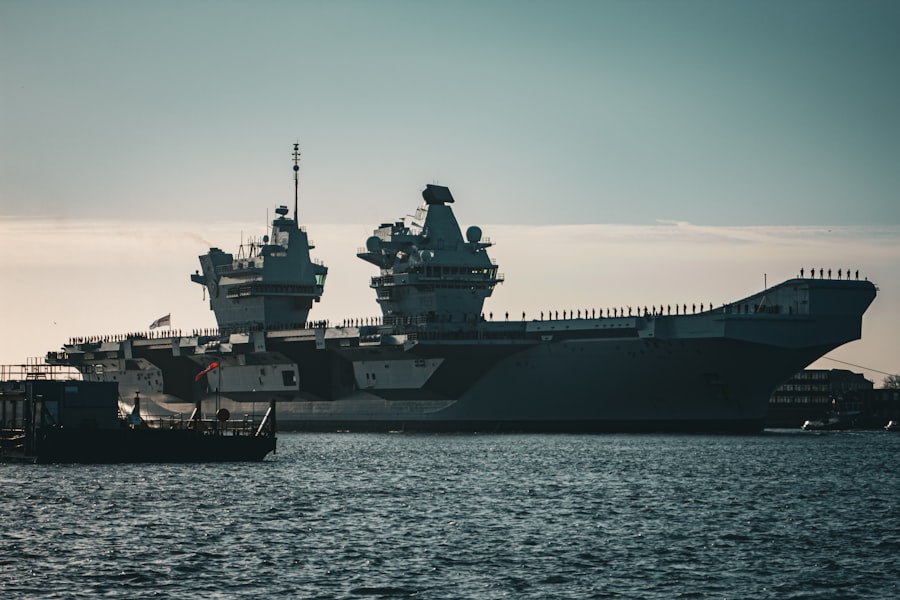
With the core of the battleship fleet neutralized, the responsibility for immediate offensive action and strategic reconnaissance fell squarely on the shoulders of the surviving aircraft carriers. Their presence, though limited, allowed the Navy to begin the arduous process of rebuilding its offensive posture and projecting a semblance of power in the face of overwhelming Japanese advances.
Operation “Kick the Japs Out” – Early Counterstrikes
Even before the full extent of the damage could be assessed and repairs initiated, the surviving carriers were pressed into service. Their primary objective was to launch retaliatory strikes, demonstrating that the United States was not defeated and could still fight back. These early missions were often daring and conducted with limited intelligence, aimed more at morale boosting and disrupting Japanese operations than achieving decisive strategic victories.
The Doolittle Raid: A Symbolic Blow
The most famous of these early retaliatory actions was the Doolittle Raid on April 18, 1942. While not a carrier operation itself (the bombers launched from the USS Hornet), it was conceptually driven by the need for a bold strike against Japan. The carriers USS Enterprise and USS Hornet were instrumental in launching this mission, providing the necessary support and demonstrating a willingness to strike at the Japanese homeland. This raid, while militarily insignificant in its damage, had an immeasurable psychological impact, boosting American morale and shaking Japanese confidence.
Reconnaissance and Intelligence Gathering
Beyond direct strikes, the carriers played a vital role in intelligence gathering. Their aircraft, equipped with cameras, provided crucial reconnaissance of Japanese-held territories and fleet movements. This intelligence was invaluable in understanding the enemy’s strength, intentions, and disposition, allowing American strategists to plan future operations more effectively.
The Turning Point: Midway and the Ascendancy of Carrier Warfare
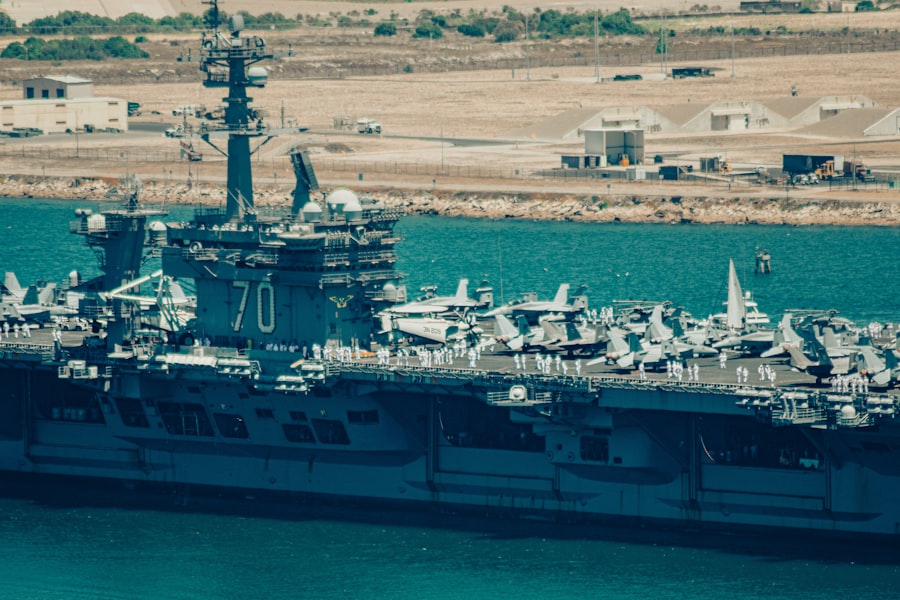
The Battle of Midway, fought in June 1942, stands as the undisputed turning point of the Pacific War. It was a naval engagement where the aircraft carrier unequivocally proved its superiority over the battleship and where the surviving American carriers, along with their newly built counterparts, delivered a crushing blow to the Imperial Japanese Navy. The lessons learned from Pearl Harbor were starkly applied at Midway, solidifying the carrier’s dominance.
Strategic Significance of Midway
The Japanese objective at Midway was to eliminate the American aircraft carriers as a threat and secure a strategic base for further expansion. They gambled their carrier force, believing they could replicate the success of Pearl Harbor. However, superior American intelligence, code-breaking efforts, and the strategic deployment of their carrier groups proved to be decisive.
The Loss of Japanese Carrier Strength
In a series of fierce aerial engagements, the United States Navy sank four of Japan’s most experienced aircraft carriers – the Akagi, Kaga, Soryu, and Hiryu. This catastrophic loss crippled the Imperial Japanese Navy’s offensive capabilities and irrevocably shifted the balance of power in the Pacific. The loss of their veteran aircrews and experienced carrier commanders was a blow from which they would never fully recover.
The Carrier as the Decisive Weapon
Midway demonstrated beyond any doubt that the aircraft carrier had replaced the battleship as the capital ship of modern naval warfare. The ability to project air power over vast distances, to strike at enemy fleets before they could be seen or engaged by surface gunnery, and to conduct reconnaissance and attack missions simultaneously, made the carrier the ultimate arbiter of naval supremacy. The surviving carriers from Pearl Harbor, along with new additions to the fleet, were at the forefront of this revolution.
The survival of aircraft carriers during the attack on Pearl Harbor has been a topic of extensive analysis, shedding light on their strategic importance in naval warfare. A related article explores the reasons behind this phenomenon, emphasizing how the carriers were not in the harbor at the time of the attack, which ultimately saved them from destruction. For a deeper understanding of this pivotal moment in history, you can read more about it in this insightful piece found here.
The Long Road to Victory: Carriers as the Backbone of the Pacific Campaign
| Reasons | Explanation |
|---|---|
| Location | The aircraft carriers were not present at Pearl Harbor during the attack, as they were out on maneuvers or delivering aircraft. |
| Early Warning | The carriers received early warnings of the attack, allowing them to take evasive action and avoid being targeted. |
| Flexibility | Aircraft carriers are mobile and can quickly change their position, making them harder to track and attack. |
| Strategic Importance | The US Navy recognized the strategic importance of aircraft carriers and took measures to protect them from potential threats. |
Following Midway, the aircraft carrier became the central pillar of the United States’ offensive strategy in the Pacific. From island hopping campaigns to decisive fleet actions, the carriers provided the essential air cover, logistical support, and offensive punch that propelled the Allied forces towards victory. Their resilience, adaptability, and ever-increasing numbers became the defining characteristic of the later stages of the war.
Island Hopping and Amphibious Assaults
The Pacific theater was characterized by a series of grueling island-hopping campaigns, each requiring overwhelming air superiority to dislodge entrenched Japanese forces. Aircraft carriers provided this vital air cover, neutralizing enemy airfields, bombarding shore defenses, and supporting amphibious landings. Their ability to move with the fleet and provide continuous air support was essential for the success of these operations.
Air Superiority and Naval Power Projection
The dominance of American carrier aviation throughout the war meant that the United States Navy could dictate the terms of engagement. Enemy fleets were often located and engaged by carrier-based aircraft before their own surface vessels could even approach. This air superiority was crucial not only in battles but also in protecting vital supply lines and projecting American power across the vast expanse of the Pacific.
The Evolving Role of the Carrier
As the war progressed, the aircraft carrier evolved from a platform for reconnaissance and limited strikes to a fully integrated system of offensive power. New classes of carriers were built, larger and more capable, carrying a greater number of aircraft and possessing improved defenses. The development of naval aviation technology, including faster and more heavily armed aircraft, further enhanced the carrier’s lethality.
The survival of the United States’ aircraft carriers from the devastating attack on Pearl Harbor was not merely a fortunate accident; it was a pivotal moment that redefined naval warfare and ultimately paved the way for Allied victory in the Pacific. These floating airfields, though absent from the initial carnage, represented the future of naval power and provided the essential foundation for America’s remarkable recovery, its strategic counteroffensives, and its eventual triumph. The silence of the battleships at Pearl Harbor served as a stark, unintended testament to the ascendancy of the aircraft carrier, a lesson etched in the annals of history.

Japan Won Pearl Harbor—So Why Did It Lose the War?
FAQs
1. How did aircraft carriers survive Pearl Harbor?
Aircraft carriers survived Pearl Harbor because they were not present at the time of the attack. The majority of the Pacific Fleet’s carriers were out at sea on training exercises or delivering aircraft to other locations.
2. Were aircraft carriers targeted during the Pearl Harbor attack?
Yes, the Japanese attackers did intend to target the aircraft carriers, but due to their absence, the carriers were spared from the destruction that befell the battleships and other vessels in the harbor.
3. What role did aircraft carriers play in the aftermath of Pearl Harbor?
Aircraft carriers played a crucial role in the aftermath of Pearl Harbor by becoming the primary offensive weapon for the United States in the Pacific theater. They were instrumental in turning the tide of the war and were key to the success of the US Navy’s operations.
4. How did the survival of aircraft carriers impact the outcome of World War II?
The survival of aircraft carriers at Pearl Harbor allowed the United States to maintain a significant naval presence in the Pacific. This enabled the US to launch counteroffensives and ultimately defeat the Japanese forces, leading to the end of World War II in the Pacific.
5. What lessons were learned from the survival of aircraft carriers at Pearl Harbor?
The survival of aircraft carriers at Pearl Harbor highlighted the importance of having a mobile and flexible naval force. It emphasized the need for aircraft carriers as a primary means of projecting power and conducting naval operations in modern warfare.