The Strategic Ghost of Pas de Calais
The immense and ultimately doomed German war machine that dominated Europe for a brutal period was, in many ways, a testament to a singular, albeit terrifying, vision. At its core lay a profound belief in the power of decisive action, rapid maneuver, and the exploitation of perceived enemy weaknesses. This ideology, championed by Adolf Hitler, extended to the strategic defense of the continent. While the eventual Allied landings at Normandy marked the beginning of the end for Nazi Germany, the focus of Hitler’s defensive planning in the years leading up to D-Day was overwhelmingly fixed on a different, more geographically logical point: the Pas de Calais. This narrow strait, the shortest sea crossing to mainland Europe, became the phantom limb of Allied invasion plans in the mind of the Führer, a perceived vulnerability that dictated the deployment of vast resources and shaped the psychological landscape of German military preparedness.
Hitler’s obsession with Pas de Calais was not born of mere geographical observation; it was deeply rooted in his own strategic thinking and the historical precedents he so readily invoked. He believed, with an almost unshakeable conviction, that any large-scale Allied amphibious assault would, by its very nature, aim for the path of least resistance, the shortest distance. This simple, yet ultimately flawed, assumption led to a misallocation of defensive strength that would prove catastrophically costly on June 6, 1944. The Allied deception operations, codenamed Operation Fortitude, were masterfully designed to exploit this very predilection, creating a phantom army and a manufactured threat that kept German reserves pinned to the Pas de Calais, awaiting an invasion that would never come.
The Geographic Imperative and Historical Echoes
The allure of Pas de Calais as an invasion point was undeniable from a purely logistical standpoint. Spanning a mere twenty-one miles across the English Channel, it offered the shortest and most direct route from the shores of Britain to the continent. For an undertaking as complex and resource-intensive as a full-scale amphibious invasion, minimizing transit time and maximizing the potential for overwhelming force were paramount considerations. The Kriegsmarine, though severely weakened by this stage of the war, still maintained a presence in the waters and ports of Northern France, and the proximity of these forces to a Pas de Calais landing would have presented a formidable immediate threat to any Allied beachhead. Furthermore, the densely populated and industrially significant regions of Belgium and the Ruhr Valley lay within relatively easy reach from this sector, offering the prospect of rapid territorial gains and the disruption of Germany’s war-making capacity.
Beyond the stark geographical realities, Hitler drew upon historical parallels to reinforce his conviction. The successful landings of Allied forces during the Napoleonic Wars, and even earlier military expeditions that had utilized the shortest crossing points, served as historical anchors for his strategic worldview. He envisioned the Allied command as being similarly inclined to exploit the most apparent and efficient route, much as he himself would have done in a similar strategic predicament. This reliance on historical precedent, often divorced from the nuanced realities of modern warfare and the specific capabilities of the Allied powers, became a critical blind spot. The British and American military planners, keenly aware of Hitler’s strategic mindset and his predisposition towards the obvious, meticulously crafted their deception plans to feed this expectation. They understood that by presenting a credible, albeit illusory, threat at Pas de Calais, they could divert German attention and resources away from the true landing zones in Normandy.
Hitler’s expectation of an invasion at Pas de Calais was influenced by various strategic considerations and intelligence reports that suggested this region was the most likely point of attack by Allied forces. The geographical proximity to Britain and the existing infrastructure made it a prime target for an invasion. For a deeper understanding of the factors that shaped Hitler’s military decisions and the broader context of World War II, you can read a related article on this topic at In the War Room.
Operation Overlord and the Shadow of Deception
The Allied invasion of Normandy, codenamed Operation Overlord, was a meticulously planned and executed undertaking that represented a monumental gamble. The decision to land in Normandy, rather than the more geographically intuitive Pas de Calais, was a strategic choice born of careful consideration of terrain, German defensive capabilities, and the crucial element of surprise. While Pas de Calais offered the shortest route, it also boasted the most heavily fortified coastal defenses, a testament to Hitler’s anticipation of an invasion there. The beaches of Normandy, while still formidable, were perceived as offering a slightly greater potential for surprise and a more manageable initial assault.
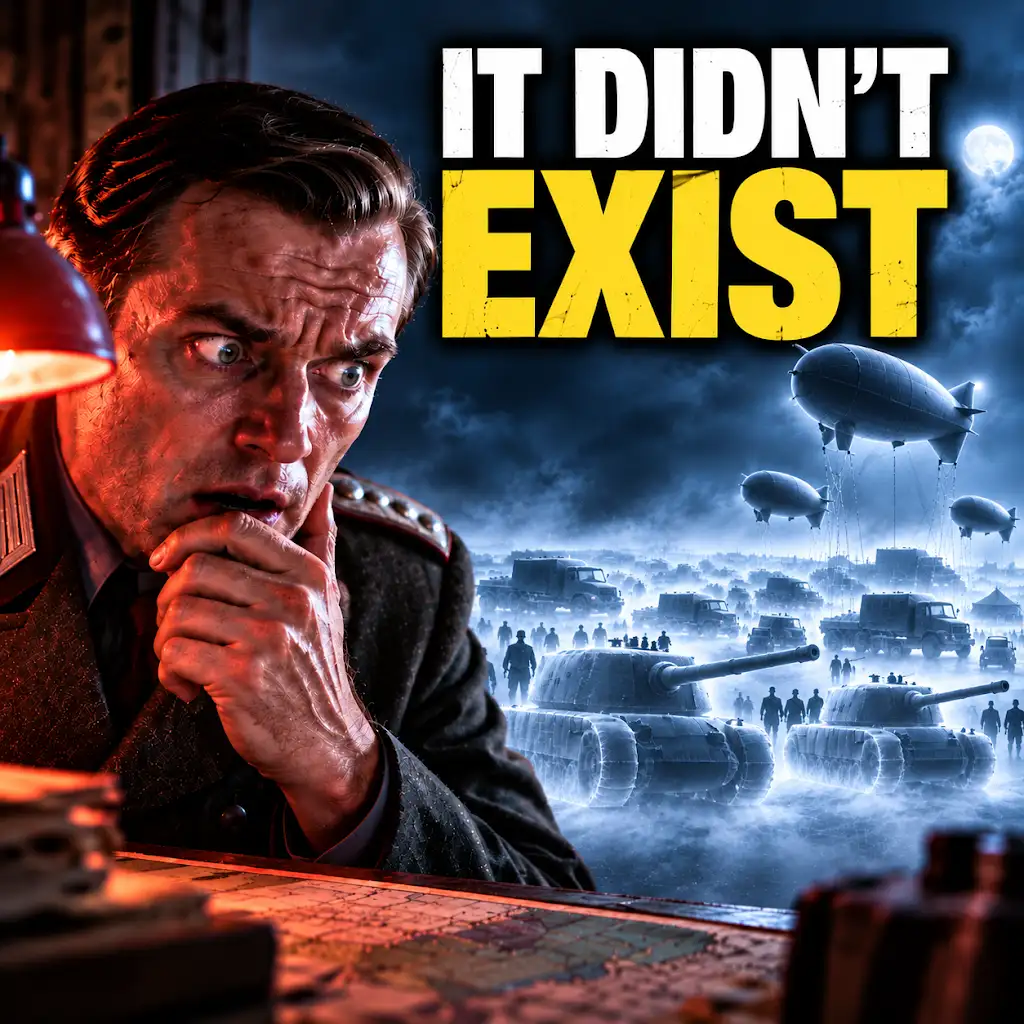
The cornerstone of the Allied strategy, however, was the masterful deception operation known as Operation Fortitude. This elaborate scheme was designed to convince the German High Command that the main Allied invasion would occur at Pas de Calais. The architects of Fortitude, including figures like Colonel David Stirling, a decorated commando, and John Masterman, a Cambridge don, employed a multifaceted approach that included the creation of a phantom army, codenamed FUSAG (First United States Army Group), under the nominal command of the highly publicized General George S. Patton. This fictitious army, with its elaborate troop movements, radio traffic, and even fake encampments, was strategically positioned to suggest an imminent assault on the Pas de Calais. The Germans, constantly monitoring Allied communications and intelligence, were meticulously fed this disinformation.
The Fuhrer’s Fixation: A Case of Strategic Tunnel Vision
Hitler’s personal conviction regarding the Pas de Calais invasion was a significant factor in the German defensive posture. Unlike the Allied command, which benefited from the collaborative efforts of experienced generals and intelligence officers, Hitler’s decision-making process often exhibited a degree of personal obsession and an almost unwavering adherence to his initial strategic intuitions. His fixation on Pas de Calais was not simply a matter of tactical preference; it became a central tenet of his defensive planning for Western Europe. This tunnel vision meant that despite intelligence reports suggesting otherwise, and despite the mounting evidence of Allied preparations elsewhere, Hitler remained largely convinced that the main thrust would come across the narrowest stretch of the Channel.
This unwavering belief led to the deployment of the majority of Germany’s formidable Atlantic Wall defenses and its strategic reserve forces, including key Panzer divisions, in the Pas de Calais region. The reasoning was simple, at least in Hitler’s mind: this was where the Allies would strike, and therefore, this was where the decisive battle for the continent would be fought. The irony was that this defensive concentration, while making a Pas de Calais landing incredibly difficult, simultaneously weakened defenses in Normandy. The Allied deception, therefore, did not just create a phantom threat; it played directly into Hitler’s pre-existing strategic assumptions, amplifying the effect of the disinformation. He was, in essence, being led to believe what he already wanted to believe.
The Misdirection of Forces and the Cost of Misjudgment
The consequences of Hitler’s fixation on Pas de Calais were profound and ultimately devastating for the German war effort. The immense resources, both in terms of manpower and materiel, that were concentrated in the Pas de Calais were critically absent from Normandy on D-Day. While the Allied landings in Normandy were met with fierce resistance, the defenders were often outmatched and outgunned, partly due to the absence of the elite units that Hitler had so confidently stationed further north. The delay in committing these reserves to Normandy, a delay exacerbated by Hitler’s initial disbelief in the landings and his insistence on verifying the threat at Calais, allowed the Allied forces to establish a more secure foothold than might otherwise have been possible.
The strategic misjudgment also extended to the German air force, the Luftwaffe, which was largely unprepared for the scale and ferocity of the Allied air superiority demonstrated over Normandy. The focus on defending the presumed invasion corridor in the Pas de Calais had meant that airfields and anti-aircraft defenses were concentrated in that region, leaving other sectors, including Normandy, more vulnerable. The limited response of the Luftwaffe on D-Day was a direct consequence of this strategic misallocation. The Allies, in contrast, had meticulously planned for air superiority over the landing zones, ensuring that their troops could advance with a degree of freedom from aerial attack that the Germans could not replicate.
In examining the strategic decisions made by Hitler during World War II, one can find insights into why he anticipated an invasion at Pas de Calais. The geography of the region, combined with the Allies’ deceptive tactics, led to a significant miscalculation on his part. For a deeper understanding of these events and their implications, you can read more in this related article on the topic. The analysis highlights how the Allies’ focus on Pas de Calais influenced German defenses throughout the war. To explore this further, visit this article.
The Aftermath: A Lesson in Deception and Strategic Blindness
The successful Allied invasion of Normandy, and the subsequent liberation of France, served as a stark and brutal lesson in the power of strategic deception and the perils of rigid, preconceived notions in warfare. Hitler’s unwavering expectation of an invasion at Pas de Calais, a belief meticulously cultivated by Allied intelligence, ultimately proved to be one of his most significant strategic blunders. The ghost of an anticipated invasion at the shortest crossing point had, in effect, drawn the very defenses that were meant to repel a real threat away from the actual point of attack.
The Allied success was not solely a testament to their military prowess; it was also a victory of intelligence and psychological warfare. Operation Fortitude, a triumph of meticulous planning and execution, had effectively blinded the German High Command, particularly Hitler himself, to the true intentions of the Allied forces. The concentration of German defenses in the Pas de Calais, while a logical defensive response to the perceived threat, became a critical vulnerability that the Allies expertly exploited. The war in Europe, already tilting in favor of the Allies, was decisively hastened by this masterful deception. The Pas de Calais remained a heavily defended sector, a monument to Hitler’s strategic foresight that was ultimately rendered irrelevant by a phantom army and a calculated misdirection of forces. The ultimate irony was that the very strategic logic that Hitler so fervently believed in had been turned against him, leading to the decisive misallocation of resources that paved the way for the liberation of Europe.
How the Allies Built an Army for Germany to Discover
FAQs
What was Hitler’s reasoning for expecting an invasion at Pas de Calais?
Hitler believed that the Pas de Calais region was the most logical choice for an Allied invasion due to its proximity to England and its strategic importance as a potential landing point for a large-scale assault.
Did Hitler’s military strategy focus solely on Pas de Calais?
No, while Hitler expected an invasion at Pas de Calais, he also anticipated possible landings in other areas along the French coast. However, he considered Pas de Calais to be the most likely target for the Allies.
How did Hitler prepare for a potential invasion at Pas de Calais?
Hitler ordered the construction of extensive fortifications and defensive structures along the coast of Pas de Calais, including the infamous Atlantic Wall. He also stationed a significant number of troops and resources in the region to defend against an invasion.
Were Hitler’s expectations of an invasion at Pas de Calais accurate?
No, Hitler’s expectations were ultimately proven wrong when the Allies launched the D-Day invasion at Normandy, rather than Pas de Calais. This surprise attack caught the German forces off guard and played a crucial role in the success of the Allied invasion of Europe.
How did Hitler’s focus on Pas de Calais impact the outcome of World War II?
Hitler’s fixation on Pas de Calais as the primary target for an Allied invasion led to a misallocation of resources and a false sense of security for the German forces. This allowed the Allies to execute a successful invasion at Normandy, ultimately leading to the liberation of Western Europe from Nazi occupation.