The dawn of the atomic age ushered in an era of unprecedented power and terrifying potential. The ability to harness the energy released from atomic nuclei, first demonstrated in a blinding flash over the New Mexico desert, rapidly transitioned from scientific curiosity to a geopolitical weapon. Atmospheric nuclear detonations, the most visible and directly impactful manifestation of this newfound power, became stark milestones in human history, forever altering the global landscape, scientific understanding, and the collective consciousness of humanity. These tests, conducted in the open air, served as both displays of might and terrifying experiments, their radioactive fallout a stark reminder of the destructive capabilities unleashed.
The Genesis of Atomic Testing and Early Detonations
The theoretical underpinnings of nuclear fission, the process that powers atomic bombs, began to coalesce in the early 20th century. However, it was the crucible of World War II that provided the impetus for translating theory into destructive reality. The race to develop a functional atomic weapon, driven by fears of Nazi Germany achieving the same, led to the Manhattan Project, a monumental undertaking by the United States. This project culminated in the first-ever nuclear detonation, a pivotal moment that marked humanity’s entry into the nuclear age.
The Trinity Test: A New Era Begins
On July 16, 1945, at the Alamogordo Bombing Range in New Mexico, the world witnessed the Trinity test. This was not a test of a weapon intended for battlefield deployment, but rather a demonstration of the implosive-type plutonium device, codenamed “Gadget.” The detonation produced a blinding flash, a deafening roar, and a mushroom cloud that soared thousands of feet into the atmosphere. The searing heat vaporized the 100-foot steel tower on which the device was placed, leaving behind a crater lined with fused sand, now known as “trinitite.” The sheer power unleashed was beyond anything previously imagined. The scientific and military observers were awestruck and, for many, deeply sobered by the reality of what they had created. J. Robert Oppenheimer, the scientific director of the Manhattan Project, famously recalled a line from the Bhagavad Gita: “Now I am become Death, the destroyer of worlds.” The Trinity test was not an atmospheric detonation in the sense of a bomb dropped on a target, but it was an open-air test that released significant radioactive material into the atmosphere, albeit in a controlled desert environment.
The Atomic Bombings of Hiroshima and Nagasaki: The First and Last Wartime Use
The practical application of the atomic bomb followed swiftly. In August 1945, the United States dropped two atomic bombs on the Japanese cities of Hiroshima and Nagasaki. The bomb dropped on Hiroshima, codenamed “Little Boy,” was a uranium-based gun-type device. The bomb dropped on Nagasaki, codenamed “Fat Man,” was a plutonium-based implosive-type device, similar in design to the Trinity test’s “Gadget.” These were the only instances of nuclear weapons being used in warfare. The atmospheric detonations over these cities resulted in immediate, catastrophic destruction and immense loss of life. The scale of death and suffering, coupled with the long-term health consequences of radiation exposure, left an indelible scar on history and served as a stark warning about the devastating potential of nuclear weapons. The mushroom clouds that billowed over these cities became iconic and terrifying symbols of the atomic age.
The history of atmospheric nuclear detonations is a complex and significant topic that highlights the geopolitical tensions of the 20th century. For a deeper understanding of this subject, you can explore a related article that delves into the implications and consequences of these tests. To read more, visit this article which provides valuable insights into the historical context and the lasting effects of atmospheric nuclear detonations.
The Cold War and the Proliferation of Nuclear Testing

The end of World War II did not bring universal peace; instead, it ushered in the Cold War, a protracted period of geopolitical tension between the United States and the Soviet Union. This ideological struggle, characterized by proxy wars and an intense arms race, fueled a relentless drive to develop and perfect nuclear weapons. Both superpowers engaged in extensive atmospheric nuclear testing programs, not only to advance their arsenals but also to demonstrate their technological prowess and deter their adversary. This era saw a dramatic increase in the frequency and yield of nuclear detonations, with far-reaching environmental and health consequences.
Soviet Union’s Test Program: Tsar Bomba and Beyond
The Soviet Union’s nuclear program, initiated shortly after the United States, quickly caught up and, in some aspects, surpassed its American counterpart in terms of raw explosive power. The Soviets conducted a vast number of atmospheric nuclear tests, many in remote locations like Novaya Zemlya in the Arctic Ocean and Semipalatinsk in Kazakhstan. One of the most infamous Soviet tests was the “Tsar Bomba” in October 1961. Initially designed to have a yield of 100 megatons, it was detonated at a reduced yield of approximately 50 megatons. Nevertheless, it remains the most powerful human-made explosion ever recorded. The mushroom cloud from this detonation reached an altitude of over 40 miles, and the blast wave circled the Earth multiple times. The Tsar Bomba test was a clear demonstration of Soviet military might and a chilling testament to the destructive capacity that had been achieved. Beyond this singular event, the Soviet Union’s continuous testing regimen contributed significantly to the global atmospheric radioactive contamination.
The United States’ Extensive Testing Series
The United States conducted a comprehensive series of atmospheric nuclear tests throughout the Cold War. These tests, often conducted in the Nevada Test Site and Pacific Ocean atolls like Bikini and Enewetak, were instrumental in developing a wide range of nuclear weapon designs, from tactical weapons to strategic intercontinental ballistic missiles. Notable test series included “Operation Upshot-Knothole,” which explored the effects of low-yield atomic weapons on various targets, and “Operation Castle,” a series of high-yield thermonuclear tests conducted in 1954, including the devastating “Castle Bravo” test, which significantly exceeded its predicted yield and caused widespread radioactive fallout across inhabited islands in the Pacific. The psychological impact of these tests on the civilian populations living downwind from the Nevada Test Site, often referred to as “downwinders,” became a significant and tragic aspect of the nuclear testing era, with documented increases in cancer rates and other radiation-related illnesses.
The Global Impact of Fallout and Public Concern

The atmospheric detonation of nuclear weapons releases vast quantities of radioactive isotopes into the atmosphere. These isotopes, carried by winds, can travel thousands of miles, eventually settling back to Earth as radioactive fallout. This fallout contaminates soil, water, and air, posing long-term health risks to humans and ecosystems. As the scientific understanding of radiation’s effects grew, so too did public awareness and concern about the pervasive contamination caused by nuclear testing.
Strontium-90 and Cesium-137: Persistent Contaminants
Among the most concerning radioactive isotopes released from nuclear detonations were Strontium-90 (Sr-90) and Cesium-137 (Cs-137). Sr-90 has a half-life of approximately 29 years and behaves similarly to calcium in the body, meaning it can be absorbed into bones and teeth, increasing the risk of bone cancer. Cs-137 has a half-life of about 30 years and can be absorbed into soft tissues, increasing the risk of various cancers. These isotopes, when deposited on the ground, can enter the food chain through plants and then be consumed by animals and humans. The widespread distribution of these isotopes meant that even populations far removed from the actual test sites were exposed to low levels of radiation. The realization that nuclear fallout was a global phenomenon, not confined to the borders of the testing nations, fueled international concern and calls for an end to atmospheric testing.
The Silent Spring and the Rise of Environmental Activism
Rachel Carson’s groundbreaking 1962 book, “Silent Spring,” although primarily focused on the dangers of pesticides, played a crucial role in galvanizing public awareness about environmental degradation and the unseen dangers of man-made substances. While not directly about nuclear fallout, the book’s powerful message about the interconnectedness of ecosystems and the potential for scientific advancements to have unforeseen, harmful consequences resonated deeply with the growing anxieties surrounding nuclear weapons testing. The concept of “fallout” became a tangible, albeit invisible, threat, and “Silent Spring” helped to foster a broader environmental consciousness that included concerns about nuclear contamination. This burgeoning environmental movement, coupled with the growing scientific evidence of radiation’s dangers, created significant political pressure on governments to curb nuclear testing.
The Path Towards a Ban on Atmospheric Testing
The escalating concerns about radioactive fallout, coupled with the increasing realization of the potential for nuclear war to lead to global catastrophe, spurred international efforts to control and eventually ban atmospheric nuclear testing. Diplomatic negotiations, scientific advocacy, and public pressure all converged to create a political climate conducive to such a ban.
The Partial Test Ban Treaty: A Crucial First Step
In response to mounting international pressure and the growing understanding of the dangers of radioactive fallout, the United States, the Soviet Union, and the United Kingdom signed the Partial Test Ban Treaty (PTBT) on August 5, 1963. This treaty prohibited nuclear weapon tests and other nuclear explosions in the atmosphere, in outer space, and under water. While it did not ban underground testing, the PTBT was a landmark achievement. It was the first significant international agreement to limit the proliferation of nuclear weapons and their testing, and it dramatically reduced the amount of radioactive material being released into the atmosphere. The treaty represented a crucial first step in controlling the most visible and widely impactful aspect of the nuclear arms race.
The Comprehensive Nuclear-Test-Ban Treaty: An Unfulfilled Promise (for some)
Following the PTBT, efforts continued to achieve a complete ban on all nuclear testing. The Comprehensive Nuclear-Test-Ban Treaty (CTBT) was adopted by the United Nations General Assembly in 1996. The CTBT bans all nuclear explosions, in any environment, for military or civilian purposes. However, the treaty has not yet entered into force because it requires ratification by 44 specific states, some of which have not yet signed or ratified it. Despite its incomplete ratification, the CTBT has been widely observed, with a significant global moratorium on nuclear testing in place since the mid-1990s. The CTBT’s establishment and the de facto moratorium represent a significant global consensus against atmospheric nuclear detonations, a testament to the lessons learned from the destructive power and environmental consequences of earlier tests.
The history of atmospheric nuclear detonations is a complex and significant topic that has shaped global politics and environmental policies. For those interested in exploring this subject further, a related article can provide valuable insights into the implications and consequences of these tests. You can read more about it in this informative piece on the history of nuclear testing, which highlights key events and their impact on international relations. Check it out here for a deeper understanding of this critical issue.
Legacy and the Ongoing Relevance of Nuclear Testing History
| Year | Country | Test Name | Yield (Kilotons) | Location | Number of Tests | Significance |
|---|---|---|---|---|---|---|
| 1945 | USA | Trinity | 20 | New Mexico, USA | 1 | First ever nuclear detonation |
| 1946 | USA | Operation Crossroads | 21, 23 | Bikini Atoll, Marshall Islands | 2 | First post-war atmospheric tests |
| 1954 | USA | Castle Bravo | 15,000 | Bikini Atoll, Marshall Islands | 1 | Largest US atmospheric test, unexpected fallout |
| 1961 | USSR | Tsar Bomba | 50,000 | Novaya Zemlya, Russia | 1 | Largest nuclear explosion in history |
| 1963 | Multiple | Partial Test Ban Treaty | N/A | Global | N/A | Banned atmospheric nuclear tests |
| 1952-1962 | UK | Various | Up to 25,000 | Australia, Pacific | 21 | UK atmospheric nuclear testing period |
| 1964-1980 | France | Various | Up to 2,600 | French Polynesia | 41 | French atmospheric nuclear tests |
The history of atmospheric nuclear detonations is a stark reminder of humanity’s capacity for both incredible scientific achievement and devastating self-destruction. The legacy of these tests continues to shape scientific understanding, international relations, and public consciousness. The environmental impact, though lessened by the ban on atmospheric testing, persists in contaminated sites, and the threat of nuclear proliferation remains a significant global concern.
Environmental Remediation and Long-Term Health Effects
Decades after the last atmospheric nuclear tests, many former testing sites and areas affected by fallout continue to require extensive environmental remediation efforts. The radioactive contamination at sites like the Nevada Test Site and Semipalatinsk poses ongoing risks to local ecosystems and populations. Furthermore, the long-term health effects on individuals exposed to radiation from nuclear testing, particularly those who lived downwind from testing sites or in areas affected by fallout, continue to be studied and addressed. These health impacts, often manifesting as increased rates of cancer, genetic mutations, and other serious illnesses, serve as a persistent and tragic reminder of the human cost of nuclear proliferation.
The Nuclear Taboo and the Future of Deterrence
The experience of atmospheric nuclear testing, particularly the terrifying power demonstrated and the widespread fallout experienced, has contributed to what is often termed the “nuclear taboo”—a strong international norm against the use of nuclear weapons. While nuclear weapons remain in the arsenals of several nations, the memory of their destructive potential, vividly showcased through atmospheric detonations, acts as a powerful psychological barrier to their deployment. The history of atmospheric nuclear detonations underscores the critical importance of continued efforts towards nuclear disarmament and non-proliferation, ensuring that the terrifying power unleashed in the past remains confined to the pages of history. The lessons learned from these atmospheric detonations are vital for informing ongoing debates about nuclear deterrence, arms control, and the ultimate goal of a world free from nuclear weapons.
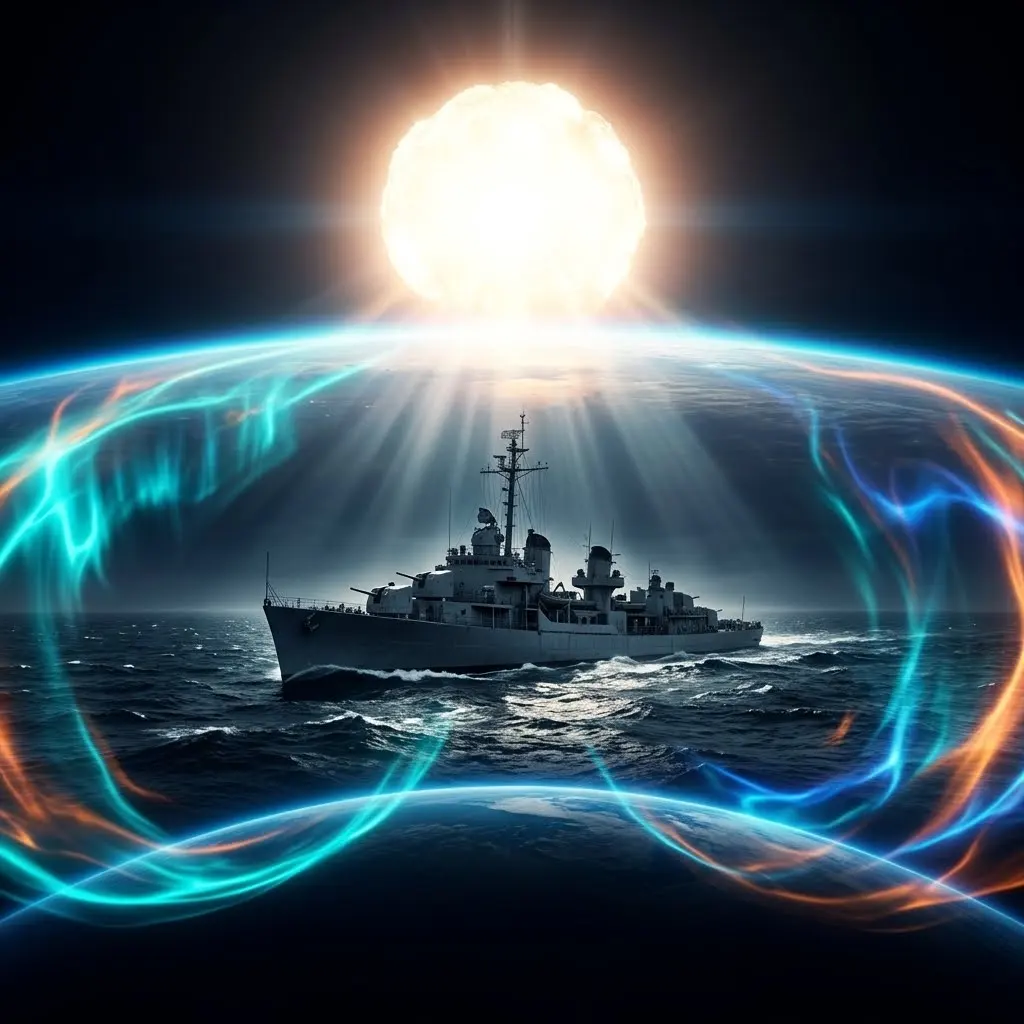
The 1958 Space Nukes Meant to Destroy Soviet Missiles
FAQs
1. What was the first atmospheric nuclear detonation?
The first atmospheric nuclear detonation was conducted by the United States on July 16, 1945, as part of the Trinity test in New Mexico.
2. How many atmospheric nuclear detonations have been conducted in history?
There have been a total of over 500 atmospheric nuclear detonations conducted by various countries between 1945 and 1980.
3. What were the main reasons for conducting atmospheric nuclear detonations?
Atmospheric nuclear detonations were primarily conducted for testing the capabilities and effects of nuclear weapons, as well as for research and development purposes during the Cold War era.
4. What were some of the environmental and health impacts of atmospheric nuclear detonations?
Atmospheric nuclear detonations resulted in widespread radioactive fallout, leading to environmental contamination and long-term health effects on populations exposed to radiation.
5. When did countries start moving towards underground nuclear testing instead of atmospheric detonations?
Countries began shifting towards underground nuclear testing in the early 1960s due to growing concerns over the environmental and health risks associated with atmospheric nuclear detonations.